Sublease Form Leases With Landlord In Harris
Description


Get your form ready online
Our built-in tools help you complete, sign, share, and store your documents in one place.
Make edits, fill in missing information, and update formatting in US Legal Forms—just like you would in MS Word.
Download a copy, print it, send it by email, or mail it via USPS—whatever works best for your next step.
Sign and collect signatures with our SignNow integration. Send to multiple recipients, set reminders, and more. Go Premium to unlock E-Sign.
If this form requires notarization, complete it online through a secure video call—no need to meet a notary in person or wait for an appointment.
We protect your documents and personal data by following strict security and privacy standards.

Make edits, fill in missing information, and update formatting in US Legal Forms—just like you would in MS Word.

Download a copy, print it, send it by email, or mail it via USPS—whatever works best for your next step.

Sign and collect signatures with our SignNow integration. Send to multiple recipients, set reminders, and more. Go Premium to unlock E-Sign.

If this form requires notarization, complete it online through a secure video call—no need to meet a notary in person or wait for an appointment.

We protect your documents and personal data by following strict security and privacy standards.
Looking for another form?








Form popularity
FAQ
The original tenant becomes the landlord to the subletter. In this situation, the original renter is still a tenant to the unit's landlord, and must comply with the terms of their original lease.
Allowing subletting can sometimes leave landlords feeling like they've lost control over their property. You may not have a direct say in who your tenants choose to sublease to. This situation becomes complex when the agreement is not specific about the terms of subleasing.
If the subtenant doesn't adhere to the lease rules or causes disruptions in the building, it could lead to complaints from neighbors or even legal action from the landlord. Eviction Risk: If a tenant sublets without permission or violates the terms of the lease, the landlord may issue an eviction notice.
The reason Landlords will not allow their tenants to sublet is because, by subletting you are altering the terms of the insurance policy the insurer accepted when they offered the landlord an insurance premium for coverage.
Consent for Subleasing A tenant must get the landlord's approval before subleasing their apartment. This is required by the Texas Property Code 91.005, which makes it clear that subleasing is not allowed without the landlord's consent. Agreements often have specific clauses about this topic.
If you sublet your apartment, you are still responsible for the lease. This means any damages or missed rent payments are your responsibility. Finding a reliable subtenant is crucial; be sure to screen carefully to avoid any complications like property damage that could leave you liable.
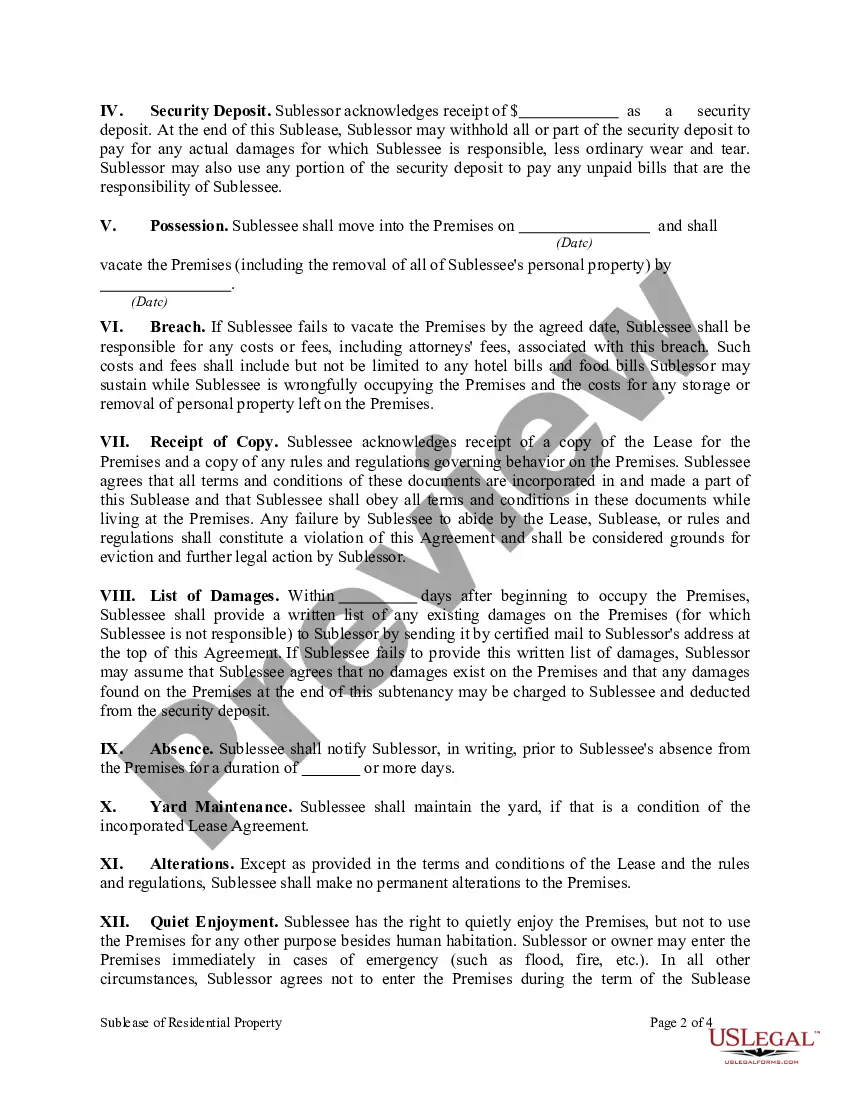
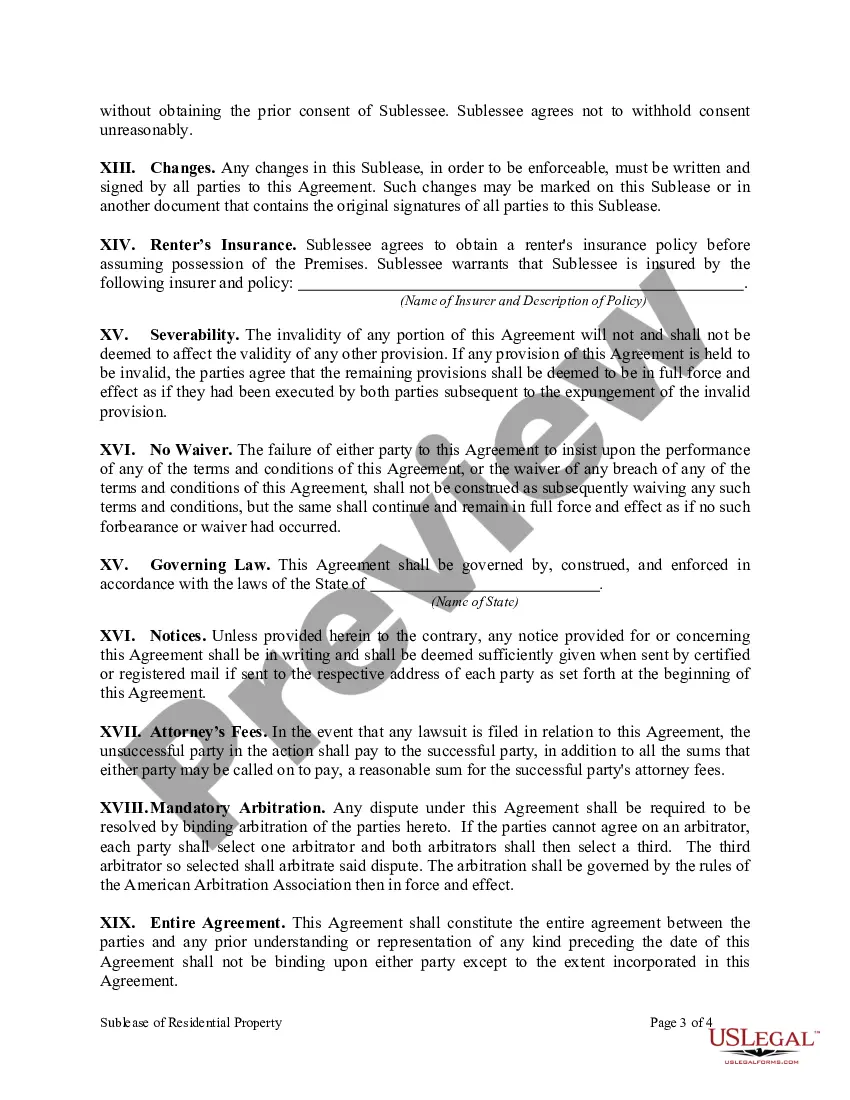
How to write a sublease contract Provide a description of the property. Add the names of the tenant and subtenant. Lay out the terms. Discuss any additional information. Decide the amount of rent. Determine the security deposit amount. State any late fees. List the policies and/or conditions.
Subletting without permission Doing so can lead to serious problems, such as eviction or legal trouble. Always check your lease to confirm whether you need permission from your landlord and get it in writing before you proceed.
Subletting isn't illegal in Texas, but you can't sublet without getting consent from the landlord. Check your original lease to determine if there's a right to sublease. If that's not included, you may ask the landlord specifically, though they have the right to say no.
A potentially devastating detriment to a sublease is its subject to the original tenant not defaulting. You could be compliant with your sublease and receive notice your lease is terminated because the original tenant defaulted. You could be subject to the landlord's new terms or be forced to vacate.
