Sublease Requirements In Fairfax
Description


Get your form ready online
Our built-in tools help you complete, sign, share, and store your documents in one place.
Make edits, fill in missing information, and update formatting in US Legal Forms—just like you would in MS Word.
Download a copy, print it, send it by email, or mail it via USPS—whatever works best for your next step.
Sign and collect signatures with our SignNow integration. Send to multiple recipients, set reminders, and more. Go Premium to unlock E-Sign.
If this form requires notarization, complete it online through a secure video call—no need to meet a notary in person or wait for an appointment.
We protect your documents and personal data by following strict security and privacy standards.

Make edits, fill in missing information, and update formatting in US Legal Forms—just like you would in MS Word.

Download a copy, print it, send it by email, or mail it via USPS—whatever works best for your next step.

Sign and collect signatures with our SignNow integration. Send to multiple recipients, set reminders, and more. Go Premium to unlock E-Sign.

If this form requires notarization, complete it online through a secure video call—no need to meet a notary in person or wait for an appointment.

We protect your documents and personal data by following strict security and privacy standards.
Looking for another form?


Form popularity
FAQ
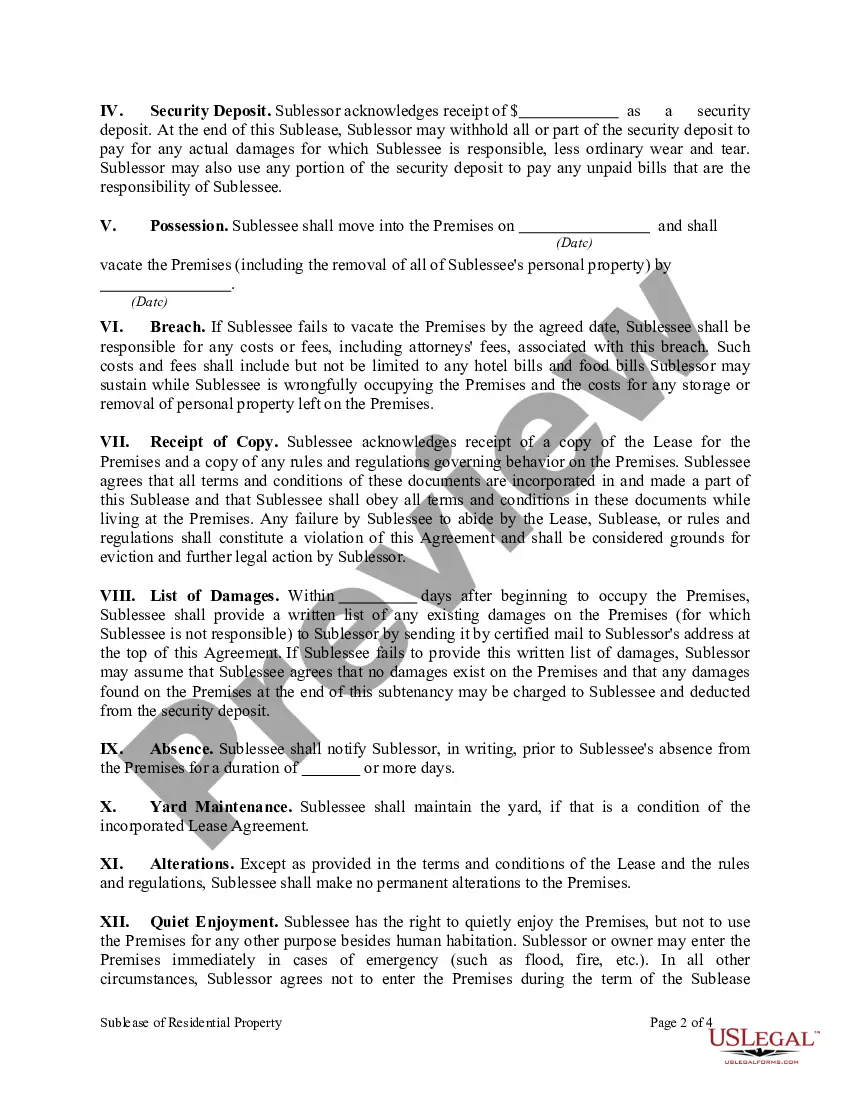
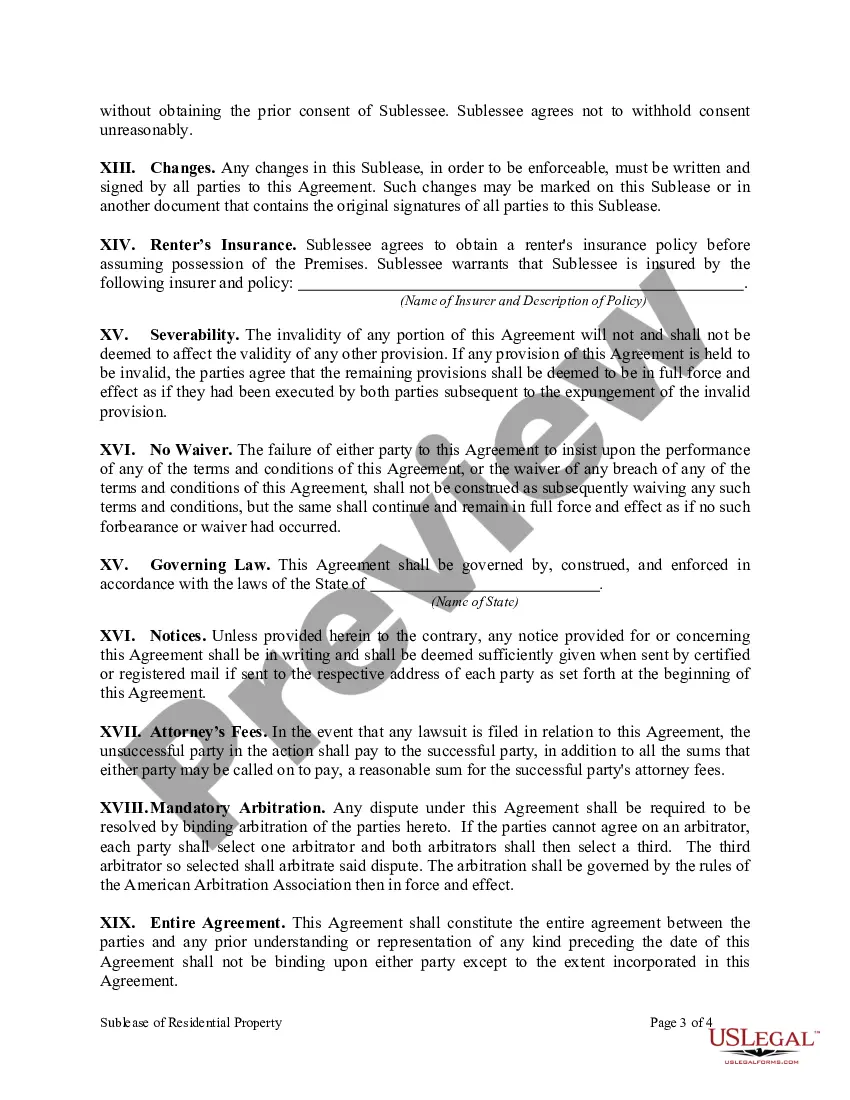
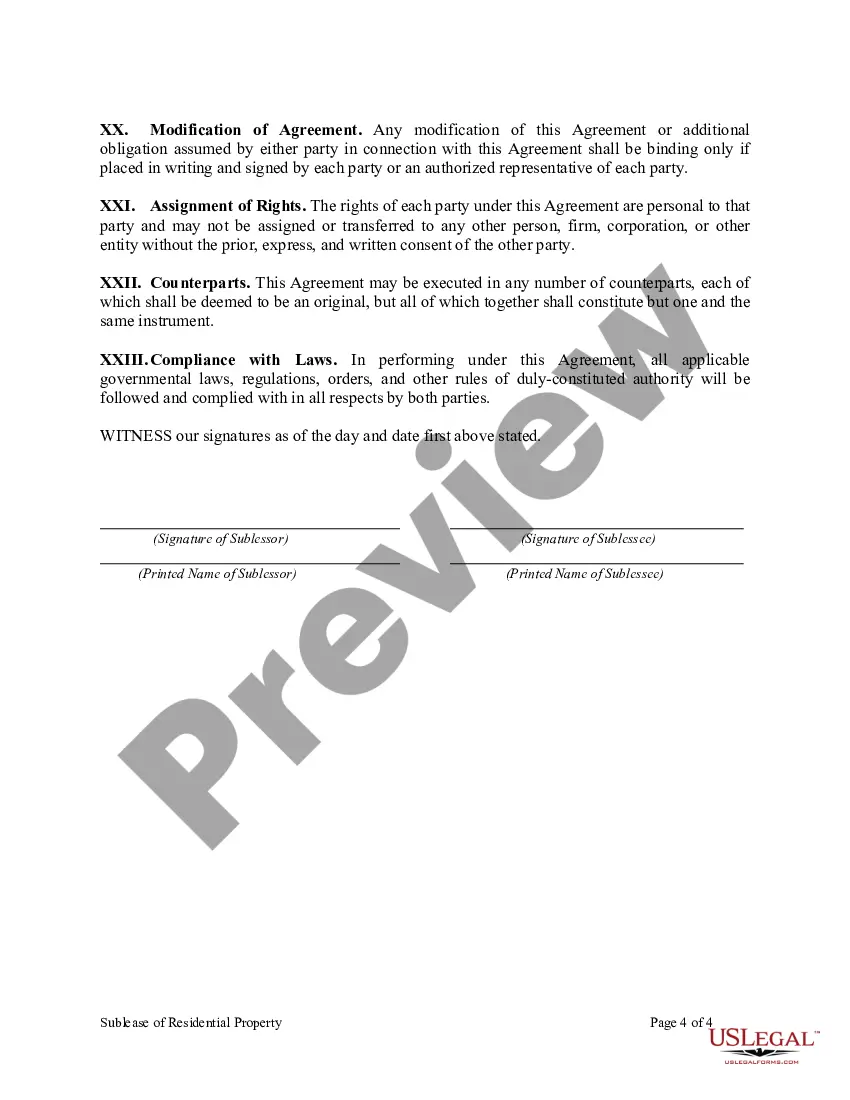
In Virginia, subleasing is a process that involves a tenant renting out their existing lease to another individual. Tenants looking to sublet must first secure written permission from their landlord. This is a critical step as Virginia law requires explicit consent from the landlord.
The landlord may only require that the tenant make $600 per month. If the landlord were to instead say that the applicant's income must be three times the total monthly rent, or $6,000 per month, that would be discriminatory and likely illegal.
How much can a landlord raise the rent? There is no rent control in Virginia. Therefore, there is no limit on rent increases a landlord can impose, but they must give a 30-day written notice of the increase.
Without a written agreement, your lease goes for 12 months. You can negotiate with your landlord to end or change it, but be sure to get any changes in writing. Your landlord can't end or change the agreement within the first 12 months unless you both agree.
Once it is signed by both the landlord and the tenant, the lease is a legally binding contract. If you have any questions about anything in this lease, you should talk to an attorney about the lease before you sign it.
If your home is to be sublet, you need to send to the Home Ownership Service:- ( 1) A copy of the tenancy agreement with the sub-tenant. (2) A forwarding correspondence address for yourself (3) Details of any managing agent (4) A contact number for you and your managing agent, if you have one, in case of emergency.
If your agreement doesn't say anything about subletting You don't need your landlord's permission but it's usually best to let them know. If they don't want you to sublet your home, your landlord can get a court order to end your tenancy, evict your subtenant and stop you from moving back in.
Fairfax County: In Fairfax County, landlords are not typically required to obtain a business license for a single rental property. However, if the rental property is part of a larger rental business with multiple units, a business license might be required.
Permits are typically required for the following projects: alterations to existing commercial structures; commercial structures; carport enclosures; decks; demolition; electrical systems; finished basements; garages and sheds; HVAC systems; mobile homes; plumbing systems; pools, spas and hot tubs; renovations; ...
In Virginia, the requirement for a business license to rent out property depends on the specific county or city. Some localities require business licenses for rental properties, especially if the rental income exceeds a certain threshold or if the landlord owns multiple properties.
