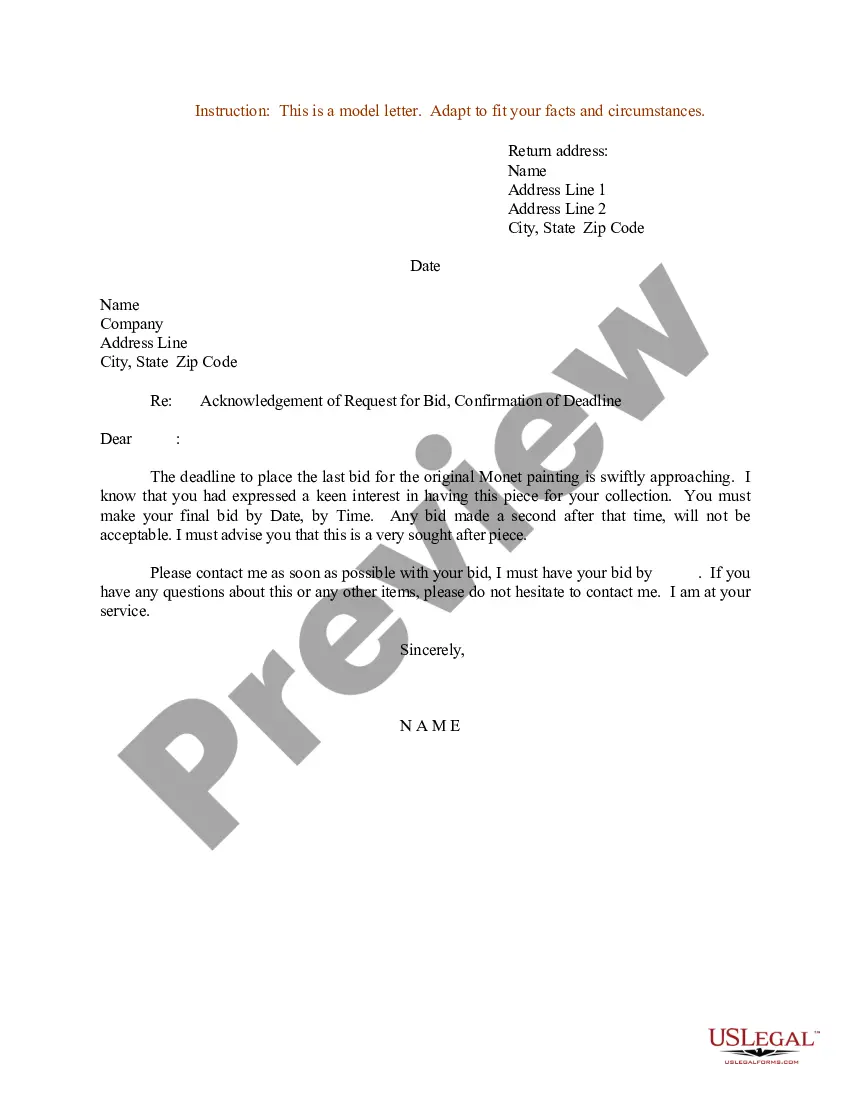
Request For Bid Template Construction In Suffolk
Description


Get your form ready online
Our built-in tools help you complete, sign, share, and store your documents in one place.
Make edits, fill in missing information, and update formatting in US Legal Forms—just like you would in MS Word.
Download a copy, print it, send it by email, or mail it via USPS—whatever works best for your next step.
Sign and collect signatures with our SignNow integration. Send to multiple recipients, set reminders, and more. Go Premium to unlock E-Sign.
If this form requires notarization, complete it online through a secure video call—no need to meet a notary in person or wait for an appointment.
We protect your documents and personal data by following strict security and privacy standards.

Make edits, fill in missing information, and update formatting in US Legal Forms—just like you would in MS Word.

Download a copy, print it, send it by email, or mail it via USPS—whatever works best for your next step.

Sign and collect signatures with our SignNow integration. Send to multiple recipients, set reminders, and more. Go Premium to unlock E-Sign.

If this form requires notarization, complete it online through a secure video call—no need to meet a notary in person or wait for an appointment.

We protect your documents and personal data by following strict security and privacy standards.
Looking for another form?





Form popularity
FAQ
What are the 7 steps in writing an RFP? Introduce the company and project. Outline project background. Provide bid deadline and proposal timeline. Specify budget. Outline project scope. Express concerns or roadblocks. Explain evaluation criteria.
8 Steps to the Construction Bidding Process Project owner issues request for general contractors to bid on the project. GC sends project out to subcontractors for bidding. Subcontractors work on bids and ask questions. Bid day. Contractor selection. Contract negotiations. Signed contract. Project buyout.
8 tips to write a request for proposal Detail the project and what your organization needs. Write an executive summary. Include vendor qualifications and the project budget. Be transparent about the selection process. Provide timelines. Format for readability. Have the expertise. Detail the job but not how to do it.
An RFP should include a brief introduction to the project, including an overview of the entity issuing the RFP, background on the project, the purpose of the work and the desired outcomes. This section may also include important dates and contact information.
How to write an RFP in 7 steps. Introduce the company and project. Outline project background. Provide bid deadline and proposal timeline. Specify budget. Outline project scope. Express concerns or roadblocks. Explain evaluation criteria.
Below are some of the items necessary to include in your bid template. Heading. Client's information. Contractor information. Name of project. Summary of services. Proposed budget. Additional information. Terms and conditions.
How to write an RFP in 7 steps. Introduce the company and project. Outline project background. Provide bid deadline and proposal timeline. Specify budget. Outline project scope. Express concerns or roadblocks. Explain evaluation criteria.
The RFP document template starts with an introduction to your company where you can input your company name, logo, and contact info such as phone number and address. After the company information is the Project section where you include the scope of work, where the project stands, and your desired objectives.