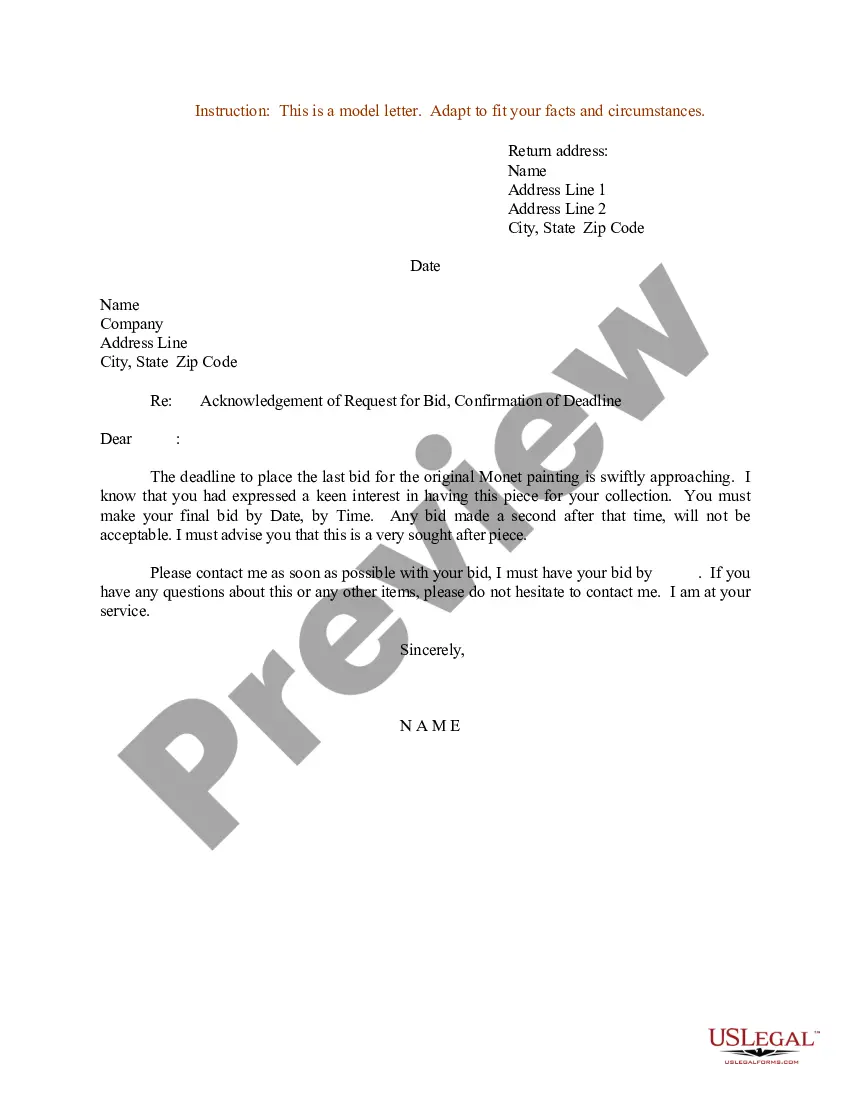
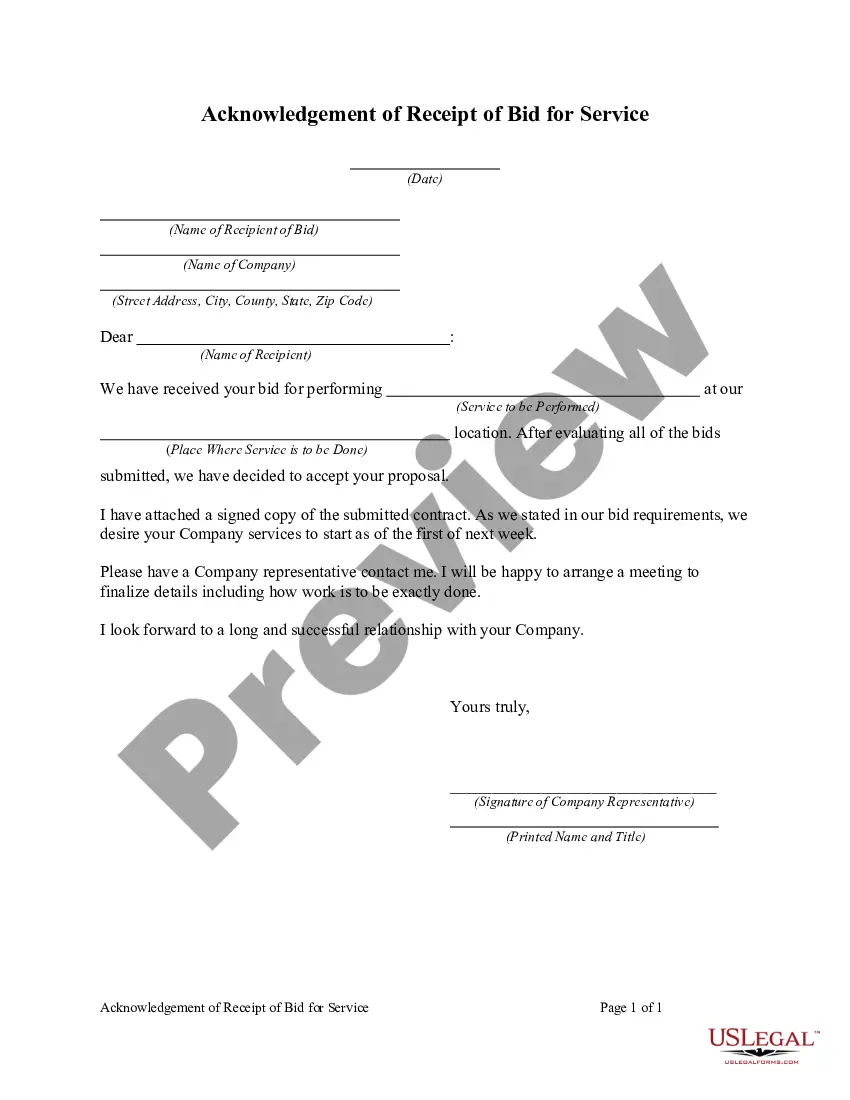
Request For Bid Rfb In California
Description


Get your form ready online
Our built-in tools help you complete, sign, share, and store your documents in one place.
Make edits, fill in missing information, and update formatting in US Legal Forms—just like you would in MS Word.
Download a copy, print it, send it by email, or mail it via USPS—whatever works best for your next step.
Sign and collect signatures with our SignNow integration. Send to multiple recipients, set reminders, and more. Go Premium to unlock E-Sign.
If this form requires notarization, complete it online through a secure video call—no need to meet a notary in person or wait for an appointment.
We protect your documents and personal data by following strict security and privacy standards.

Make edits, fill in missing information, and update formatting in US Legal Forms—just like you would in MS Word.

Download a copy, print it, send it by email, or mail it via USPS—whatever works best for your next step.

Sign and collect signatures with our SignNow integration. Send to multiple recipients, set reminders, and more. Go Premium to unlock E-Sign.

If this form requires notarization, complete it online through a secure video call—no need to meet a notary in person or wait for an appointment.

We protect your documents and personal data by following strict security and privacy standards.
Looking for another form?


Form popularity
FAQ
The Request for Bid (RFB) is a type of line item BP. RFBs are unique in that the business process requires participation from personnel outside your company.
A Request for Qualifications (RFQ) usually refers to the pre-qualification stage of the procurement process. Only those proponents who successfully respond to the RFQ and meet the qualification criteria will be included in the subsequent Request for Proposals (RFP) solicitation process.
What is the difference between an IFB, an RFP, and an RFQ? Invitations for Bids (IFB) are the most commonly used solicitation type. Request for Proposals (RFP) are used for specialized or complex professional services, including financial audits, IT services, development consultancies, and garbage collection etc.
LOI best practices Begin the letter by clearly stating your intention to bid and basic company information. Include contact information for the person who will manage the proposal process. This is the person the buyer should contact if they have questions, need more information or want to begin negotiations.
8 tips to write a request for proposal Detail the project and what your organization needs. Write an executive summary. Include vendor qualifications and the project budget. Be transparent about the selection process. Provide timelines. Format for readability. Have the expertise. Detail the job but not how to do it.
Getting a government contract can be complex. To prepare, invest time up front to research the competition and understand the processes and strategies used to compete in the federal market. This will help you determine if a government contract is a good fit for your business.
Before you can bid on government proposals, you need to get a Unique Entity Identifier (UEI). A UEI is a unique 12-character, alpha-numeric value. You will receive a UEI when you register with SAM at SAM. Entities doing business with the federal government must use the UEI created by the system.
If you're trying to break into federal contracting, or you're looking for an easy win, look into religious services contracts. The federal government purchases religious services regularly, and these contracts are easier to win than you think. There are tons of religious opportunities there.
How Contractors Obtain Bid Security Review bid documentation. Negotiate with a surety company. Submit an application for evaluation. Receive bid security. Complete bid submission.