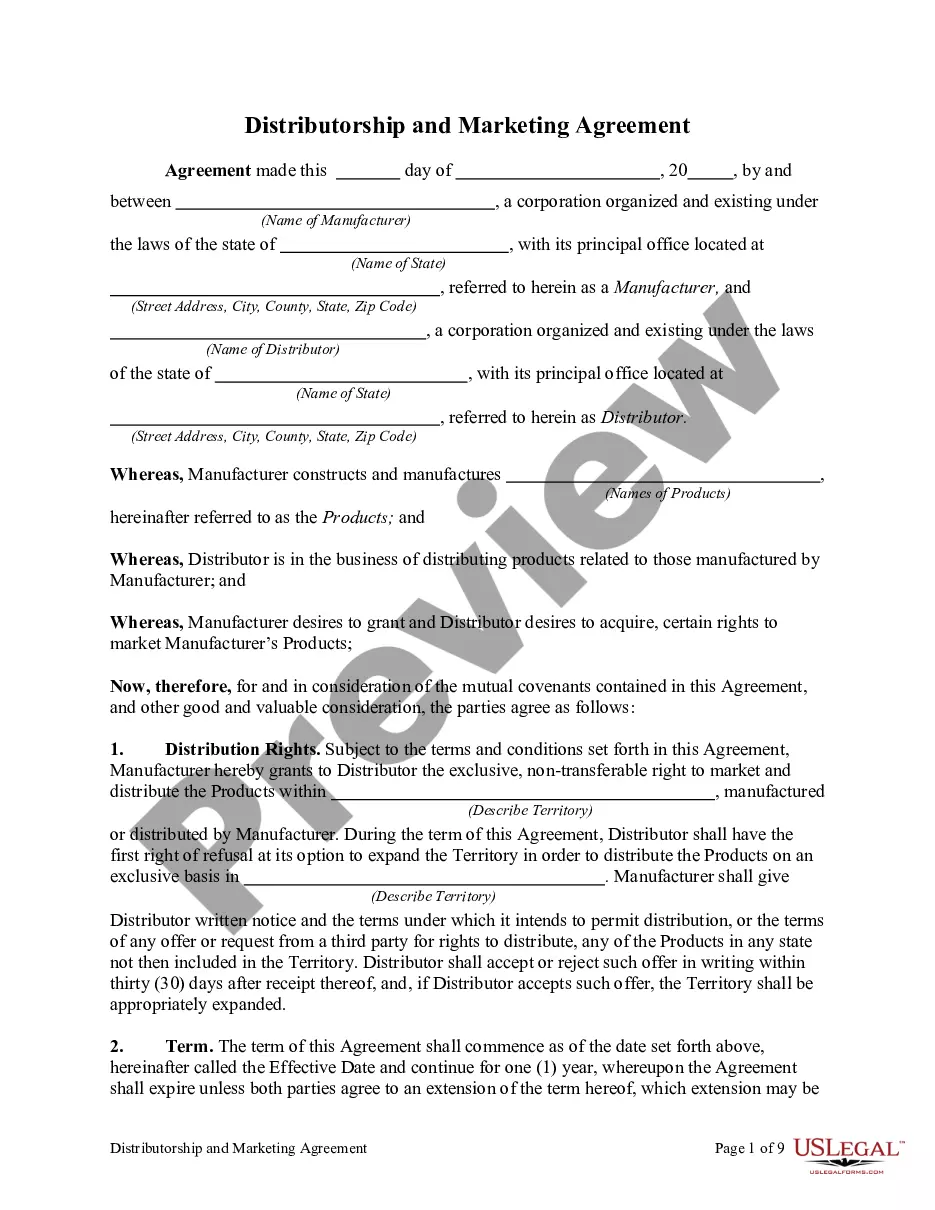
Independent Contractor Agreement With Non Compete Clause In Utah
Description





Get your form ready online
Our built-in tools help you complete, sign, share, and store your documents in one place.
Make edits, fill in missing information, and update formatting in US Legal Forms—just like you would in MS Word.
Download a copy, print it, send it by email, or mail it via USPS—whatever works best for your next step.
Sign and collect signatures with our SignNow integration. Send to multiple recipients, set reminders, and more. Go Premium to unlock E-Sign.
If this form requires notarization, complete it online through a secure video call—no need to meet a notary in person or wait for an appointment.
We protect your documents and personal data by following strict security and privacy standards.

Make edits, fill in missing information, and update formatting in US Legal Forms—just like you would in MS Word.

Download a copy, print it, send it by email, or mail it via USPS—whatever works best for your next step.

Sign and collect signatures with our SignNow integration. Send to multiple recipients, set reminders, and more. Go Premium to unlock E-Sign.

If this form requires notarization, complete it online through a secure video call—no need to meet a notary in person or wait for an appointment.

We protect your documents and personal data by following strict security and privacy standards.
Looking for another form?








Form popularity
FAQ
Confidentiality, NDAs, and exclusivity For instance, you may want to insert an exclusivity clause, which restricts the contractor's ability to work with other parties during the contract period. However, the contractor is under no obligation to sign this, and may opt to refuse.
The ban covers all non-competes for U.S. workers (including employees and independent contractors) with limited carve-outs, and is subject to certain exceptions based on the FTC's statutory authority.
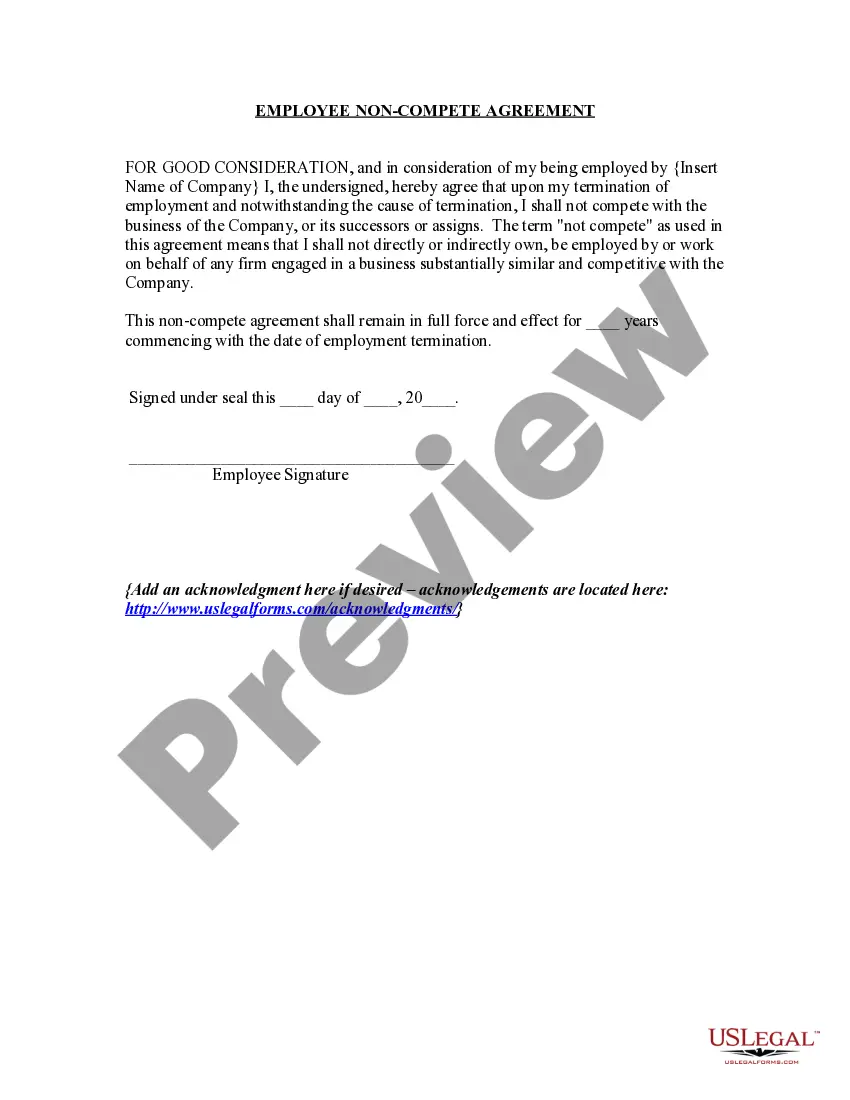
The enforceability of non-compete agreements varies widely across states – although they will soon be non-enforceable nationwide if and when the federal rule is effective. In Utah, non-competes are widespread because agreements are enforceable in a broad set of circumstances.
The following are the most common ways to get out of a non-compete agreement: Determine that the terms of the contract do not in fact prevent you from a desired course of action. Recognize when a non-compete contradicts the law. Negotiate a release agreement with the involved parties. Ignore the agreement.
In addition to a legitimate business interest, many states have requirements for the types of restrictions a non-compete may impose on a person. For instance, in Utah, a non-compete may not restrict an employee from working for a new employer for a period of more than one year.
If an employee breaks or violates the terms of a legally enforceable non-compete agreement, the employer may file a lawsuit against the employee and ask a court for an injunction to stop the employee's allegedly improper activity.
Non-Competitive Activity at New Employer: One of the most straightforward ways to overcome a noncompete is by ensuring that your new role with a different employer is in a non-competitive capacity. If you're not engaging in activities that directly compete with your former employer's business, you may be in the clear.
In Georgia, a non-compete agreement may be declared unenforceable or invalid for a number of reasons, including: An unreasonable time period (under the newest version of Georgia's non-compete law, restraints lasting more than 2 years are presumed unreasonable) An unreasonable restriction on geographic territory.
Utah courts require that non-compete restrictions be “reasonably limited in time and geographic area” in order to be valid and enforceable. Generally speaking, the geographic restriction in a non-compete provision cannot be more broad than the territory encompassed by the employer's business.