Employing International Contractors Foreigners In Malaysia In Michigan
Description

Get your form ready online
Our built-in tools help you complete, sign, share, and store your documents in one place.
Make edits, fill in missing information, and update formatting in US Legal Forms—just like you would in MS Word.
Download a copy, print it, send it by email, or mail it via USPS—whatever works best for your next step.
Sign and collect signatures with our SignNow integration. Send to multiple recipients, set reminders, and more. Go Premium to unlock E-Sign.
If this form requires notarization, complete it online through a secure video call—no need to meet a notary in person or wait for an appointment.
We protect your documents and personal data by following strict security and privacy standards.

Make edits, fill in missing information, and update formatting in US Legal Forms—just like you would in MS Word.

Download a copy, print it, send it by email, or mail it via USPS—whatever works best for your next step.

Sign and collect signatures with our SignNow integration. Send to multiple recipients, set reminders, and more. Go Premium to unlock E-Sign.

If this form requires notarization, complete it online through a secure video call—no need to meet a notary in person or wait for an appointment.

We protect your documents and personal data by following strict security and privacy standards.
Looking for another form?








Form popularity
FAQ
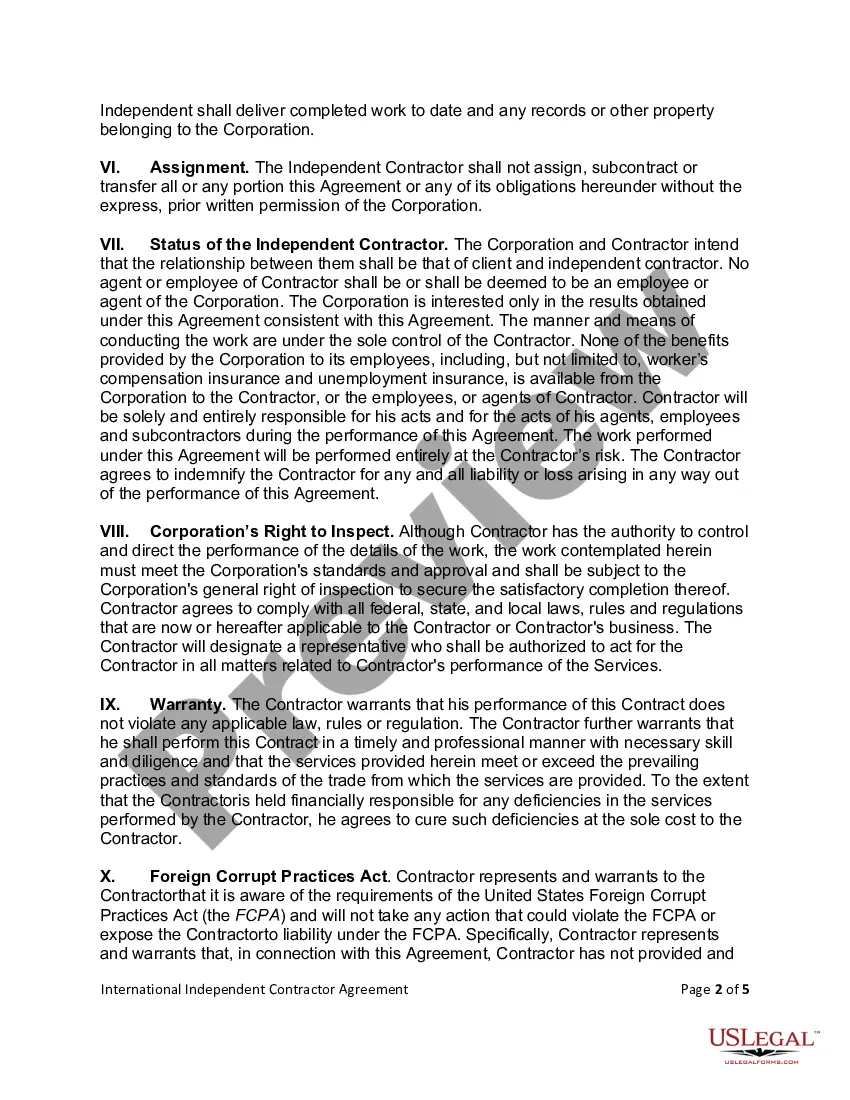
Today, it's possible to hire independent contractors from any part of the world, thanks to improvements in technology and communications. It's a great idea to consider Mexico if you're looking to expand your team. Its proximity and strong economic ties to the US are definite advantages.
Absolutely! U.S. companies can hire foreign employees. However, companies should acquaint themselves with the rules and regulations associated with managing a foreign worker. This means ensuring the right worker classification, managing global payroll, and adhering to foreign tax and worker regulations.
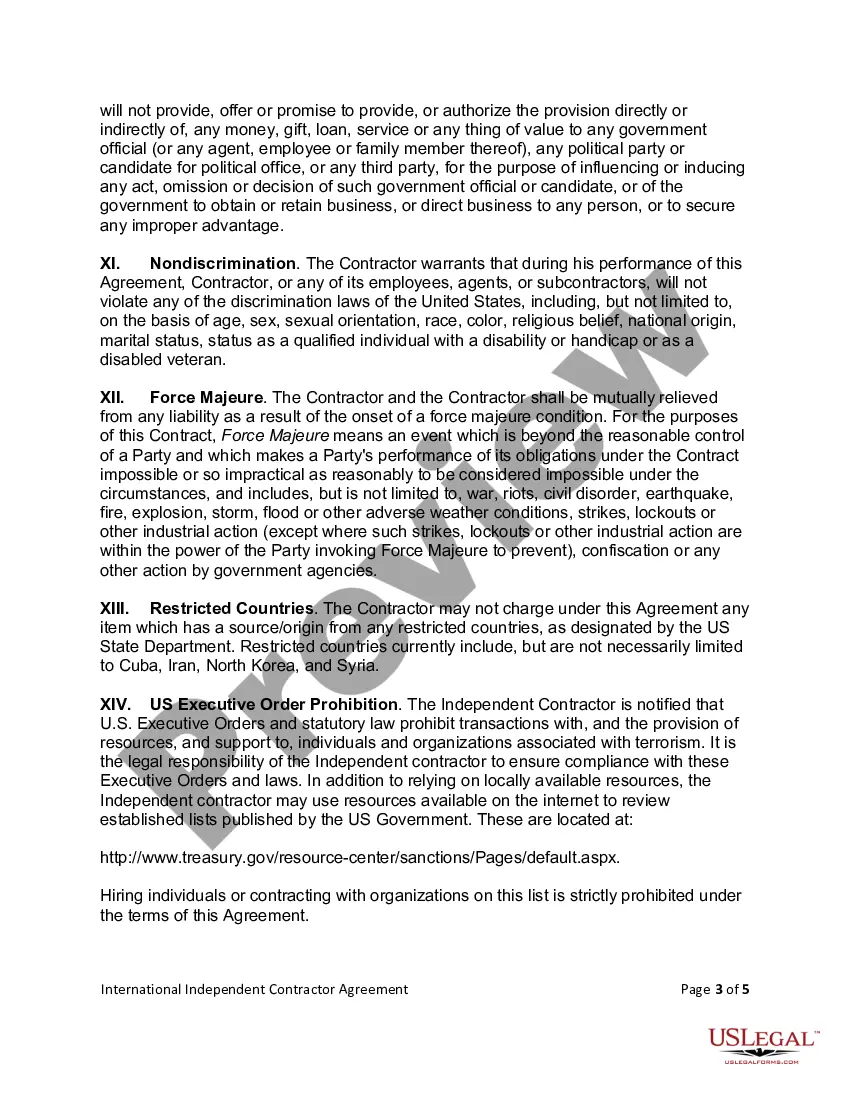
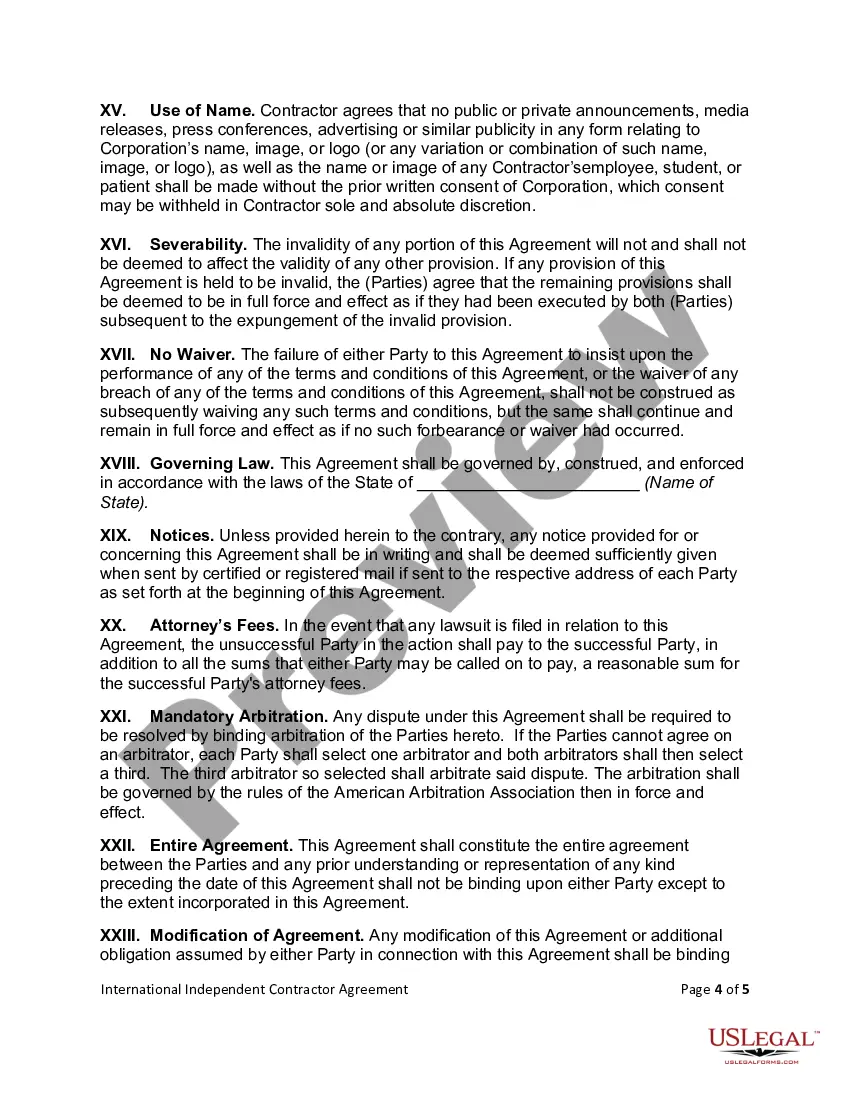
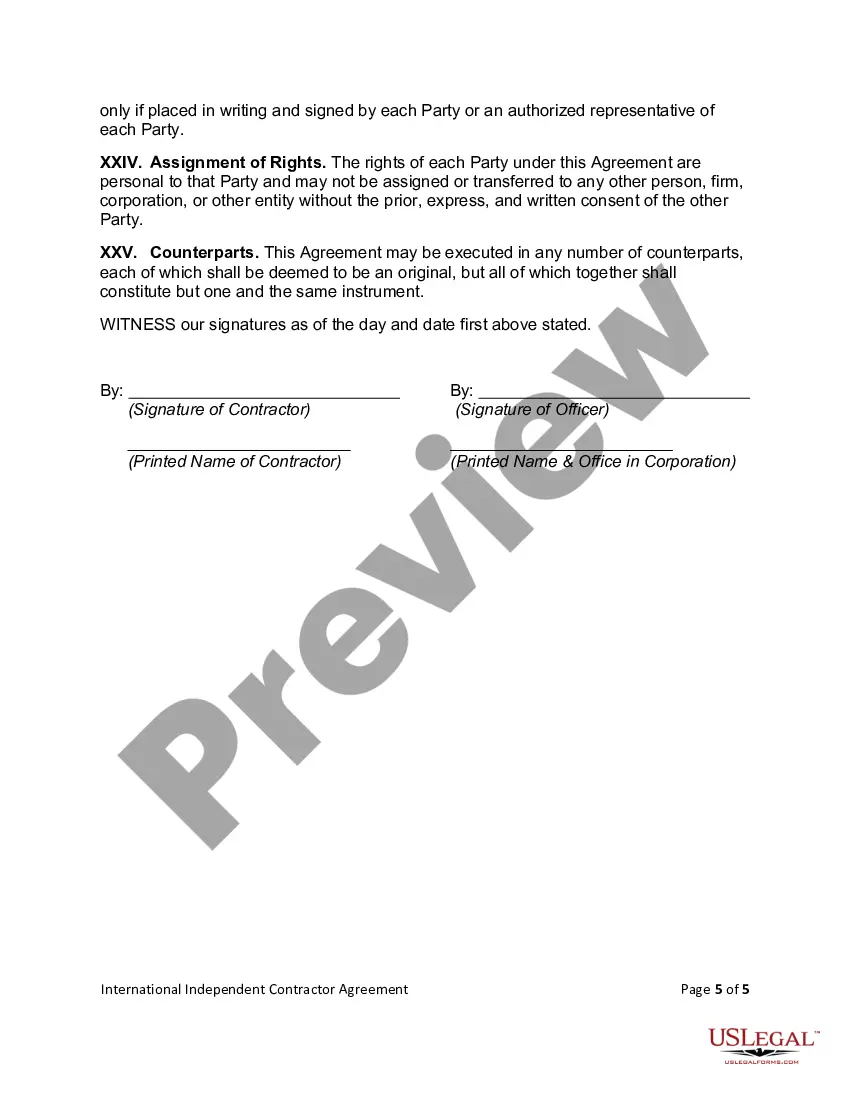
This is a key point in understanding how can a US company hire a foreign independent contractor. As long as the contractor complies with the tax and legal requirements of their home country and the U.S., they can provide services to a U.S. company without being considered an employee.
Sector-specific employment: Foreign workers are allowed only in approved sectors, including: Manufacturing. Construction. Plantation. Agriculture. Mining and quarrying.
Today, it's possible to hire independent contractors from any part of the world, thanks to improvements in technology and communications. It's a great idea to consider Mexico if you're looking to expand your team. Its proximity and strong economic ties to the US are definite advantages.
You will have to register your business, and most contractors register as sole proprietors. You will also need client service contracts, a work permit, tax ID number and method of payment for your clients to use. You must also invoice your clients and avoid any appearance of being in an employee relationship.
Can a U.S. company hire international employees? Yes, a U.S. company can hire international workers abroad. However, hiring overseas employees comes with unique challenges, such as navigating foreign tax and employment regulations, correctly classifying international workers, and running global payroll.
To work in Malaysia, you need a valid work visa. Familiarize yourself with the types of work visas available, such as the Employment Pass (EP) for skilled workers. Your employer typically sponsors this visa. Identify industries that are open to hiring foreign graduates.
It is important to note that foreign independent contractors must comply with the immigration laws and regulations of the country where they are providing their services. They may need to obtain work permits or visas to legally work in the United States or any other country where they are contracted.
An employee enjoys the benefits and protection under the Employment Act 1955 as well as the Industrial Relations Act 1967. An independent contractor, on the other hand, is only bound to the contract and the terms therein.
