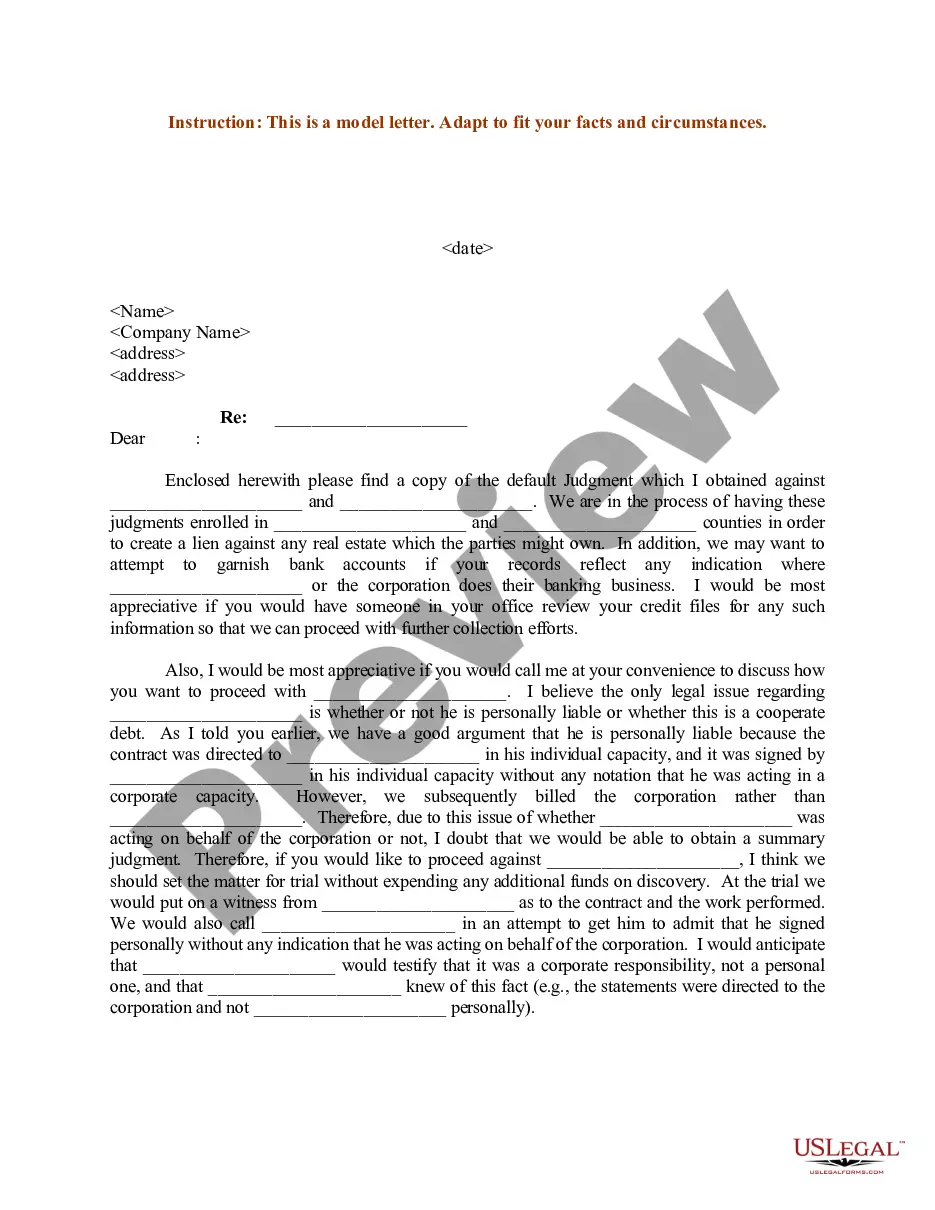
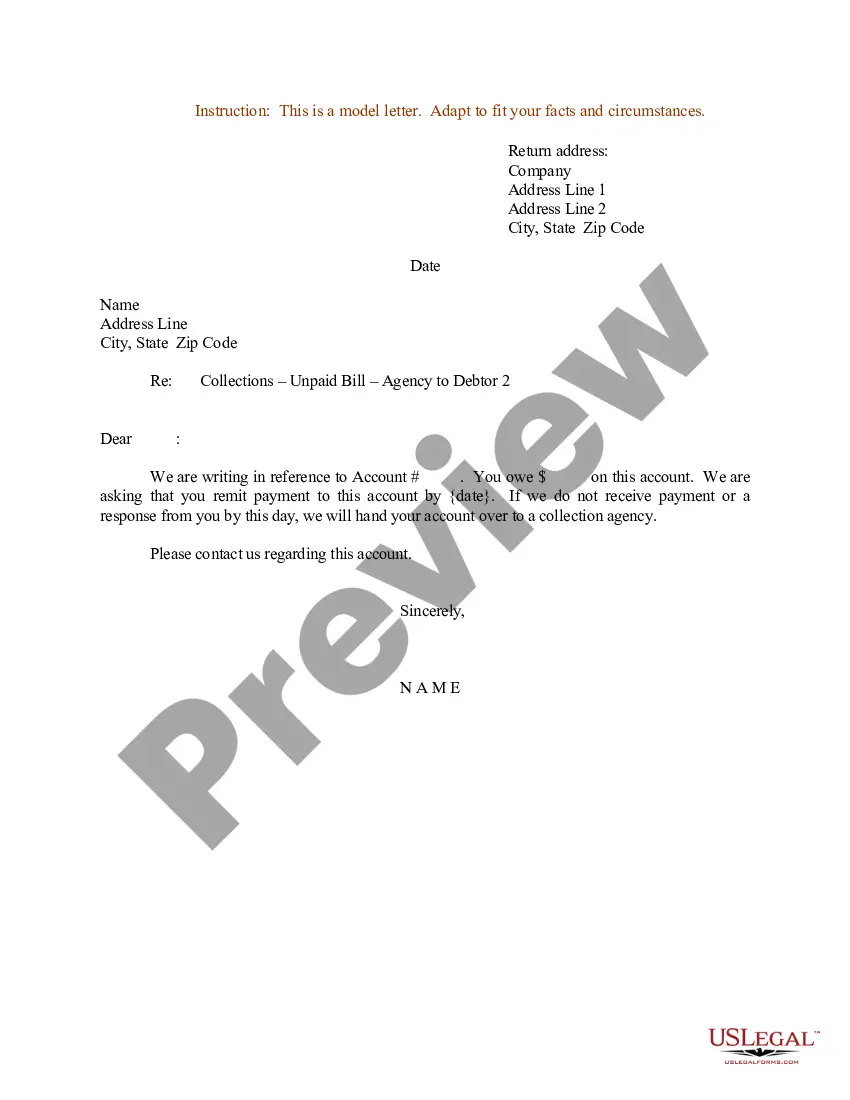
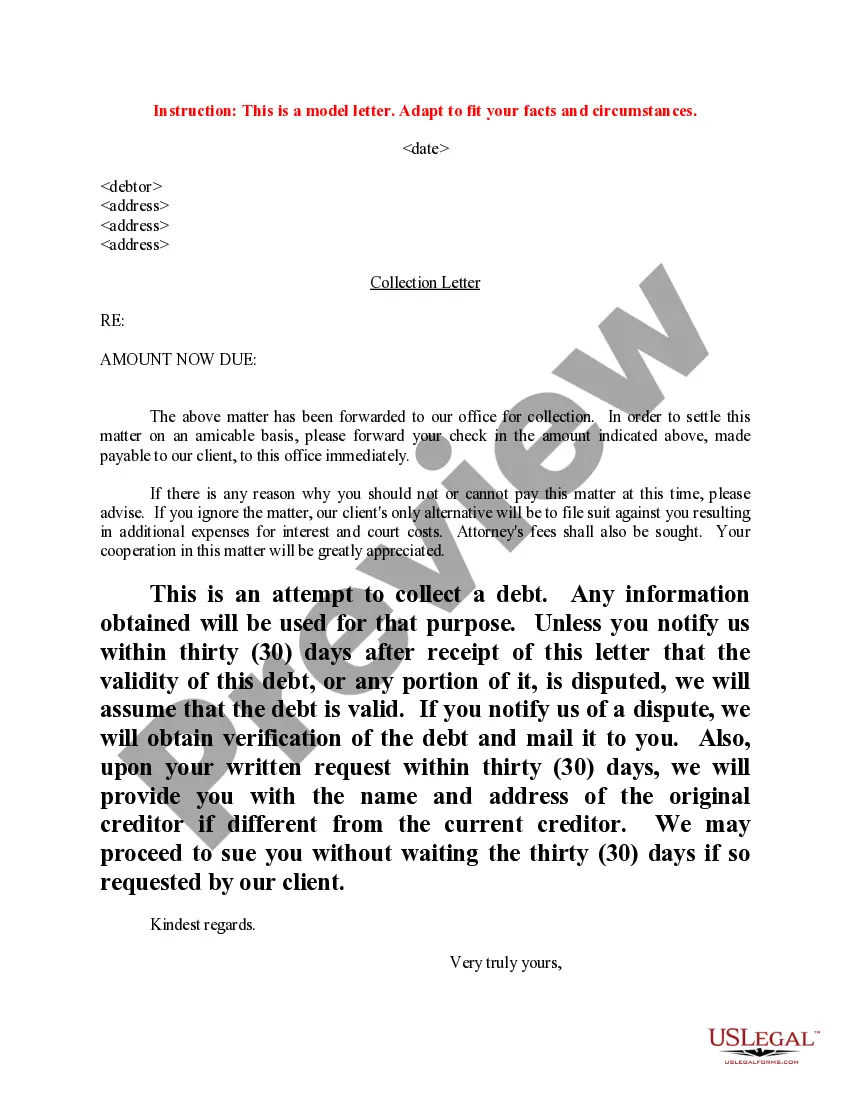
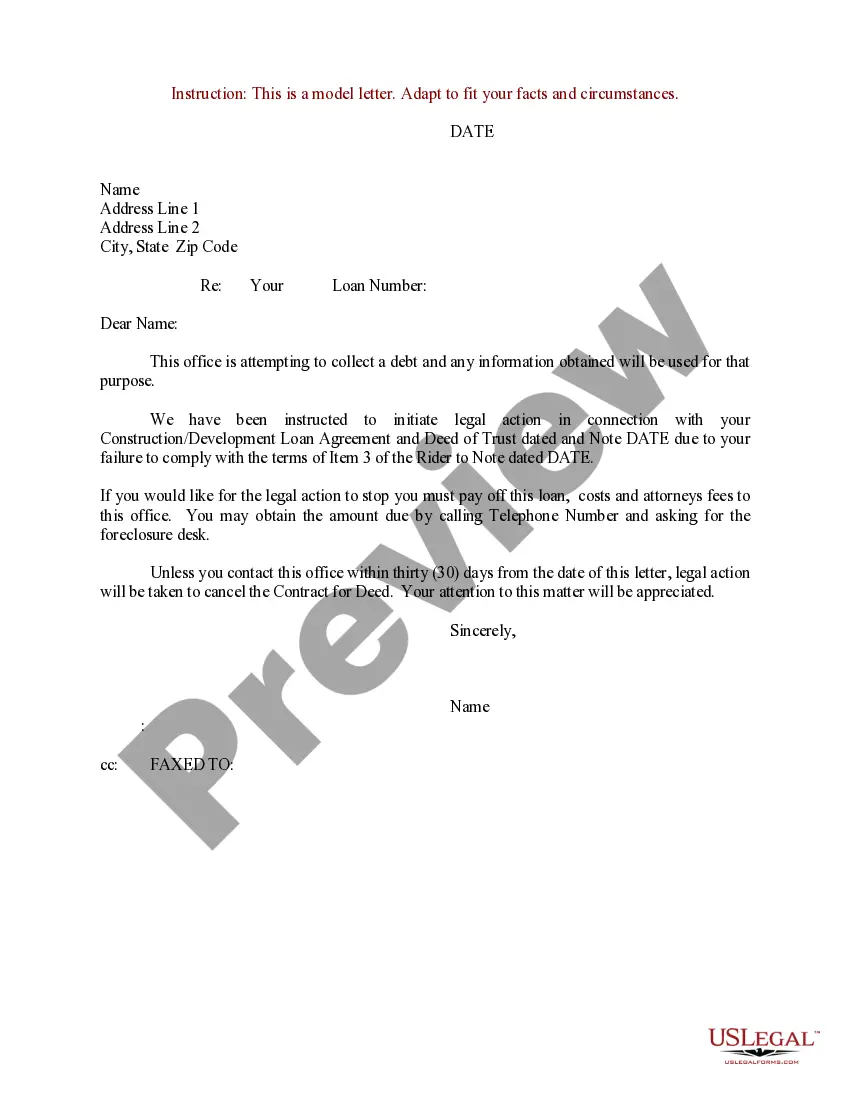
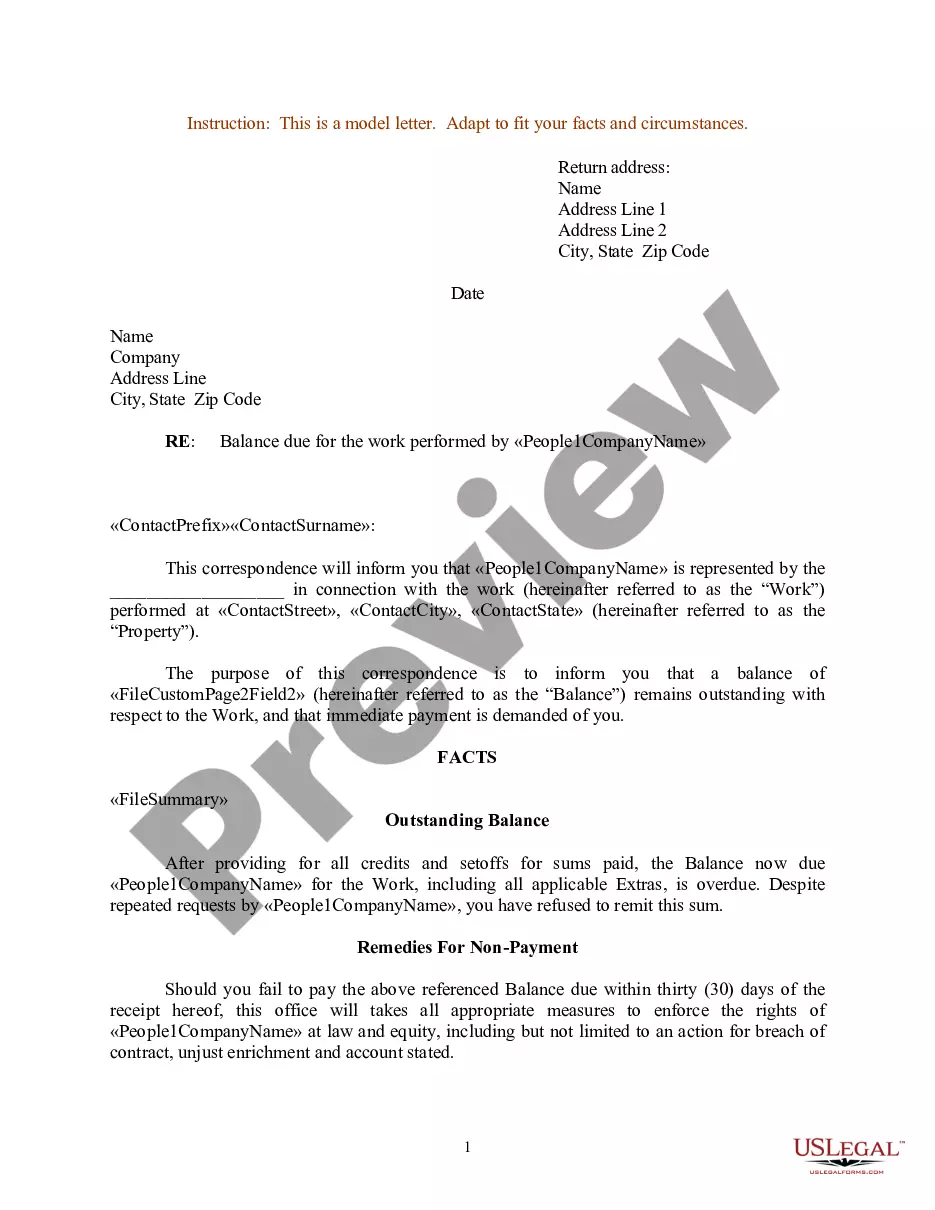
Letters Legal Collections Without Prejudice In Ohio
Description
Get your form ready online
Our built-in tools help you complete, sign, share, and store your documents in one place.
Make edits, fill in missing information, and update formatting in US Legal Forms—just like you would in MS Word.
Download a copy, print it, send it by email, or mail it via USPS—whatever works best for your next step.
Sign and collect signatures with our SignNow integration. Send to multiple recipients, set reminders, and more. Go Premium to unlock E-Sign.
If this form requires notarization, complete it online through a secure video call—no need to meet a notary in person or wait for an appointment.
We protect your documents and personal data by following strict security and privacy standards.

Make edits, fill in missing information, and update formatting in US Legal Forms—just like you would in MS Word.

Download a copy, print it, send it by email, or mail it via USPS—whatever works best for your next step.

Sign and collect signatures with our SignNow integration. Send to multiple recipients, set reminders, and more. Go Premium to unlock E-Sign.

If this form requires notarization, complete it online through a secure video call—no need to meet a notary in person or wait for an appointment.

We protect your documents and personal data by following strict security and privacy standards.
Looking for another form?









Form popularity
FAQ
During the call you should never say it's your debt, your account, that you ever had an account, and any other personal financial information. Don't lie if they ask you point-blank questions; just don't answer them by reiterating the first paragraph... several times if necessary.
Your answer should include the court name, case name, case number, and your affirmative defenses. Print three copies of your answer. File one with the clerk's office and mail (or “serve”) one to the plaintiff or plaintiff's attorney.
Within five days after a debt collector first contacts you, it must send you a written notice, called a "validation notice," that tells you (1) the amount it thinks you owe, (2) the name of the creditor, and (3) how to dispute the debt in writing.
The dismissal ``without prejudice'' does not mean that you won the issue regarding the debt. It just means that the creditor stopped fighting in court without conceding that you won. So the dismissal ``without prejudice'' does not necessarily help your argument to remove this from your credit report.
File the answer with your clerk of courts' office. The summons will have the address and contact information for the clerk of court's office. Mail a copy of your answer on the plaintiff's attorney. You can find name and address for the plaintiff's attorney on the summons.
How To Answer an Ohio Court Summons for Debt File an Answer to the Summons Within 28 Days. You need to respond to the summons and complaint by filing an answer form within 28 days of receiving the summons. Complete a Certificate of Service. Serve a Copy of the Answer on the Plaintiff. What Happens Next?
A judge may dismiss a case without prejudice in order to allow for errors in the case presented to be addressed before it is brought back to court. A judge will dismiss a case with prejudice if he or she finds reason why the case should not move forward and should be permanently closed.
Here's a step-by-step guide that outlines the actions a business should take before moving forward with a collection agency. Contact the Debtor. Send a Demand Letter. Consider Negotiation. Hire a Collection Agency. Provide Documentation. Monitor Progress. Consider Legal Action.
Rule 33 - Interrogatories to Parties (A) Availability; procedures for use. Any party, without leave of court, may serve upon any other party up to forty written interrogatories to be answered by the party served.
