Performance Agreement To In San Diego
Description

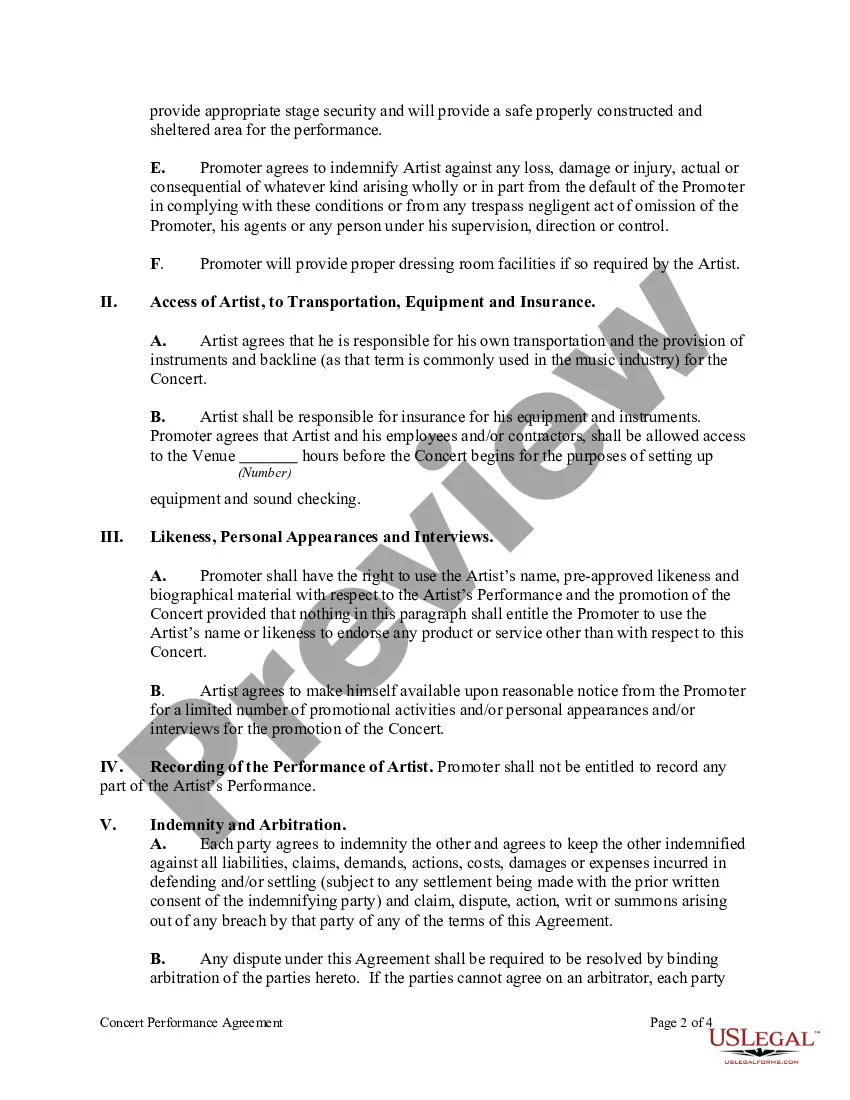
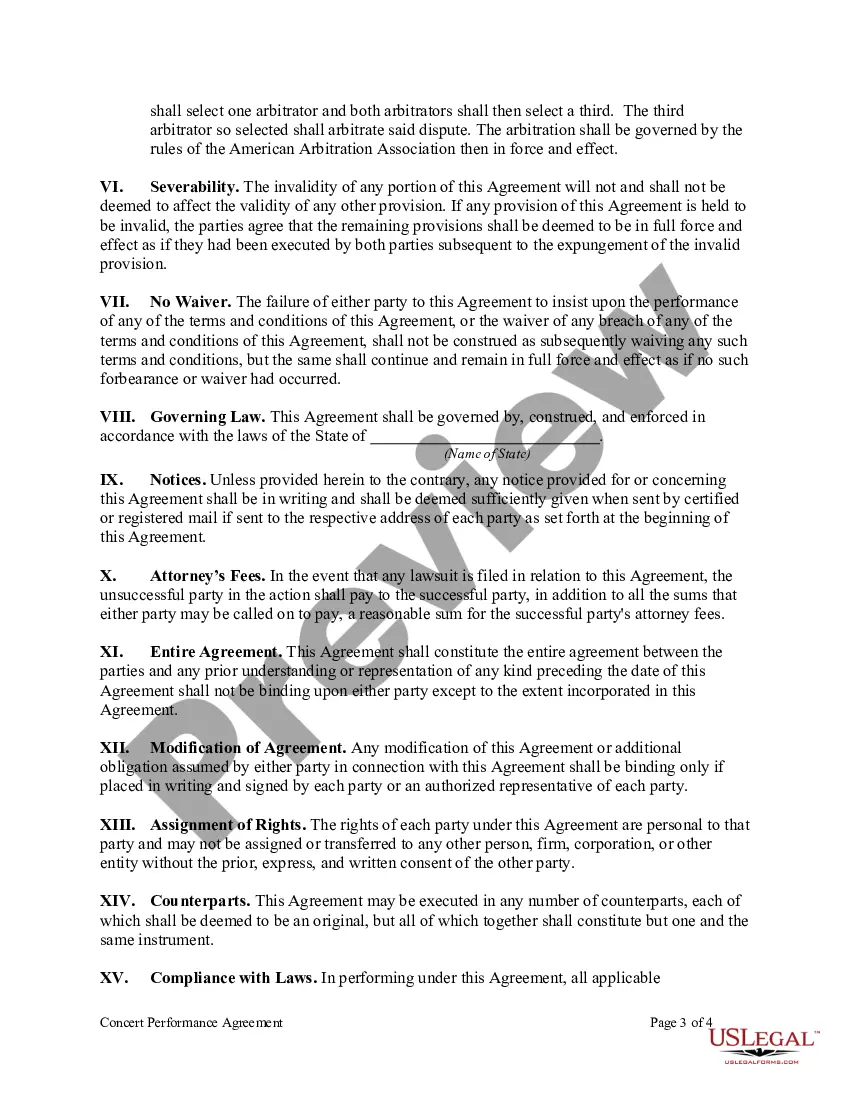
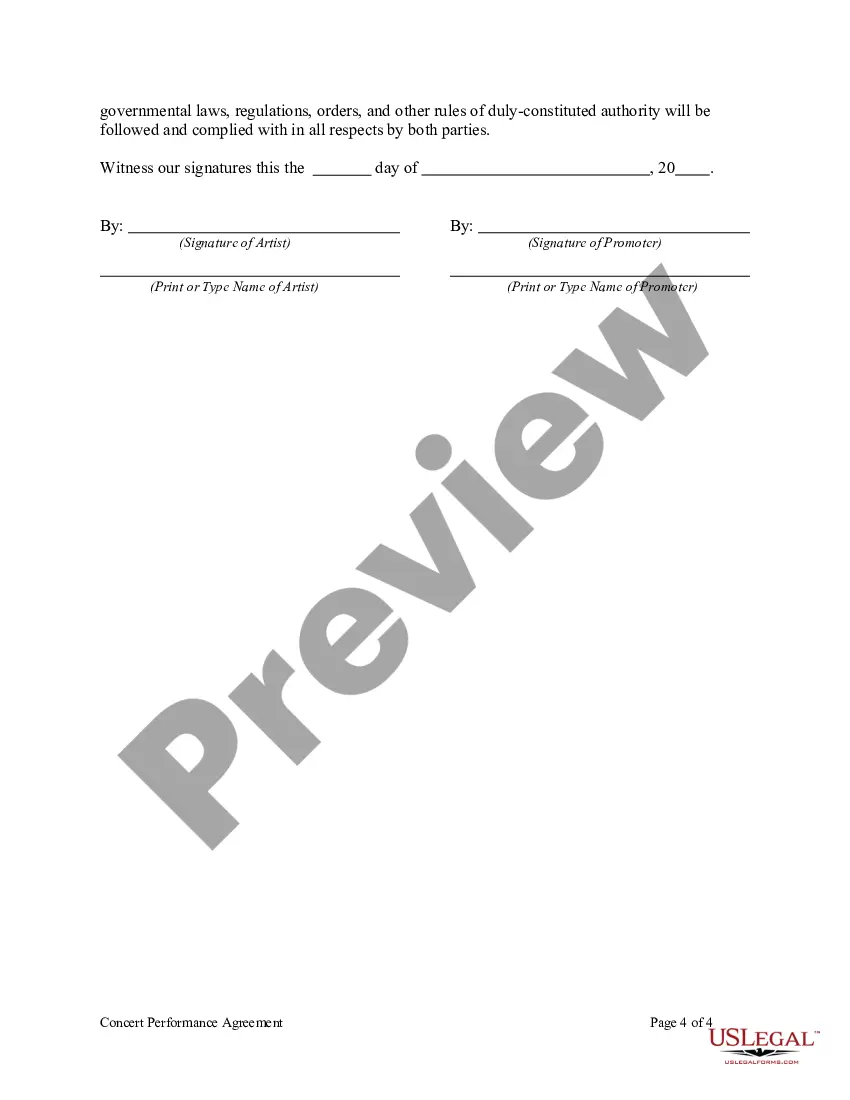
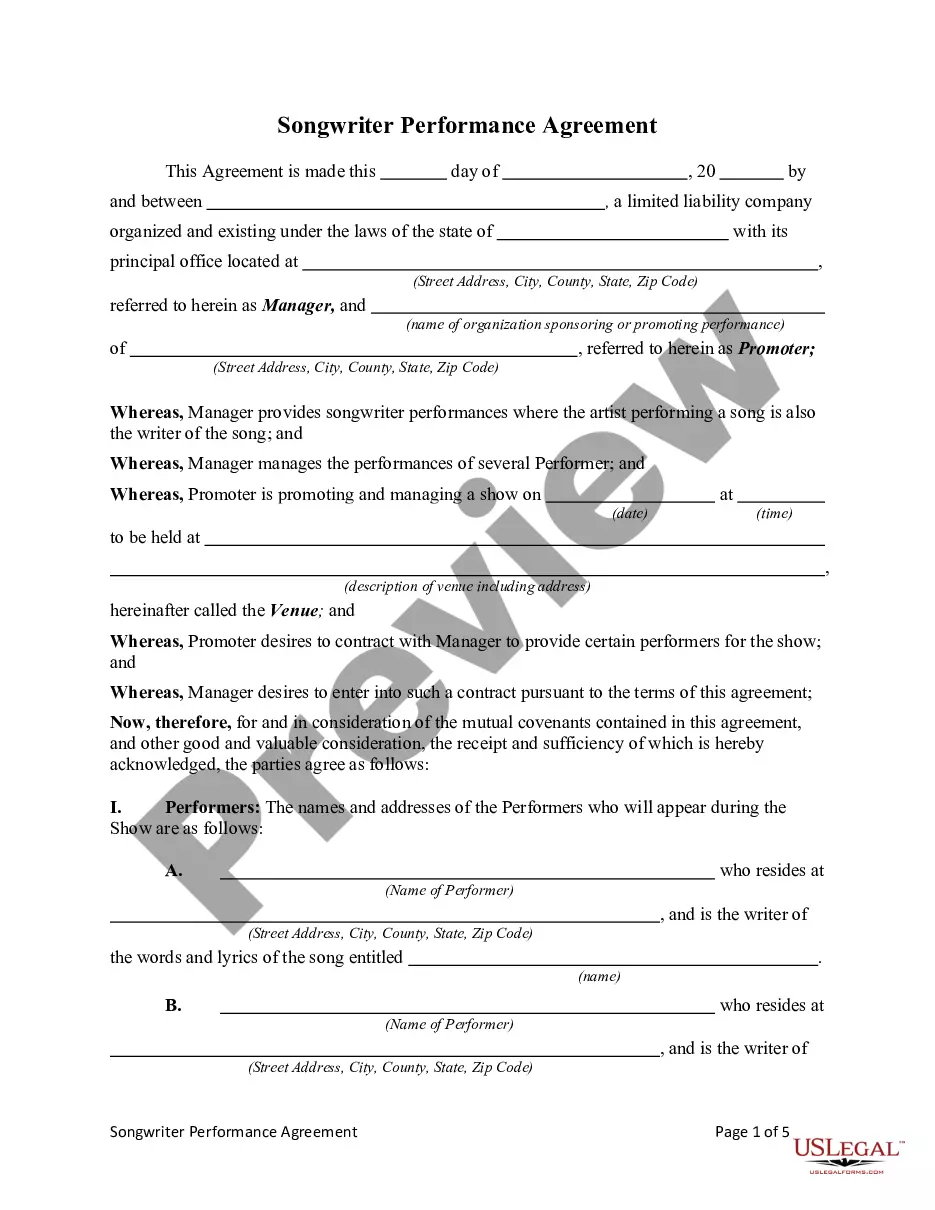
Get your form ready online
Our built-in tools help you complete, sign, share, and store your documents in one place.
Make edits, fill in missing information, and update formatting in US Legal Forms—just like you would in MS Word.
Download a copy, print it, send it by email, or mail it via USPS—whatever works best for your next step.
Sign and collect signatures with our SignNow integration. Send to multiple recipients, set reminders, and more. Go Premium to unlock E-Sign.
If this form requires notarization, complete it online through a secure video call—no need to meet a notary in person or wait for an appointment.
We protect your documents and personal data by following strict security and privacy standards.

Make edits, fill in missing information, and update formatting in US Legal Forms—just like you would in MS Word.

Download a copy, print it, send it by email, or mail it via USPS—whatever works best for your next step.

Sign and collect signatures with our SignNow integration. Send to multiple recipients, set reminders, and more. Go Premium to unlock E-Sign.

If this form requires notarization, complete it online through a secure video call—no need to meet a notary in person or wait for an appointment.

We protect your documents and personal data by following strict security and privacy standards.
Looking for another form?










Form popularity
FAQ
Three types of performance could occur in your contract: actual, substantial, and perfect. Actual Performance: An actual performance is one where both parties have fulfilled their obligations as set out in the contract. It usually occurs when goods or services are delivered following the terms agreed upon.
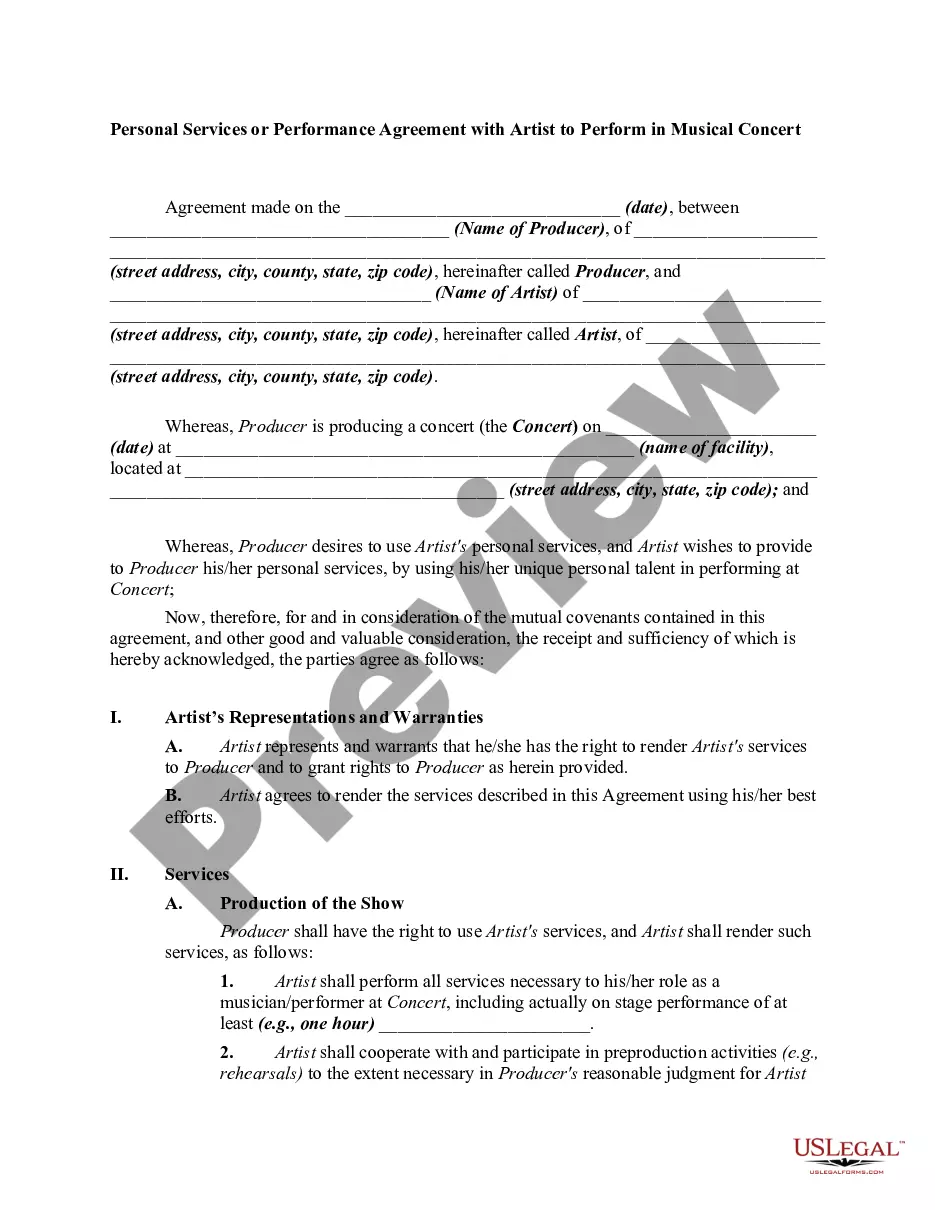
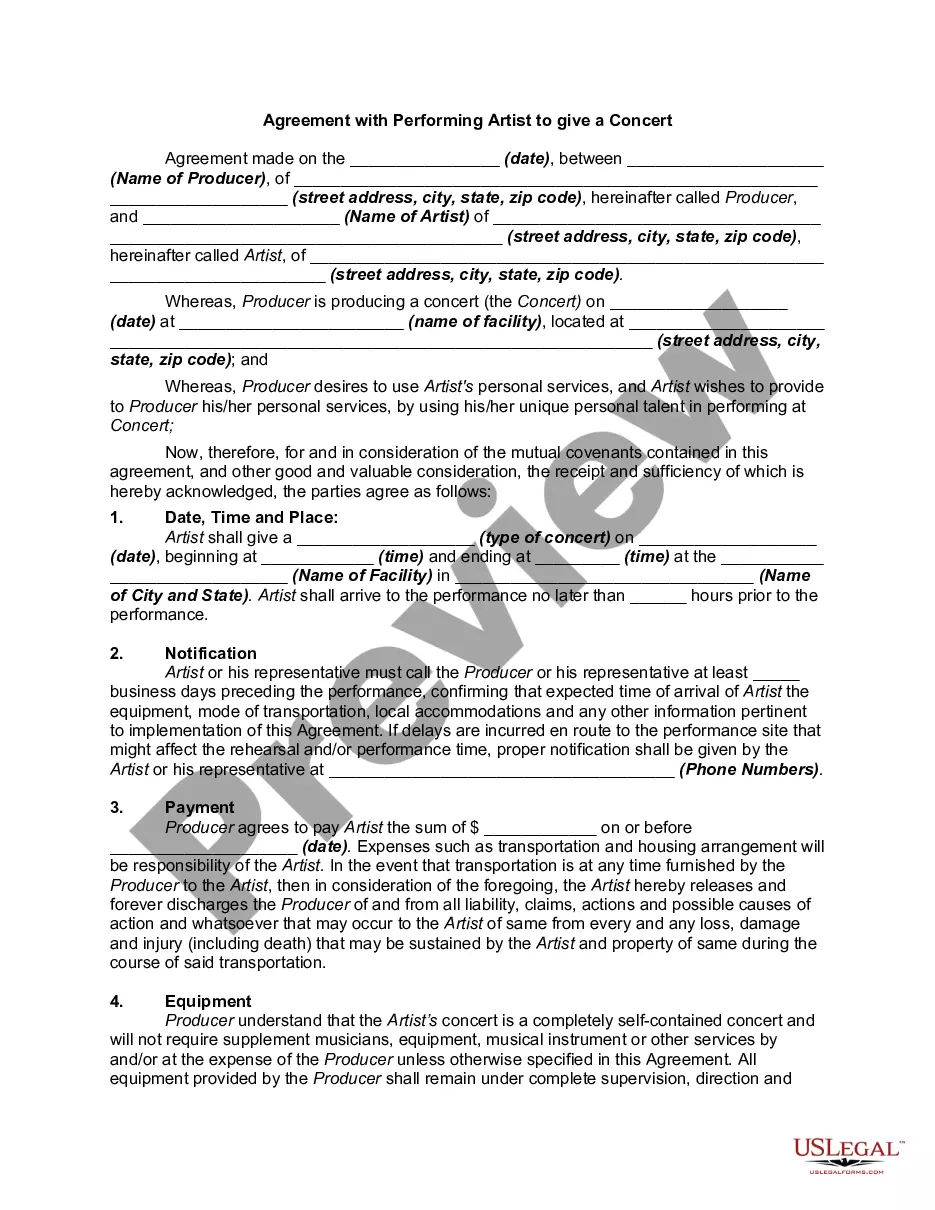
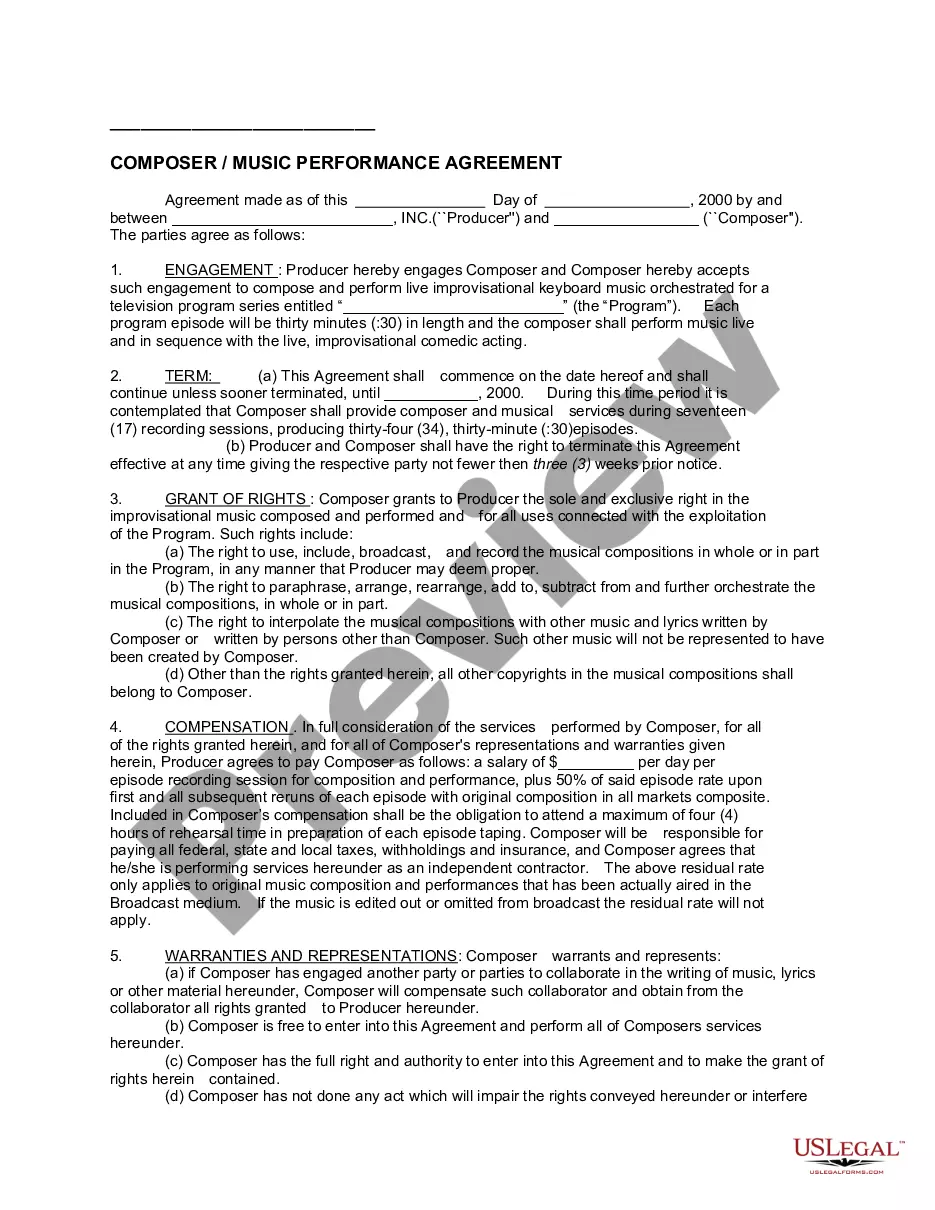
A Performance Agreement or Classification Worksheet is used to hire individuals or groups to provide a musical, dance or theatrical performances. The individual or group is the marquee/headlining performer who the audience is specifically coming to see.
As with all contracts, a performance contract is a mutual agreement, and both parties should willingly agree to the terms and conditions of the contract. The performance objectives, metrics, and timeline must be clearly defined. It should be transparent and encapsulate the shared understanding of the expectations.
Follow these steps to put an effective performance agreement in place for your staff: Start With Clear Expectations. Build in Milestones. Agree on the Terms. Schedule Accountability Meetings. Establish Outcome Results and Consequences. Sign and Date the Agreement.
Performance Agreement: An arrangement between an employer and an employee, or a business and a contractor, which outlines the terms, expectations, goals, and standards of performance for each party. Scope: The range of activities, duties, and expectations covered by an agreement.
Performance contracting process typically involves four main stages namely work plan management, skills development, performance monitoring and evaluation, and rewarding of outstanding performance.
Suggested steps for developing a performance agreement Step 1: Plan. The first step is to plan by looking at your business goals for the year ahead. Step 2: Discuss. The next step is to arrange a time to meet with the employee to discuss and set up the performance agreement. Step 3: Monitor. Step 4: Review.
Performance agreements define executive accountability for specific organizational goals, help executives align daily operations, and clarify how work unit activities contribute to the agency's goals and objectives.
A live performance contract is a contract between the client (the venue) and a performer when the performer is hired to provide entertainment services at an event.
