Performance Agreement For Supply Chain Manager In Ohio
Description
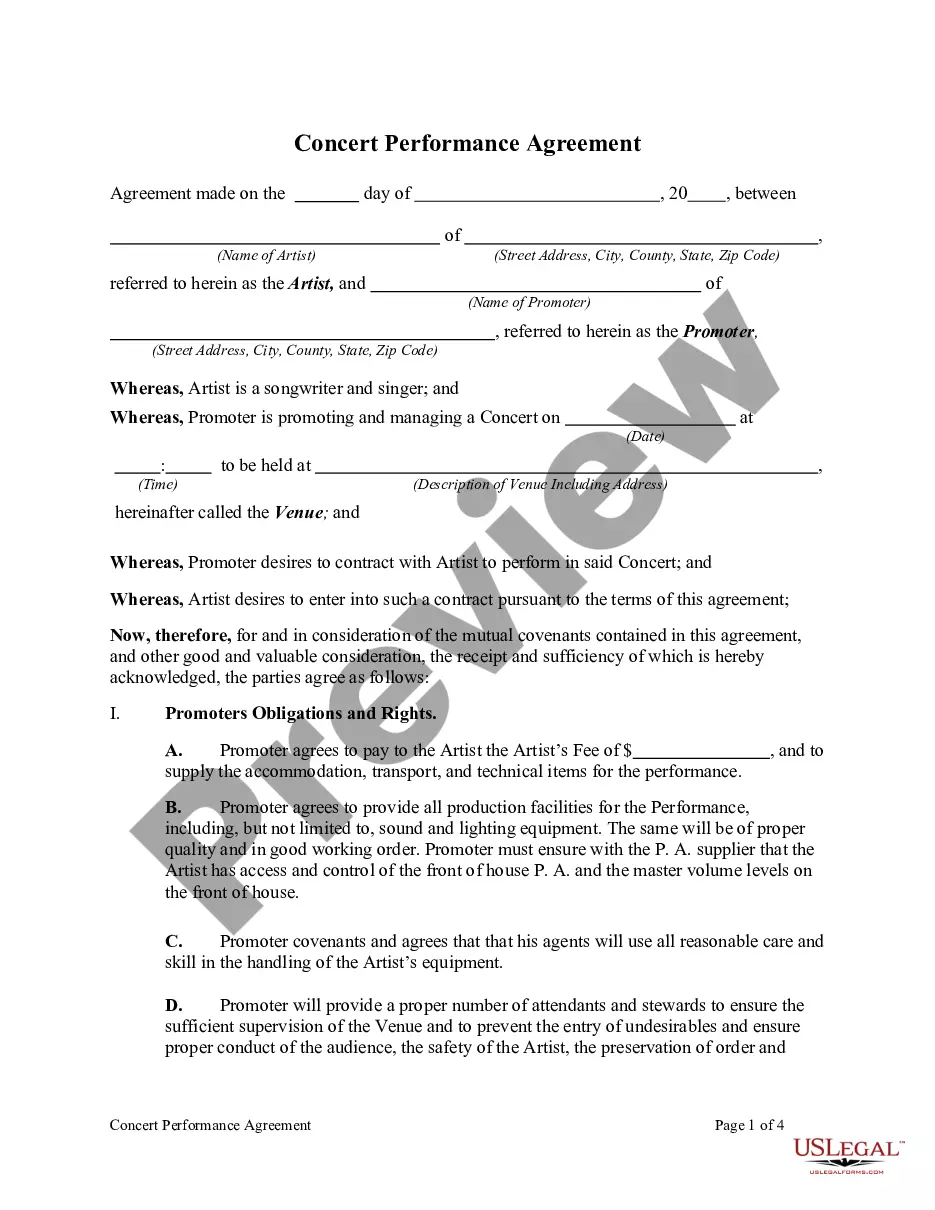
Get your form ready online
Our built-in tools help you complete, sign, share, and store your documents in one place.
Make edits, fill in missing information, and update formatting in US Legal Forms—just like you would in MS Word.
Download a copy, print it, send it by email, or mail it via USPS—whatever works best for your next step.
Sign and collect signatures with our SignNow integration. Send to multiple recipients, set reminders, and more. Go Premium to unlock E-Sign.
If this form requires notarization, complete it online through a secure video call—no need to meet a notary in person or wait for an appointment.
We protect your documents and personal data by following strict security and privacy standards.

Make edits, fill in missing information, and update formatting in US Legal Forms—just like you would in MS Word.

Download a copy, print it, send it by email, or mail it via USPS—whatever works best for your next step.

Sign and collect signatures with our SignNow integration. Send to multiple recipients, set reminders, and more. Go Premium to unlock E-Sign.

If this form requires notarization, complete it online through a secure video call—no need to meet a notary in person or wait for an appointment.

We protect your documents and personal data by following strict security and privacy standards.
Looking for another form?









Form popularity
FAQ
Exploring the key stages of the contract management lifecycle Stage 1: Contract Initiation. Stage 2: Contract Creation and Negotiation. Stage 3: Contract Approval. Stage 4: Contract Execution. Stage 5: Contract Monitoring and Management. Stage 6: Contract Renewal or Termination.
Some examples of Contract Management activities are: Phone calls with suppliers; Meetings with suppliers; Score carding of suppliers; Site visits; Analysing performance information; Problem solving; Benchmarking against other similar contracts/suppliers; Analysing management information.
Contract management is a systematic process of managing contracts to minimize operational and functional risks and optimize vendor performance. It involves contract creation, execution, and analysis. Depending on the business operations, it also consists of termination of contracts.
Vendor SLA penalties and incentives are contractual clauses that specify the rewards or consequences for meeting or failing to meet certain service level agreements (SLAs). SLAs are the measurable standards of service quality and delivery that you expect from your vendors.
Contract management is defined as the overall process of effectively planning, administering and managing commercial contracts with various entities such as vendors, partners, customers, and employees at all stages of their engagement with a business.
These agreements outline the terms and conditions under which the parties will collaborate and interact within the supply chain. They are important because they provide a legal framework that governs the relationships and responsibilities of the parties involved, ensuring clarity, transparency, and accountability.
Contract management is a systematic process of managing contracts to minimize operational and functional risks and optimize vendor performance. It involves contract creation, execution, and analysis. Depending on the business operations, it also consists of termination of contracts.
