Federal Habeas Corpus Practice And Procedure In Wayne
Description

Get your form ready online
Our built-in tools help you complete, sign, share, and store your documents in one place.
Make edits, fill in missing information, and update formatting in US Legal Forms—just like you would in MS Word.
Download a copy, print it, send it by email, or mail it via USPS—whatever works best for your next step.
Sign and collect signatures with our SignNow integration. Send to multiple recipients, set reminders, and more. Go Premium to unlock E-Sign.
If this form requires notarization, complete it online through a secure video call—no need to meet a notary in person or wait for an appointment.
We protect your documents and personal data by following strict security and privacy standards.

Make edits, fill in missing information, and update formatting in US Legal Forms—just like you would in MS Word.

Download a copy, print it, send it by email, or mail it via USPS—whatever works best for your next step.

Sign and collect signatures with our SignNow integration. Send to multiple recipients, set reminders, and more. Go Premium to unlock E-Sign.

If this form requires notarization, complete it online through a secure video call—no need to meet a notary in person or wait for an appointment.

We protect your documents and personal data by following strict security and privacy standards.
Looking for another form?









Form popularity
FAQ
Habeas review now plays a far more central role in the complex regulation of detention than scholars predicted, because habeas review does not depend on underlying due process rights. A judge instead focuses on whether a detention is authorized.
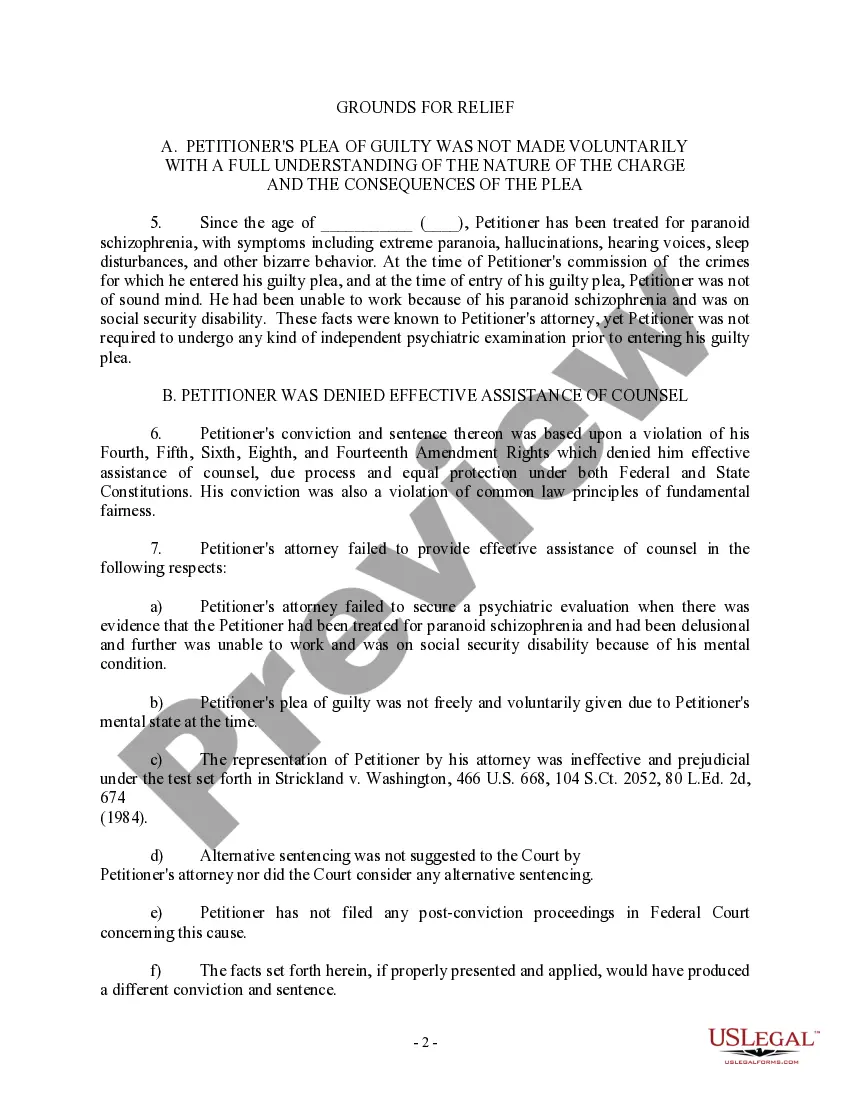
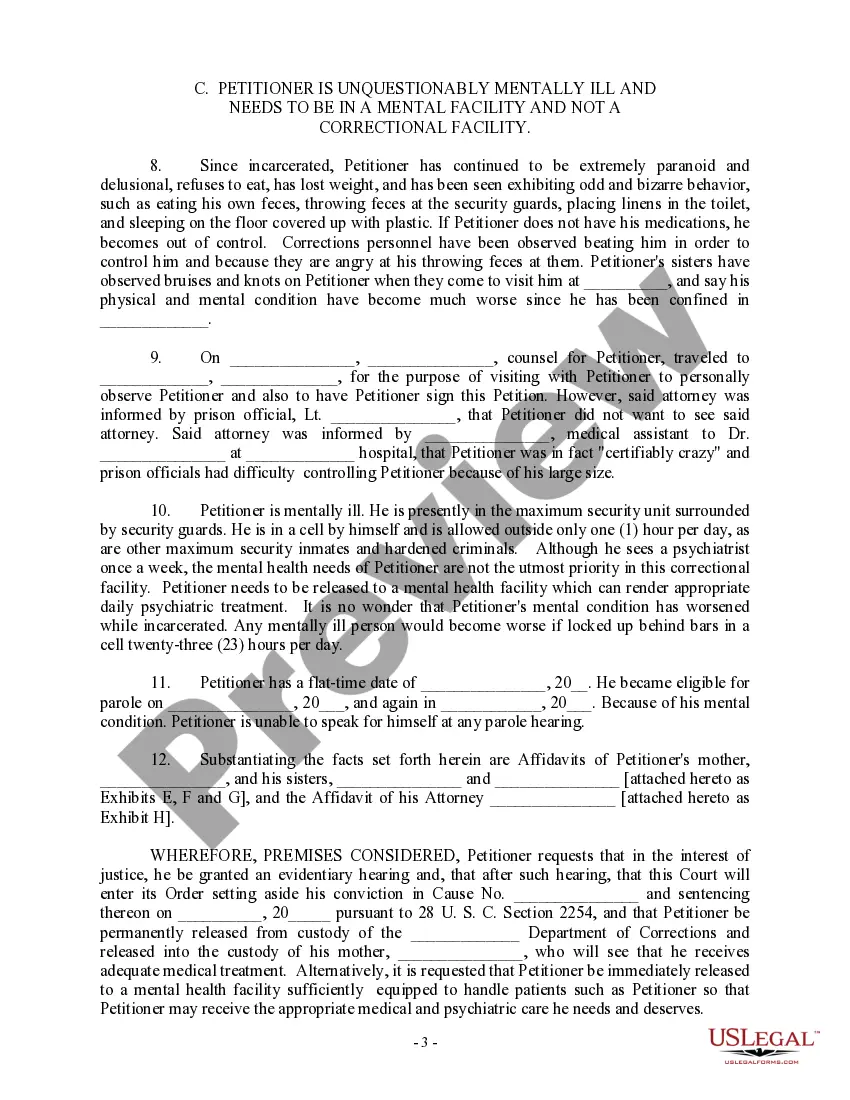
While there are many different claims one can raise in a petition for writ of habeas corpus, some of the most commonly litigated claims include the following: Ineffective assistance of counsel (either trial or appellate counsel); Juror misconduct; New evidence; or. Changes in the law.
Federal habeas corpus is a procedure under which a federal court may review the legality of an individual's incarceration. It is most often the stage of the criminal appellate process that follows direct appeal and any available state collateral review. The law in the area is an intricate weave of statute and case law.
The petitioner, typically through an attorney, files a writ of habeas corpus to the relevant court, usually the California Superior Court, and the arguments as to why the petitioner has been illegally detained. The petitioner's lawyer files a writ of habeas corpus to explain why they have been illegally detained.
If an inmate meets all the requirements to file a petition for writ of habeas corpus, they will file their petition in the superior court in the court of conviction. Within 60 days, the court will review the petition to determine if the inmate raised a prima facie case entitling them to relief.
As a fundamental instrument for safeguarding individual's freedom against arbitrary and lawless state action, the writ of habeas corpus serves as a procedural device, by which executive, judicial, or other governmental restraints on personal liberty are subjected to judicial scrutiny.
The court must rule on a petition for writ of habeas corpus within 60 days after the petition is filed. (B) If the court fails to rule on the petition within 60 days of its filing, the petitioner may file a notice and request for ruling.
For example, if an individual was convicted on the basis that their skin color matched that of the perpetrator ing to eyewitnesses, but there is no other evidence against them, then the individual can appeal for habeas corpus in order to be freed from imprisonment.
The "Great Writ" of habeas corpus is a fundamental right in the Constitution that protects against unlawful and indefinite imprisonment. Translated from Latin it means "show me the body." Habeas corpus has historically been an important instrument to safeguard individual freedom against arbitrary executive power.
State every ground (reason) that supports your claim that you are being held in violation of the Constitution, laws, or treaties of the United States. Attach additional pages if you have more than four grounds. State the facts supporting each ground. Any legal arguments must be submitted in a separate memorandum.
