Federal Habeas Corpus Rules In Texas
Description

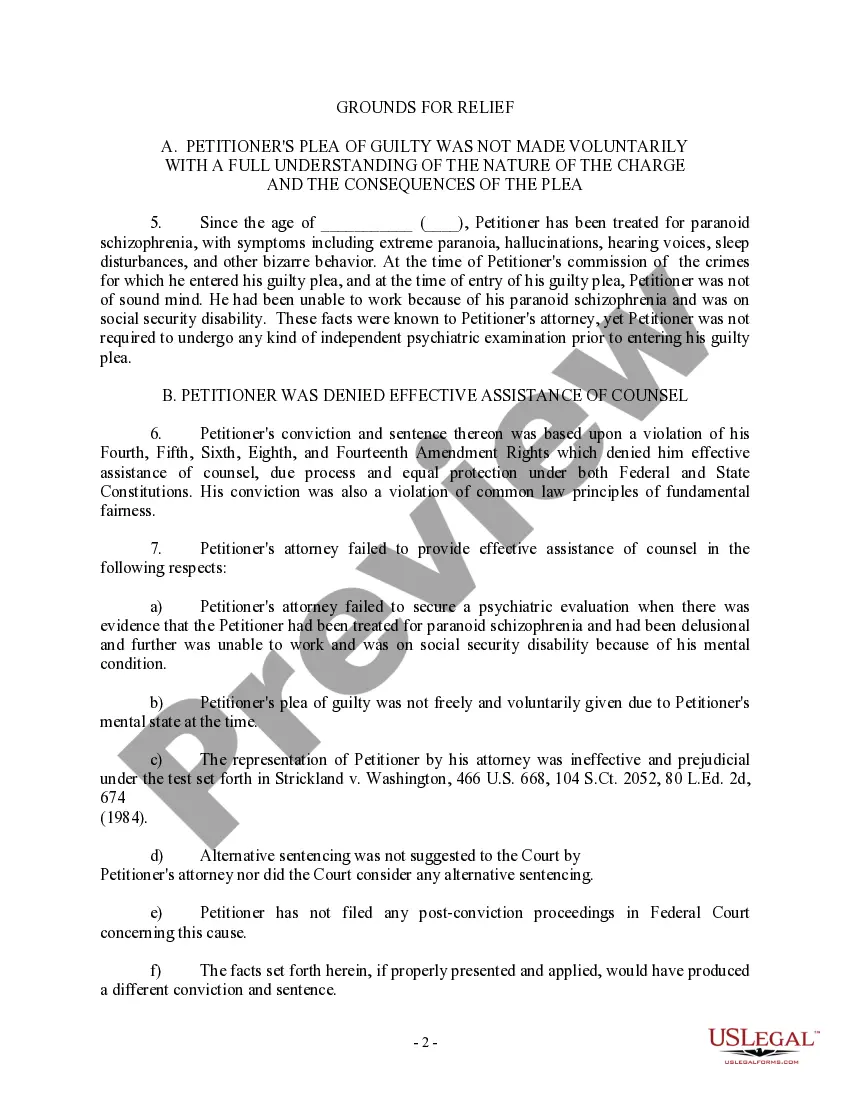
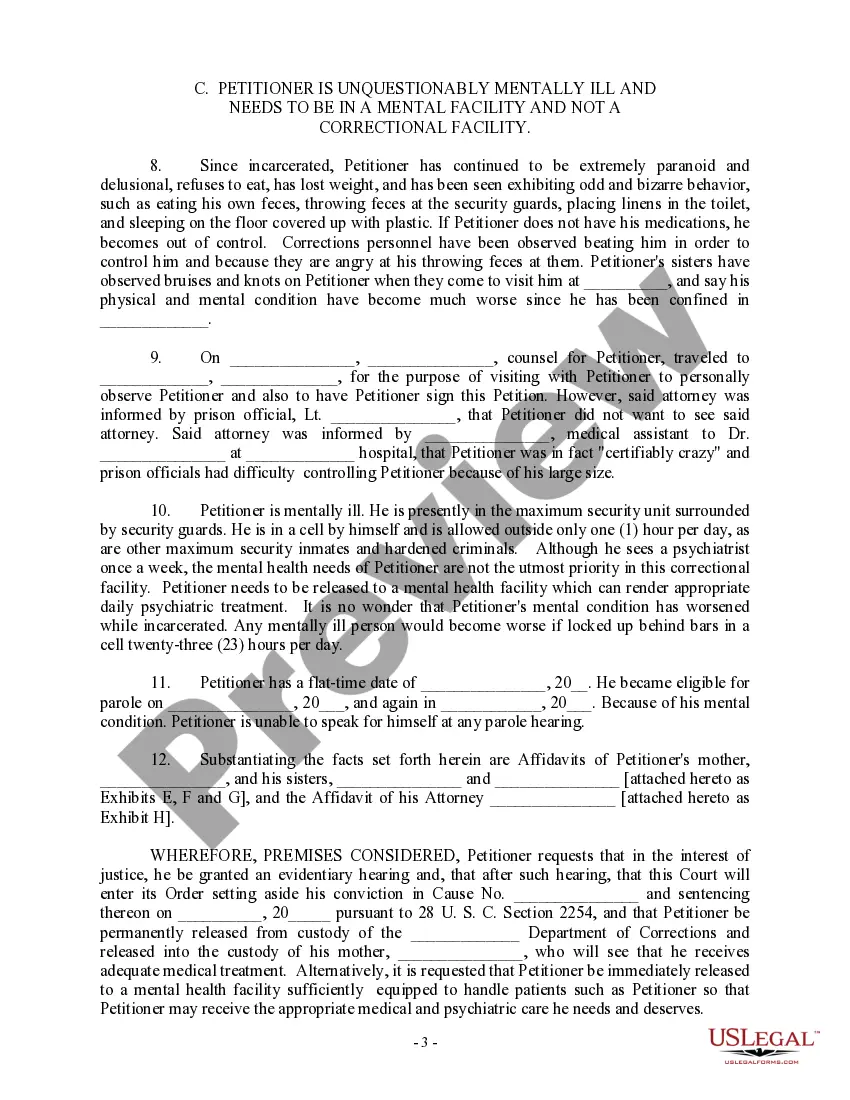
Get your form ready online
Our built-in tools help you complete, sign, share, and store your documents in one place.
Make edits, fill in missing information, and update formatting in US Legal Forms—just like you would in MS Word.
Download a copy, print it, send it by email, or mail it via USPS—whatever works best for your next step.
Sign and collect signatures with our SignNow integration. Send to multiple recipients, set reminders, and more. Go Premium to unlock E-Sign.
If this form requires notarization, complete it online through a secure video call—no need to meet a notary in person or wait for an appointment.
We protect your documents and personal data by following strict security and privacy standards.

Make edits, fill in missing information, and update formatting in US Legal Forms—just like you would in MS Word.

Download a copy, print it, send it by email, or mail it via USPS—whatever works best for your next step.

Sign and collect signatures with our SignNow integration. Send to multiple recipients, set reminders, and more. Go Premium to unlock E-Sign.

If this form requires notarization, complete it online through a secure video call—no need to meet a notary in person or wait for an appointment.

We protect your documents and personal data by following strict security and privacy standards.
Looking for another form?









Form popularity
FAQ
Third, habeas relief is only available when the state court's determination was “contrary to, or involved an unreasonable application of clearly established federal law as determined by the Supreme Court of the United States.”
It is an order issued by a court or judge of competent jurisdiction, directed to any one having a person in his custody, or under his restraint, commanding him to produce such person, at a time and place named in the writ, and show why he is held in custody or under restraint.
24 Hours after the Writ is posted (even if no one is home), the landlord is entitled to receive possession of the property. The constable will arrive to see that the landlord takes possession and to remove the tenants if they continue to remain on the property.
A Writ of Habeas Corpus usually addresses claims of ineffective assistance of counsel, prosecutorial misconduct, newly discovered evidence, jury misconduct, and claims of actual innocence.
Texas Code of Criminal Conduct Article 11.07 is titled “Procedure for conviction without death penalty,” and is the statute that addresses the filing of a writ of habeas corpus for non-death penalty cases. Article 11.071 addresses the filing of a writ of habeas corpus in a death penalty case.
An 11.07 writ, in its simplest terms, is a post-conviction vehicle for relief. While issues raised on direct appeal are confined to the four corners of the record, a writ gives the applicant a chance to supplement the record and raise issues that would not otherwise be available.
Post-conviction relief in Texas usually takes the form of an application for a writ of habeas corpus. In a habeas corpus proceeding, a defendant may raise claims such as ineffective assistance of counsel, illegal sentencing, or newly discovered evidence that exonerates the defendant.
Post-conviction relief in Texas usually takes the form of an application for a writ of habeas corpus. In a habeas corpus proceeding, a defendant may raise claims such as ineffective assistance of counsel, illegal sentencing, or newly discovered evidence that exonerates the defendant.
(b) An application for writ of habeas corpus filed after final conviction in a felony case, other than a case in which the death penalty is imposed, must be filed with the clerk of the court in which the conviction being challenged was obtained, and the clerk shall assign the application to that court.
The Court of Criminal Appeals will review these recommendations and make the final decision about whether to deny or grant relief. If an application for a writ of habeas corpus is denied at the state level, the defendant may be able to apply for a federal writ and challenge this decision.
