Define Writ Of Habeas Corpus With Example In Mecklenburg
Description


Form popularity
FAQ
Gideon sought relief from his conviction by filing a petition for writ of habeas corpus in the Florida Supreme Court. In his petition, Gideon challenged his conviction and sentence on the ground that the trial judge's refusal to appoint counsel violated Gideon's constitutional rights.
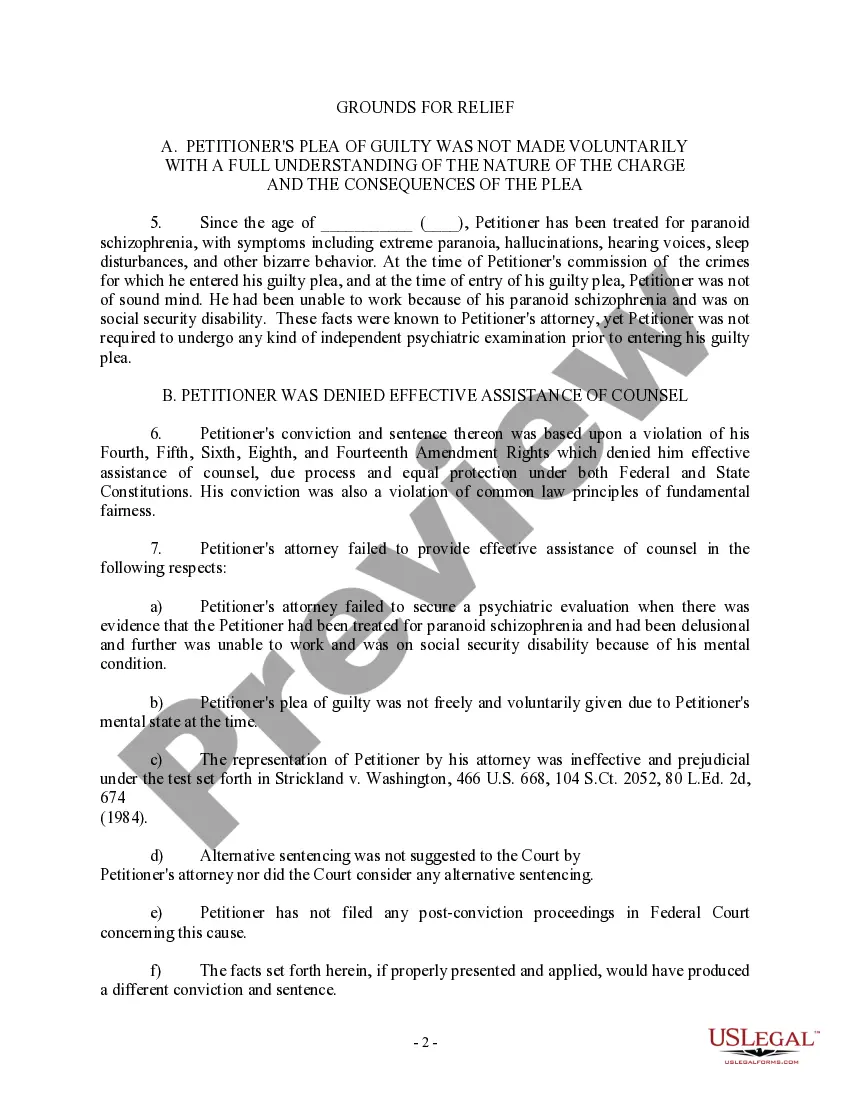
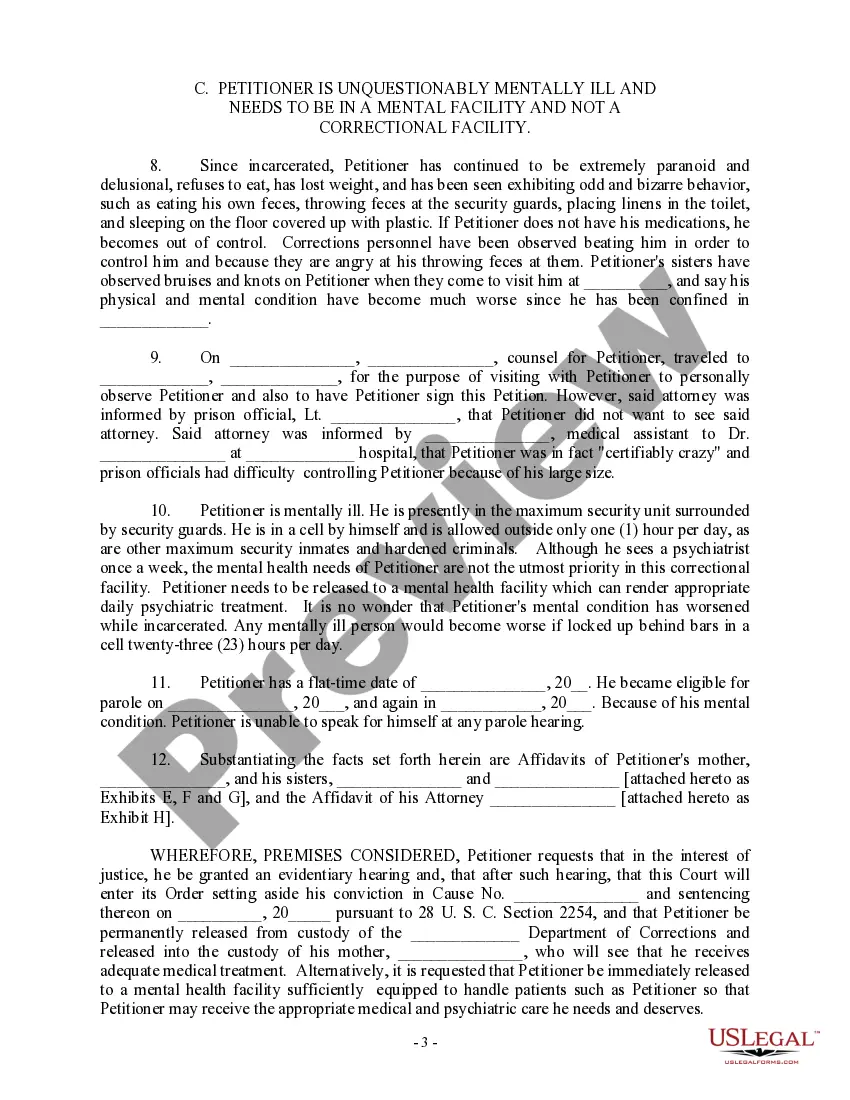
The following are some common grounds for writ of habeas corpus petitions: Introduction of new evidence that points to your innocence. Changes in the law. Incompetency during trial. Ineffective assistance of counsel. Conviction under unconstitutional law. Prosecutorial misconduct. No jurisdiction.
State every ground (reason) that supports your claim that you are being held in violation of the Constitution, laws, or treaties of the United States. Attach additional pages if you have more than four grounds. State the facts supporting each ground. Any legal arguments must be submitted in a separate memorandum.
A defendant who is imprisoned in North Carolina for any criminal or supposed criminal matter may challenge the lawfulness of his or her custody by applying for a writ of habeas corpus (ad subjiciendum). See G.S. 17-3. This writ was known as the “great Writ of Right.” See State v.
1 Habeas Corpus translates to “produce the body”. 2 A habeas corpus application is used by persons who feel they are being wrongfully detained. Upon application, the individual is brought before a judge who will determine whether the detainment is lawful. Provincial courts must hear these applications quickly.
Example of a Writ A writ of execution is a court order that allows a piece of property to be transferred from one party to another. The plaintiff or injured party must commence legal action against the defendant in order to get this court order.
Latin for "that you have the body." In the US system, federal courts can use the writ of habeas corpus to determine if a state's detention of a prisoner is valid.
Examples of 'writ of habeas corpus' in a sentence A number of people arrested and detained throughout the country sought writs of habeas corpus before the courts. He wanted them released through writs of habeas corpus, a right hitherto granted only to human prisoners.
