Habeas Corpus Petition Format For Missing Person In Maryland
Description

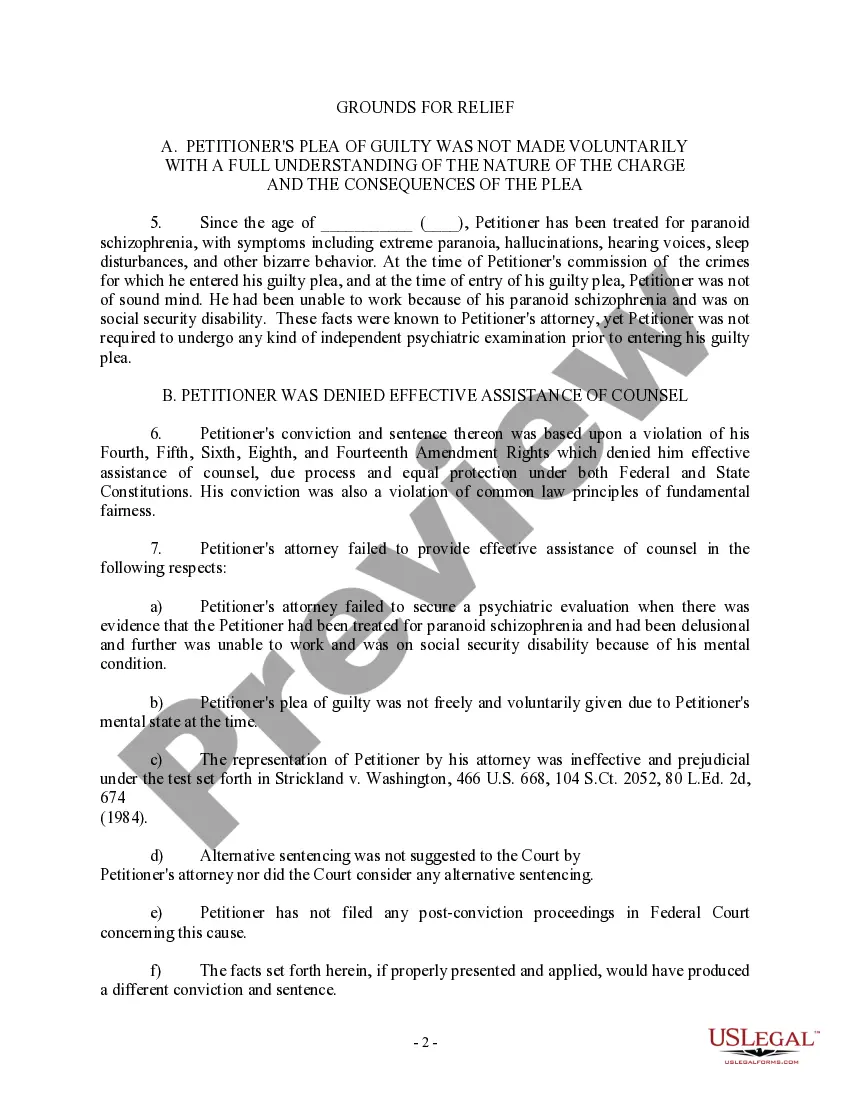
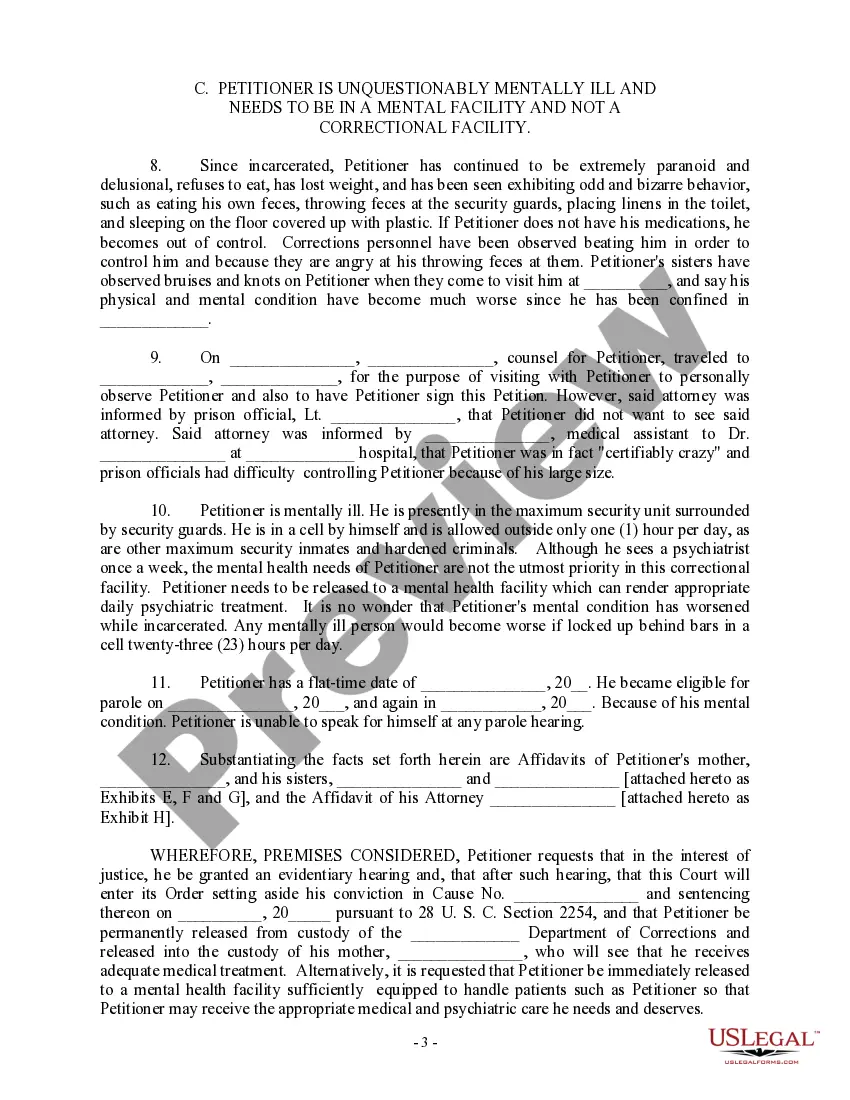

Get your form ready online
Our built-in tools help you complete, sign, share, and store your documents in one place.
Make edits, fill in missing information, and update formatting in US Legal Forms—just like you would in MS Word.
Download a copy, print it, send it by email, or mail it via USPS—whatever works best for your next step.
Sign and collect signatures with our SignNow integration. Send to multiple recipients, set reminders, and more. Go Premium to unlock E-Sign.
If this form requires notarization, complete it online through a secure video call—no need to meet a notary in person or wait for an appointment.
We protect your documents and personal data by following strict security and privacy standards.

Make edits, fill in missing information, and update formatting in US Legal Forms—just like you would in MS Word.

Download a copy, print it, send it by email, or mail it via USPS—whatever works best for your next step.

Sign and collect signatures with our SignNow integration. Send to multiple recipients, set reminders, and more. Go Premium to unlock E-Sign.

If this form requires notarization, complete it online through a secure video call—no need to meet a notary in person or wait for an appointment.

We protect your documents and personal data by following strict security and privacy standards.
Looking for another form?









Form popularity
FAQ
Section 2241 of Title 28 of the United States Code (“28 U.S.C. § 2241”) permits courts to issue writs of habeas corpus where a prisoner establishes that he is in custody in violation of the Constitution or laws or treaties of the United States.
It found that 3.2 percent of the petitions were granted in whole or in part, and only l. 8 percent resulted in any type of release of the petitioner. Successful habeas corpus claims in most cases do not produce a prisoner's release, but rather a requirement for further judicial review.
State every ground (reason) that supports your claim that you are being held in violation of the Constitution, laws, or treaties of the United States. Attach additional pages if you have more than four grounds. State the facts supporting each ground. Any legal arguments must be submitted in a separate memorandum.
The Suspension Clause of the Constitution (Article I, Section 9, Clause 2) , states: “The Privileges of the Writ of Habeas Corpus shall not be suspended unless when in Cases of Rebellion or Invasion the public Safety may require it.”
The high prerogative writ of habeas corpus is a speedy and effectual remedy to relieve persons from unlawful restraint. It secures the prisoner the right to have the cause of his detention to be examined and determined by the Court of Justice and have it ascertained whether he is held under lawful custody.
File the Petition for a Writ of Mandamus at the circuit court. There is no form for filing a Petition for Writ of Mandamus. You may want to visit a law library to locate a sample of a Petition for a Writ of Mandamus. More information on the law libraries of Maryland can be found at mdcourts/ccll.
In many District Court cases, the Clerk's Office will set the trial date within 60 days after the complaint was filed. When a Notice of Intention to Defend is filed within 60 days of service (such as for a corporation), then the Clerk's Office schedules the trial within 90 days of filing the complaint.
A petition for a writ of habeas corpus shall be supported by affidavit of the petitioner and shall include: (1) a statement that the individual by or on behalf of whom the writ is sought is unlawfully confined or restrained; (2) the place where the individual is confined or restrained, if known;
Anyone can file criminal charges simply by swearing out a charging document before a commissioner. Maryland law allows individuals to initiate criminal charges through a District Court commissioner.
HABEAS CORPUS. "'The writ of habeas corpus is a high prerogative writ, given by the common law, and made effective and enforced by statute, the great object of which is the liberation of parties who may be imprisoned or detained without sufficient cause.
