Federal Habeas Corpus Time Limit In Franklin
Description

Get your form ready online
Our built-in tools help you complete, sign, share, and store your documents in one place.
Make edits, fill in missing information, and update formatting in US Legal Forms—just like you would in MS Word.
Download a copy, print it, send it by email, or mail it via USPS—whatever works best for your next step.
Sign and collect signatures with our SignNow integration. Send to multiple recipients, set reminders, and more. Go Premium to unlock E-Sign.
If this form requires notarization, complete it online through a secure video call—no need to meet a notary in person or wait for an appointment.
We protect your documents and personal data by following strict security and privacy standards.

Make edits, fill in missing information, and update formatting in US Legal Forms—just like you would in MS Word.

Download a copy, print it, send it by email, or mail it via USPS—whatever works best for your next step.

Sign and collect signatures with our SignNow integration. Send to multiple recipients, set reminders, and more. Go Premium to unlock E-Sign.

If this form requires notarization, complete it online through a secure video call—no need to meet a notary in person or wait for an appointment.

We protect your documents and personal data by following strict security and privacy standards.
Looking for another form?
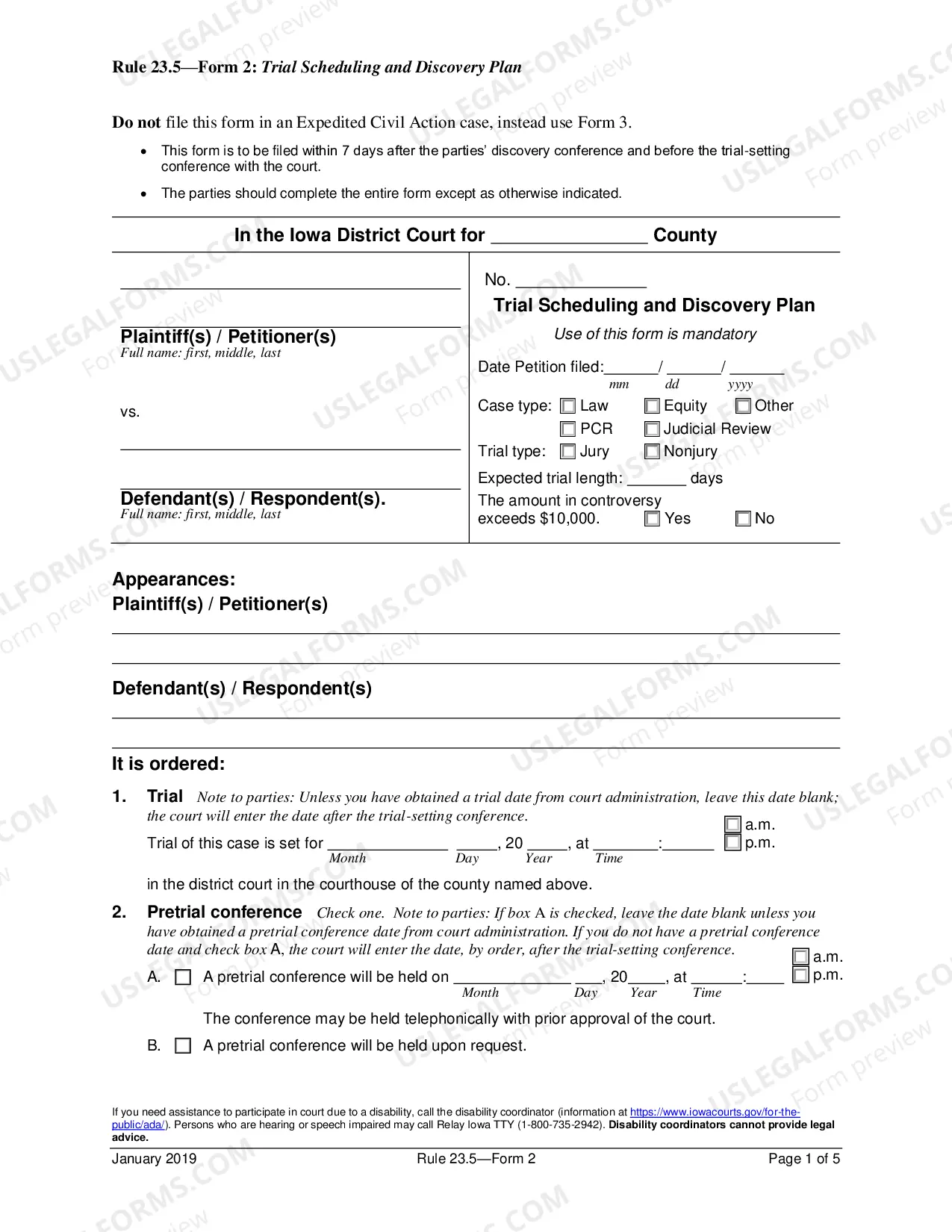
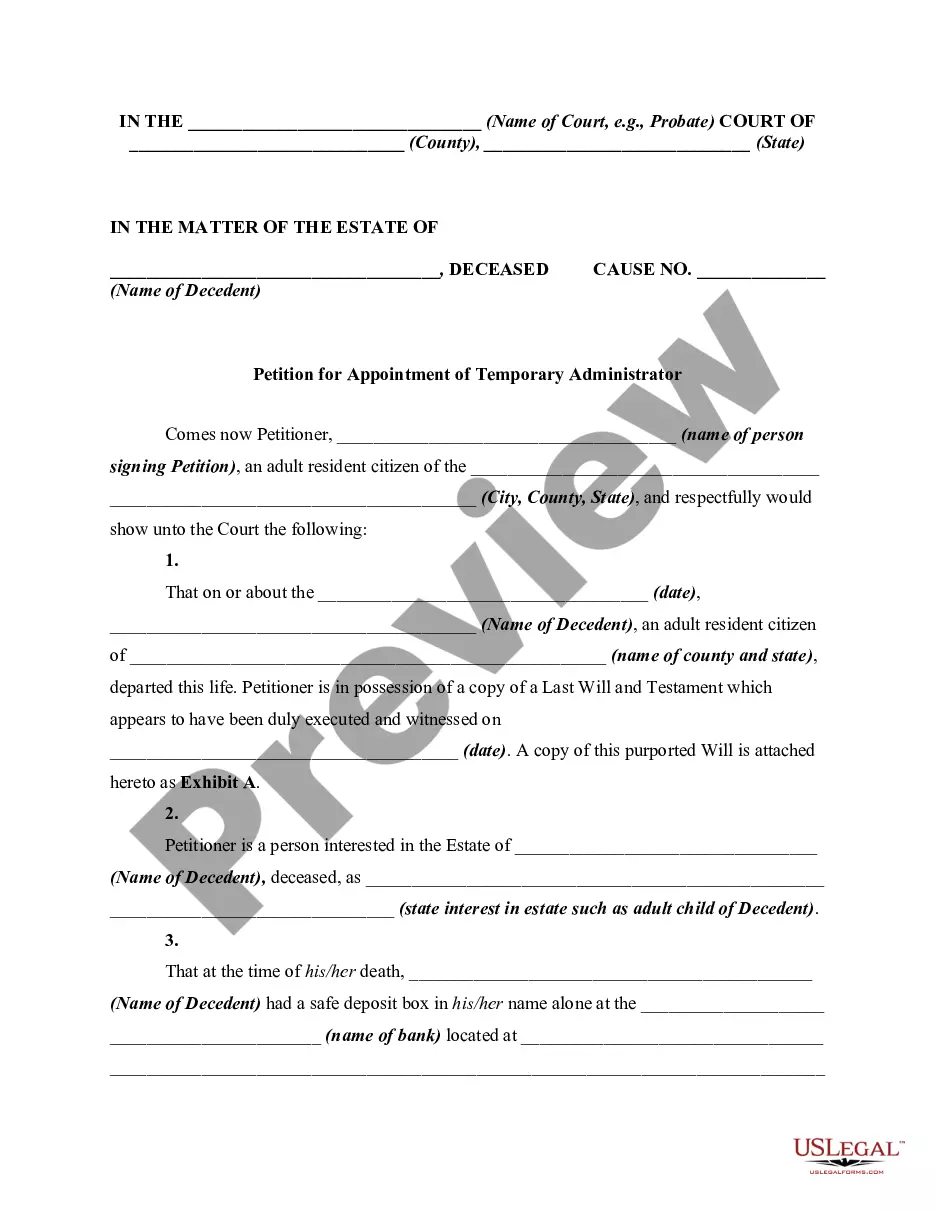
Form popularity
FAQ
The US Constitution specifically protects this right in Article I, Section 9: “The privilege of the writ of habeas corpus shall not be suspended, unless when in cases of rebellion or invasion the public safety may require it.” Lincoln initially suspended habeas corpus in the volatile border state of Maryland in 1861 in ...
The suspension of the privilege of the Writ of Habeas Corpus is a measure reserved for extreme circumstances. Under Article VII, Section 18 of the 1987 Constitution, the President may suspend the privilege only in cases of invasion or rebellion when public safety requires it.
Congressional suspension of habeas corpus That bill, the Habeas Corpus Suspension Act, was signed into law March 3, 1863. Lincoln exercised his powers under it in September, suspending habeas corpus throughout the Union in any case involving prisoners of war, spies, traitors, or military personnel.
Article I, Section 9, Clause 2: The Privilege of the Writ of Habeas Corpus shall not be suspended, unless when in Cases of Rebellion or Invasion the public Safety may require it.
The provisions for the release of prisoners were incorporated into the Civil Rights Act of 1871, which authorized the suspension of habeas corpus in order to break the Ku Klux Klan. Congress strengthened the protections for officials sued for actions arising from the suspension of habeas corpus in 1866 and 1867.
Presidents Lincoln and Bush both unconstitutionally suspended habeas corpus during a time of war because the writ of habeas corpus is a fundamental right and suspension is a power granted only to congress.
The writ of habeas corpus has been suspended four times since the Constitution was ratified: throughout the entire country during the Civil War; in eleven South Carolina counties overrun by the Ku Klux Klan during Reconstruction; in two provinces of the Philippines during a 1905 insurrection; and in Hawaii after the ...
In other words, the writ of habeas corpus only functions to test jurisdictional defects that may invalidate the legal authority to detain the person, and the reviewing court only examines the power and authority of the governmental authority to detain the person, and does not review the correctness of the authorities' ...
President Franklin Roosevelt suspended the writ of habeas corpus following the Japanese attack on Pearl Harbor in 1941. Eventually, most Japanese Americans were forced into internment camps for the duration of the Second World War. More recently, President George W.
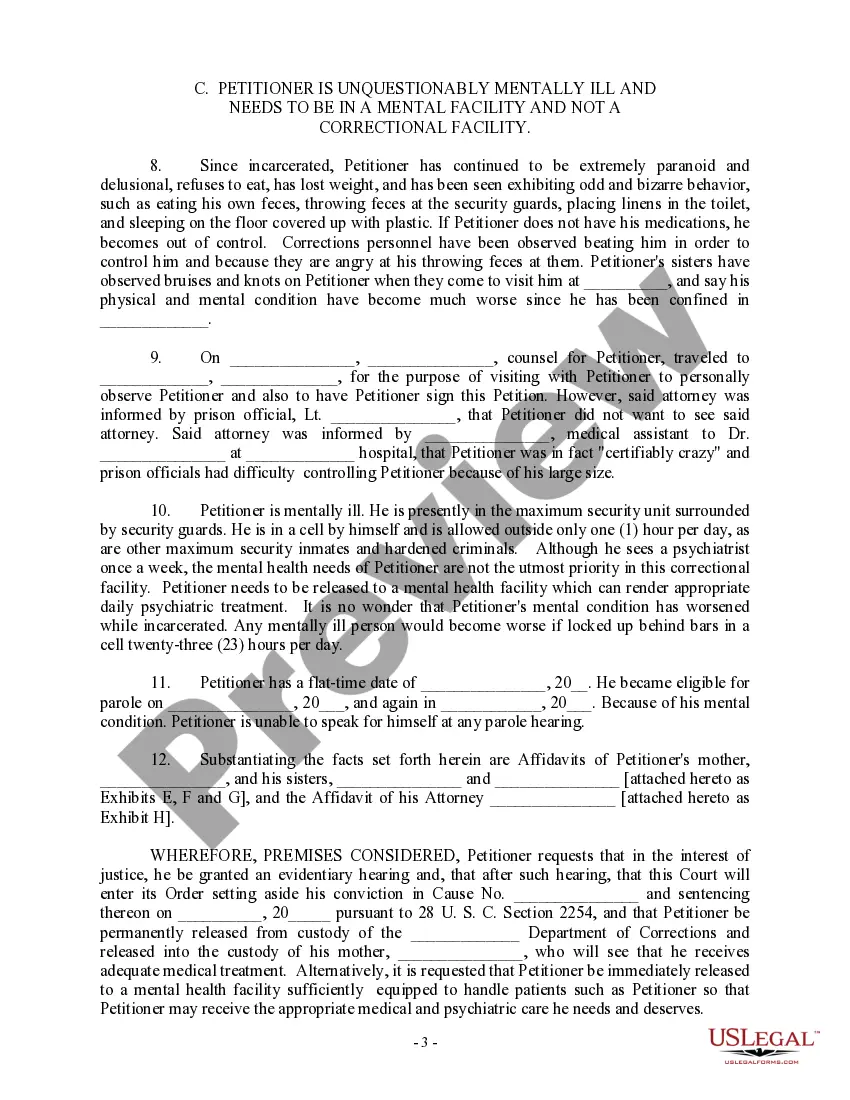
Under 28 U.S.C. section 2244(d)(1), a federal habeas petition must be filed within one year of the finality of the state judgment.