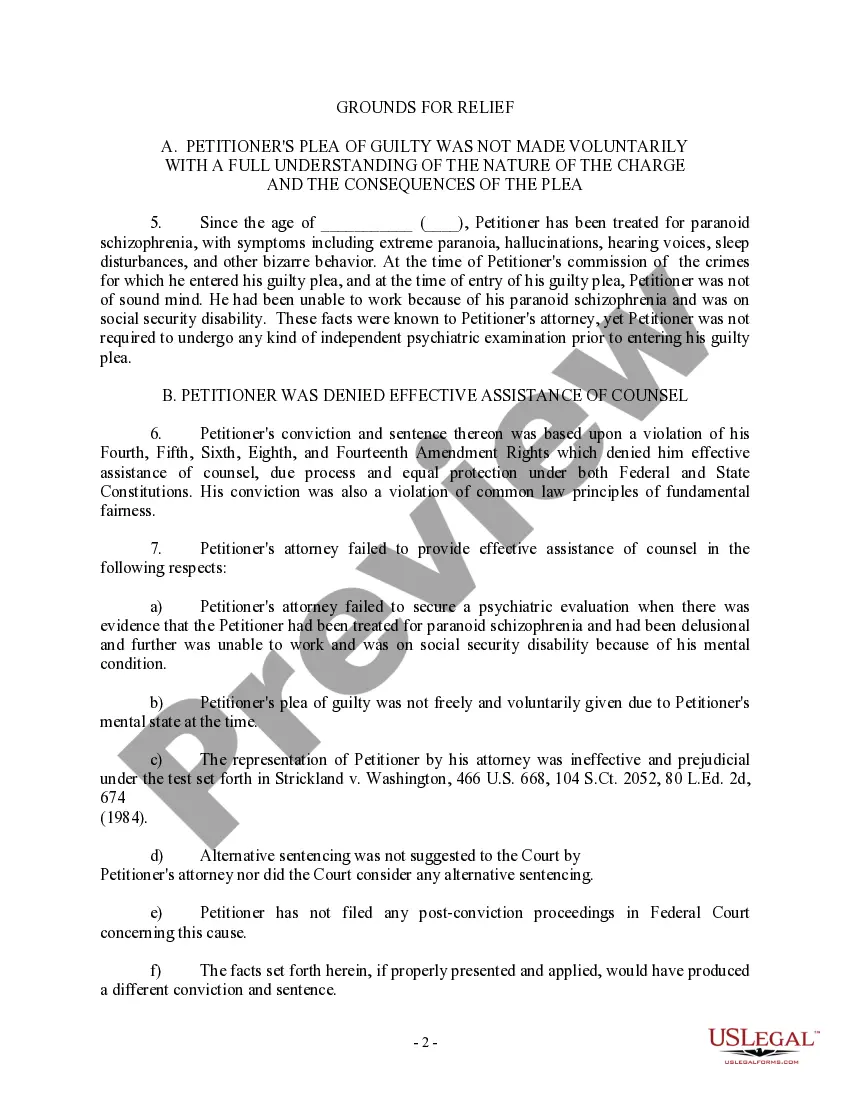
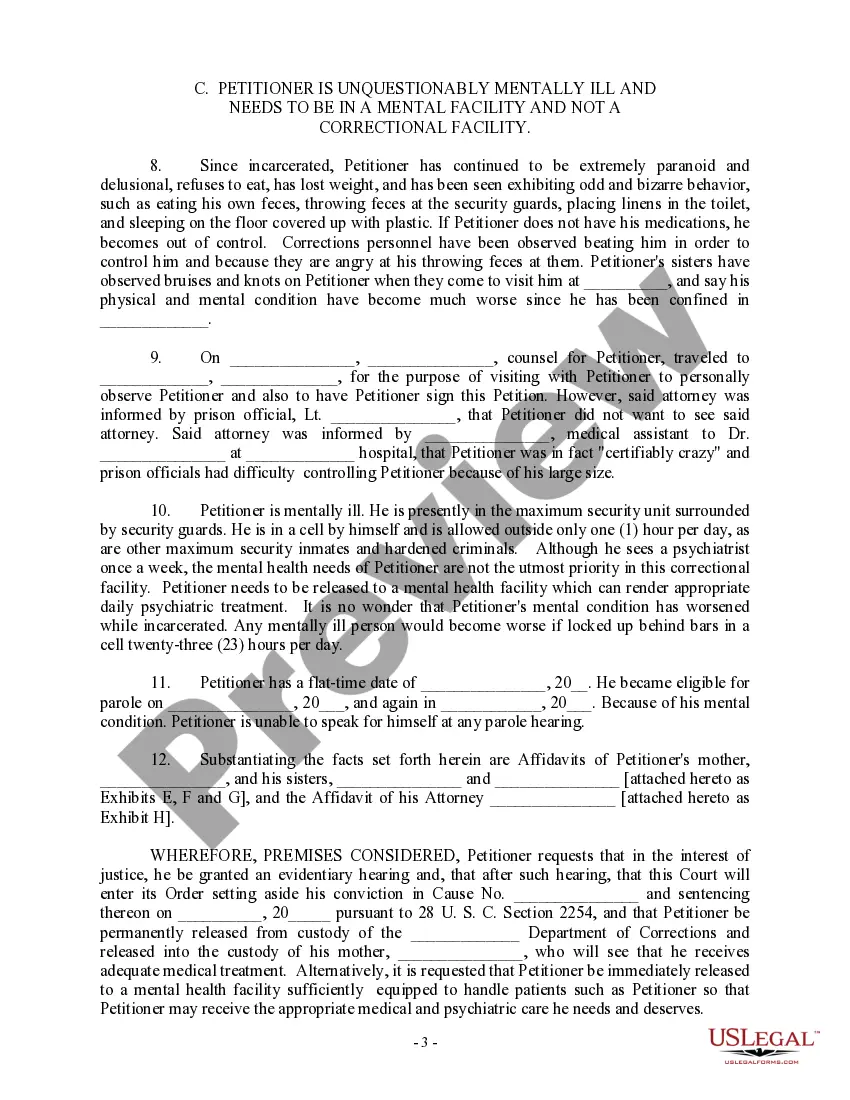
Habeas Corpus Petition Form With Attorney General In Contra Costa
Description

Get your form ready online
Our built-in tools help you complete, sign, share, and store your documents in one place.
Make edits, fill in missing information, and update formatting in US Legal Forms—just like you would in MS Word.
Download a copy, print it, send it by email, or mail it via USPS—whatever works best for your next step.
Sign and collect signatures with our SignNow integration. Send to multiple recipients, set reminders, and more. Go Premium to unlock E-Sign.
If this form requires notarization, complete it online through a secure video call—no need to meet a notary in person or wait for an appointment.
We protect your documents and personal data by following strict security and privacy standards.

Make edits, fill in missing information, and update formatting in US Legal Forms—just like you would in MS Word.

Download a copy, print it, send it by email, or mail it via USPS—whatever works best for your next step.

Sign and collect signatures with our SignNow integration. Send to multiple recipients, set reminders, and more. Go Premium to unlock E-Sign.

If this form requires notarization, complete it online through a secure video call—no need to meet a notary in person or wait for an appointment.

We protect your documents and personal data by following strict security and privacy standards.
Looking for another form?








Form popularity
FAQ
Habeas Corpus is a Latin word meaning which literally means 'to have the body of'. It is an order issued by the court to a person who has detained another person, to produce the body of the latter before it. The court then examines the cause and legality of detention. Further Reading: Types of Writs.
The petitioner, typically through an attorney, files a writ of habeas corpus to the relevant court, usually the California Superior Court, and the arguments as to why the petitioner has been illegally detained. The petitioner's lawyer files a writ of habeas corpus to explain why they have been illegally detained.
- The writ of habeas corpus may be granted by the Supreme Court, or any member thereof, on any day and at any time, or by the Court of Appeals or any member thereof in the instances authorized by law, and if so granted it shall be enforceable anywhere in the Philippines, and may be made returnable before the court or ...
(A) On filing, the clerk of the court must immediately deliver the petition to the presiding judge or his or her designee. The court must rule on a petition for writ of habeas corpus within 60 days after the petition is filed.
Preparation and Filing of the Petition: The petitioner must file a verified petition in court, stating the circumstances of the detention and requesting the issuance of the writ.
The purchaser at the foreclosure sale may however file with the regional trial court where the property is situated a petition for issuance of writ of possession, furnishing bond in an amount equal to the use of the property for twelve months, to indemnify the mortgagor in case the sale was made without any violation ...
COURT PROCESSES AND LEGAL REMEDIES. If disagreements arise and cannot be settled amicably, either parent can file a petition for custody or visitation in the appropriate Family Court (regional trial courts designated as family courts under Republic Act No. 8369).
