Letter For Recovery In Pennsylvania
Description



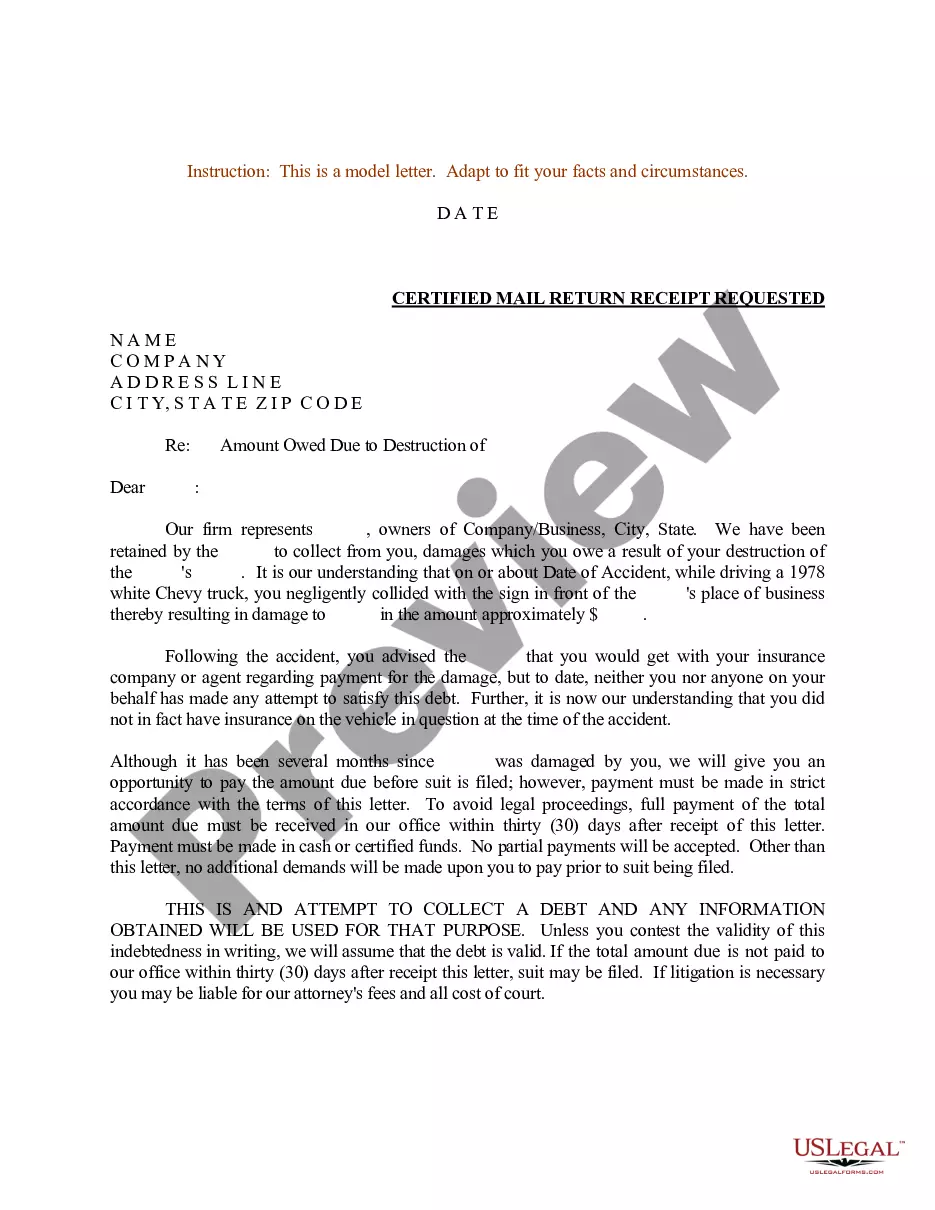

Get your form ready online
Our built-in tools help you complete, sign, share, and store your documents in one place.
Make edits, fill in missing information, and update formatting in US Legal Forms—just like you would in MS Word.
Download a copy, print it, send it by email, or mail it via USPS—whatever works best for your next step.
Sign and collect signatures with our SignNow integration. Send to multiple recipients, set reminders, and more. Go Premium to unlock E-Sign.
If this form requires notarization, complete it online through a secure video call—no need to meet a notary in person or wait for an appointment.
We protect your documents and personal data by following strict security and privacy standards.

Make edits, fill in missing information, and update formatting in US Legal Forms—just like you would in MS Word.

Download a copy, print it, send it by email, or mail it via USPS—whatever works best for your next step.

Sign and collect signatures with our SignNow integration. Send to multiple recipients, set reminders, and more. Go Premium to unlock E-Sign.

If this form requires notarization, complete it online through a secure video call—no need to meet a notary in person or wait for an appointment.

We protect your documents and personal data by following strict security and privacy standards.
Looking for another form?






Form popularity
FAQ
If an individual 55 years of age or older received certain Medical Assistance benefits and dies, the department will reimburse the Medical Assistance program by recovering these costs from the assets of the person's estate. An estate exists when a person dies and his or her assets are distributed by will or state law.
Although there is no statute of limitations, Pennsylvania's estate recovery statute does set forth a time period in which the state must respond to a request for a statement of claim submitted by the duly appointed personal representative of an estate.
A request for a statement of claim must include the following: A statement that the personal representative is requesting a statement of claim against the decedent's estate. The decedent's name. The decedent's last address. The decedent's date of birth. The decedent's date of death. The decedent's Social Security Number.
Claims Not Reduced to Judgment See PEF Code §3532(b)(1). No claimant shall have any claim against distributed real property unless such claimant has, within one (1) year after the decedent's death, filed a written notice of claim with the Clerk of Court.
The State Cannot Take Your Property While You're Alive It's important to say immediately that the state government cannot take your house or any other property while you are alive. The Estate Recovery Program only starts after someone receiving Medicaid benefits has died.
The form can be obtained by contacting the Estate Recovery Program at the above address or by calling them at 1-800-528-3708. Information is also available at the Estate Recovery Program Web site at .dpw.state.pa/ServicesPrograms/Other/003670689.htm.
How to Avoid Medicaid Estate Recovery in Pennsylvania Life insurance Policies. Joint Bank Accounts. Assets in Trust. Reparations Payments to Special Populations. Work with an Elder Law Attorney to Make Exempt Transfers During Lifetime. Caregiver Exception Can Avoid Recovery Against House.
