Recovery Letter For Employee In Massachusetts
Description




Get your form ready online
Our built-in tools help you complete, sign, share, and store your documents in one place.
Make edits, fill in missing information, and update formatting in US Legal Forms—just like you would in MS Word.
Download a copy, print it, send it by email, or mail it via USPS—whatever works best for your next step.
Sign and collect signatures with our SignNow integration. Send to multiple recipients, set reminders, and more. Go Premium to unlock E-Sign.
If this form requires notarization, complete it online through a secure video call—no need to meet a notary in person or wait for an appointment.
We protect your documents and personal data by following strict security and privacy standards.

Make edits, fill in missing information, and update formatting in US Legal Forms—just like you would in MS Word.

Download a copy, print it, send it by email, or mail it via USPS—whatever works best for your next step.

Sign and collect signatures with our SignNow integration. Send to multiple recipients, set reminders, and more. Go Premium to unlock E-Sign.

If this form requires notarization, complete it online through a secure video call—no need to meet a notary in person or wait for an appointment.

We protect your documents and personal data by following strict security and privacy standards.
Looking for another form?





Form popularity
FAQ
Chronic Health Conditions FMLA leave may be taken for a period of incapacity due to a chronic health condition such as migraine headaches, epilepsy, diabetes, and asthma. This type of serious health condition requires care by a healthcare provider at least twice a year and must recur over an extended period.
A serious health condition is a physical or mental condition that prevents you from doing your job for more than 3 consecutive days, and requires ONE of the following: Overnight stay in a medical facility. 2 or more treatments by a health care provider within 30 days of whatever prevented you from doing your job.
The FMLA defines a serious health condition as an illness, injury, impairment, or physical or mental condition that involves either inpatient care or continuing treatment by a health care provider.
The FMLA's definition of a serious health condition is broader than the definition of a disability, encompassing pregnancy and many illnesses, injuries, impairments, or physical or mental conditions that require multiple treatments and intermittent absences.
For FMLA purposes, a “serious health condition” means an illness, injury, impairment, or physical or mental condition that involves inpatient care or continuing treatment by a health care provider. For more information about the definitions of a serious health condition under the FMLA, see the chart on page 4.
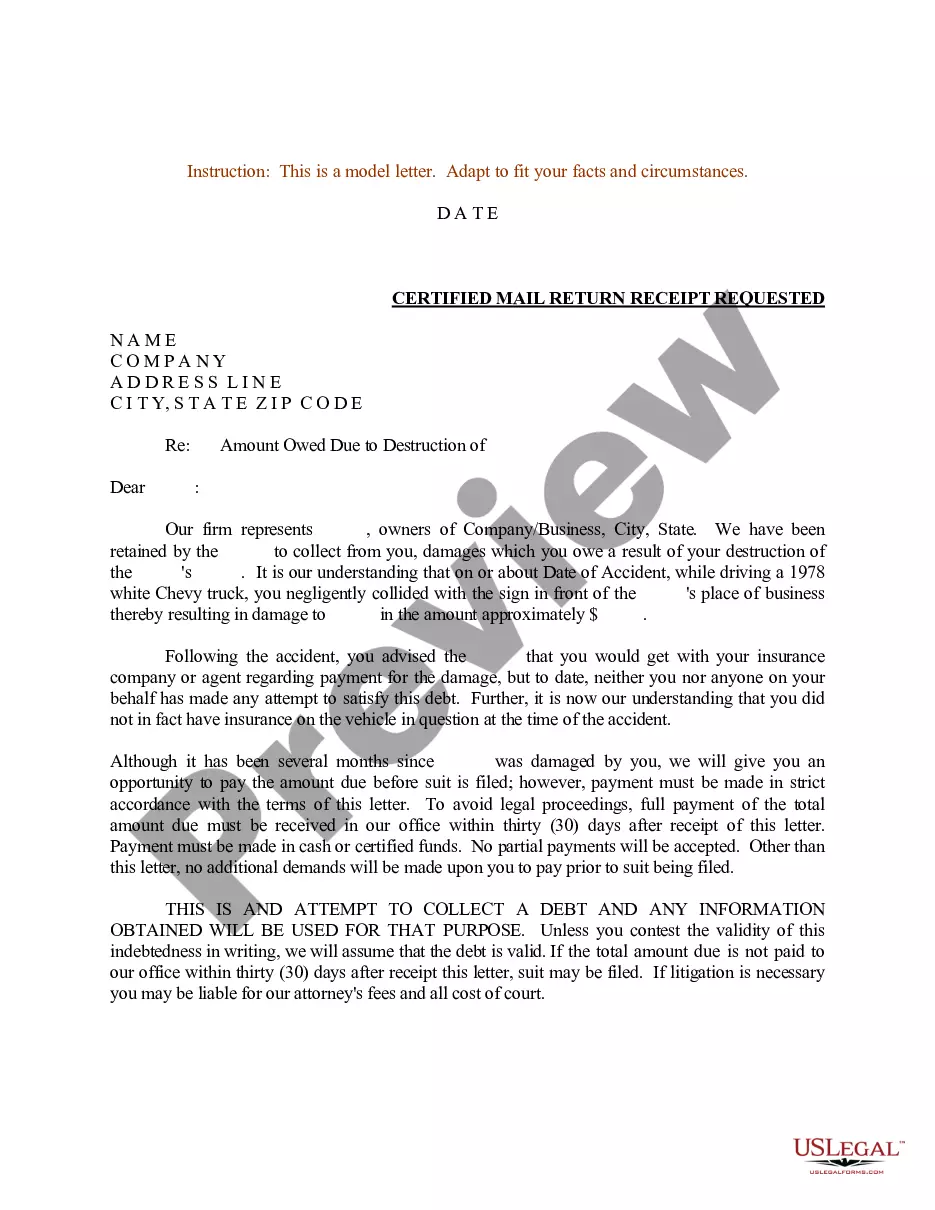
State law requires you to send the business a letter 30 days before filing a claim in court. The letter must outline your complaint, the harm you suffered, and how you want the problem resolved. This is called a 30 Day Demand Letter.
Although a demand letter is not a required prerequisite to a lawsuit under California law, courts tend to have a more favorable view of parties that make good faith efforts to resolve disputes prior to formal legal action in court.
Statutes of Limitation in Massachusetts Injury to Person3 yrs. Ch. 260 §4 Libel/Slander 3 yrs. Ch. 260 §4 Fraud 3 yrs. Ch. 260 §4 Injury to Personal Property 3 yrs. Ch. 260 §4 Professional Malpractice 3 yrs., max. 7 yrs. (personal injury) Ch. 260 §45 more rows
In order to bring a Chapter 93A claim, however, an aggrieved party must begin the process by sending what is commonly referred to as a Chapter 93A, section 9 "consumer protection demand letter" to which the business has 30 days to respond.
