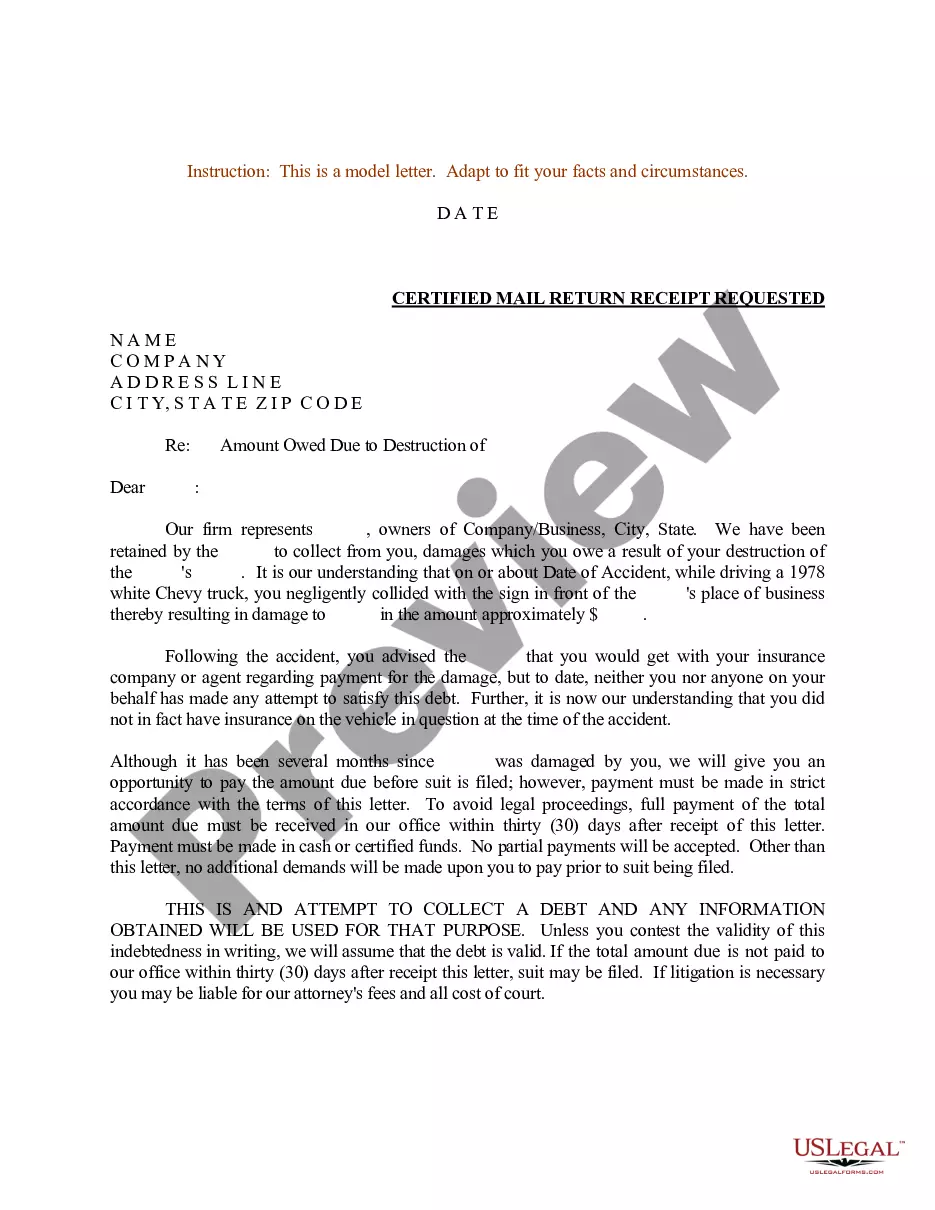
Letter For Recovery Debt In Maryland
Description



Get your form ready online
Our built-in tools help you complete, sign, share, and store your documents in one place.
Make edits, fill in missing information, and update formatting in US Legal Forms—just like you would in MS Word.
Download a copy, print it, send it by email, or mail it via USPS—whatever works best for your next step.
Sign and collect signatures with our SignNow integration. Send to multiple recipients, set reminders, and more. Go Premium to unlock E-Sign.
If this form requires notarization, complete it online through a secure video call—no need to meet a notary in person or wait for an appointment.
We protect your documents and personal data by following strict security and privacy standards.

Make edits, fill in missing information, and update formatting in US Legal Forms—just like you would in MS Word.

Download a copy, print it, send it by email, or mail it via USPS—whatever works best for your next step.

Sign and collect signatures with our SignNow integration. Send to multiple recipients, set reminders, and more. Go Premium to unlock E-Sign.

If this form requires notarization, complete it online through a secure video call—no need to meet a notary in person or wait for an appointment.

We protect your documents and personal data by following strict security and privacy standards.
Looking for another form?
Form popularity
FAQ
Specifically, the rule states that a debt collector cannot: Make more than seven calls within a seven-day period to a consumer regarding a specific debt. Call a consumer within seven days after having a telephone conversation about that debt.
Yes it does actually work. Collectors rarely actually validate the debt because most of the debts in fact are not valid. Some just back off because receiving a well worded debt validation letter means you have consulted the FDCPA (or at least a good debt/credit forum) and know what you're doing.
If you do not respond, you will lose certain rights, but it is not a legal admission, usable in court, that you owe the debt. If there is no response, or if the letter goes back to the collection agency undelivered or marked moved, deceased, in jail, etc., the collection agency can still due you.
Maryland is a consumer-friendly state. The statute of limitations allows a creditor three years to collect on debts. That's a shorter timeframe than many states.
Yes. There are time limits governing when a creditor can sue you for a debt. These laws are called the statute of limitations. In Maryland, the statute of limitations requires that a lawsuit be filed within three years for written contracts, and 3 years for open accounts, such as credit cards.
Debt Collection Statute of Limitations by State StateWritten ContractOpen-Ended Accounts California 4 years 4 years Colorado 3 (6 most debts; rent) (2 tortious breach) 6 years Connecticut 6 years 6 years Delaware 3 years 3 years47 more rows •
Dear Creditor: Please provide me with verification of the debt which you state I owe. Please provide me with any records which are in your possession, including, but not limited to, all statements of each account, invoices, and any other documentation which I may have signed.
Old (Time-Barred) Debts In California, there is generally a four-year limit for filing a lawsuit to collect a debt based on a written agreement.
You may request an exemption to the garnishment. You must make your request within 30 days of when the garnishment was served on the bank. Use the form Motion for Release of Property from Levy/Garnishment (DC-CV-036).