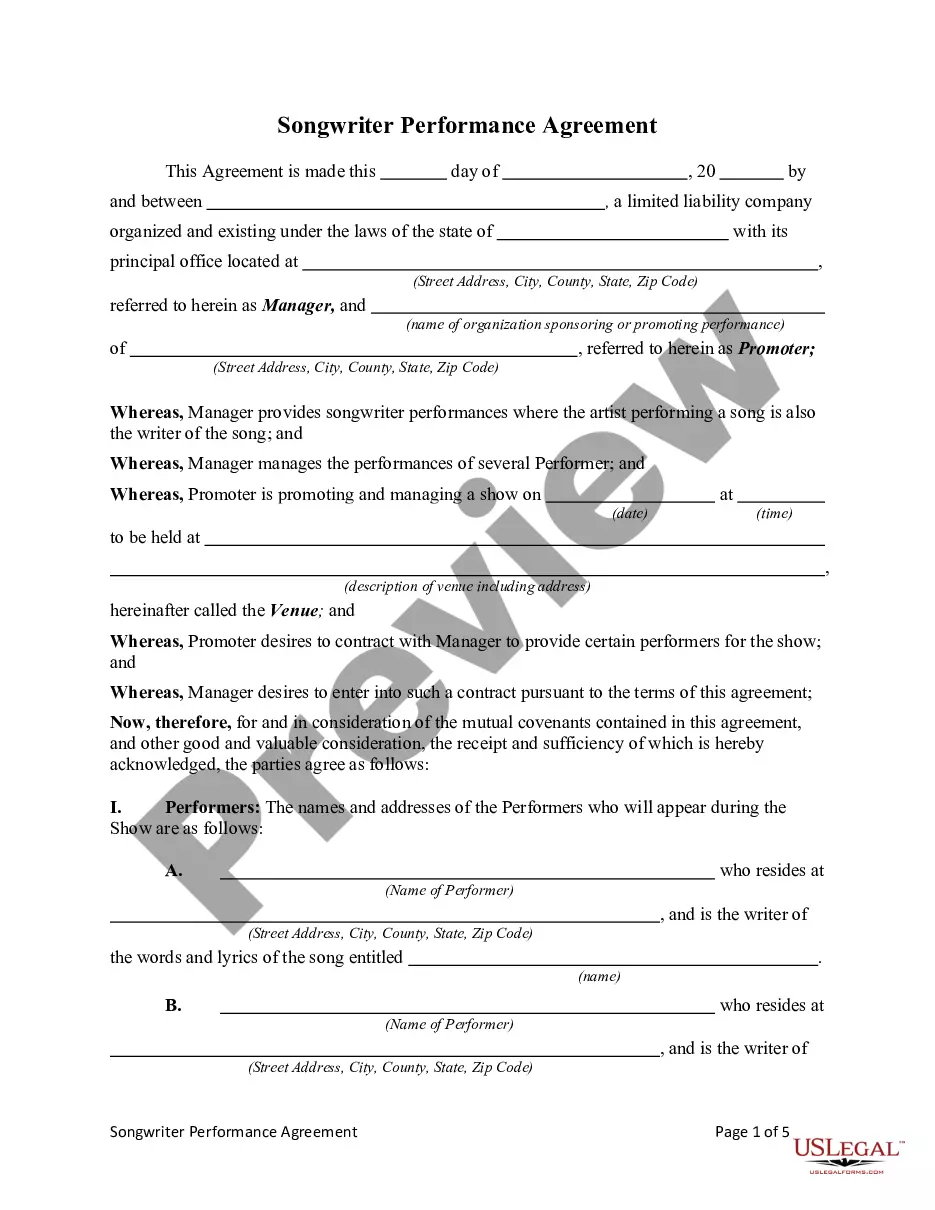
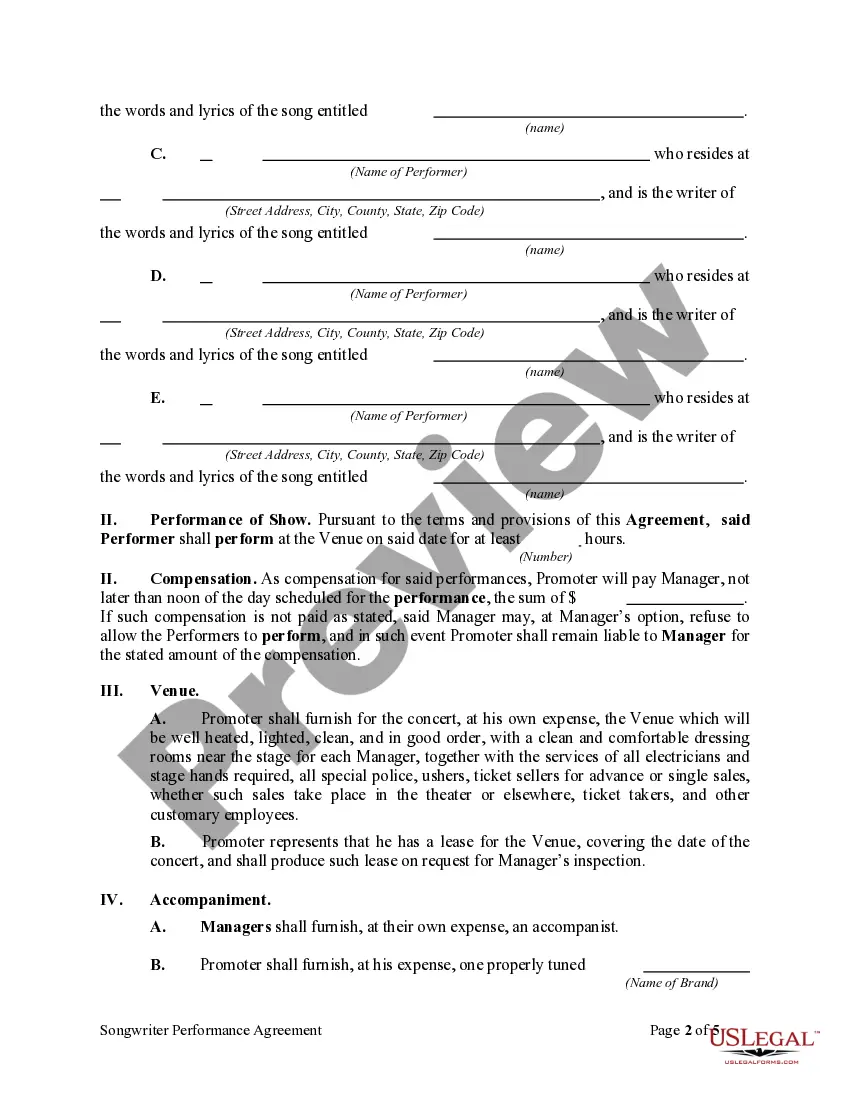
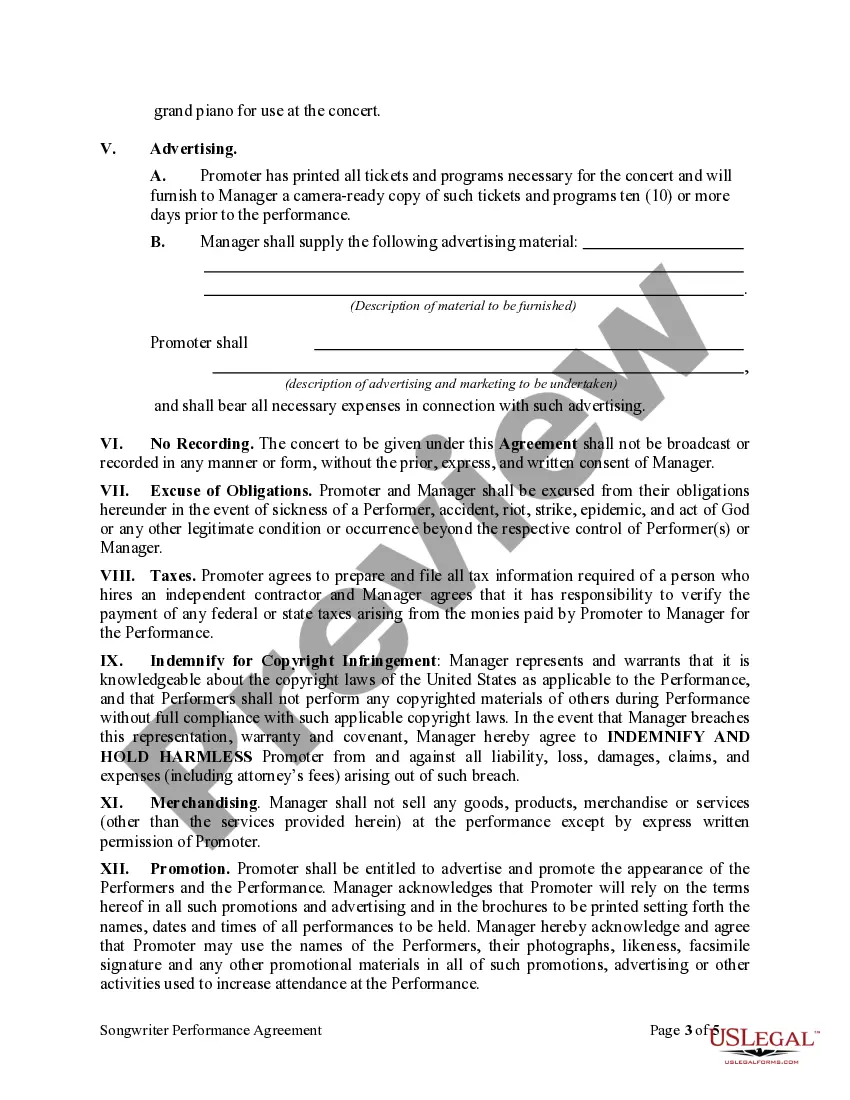
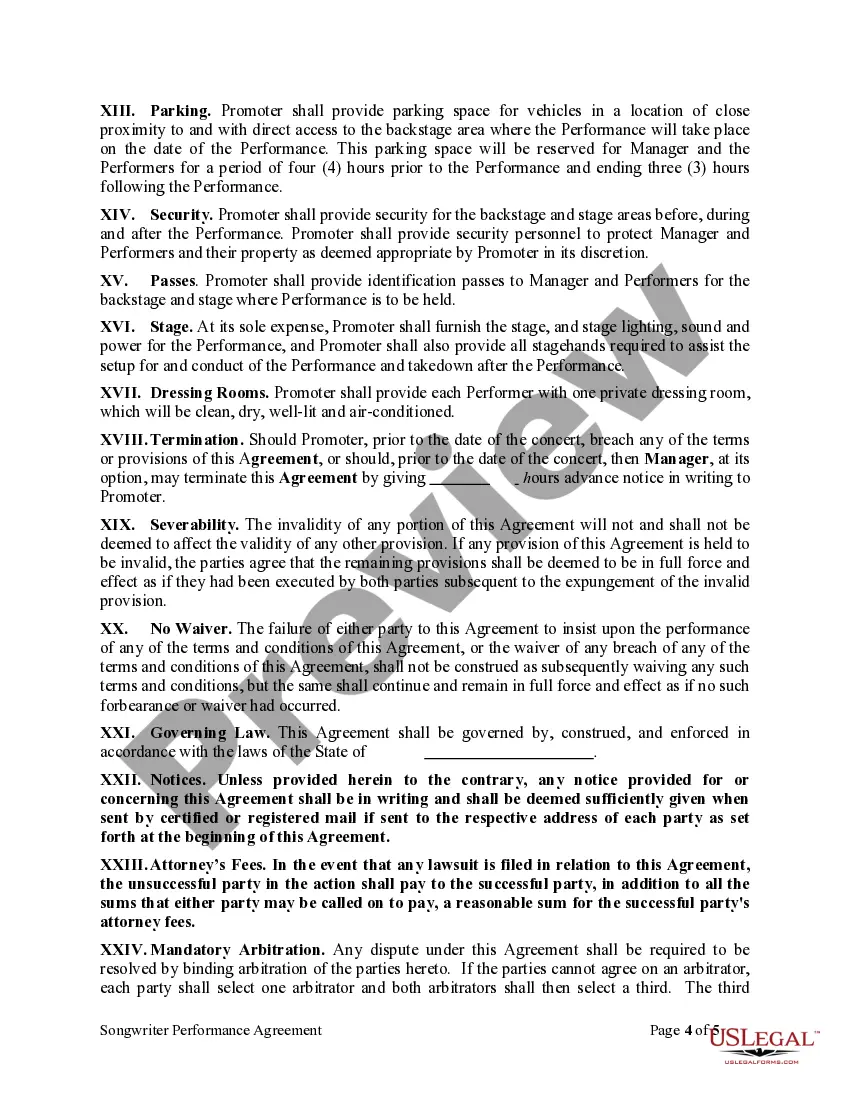
Songwriter Agreement Template For Professional Services In Ohio
Description

Get your form ready online
Our built-in tools help you complete, sign, share, and store your documents in one place.
Make edits, fill in missing information, and update formatting in US Legal Forms—just like you would in MS Word.
Download a copy, print it, send it by email, or mail it via USPS—whatever works best for your next step.
Sign and collect signatures with our SignNow integration. Send to multiple recipients, set reminders, and more. Go Premium to unlock E-Sign.
If this form requires notarization, complete it online through a secure video call—no need to meet a notary in person or wait for an appointment.
We protect your documents and personal data by following strict security and privacy standards.

Make edits, fill in missing information, and update formatting in US Legal Forms—just like you would in MS Word.

Download a copy, print it, send it by email, or mail it via USPS—whatever works best for your next step.

Sign and collect signatures with our SignNow integration. Send to multiple recipients, set reminders, and more. Go Premium to unlock E-Sign.

If this form requires notarization, complete it online through a secure video call—no need to meet a notary in person or wait for an appointment.

We protect your documents and personal data by following strict security and privacy standards.
Looking for another form?










Form popularity
FAQ
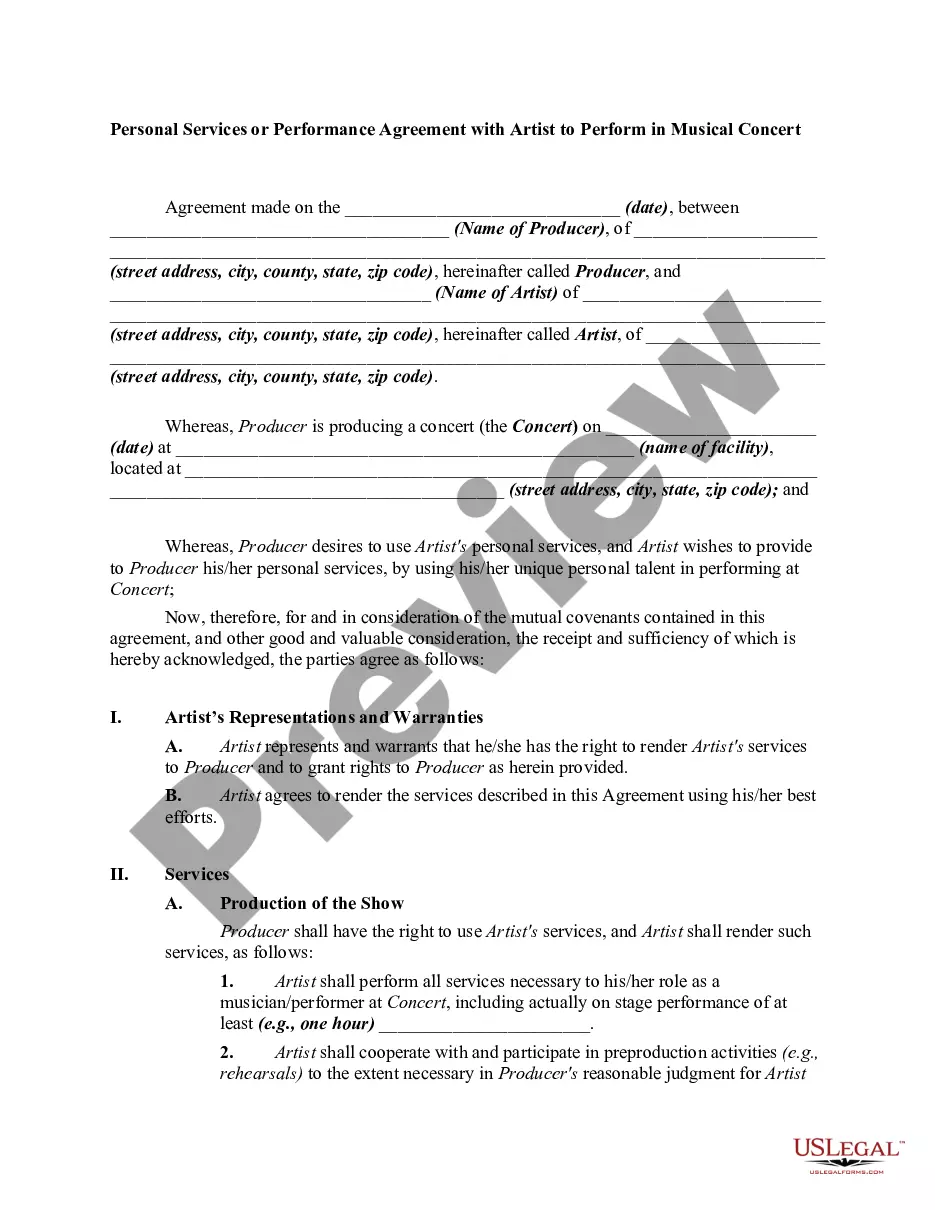
Under the exclusive agreement, the songwriter agrees to assign all compositions written during a specified term (for example, 2 years from January 1 or 1 year with four options), with the guarantee of a share of the income generated and usually a proviso for weekly or monthly payments.
When should you use a split sheet? You should use a split sheet every time you write a song with one or more other people in the room. You should put down everyone's information immediately before or after every co-write, then sign it.
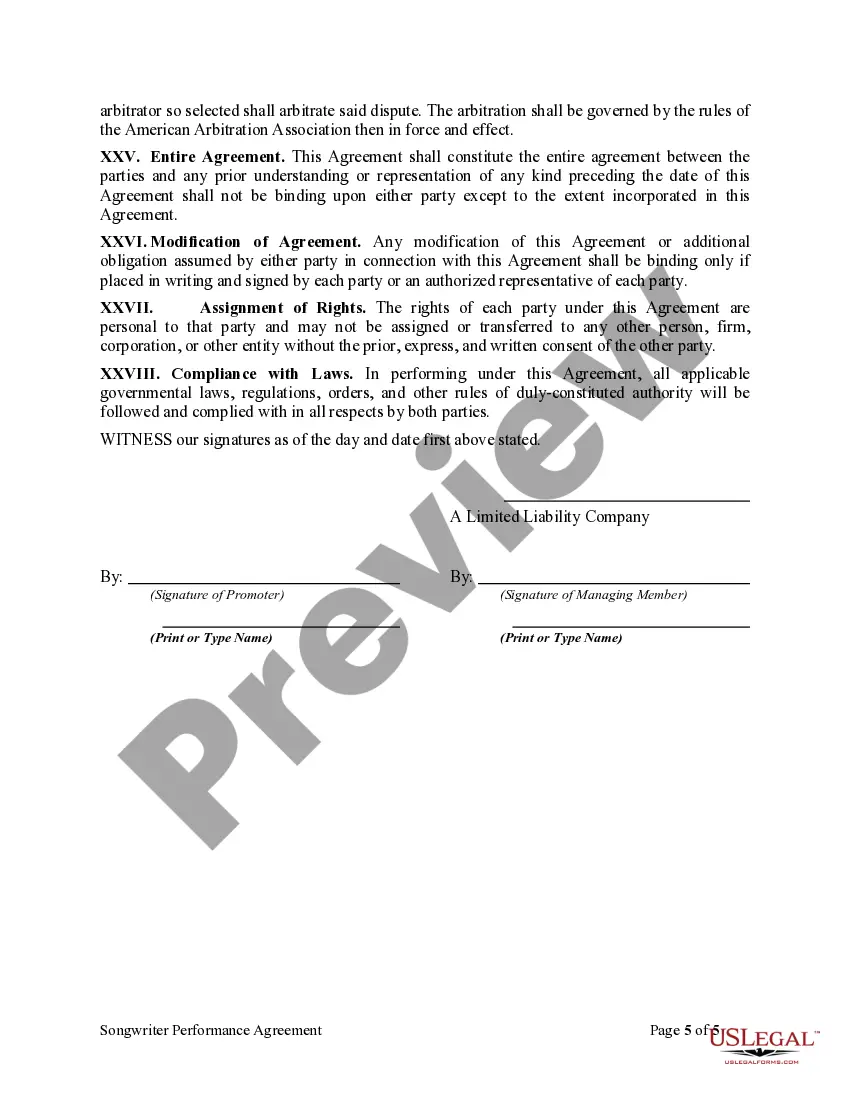
Producer shall own and control Fifty Percent (50%) of the so-called “Writer's Share” of the underlying composition. Producer shall own, control, and administer One Hundred Percent (100%) of the so-called “Publisher's Share” of the underlying composition.
This gave me a really good rough idea of how much writing I would need to do. But the Lyric Triad changes all that. It gives you a bullseye to write for and flips the 80/20 rule: 80 percent of your writing will make the cut while 20 percent will go into the waste basket.
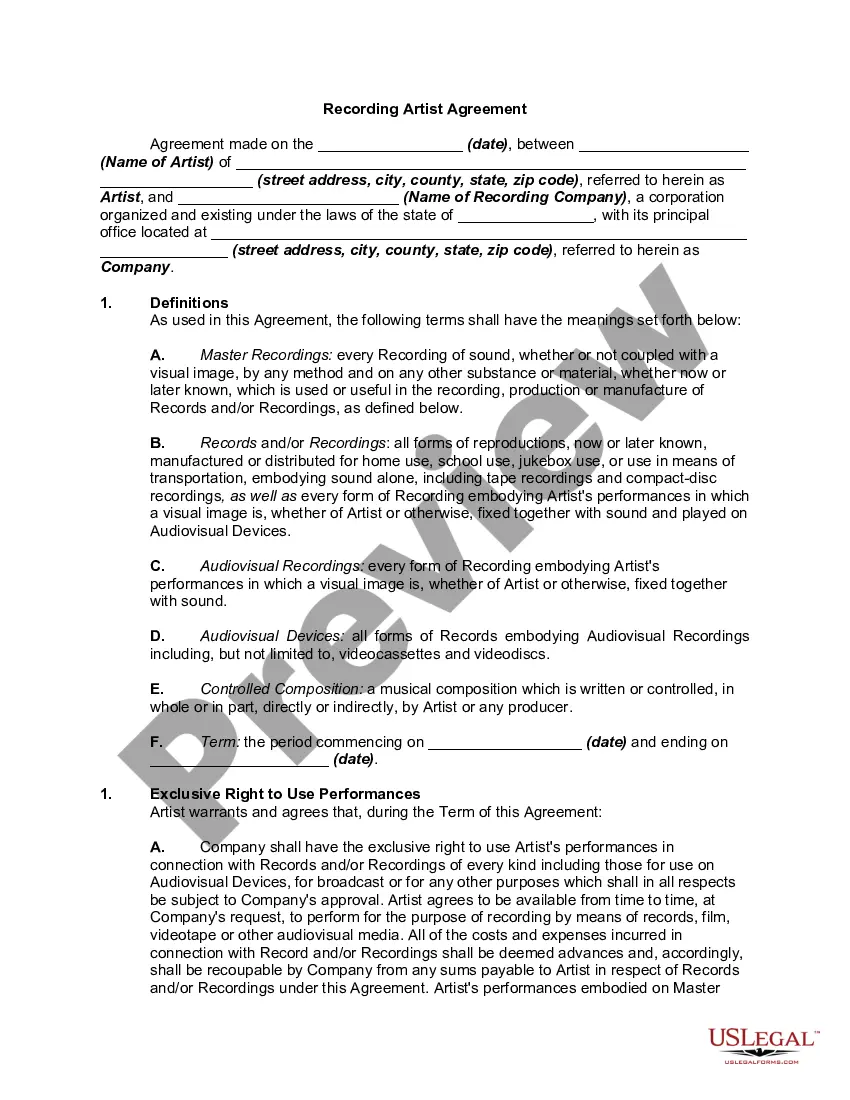
Your Music Recording Contract should cover details like: Compensation and royalties. Where and when the album will be recorded. The album's release date. Who has creative control over specific elements of the album. The termination clause. The exclusive agreement clause. Dispute resolution. Promotional appearances.
Following this step-by-step checklist will mean that you can write your contract with confidence: Know your parties. Agree on the terms. Set clear boundaries. Spell out the consequences. Specify how you will resolve disputes. Cover confidentiality. Check the legality of the contract. Open it up to negotiation.
A songwriter split sheet is a written agreement that identifies all contributors to a song as well as their ownership percentages of that song. These ownership percentages determine how publishing royalties will be "split" between creators. When all parties sign, split sheets become legally binding.
In the absence of a written agreement you automatically share equally, even if your contributions clearly were not equal. Thus, with two songwriters, you own the song 50-50; three songwriters, one-third each; and so on.
