Songwriting Agreement Template In Kings
Description
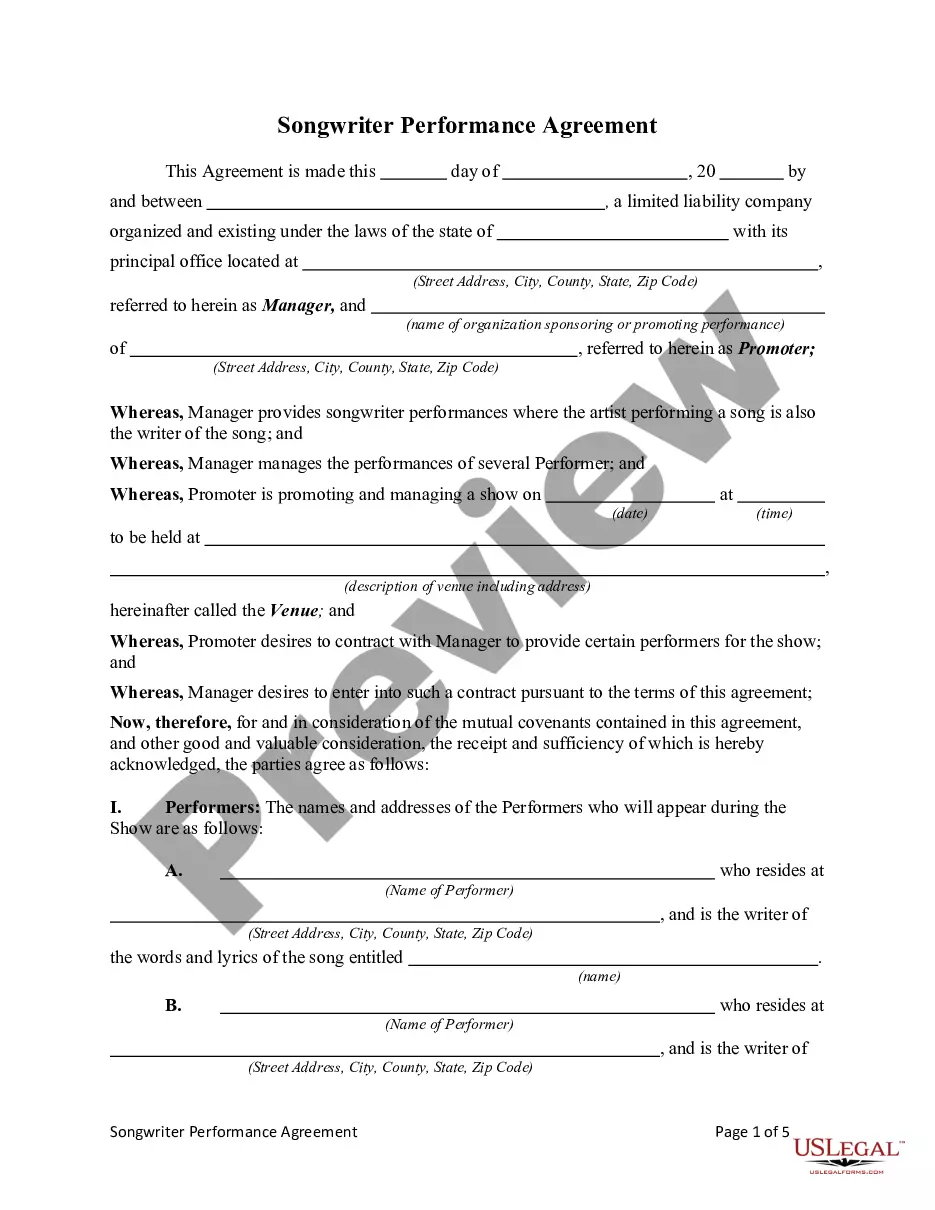
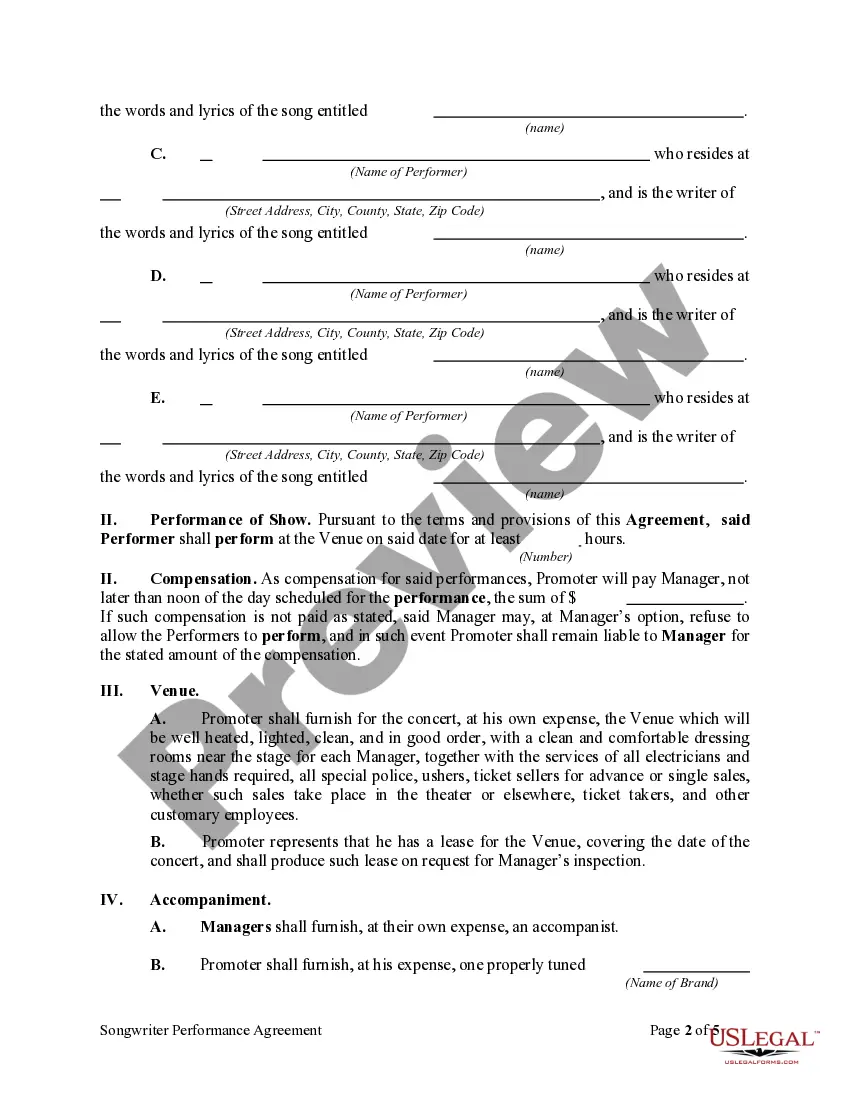
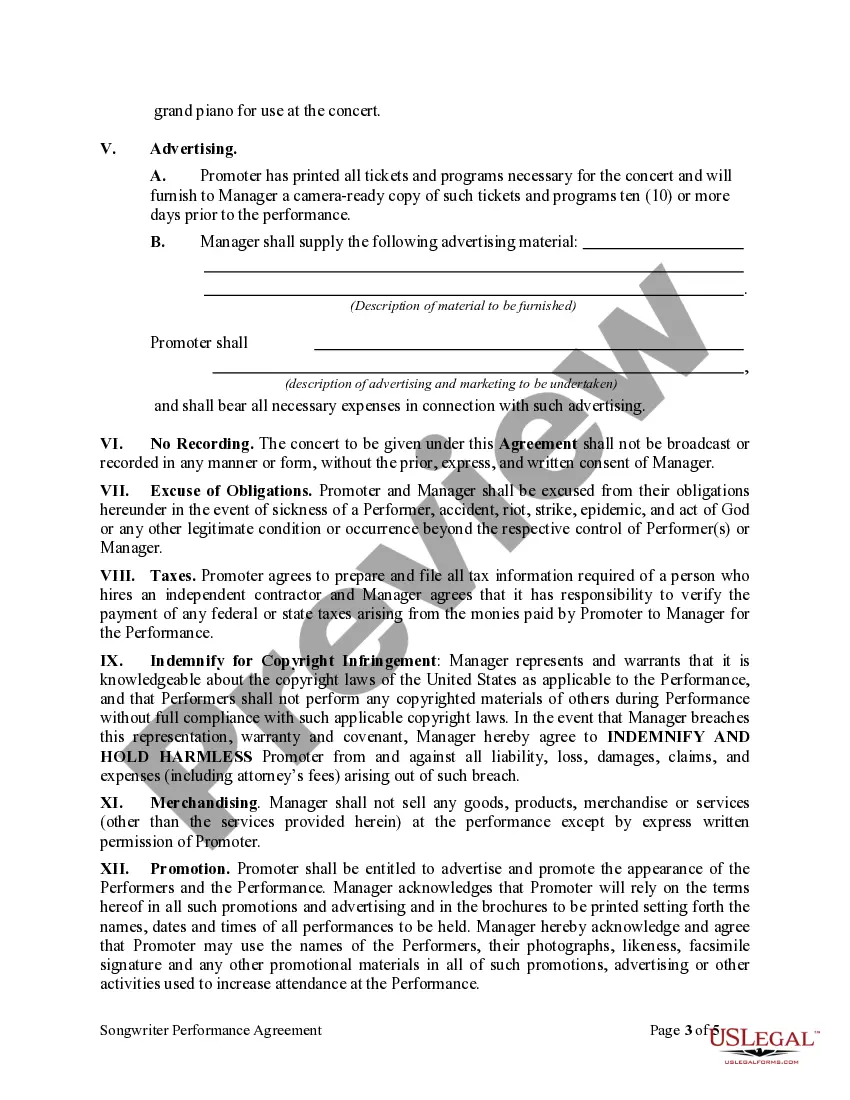
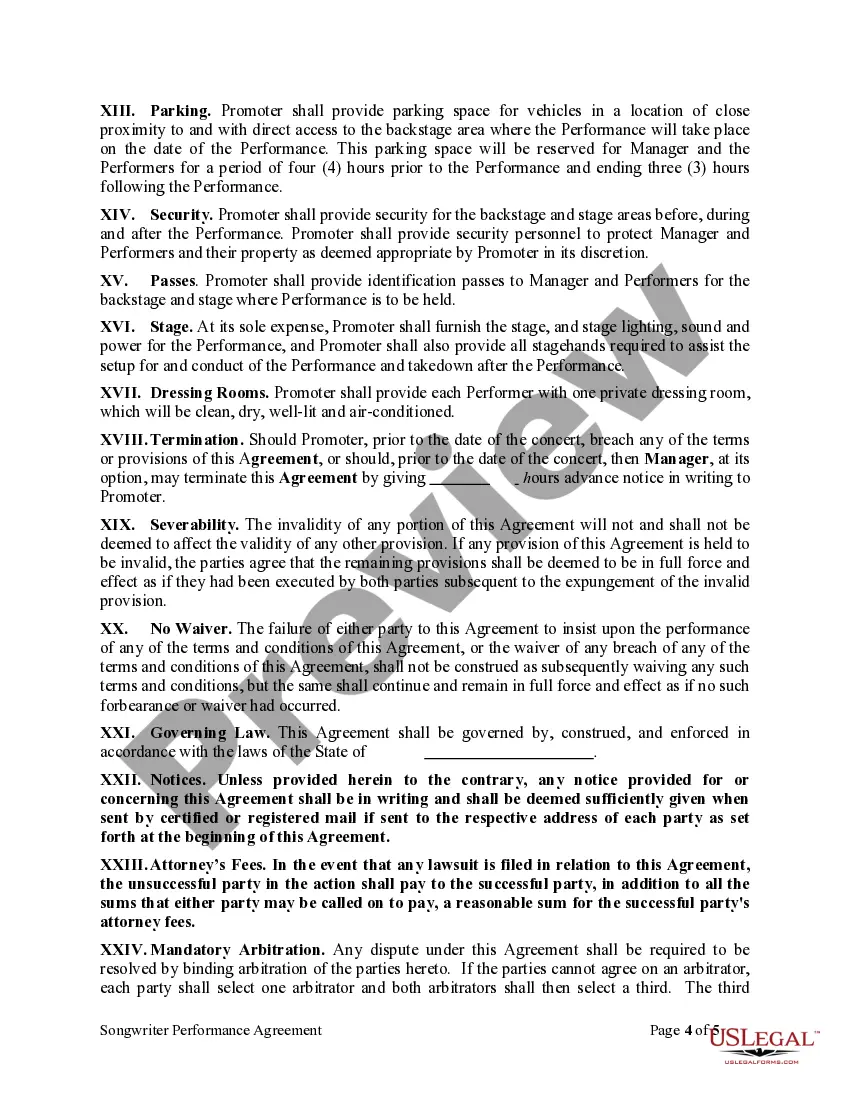

Get your form ready online
Our built-in tools help you complete, sign, share, and store your documents in one place.
Make edits, fill in missing information, and update formatting in US Legal Forms—just like you would in MS Word.
Download a copy, print it, send it by email, or mail it via USPS—whatever works best for your next step.
Sign and collect signatures with our SignNow integration. Send to multiple recipients, set reminders, and more. Go Premium to unlock E-Sign.
If this form requires notarization, complete it online through a secure video call—no need to meet a notary in person or wait for an appointment.
We protect your documents and personal data by following strict security and privacy standards.

Make edits, fill in missing information, and update formatting in US Legal Forms—just like you would in MS Word.

Download a copy, print it, send it by email, or mail it via USPS—whatever works best for your next step.

Sign and collect signatures with our SignNow integration. Send to multiple recipients, set reminders, and more. Go Premium to unlock E-Sign.

If this form requires notarization, complete it online through a secure video call—no need to meet a notary in person or wait for an appointment.

We protect your documents and personal data by following strict security and privacy standards.
Looking for another form?










Form popularity
FAQ
The producer's royalty thus also depends on what was agreed between label and artist. This type of agreement commonly attributes anywhere between 15% to 25% of the artist's royalties to the producer, but again in practice the agreed royalty rate fully depends on what was agreed between all parties.
Typically, music publishers and artists will split the composition copyright 50/50: 50% for publishing rights and 50% for writer's rights. This means that the publisher will receive 50% of any royalties and the artist will receive the other 50%.
Key Takeaway: Traditional publishing royalties are around 10 to 15%, while self-publishing royalties go anywhere from 35 to 70%. Authors collect a higher royalty percentage when self-publishing.
Under the exclusive agreement, the songwriter agrees to assign all compositions written during a specified term (for example, 2 years from January 1 or 1 year with four options), with the guarantee of a share of the income generated and usually a proviso for weekly or monthly payments.
Your Music Recording Contract should cover details like: Compensation and royalties. Where and when the album will be recorded. The album's release date. Who has creative control over specific elements of the album. The termination clause. The exclusive agreement clause. Dispute resolution. Promotional appearances.
If you are the writer and the publisher, you get to own both the shares meaning 50% plus 50% of all the royalties your song generates through live performance, radio broadcast, and internet distribution.
In general, non-exclusive beat licenses are sold with a 50% publishing and writer's share. This is non-negotiable, since the musical part is half of the song and the other half are the lyrics, that half has to be divided between the different artists who have written the lyrics. Example in a non-exclusive license.
The producer's royalty thus also depends on what was agreed between label and artist. This type of agreement commonly attributes anywhere between 15% to 25% of the artist's royalties to the producer, but again in practice the agreed royalty rate fully depends on what was agreed between all parties.
In the absence of a written agreement you automatically share equally, even if your contributions clearly were not equal. Thus, with two songwriters, you own the song 50-50; three songwriters, one-third each; and so on.
An agreement under which a production company commissions a writer to create successive drafts of a film screenplay in return for set payments and possibly also a share of profits from the film.
