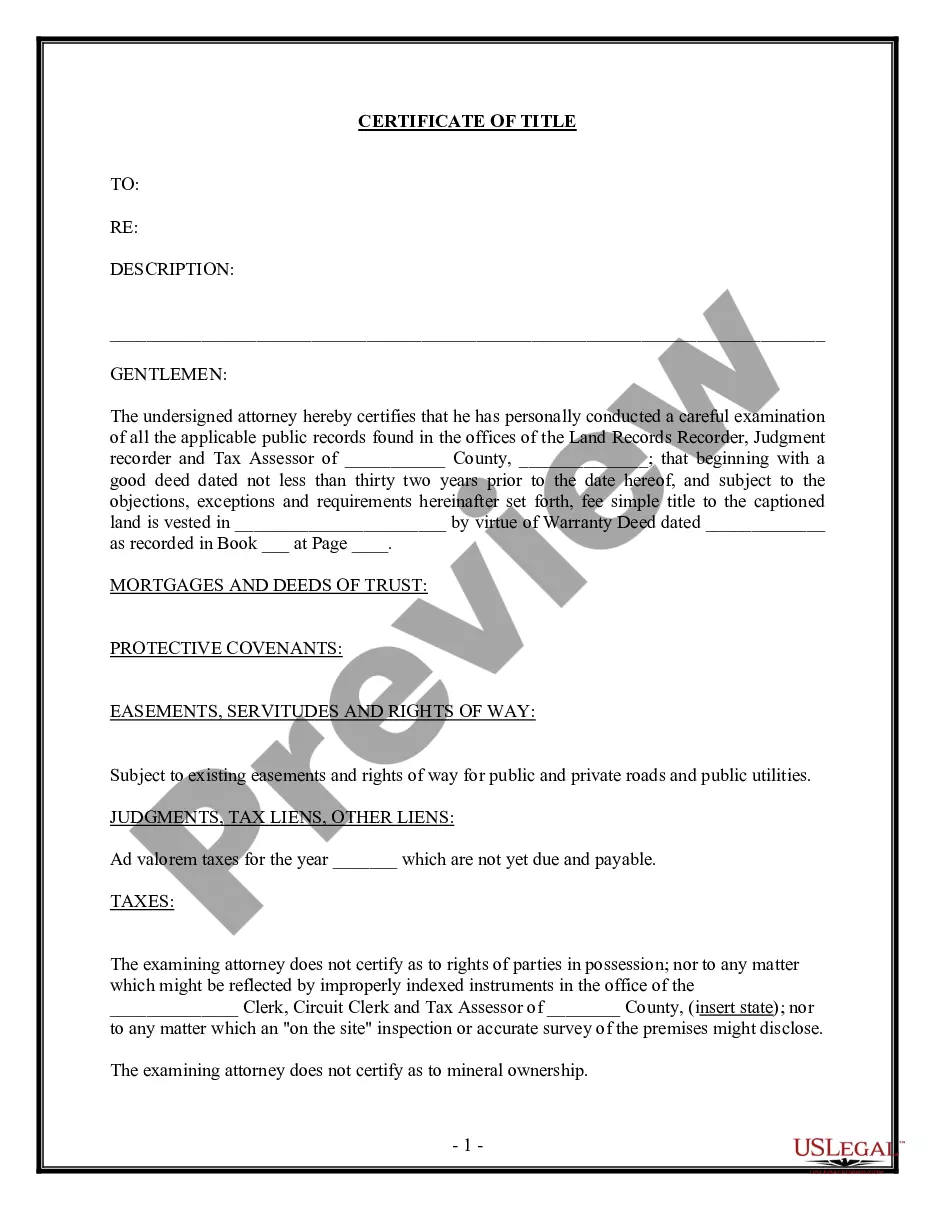
Judgment Against Property With Rem In Santa Clara
Description




Get your form ready online
Our built-in tools help you complete, sign, share, and store your documents in one place.
Make edits, fill in missing information, and update formatting in US Legal Forms—just like you would in MS Word.
Download a copy, print it, send it by email, or mail it via USPS—whatever works best for your next step.
Sign and collect signatures with our SignNow integration. Send to multiple recipients, set reminders, and more. Go Premium to unlock E-Sign.
If this form requires notarization, complete it online through a secure video call—no need to meet a notary in person or wait for an appointment.
We protect your documents and personal data by following strict security and privacy standards.

Make edits, fill in missing information, and update formatting in US Legal Forms—just like you would in MS Word.

Download a copy, print it, send it by email, or mail it via USPS—whatever works best for your next step.

Sign and collect signatures with our SignNow integration. Send to multiple recipients, set reminders, and more. Go Premium to unlock E-Sign.

If this form requires notarization, complete it online through a secure video call—no need to meet a notary in person or wait for an appointment.

We protect your documents and personal data by following strict security and privacy standards.
Looking for another form?


Form popularity
FAQ
Judgments, which are detrimental to your credit rating, typically remain on your credit report for seven years. In California, however, judgments can be enforced for up to ten years and then renewed ad infinitum as soon as five years after that. CCP §§ 683.010 – 683.220.
Key Takeaways. A judgment lien is a court ruling that gives a creditor the right to take possession of a debtor's property if the debtor fails to fulfill their contractual obligations. Judgment liens are nonconsensual because they are attached to property without the owner's consent or agreement.
Essentially, consensual liens don't adversely affect your credit as long as repayment terms are satisfied. Judgment and most statutory liens have a negative impact on your credit score and report, which affect your ability to obtain financing in the future.
Court judgments in California are public records that can significantly impact credit scores and financial opportunities by acting as property liens, and they can be renewed indefinitely beyond their initial 10-year lifespan.
Personal property such as medical equipment, work tools, and basic household items are generally exempt from seizure by a judgment creditor. Negotiating a payment plan with the creditor is often the best approach to avoid prolonged and stressful collection efforts.
Options Invalidate the lien. If the lien is invalid or was obtained in a manner that doesn't follow the procedural requirements under the law, an attorney may be able to strip the lien from the property. Satisfy the debt. This is the simplest way to have the lien cleared. Negotiate a lower payoff. File for bankruptcy.
The following kinds of personal property are exempt from debt collection and cannot be seized: Household goods, like furniture, clothing, and appliances. Medical equipment, such as a wheelchair. One television, one radio, one computer and one cell phone.
Exemption from the Enforcement of Judgments Type of PropertyCode Social Security Direct Deposit Accounts (the account itself) CCP § 704.080 Wages CCP § 704.070 Public Assistance (Welfare) CCP § 704.170 W&I § 17409 Charity; Fraternal Benefit Funds CCP § 704.17027 more rows
To do this, fill out an EJ-001 Abstract of Judgment form and take it to the clerk's office. After the clerk stamps it, record it at the County Recorder's Office in the county where the property is located. Place a lien on a business.
To create a lien, you need to record an abstract of judgment with the county recorder's office in the county where the property is located. You may use either Abstract of Judgment—Restitution (form CR-111/JV-791) or Abstract of Judgment—Civil and Small Claims (form EJ-001).