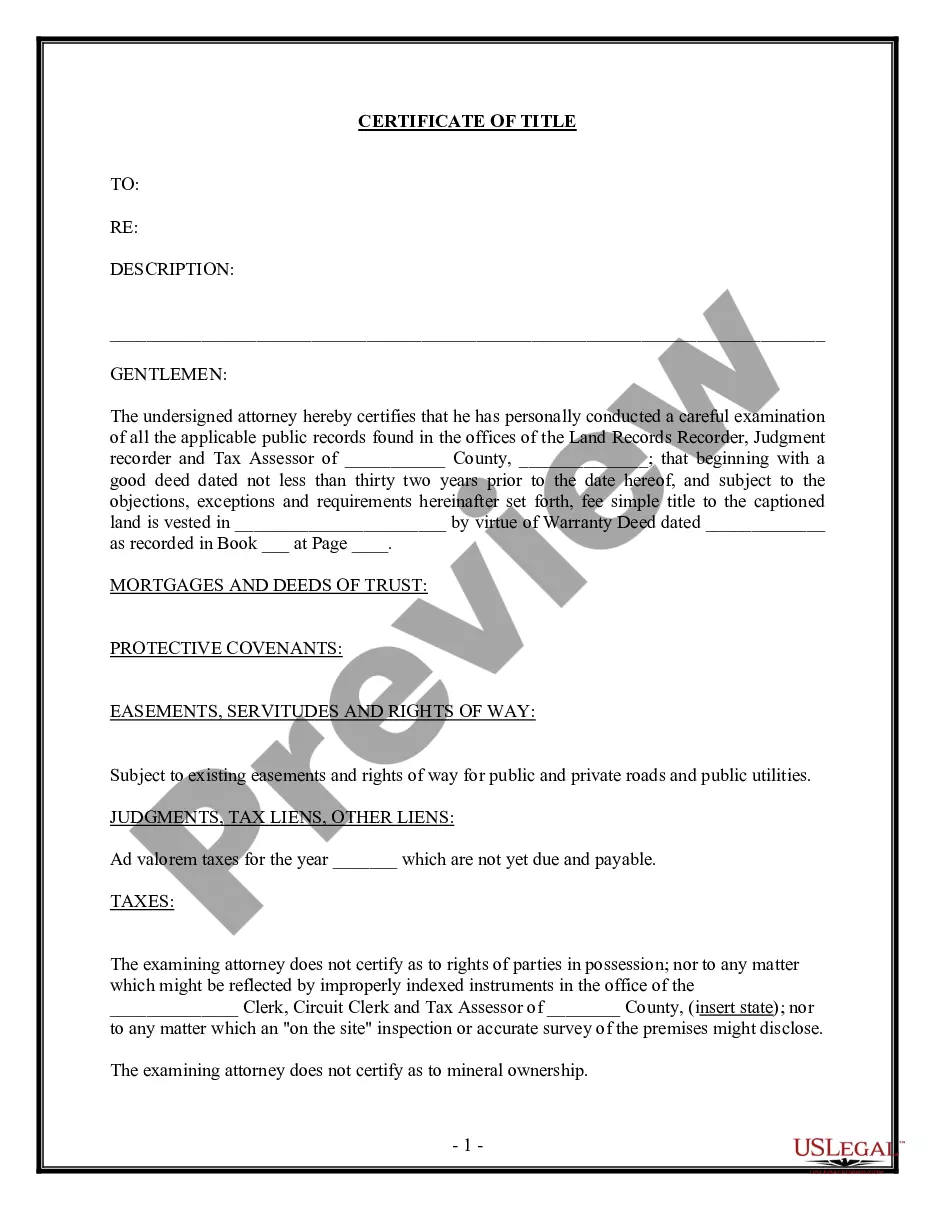
Judgment Against Property With Florida In Pima
Description




Get your form ready online
Our built-in tools help you complete, sign, share, and store your documents in one place.
Make edits, fill in missing information, and update formatting in US Legal Forms—just like you would in MS Word.
Download a copy, print it, send it by email, or mail it via USPS—whatever works best for your next step.
Sign and collect signatures with our SignNow integration. Send to multiple recipients, set reminders, and more. Go Premium to unlock E-Sign.
If this form requires notarization, complete it online through a secure video call—no need to meet a notary in person or wait for an appointment.
We protect your documents and personal data by following strict security and privacy standards.

Make edits, fill in missing information, and update formatting in US Legal Forms—just like you would in MS Word.

Download a copy, print it, send it by email, or mail it via USPS—whatever works best for your next step.

Sign and collect signatures with our SignNow integration. Send to multiple recipients, set reminders, and more. Go Premium to unlock E-Sign.

If this form requires notarization, complete it online through a secure video call—no need to meet a notary in person or wait for an appointment.

We protect your documents and personal data by following strict security and privacy standards.
Looking for another form?








Form popularity
FAQ
Florida Statute of Limitations on a Judgment Lasts 20 Years. Until recently, there has been some debate on this litigation question caused by the interpretation of some Courts that a Florida judgment is subject to a five year statute of limitations. However, the Florida Supreme Court, in Salinas v.
Except as provided in sections 33-729 and 33-730, from and after the time of recording as provided in section 33-961, a judgment shall become a lien for a period of ten years after the date it is given on all real property of the judgment debtor in the county in which the judgment is recorded, whether the property is ...
File a petition for the domestication of the foreign judgment in the circuit court of the Florida county where the debtor lives or has property; Serve the petition and a copy of the foreign judgment on the judgment debtor; Attend a hearing on the petition, if the court schedules one; and.
Arizona's homestead exemption exempts up to $150,000 of a person's equity in their dwelling from attachment, execution or forced sale. The exemption applies to a person's house and land, condominium or cooperative, mobile home or mobile home and land.
In order to enforce or modify an out of state order in a foreign state, if one party has relocated to a foreign state with the children, you must register the order in the new state. This is usually done with the county clerk in the county where you are now residing.
First, you must obtain a certified copy of the judgment from the court that awarded the judgment to you. Then, you must record the certified copy in the office of the clerk of the circuit court of any Florida county, which is usually where the debtor resides or where the debtor's assets are located.
A complicating factor is the location of the debtor or the debtor's assets. If a judgment is entered against the debtor in one state, but the debtor resides in another state or the debtor's assets are located in another state, then the creditor must transfer the judgment to that state.
In Florida, a judgment lien can be attached to the debtor's real estate -- meaning a house, condo, land, or similar kind of property interest. Florida also allows judgment liens to be attached to the debtor's personal property -- things like jewelry, art, antiques, and other valuables.