Sample Of Judgment Sentences In Miami-Dade
Description




Get your form ready online
Our built-in tools help you complete, sign, share, and store your documents in one place.
Make edits, fill in missing information, and update formatting in US Legal Forms—just like you would in MS Word.
Download a copy, print it, send it by email, or mail it via USPS—whatever works best for your next step.
Sign and collect signatures with our SignNow integration. Send to multiple recipients, set reminders, and more. Go Premium to unlock E-Sign.
If this form requires notarization, complete it online through a secure video call—no need to meet a notary in person or wait for an appointment.
We protect your documents and personal data by following strict security and privacy standards.

Make edits, fill in missing information, and update formatting in US Legal Forms—just like you would in MS Word.

Download a copy, print it, send it by email, or mail it via USPS—whatever works best for your next step.

Sign and collect signatures with our SignNow integration. Send to multiple recipients, set reminders, and more. Go Premium to unlock E-Sign.

If this form requires notarization, complete it online through a secure video call—no need to meet a notary in person or wait for an appointment.

We protect your documents and personal data by following strict security and privacy standards.
Looking for another form?







Form popularity
FAQ
The County Civil Division has jurisdiction over civil cases up to $50,000 and Small Claims cases with amounts up to $8,000.
A final judgment leaves nothing to be decided except decisions on how to enforce the judgment, whether to award costs, and whether to file an appeal. Only once a final judgment has been made can a party typically file an appeal. A final judgment can exist even if there is an outstanding motion for a new trial.
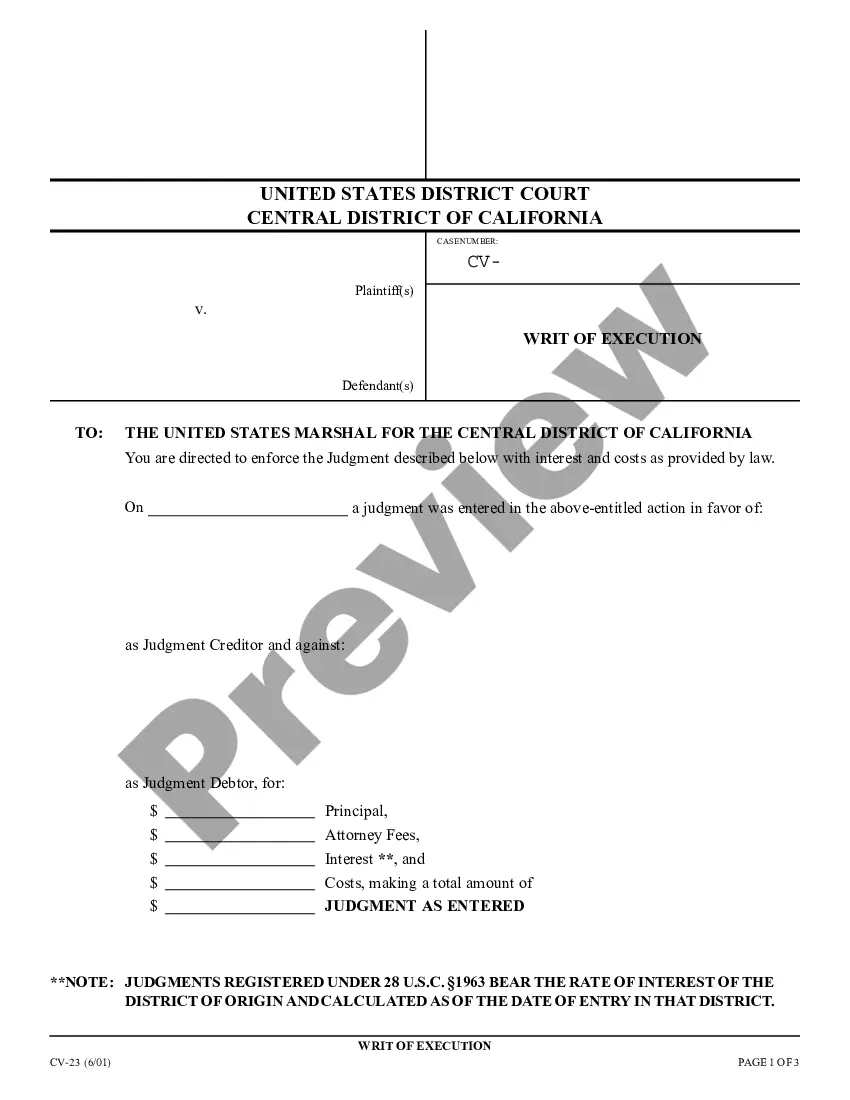
A Writ of Execution may be issued by a deputy clerk upon request. A Writ of Execution commands the Sheriff's Department to make demand for the amount of your final judgment from the defendant. This is only effective if you obtain an Instruction for Levy form from the Sheriff's Office.
Usually when foreclosing on a property the bank presents the owed amount including interest charges penalties and fees. The judge award that amount or another calculation he feels necessary. This is called the final judgement amount.
The Final Judgment Rule (sometimes called the “One Final Judgment Rule”) is the legal principle that appellate courts will only hear appeals from the “final” judgment in a case. A plaintiff or defendant cannot appeal rulings of the trial court while the case is still ongoing.
A “Final Judgment” is the written pronouncement of the court that determines the rights of the parties. The Final Judgment ends the legal proceedings in that court and allows for appeal to a higher court.
Presently there is a Florida statute that limits judgment liens to 20 years,3 and there is a Florida statute that limits “actions” on certain judgments to 20 years and other judgments to five years. There is, however, no statute or court rule that places a time limit on the execution of judgments.
Final process to enforce a judgment for the recovery of property shall be by a writ of possession for real property and by a writ of replevin, distress writ, writ of garnishment, or other appropriate process or proceedings for other property.
In Florida, a judgment lien has a limited lifespan of ten years from the date of its issuance by the court.
In Florida, a “void judgment” is so defective that it is deemed never to have had legal force and effect, while a “voidable judgment” is a judgment that has been entered based upon some error in procedure that allows a party to have the judgment vacated, but the judgment has legal force and effect unless and until it ...

