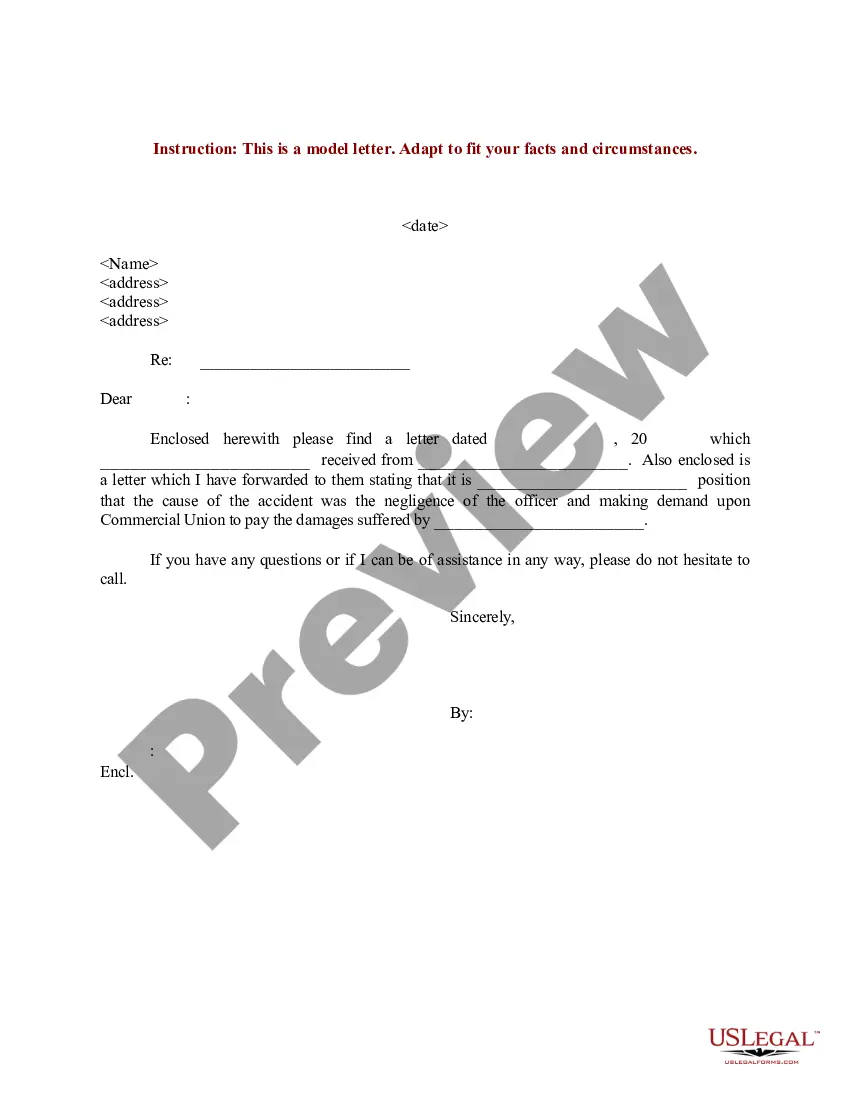
Sample Letter To Collect Judgement For Bir In Cuyahoga
Description




Get your form ready online
Our built-in tools help you complete, sign, share, and store your documents in one place.
Make edits, fill in missing information, and update formatting in US Legal Forms—just like you would in MS Word.
Download a copy, print it, send it by email, or mail it via USPS—whatever works best for your next step.
Sign and collect signatures with our SignNow integration. Send to multiple recipients, set reminders, and more. Go Premium to unlock E-Sign.
If this form requires notarization, complete it online through a secure video call—no need to meet a notary in person or wait for an appointment.
We protect your documents and personal data by following strict security and privacy standards.

Make edits, fill in missing information, and update formatting in US Legal Forms—just like you would in MS Word.

Download a copy, print it, send it by email, or mail it via USPS—whatever works best for your next step.

Sign and collect signatures with our SignNow integration. Send to multiple recipients, set reminders, and more. Go Premium to unlock E-Sign.

If this form requires notarization, complete it online through a secure video call—no need to meet a notary in person or wait for an appointment.

We protect your documents and personal data by following strict security and privacy standards.
Looking for another form?




Form popularity
FAQ
Some possible options to enforce an out-of-state judgment in California include the following: Levying the debtor's assets and personal belongings. Placing a lien on the debtor's property. Levying the debtor's bank account. Levying the debtor's vehicle. Garnishing the debtor's wages.
Include your full name, company name, and mailing address. Address the letter to your client by their full name. State the problem: Specify and provide proof of the debt in question. Reference the original contract or agreement that states the services the client owes you for.
Specifically, the rule states that a debt collector cannot: Make more than seven calls within a seven-day period to a consumer regarding a specific debt. Call a consumer within seven days after having a telephone conversation about that debt.
Some possible options to enforce an out-of-state judgment in California include the following: Levying the debtor's assets and personal belongings. Placing a lien on the debtor's property. Levying the debtor's bank account. Levying the debtor's vehicle. Garnishing the debtor's wages.
The Parenting Proceeding Affidavit is a sworn statement stating the names and dates of birth of the minor children of the parties, their residence addresses for the previous five years and whether any or all of the children have been the subject of any court cases where a designation of parental rights has been made no ...
An Affidavit of Parentage is a document used to establish paternity is cases where the parents are not married to each other at the time their child is born. WHO SIGNS AN AFFIDAVIT OF PARENTAGE? An Affidavit of Parentage is signed by both parents and acknowledges that they are the biological parents of the child.
Definition and Purpose. Child custody affidavits are written statements made under penalty of perjury. They explain relevant facts about the child's living situation, parental involvement, and overall welfare.
All judgments and court records are filed in the County Clerk Office in the County where the lawsuit was filed. You can go in person to the County Clerk Office in the County where you live to ask if a judgment has been entered against you. Most counties also allow you to search online.
An Affidavit of Parentage determines the identity of a child's father. It is a legal document voluntarily signed by the parents of a child that creates a binding statement of paternity. This form affirms who is the presumed father in a situation where the parents are unmarried.
To collect your judgment through a bank account attachment, complete the following three steps: Find out the name of the Judgment Debtor's bank, the bank's address, and the Judgment Debtor's account number. Obtain and complete the OTW Garnishment Packet. File the "OTW" Garnishment Packet with the Clerk of Court.

