Judgment Against Property With Florida In Broward
Description




Get your form ready online
Our built-in tools help you complete, sign, share, and store your documents in one place.
Make edits, fill in missing information, and update formatting in US Legal Forms—just like you would in MS Word.
Download a copy, print it, send it by email, or mail it via USPS—whatever works best for your next step.
Sign and collect signatures with our SignNow integration. Send to multiple recipients, set reminders, and more. Go Premium to unlock E-Sign.
If this form requires notarization, complete it online through a secure video call—no need to meet a notary in person or wait for an appointment.
We protect your documents and personal data by following strict security and privacy standards.

Make edits, fill in missing information, and update formatting in US Legal Forms—just like you would in MS Word.

Download a copy, print it, send it by email, or mail it via USPS—whatever works best for your next step.

Sign and collect signatures with our SignNow integration. Send to multiple recipients, set reminders, and more. Go Premium to unlock E-Sign.

If this form requires notarization, complete it online through a secure video call—no need to meet a notary in person or wait for an appointment.

We protect your documents and personal data by following strict security and privacy standards.
Looking for another form?










Form popularity
FAQ
Florida Homestead Protection Article X, Section 4, Constitution of the State of Florida (1968) exempts a homestead from forced sale and provides that no judgment or execution shall be a lien thereon.
A Florida judgment creditor can put a judgment lien on the judgment debtor's tangible personal property and some kinds of intangible personal property. Tangible property means things you can see and touch, like furniture, electronics, artwork, and jewelry.
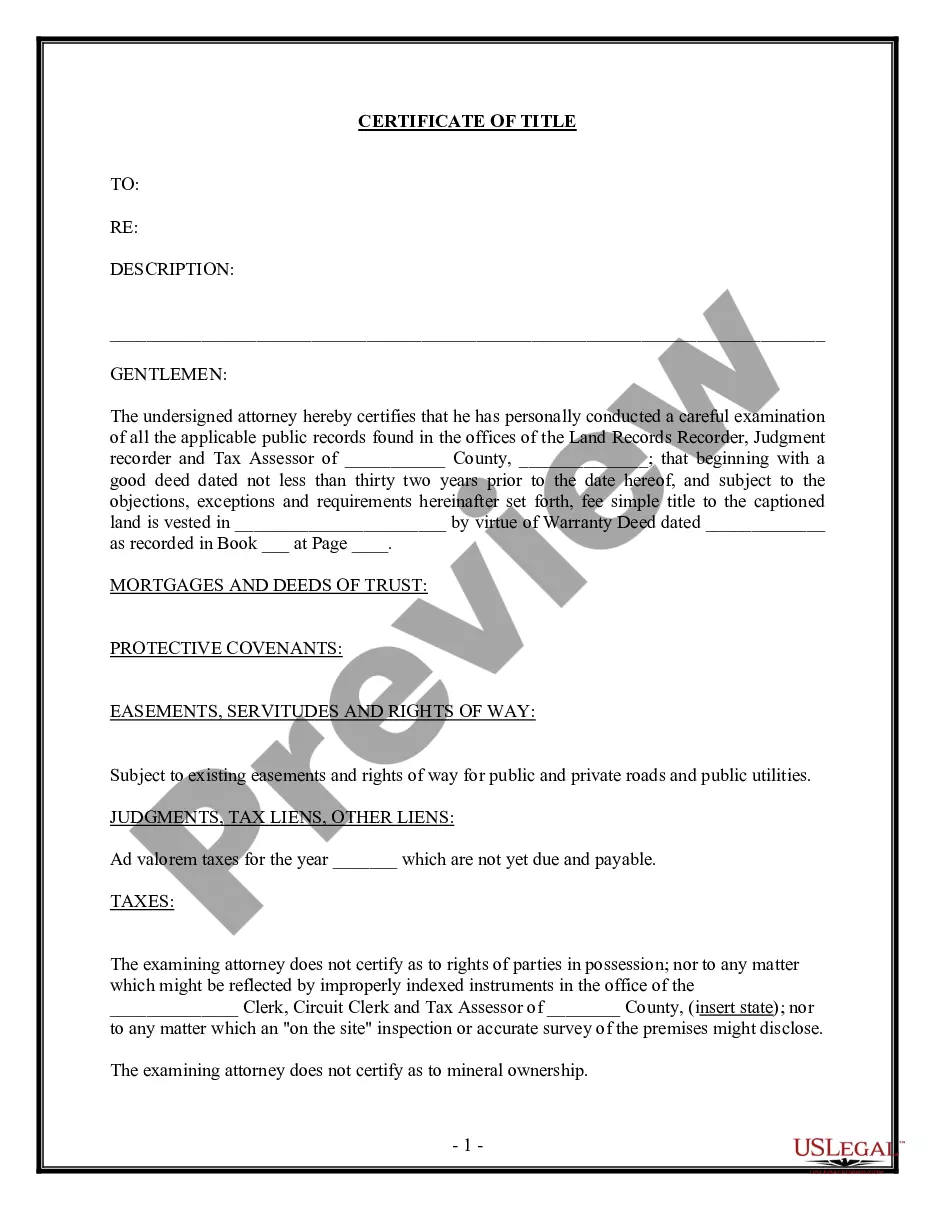
Recording the judgment creates a lien on the debtor's real estate in that county. Without recording, the judgment is only a piece of paper and does not attach to any property.
The recorded judgment automatically attaches to all property in whatever county the judgment is recorded. The creditor would have to record the judgment in all 67 Florida counties separately to create a state-wide lien on the debtor's real property. Second, only “certified copies” of the judgment give rise to a lien.
Q: Where can I find judgments, filings, complaints, and divorce decrees (orders), or other case documents or information? A: You must contact the clerk's office at the court where your case was handled. You may find trial court clerks' phone numbers, street addresses, and website addresses through .flclerks.
A judgment creditor may garnish the debtor's bank accounts even if the creditor has not recorded its judgment or has recorded in second place. Florida Statute 55.081 states that judgments are good for 20 years.
Florida Statute of Limitations on a Judgment Lasts 20 Years.
The sheriff's department can seize: Personal property: movable things (e.g., cars, horses, boats, furniture, jewelry) owned by the debtor. Real property: land and buildings owned by the debtor.