Judgement Sample Example In Arizona
Description




Get your form ready online
Our built-in tools help you complete, sign, share, and store your documents in one place.
Make edits, fill in missing information, and update formatting in US Legal Forms—just like you would in MS Word.
Download a copy, print it, send it by email, or mail it via USPS—whatever works best for your next step.
Sign and collect signatures with our SignNow integration. Send to multiple recipients, set reminders, and more. Go Premium to unlock E-Sign.
If this form requires notarization, complete it online through a secure video call—no need to meet a notary in person or wait for an appointment.
We protect your documents and personal data by following strict security and privacy standards.

Make edits, fill in missing information, and update formatting in US Legal Forms—just like you would in MS Word.

Download a copy, print it, send it by email, or mail it via USPS—whatever works best for your next step.

Sign and collect signatures with our SignNow integration. Send to multiple recipients, set reminders, and more. Go Premium to unlock E-Sign.

If this form requires notarization, complete it online through a secure video call—no need to meet a notary in person or wait for an appointment.

We protect your documents and personal data by following strict security and privacy standards.
Looking for another form?






Form popularity
FAQ
Creditors typically acquire property liens through your voluntary consent. On the other hand, creditors get judgment liens after winning a lawsuit against you for a debt you owe.
Take the certified copy to the county Recorder's Office where the Judgment Debtor has real estate property. If the Judgment Debtor has property in different counties, you can record your judgment with each county. NOTE: Fees apply.
The first step to filing a mechanics lien is to record a Notice and Claim of Lien within 60 days after the property owner has recorded a Notice of Completion. If a notice has not been recorded, however, you will have 120 days after the completion of the project to record the claim.
How does a creditor go about getting a judgment lien in Arizona? To attach the lien, the creditor files and records a judgment with the county recorder in any Arizona county where the debtor owns property now or where they may own property in the future.
How does a creditor go about getting a judgment lien in Arizona? To attach the lien, the creditor files and records a judgment with the county recorder in any Arizona county where the debtor owns property now or where they may own property in the future.
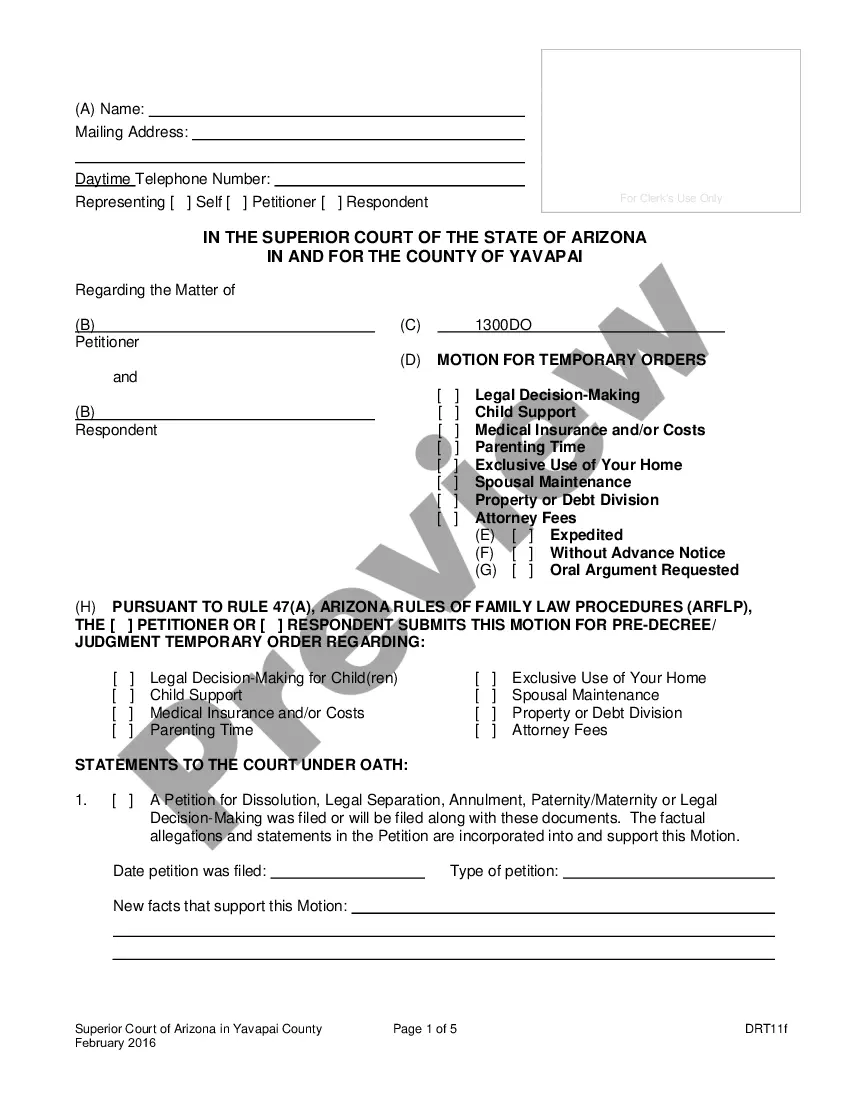
A default judgment may be entered against a minor, an incapacitated person, or adult in need of protection only if the person's parent, conservator, or guardian-as specified in Rule 17(g) - has appeared.
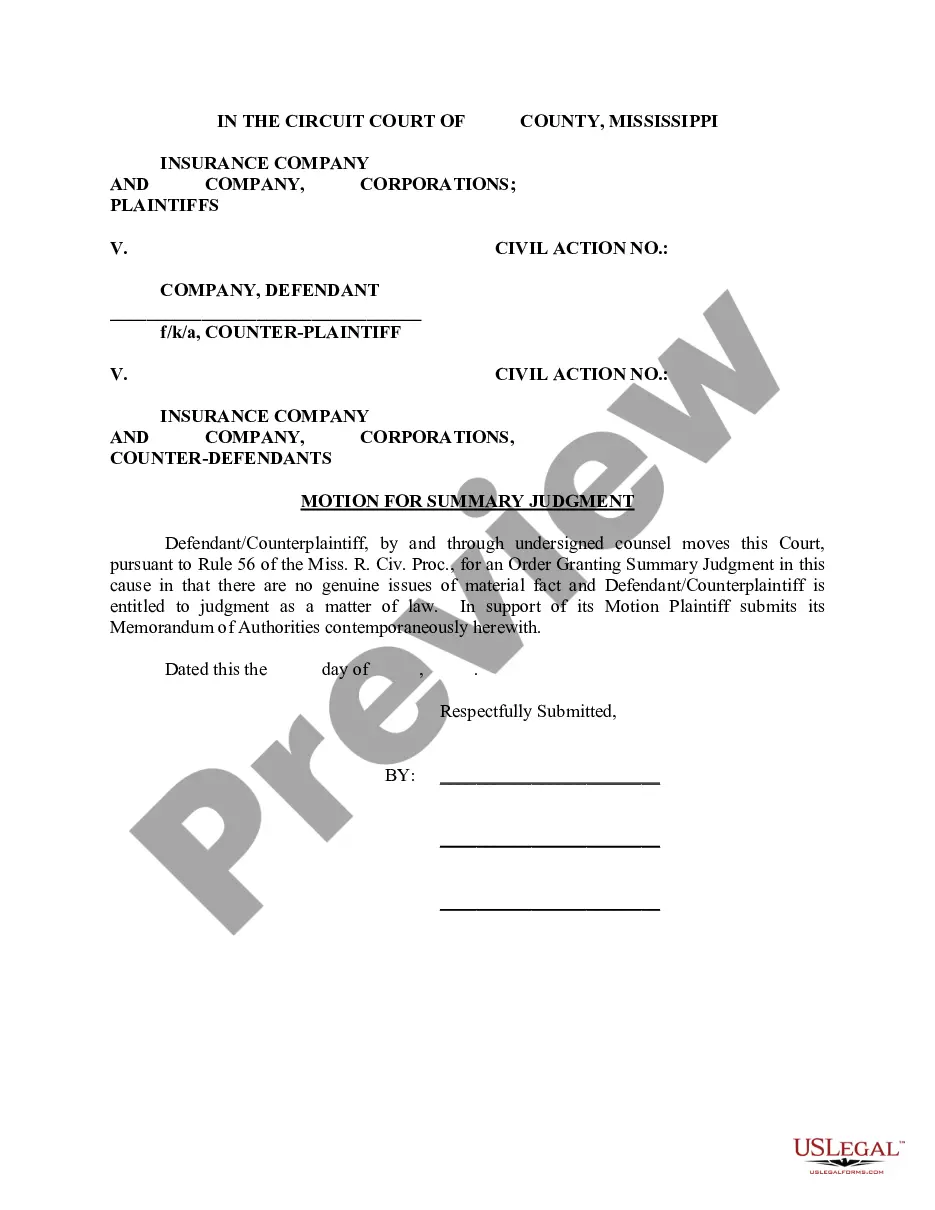
The court shall grant summary judgment if the moving party shows that there is no genuine dispute as to any material fact and the moving party is entitled to judgment as a matter of law. The court should state on the record the reasons for granting or denying the motion.
Per ARS §22-246 a certified copy of the judgment must be filed with the Clerk of Superior Court who will issue an execution on the judgment. Upon filing this with the County Recorder's Office, a lien will be placed on the defendant's real property.
All judgments must be in writing, and the court must mail copies to all parties. The judgment must clearly state the determination of the rights of the parties. The judgment is due and payable immediately after the judgment is rendered by the justice of the peace or a hearing officer in small claims court.
When a person fails to answer a complaint it is called default. After the required period of time has passed a person can file for a default judgment asking the judge to decided the case even though the other person has failed to answer.

