Corporate Refusal Within A Contract In Clark
Description
Get your form ready online
Our built-in tools help you complete, sign, share, and store your documents in one place.
Make edits, fill in missing information, and update formatting in US Legal Forms—just like you would in MS Word.
Download a copy, print it, send it by email, or mail it via USPS—whatever works best for your next step.
Sign and collect signatures with our SignNow integration. Send to multiple recipients, set reminders, and more. Go Premium to unlock E-Sign.
If this form requires notarization, complete it online through a secure video call—no need to meet a notary in person or wait for an appointment.
We protect your documents and personal data by following strict security and privacy standards.

Make edits, fill in missing information, and update formatting in US Legal Forms—just like you would in MS Word.

Download a copy, print it, send it by email, or mail it via USPS—whatever works best for your next step.

Sign and collect signatures with our SignNow integration. Send to multiple recipients, set reminders, and more. Go Premium to unlock E-Sign.

If this form requires notarization, complete it online through a secure video call—no need to meet a notary in person or wait for an appointment.

We protect your documents and personal data by following strict security and privacy standards.
Looking for another form?










Form popularity
FAQ
The short answer to this question, is yes, you can be sued for breach of contract if you did not sign or agree in writing, but you may have certain defenses.
Once the plaintiff proves that a valid contract existed, they must show that they upheld their part. After that, the plaintiff must show that the defendant did not fulfill their obligations. And finally there must be evidence of actual damages that the plaintiff suffered as a result.
To sue someone for breaking a contract, there needs to be a valid contract.
A breach of contract is when one party to the contract doesn't do what they agreed. Breach of contract happens when one party to a valid contract fails to fulfill their side of the agreement. If a party doesn't do what the contract says they must do, the other party can sue.
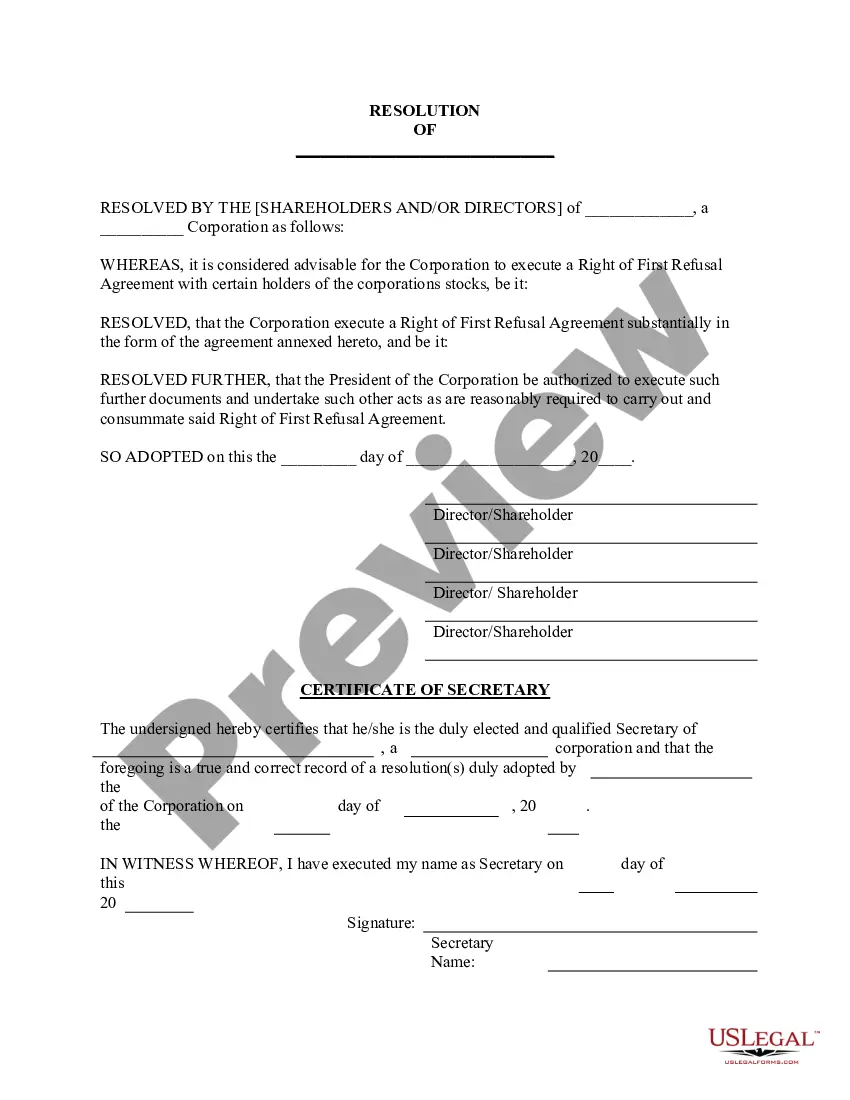
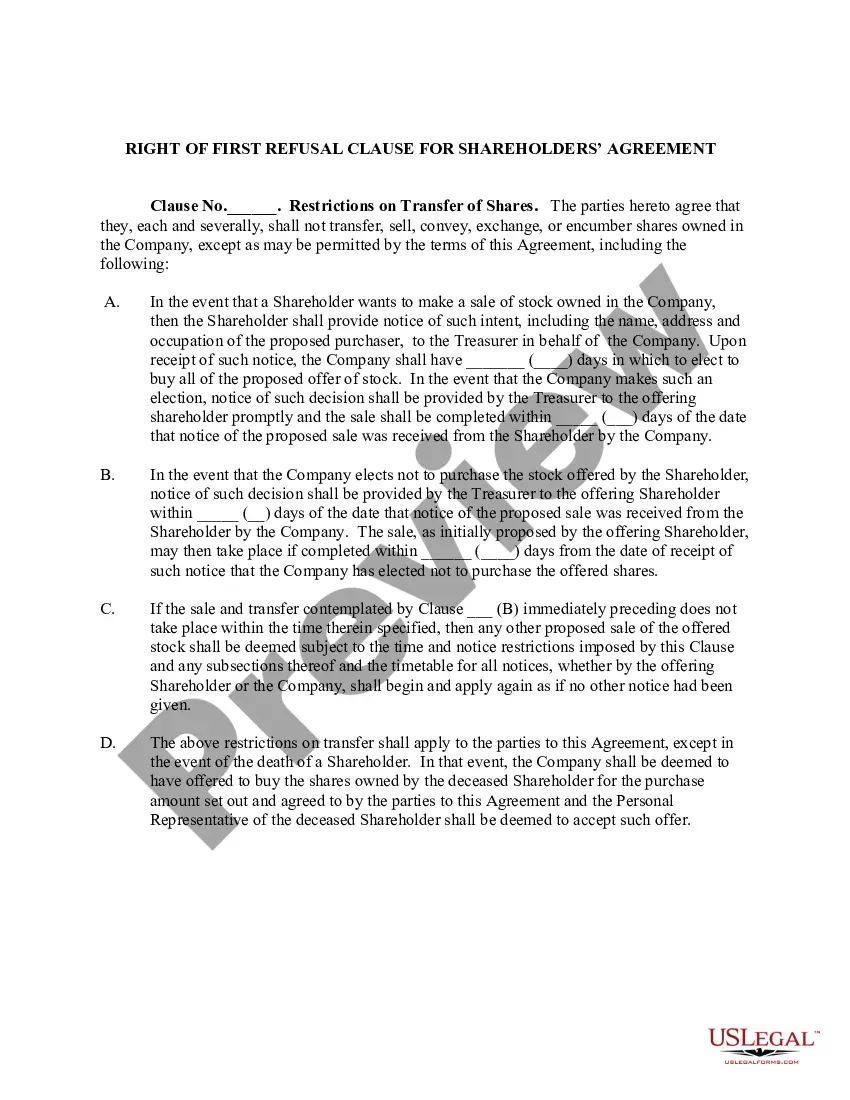
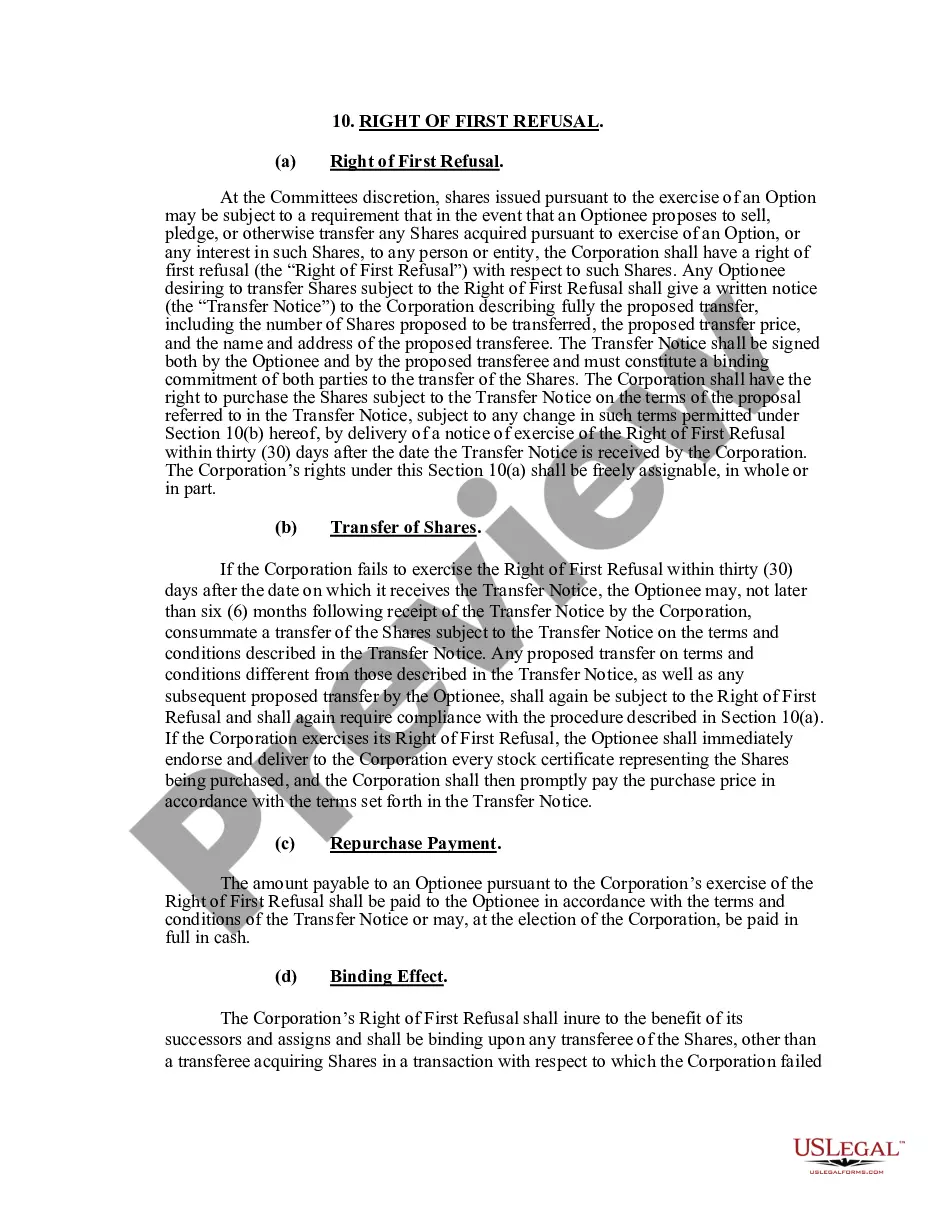
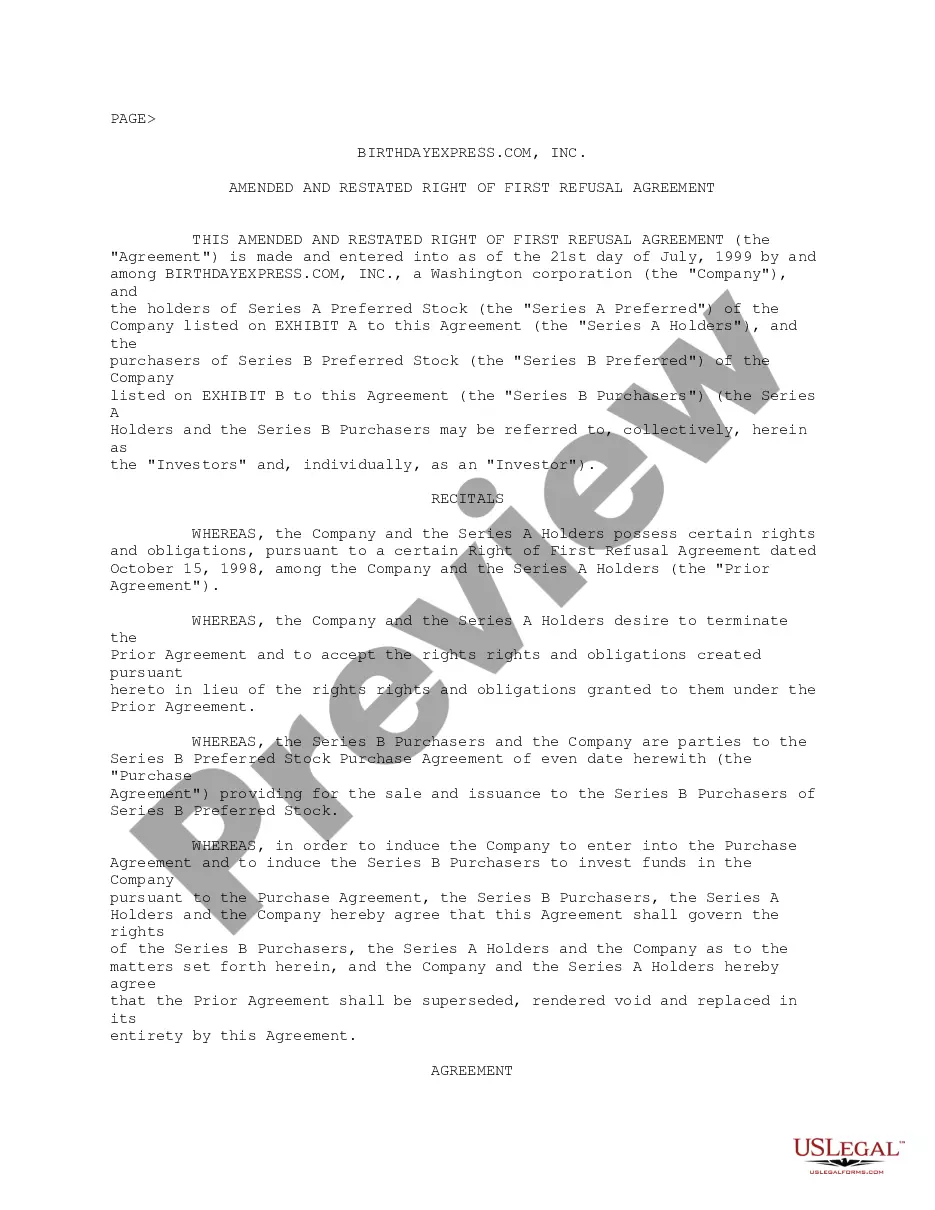
Right of first refusal (ROFR or RFR) is a contractual right that gives its holder the option to enter a business transaction with the owner of something, ing to specified terms, before the owner is entitled to enter into that transaction with a third party.
When a verbal agreement is made and a breach of contract occurs, one party may seek legal action against the other. If someone suspects that the other contracted party has breached the terms of the contract, they can begin the legal process by: Collecting proof and evidence of the breach.
What are alternatives to the first right of refusal? The right of first offer, also known as the right of first negotiation, is the most effective alternative to the ROFR.
A right of first refusal is a serious detriment to the value and marketability of property and often leads to litigation. In most situations you should avoid granting rights of first refusal if at all possible.
In real estate, the right of first refusal is a clause in a contract that gives a prioritized, interested party the right to make the first offer on a house before the owner can negotiate with other prospective buyers.
A right of first refusal clause could apply to family members of the property owner. If an owner decides to sell a property, the ROFR stipulates that named relatives, like children or siblings, may have the first opportunity to buy the property and make an offer.