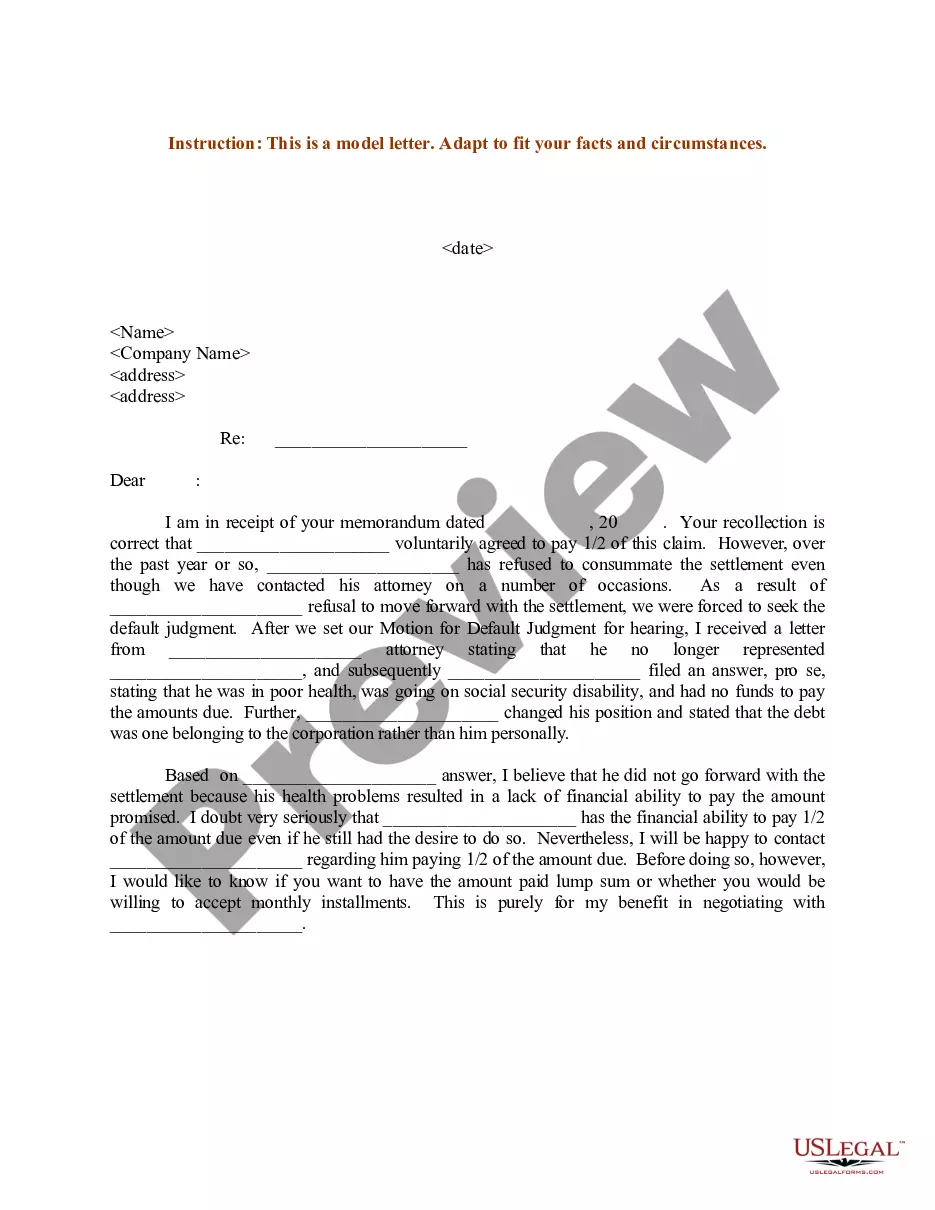
Letter For Judgment In Philadelphia
Description




Get your form ready online
Our built-in tools help you complete, sign, share, and store your documents in one place.
Make edits, fill in missing information, and update formatting in US Legal Forms—just like you would in MS Word.
Download a copy, print it, send it by email, or mail it via USPS—whatever works best for your next step.
Sign and collect signatures with our SignNow integration. Send to multiple recipients, set reminders, and more. Go Premium to unlock E-Sign.
If this form requires notarization, complete it online through a secure video call—no need to meet a notary in person or wait for an appointment.
We protect your documents and personal data by following strict security and privacy standards.

Make edits, fill in missing information, and update formatting in US Legal Forms—just like you would in MS Word.

Download a copy, print it, send it by email, or mail it via USPS—whatever works best for your next step.

Sign and collect signatures with our SignNow integration. Send to multiple recipients, set reminders, and more. Go Premium to unlock E-Sign.

If this form requires notarization, complete it online through a secure video call—no need to meet a notary in person or wait for an appointment.

We protect your documents and personal data by following strict security and privacy standards.
Looking for another form?







Form popularity
FAQ
You are in default because you have failed to enter a written appearance personally or by attorney and file in writing with the Court your defenses or objections to the claims set forth against you.
237.5 - Form of Notice of Praecipe to Enter Judgment by Default. YOU ARE IN DEFAULT BECAUSE YOU HAVE FAILED TO ENTER A WRITTEN APPEARANCE PERSONALLY OR BY ATTORNEY AND FILE IN WRITING WITH THE COURT YOUR DEFENSES OR OBJECTIONS TO THE CLAIMS SET FORTH AGAINST YOU.
5 Steps How to Collect a Judgment in Pennsylvania File Your Judgment With the County Courts. File Your Writ of Execution (This the Key for the Sheriff to help you) . Seize Bank Accounts by Sending Questions (Interrogatories) to the Banks. Levy and Sell Personal Assets and Vehicles. Levy and Sell Real Property / Land.
File a praecipe for judgment, a dated copy of the 10 day notice, and a Pennsylvania Rule 236 form. If the debtor is an individual, you must file a notarized affidavit of nonmilitary service. File an original and a copy for each debtor with a Rule 236 form. Include a stamped envelope addressed to each debtor.
You are in default because you have failed to enter a written appearance personally or by attorney and file in writing with the Court your defenses or objections to the claims set forth against you.
(A) An appeal to the Court of Common Pleas from an order of the Municipal Court granting or denying a petition to open a default judgment or any other post-judgment order which would have been appealable had it been entered by the Court of Common Pleas shall be filed within thirty (30) days from the date of entry of ...
All complaints are filed by the First Filing Unit, 1339 Chestnut Street, Philadelphia, PA 19107. Mail your complaint to this address. Include a self-address stamped envelope with your filing, to receive your filed complaint, pertinent forms and hearing information.
Code r. 1037. Rule 1037 - Judgment Upon Default or Admission (a) If an action is not commenced by a complaint, the prothonotary, upon praecipe of the defendant, shall enter a rule upon the plaintiff to file a complaint.
A default occurs when a defendant/ respondent fails to answer the suit upon service within the time allowed by law. Summary judgment occurs upon motion of one of the parties to litigation that, upon the facts in evidence, the moving party is entitled to a judgment as a matter of law.

