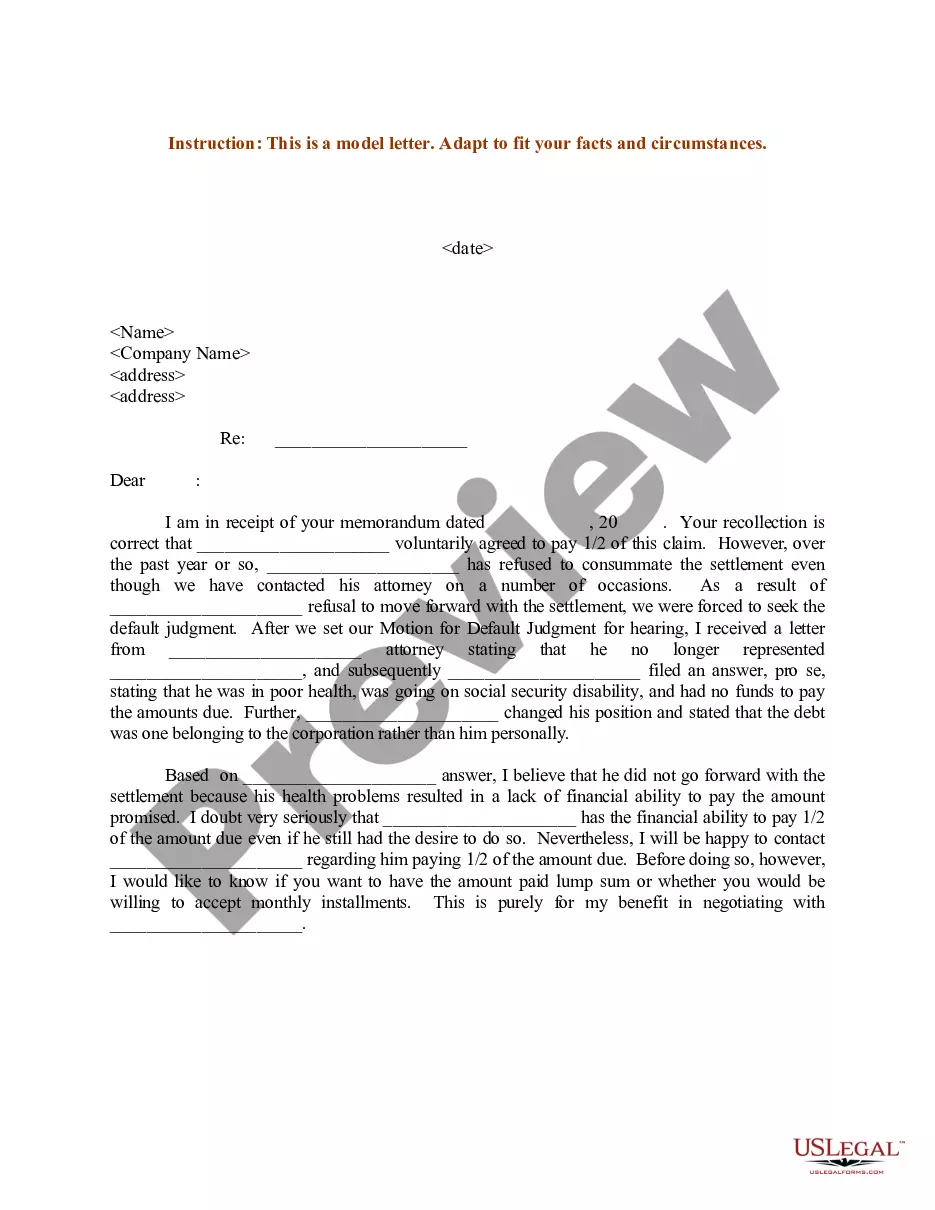
Letter For Judgment In Massachusetts
Description




Get your form ready online
Our built-in tools help you complete, sign, share, and store your documents in one place.
Make edits, fill in missing information, and update formatting in US Legal Forms—just like you would in MS Word.
Download a copy, print it, send it by email, or mail it via USPS—whatever works best for your next step.
Sign and collect signatures with our SignNow integration. Send to multiple recipients, set reminders, and more. Go Premium to unlock E-Sign.
If this form requires notarization, complete it online through a secure video call—no need to meet a notary in person or wait for an appointment.
We protect your documents and personal data by following strict security and privacy standards.

Make edits, fill in missing information, and update formatting in US Legal Forms—just like you would in MS Word.

Download a copy, print it, send it by email, or mail it via USPS—whatever works best for your next step.

Sign and collect signatures with our SignNow integration. Send to multiple recipients, set reminders, and more. Go Premium to unlock E-Sign.

If this form requires notarization, complete it online through a secure video call—no need to meet a notary in person or wait for an appointment.

We protect your documents and personal data by following strict security and privacy standards.
Looking for another form?







Form popularity
FAQ
Unless otherwise permitted by the court, the examination and cross-examination of each witness shall be conducted by one counsel only for each party, and the counsel shall stand while so examining or cross-examining.
The proper venue could be the place (i.e., municipality or county) where a piece of land is located, or the place where one of the parties lives or has their business, for example.
To sue someone in Massachusetts, you have to file a complaint with the clerk of the court. A complaint is not a specific form. It is a document that contains a short statement of the facts showing your claim and why you are entitled to relief and a demand for judgment granting that relief.
The best evidence rule only applies when a party seeks to prove the contents of the document sought to be admitted as evidence. The best evidence rule provides that the original documents must be provided as evidence, unless the original is lost, destroyed, or otherwise unobtainable.
Rule 12 - Defenses and Objections-When and How Presented-By Pleading or Motion-Motion for Judgment on Pleadings (a) When Presented. (1) After service upon him of any pleading requiring a responsive pleading, a party shall serve such responsive pleading within 20 days unless otherwise directed by order of the court.
Summary Judgment, by definition, is where judgment is granted to the party that moves the court by motion because: “there is no genuine issue as to any material fact and that the moving party is entitled to judgment as a matter of law.”
All civil motions shall be governed, where applicable, by Superior Court Rules 9A through 9E. Any criminal motion must be in writing and filed before being placed upon a list for hearing, unless otherwise ordered by the court, or otherwise provided for under Superior Court Rule 61.
Rule 56 - Summary Judgment (a)Motions for Summary Judgment. A party may move for summary judgment subsequent to the commencement of any proceeding under these rules except in actions for divorce or in actions for custody or visitation or for criminal contempt.
To sue someone in Massachusetts, you have to file a complaint with the clerk of the court. A complaint is not a specific form. It is a document that contains a short statement of the facts showing your claim and why you are entitled to relief and a demand for judgment granting that relief.

