Accident And Injury Center In Ohio
Description

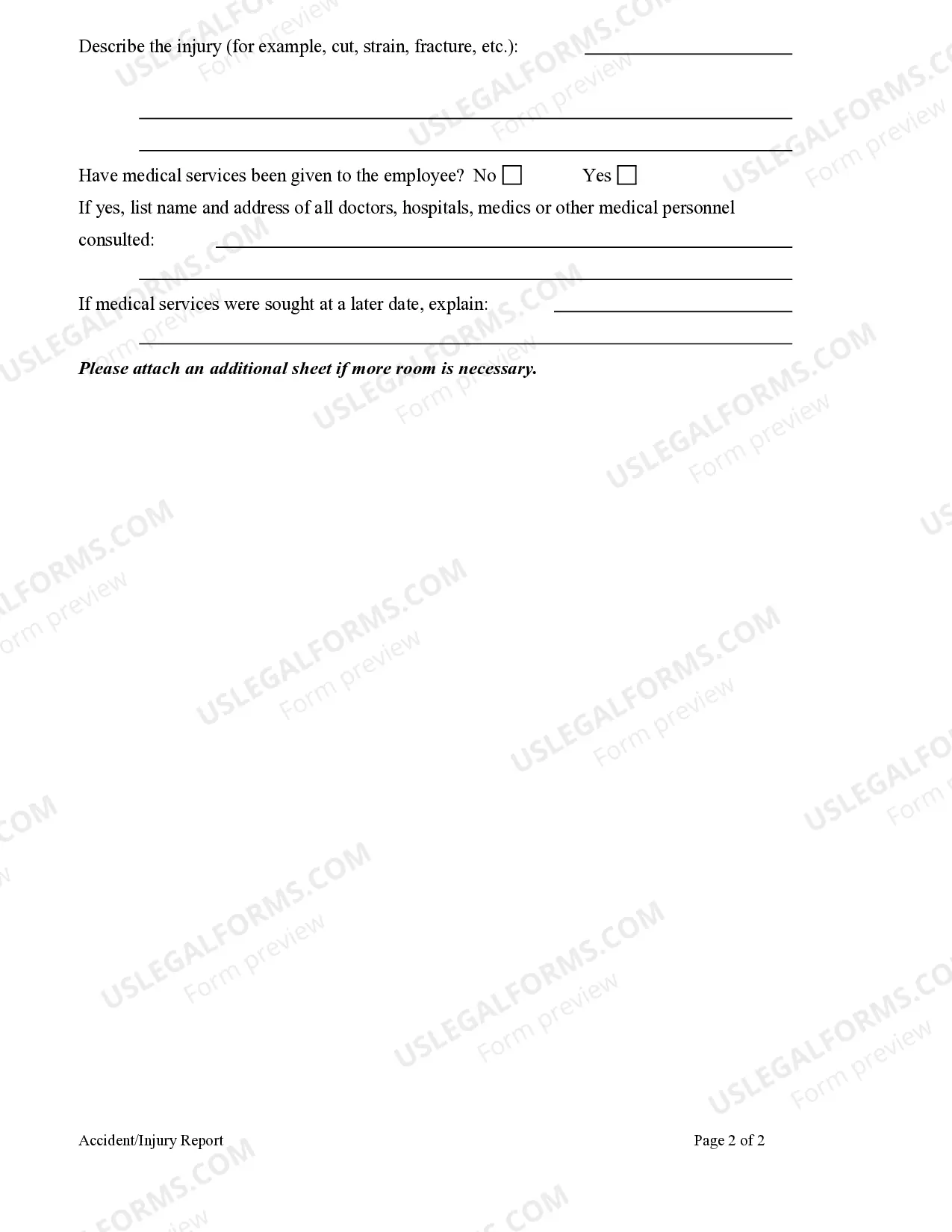
Get your form ready online
Our built-in tools help you complete, sign, share, and store your documents in one place.
Make edits, fill in missing information, and update formatting in US Legal Forms—just like you would in MS Word.
Download a copy, print it, send it by email, or mail it via USPS—whatever works best for your next step.
Sign and collect signatures with our SignNow integration. Send to multiple recipients, set reminders, and more. Go Premium to unlock E-Sign.
If this form requires notarization, complete it online through a secure video call—no need to meet a notary in person or wait for an appointment.
We protect your documents and personal data by following strict security and privacy standards.

Make edits, fill in missing information, and update formatting in US Legal Forms—just like you would in MS Word.

Download a copy, print it, send it by email, or mail it via USPS—whatever works best for your next step.

Sign and collect signatures with our SignNow integration. Send to multiple recipients, set reminders, and more. Go Premium to unlock E-Sign.

If this form requires notarization, complete it online through a secure video call—no need to meet a notary in person or wait for an appointment.

We protect your documents and personal data by following strict security and privacy standards.
Looking for another form?

Form popularity
FAQ
Following a car accident in Cleveland or anywhere else in Ohio, an injured victim has two years from the date of the crash to file insurance claims. A family member or the estate executor for a person who dies in a car crash also has two years to file a wrongful death claim.
Under Ohio Revised Code Chapter 2305, you usually have two years to file a car accident lawsuit in Ohio. The timer begins counting down the day your injuries occur. If you do not file a lawsuit against the liable party by the time two years passes, you will likely lose the right to hold them responsible in court.
The California statute of limitations sets specific deadlines for filing lawsuits. For personal injury cases like car accident lawsuits, you have two years from the date of the accident.
The law, in Ohio, Ohio Revised Code § 2305.10 (A), states that most personal injury claims, including those arising from car accidents, must be filed within two years of when the cause of action occurred. This means that there is a two-year time frame starting from the date of negligence or discovery.
In addition to the above conditions per Ohio Revised Code Section 5502.11, if you are reporting a collision with an uninsured driver, you have six months from the date of the accident to report it. Failing to report your accident within the mandatory time frame may prompt the state to penalize you.
The employer is required to file an Employer's First Report of Injury or Illness DWC FORM-001 Rev. 10/05 with the injured worker's insurance carrier, and the injured claimant or the claimant's representative within 8 days after the employee's absence from work or receipt of notice of occupational disease.
Under Ohio law, you have two years from the date your cause of action arises to file a personal injury claim. In a majority of cases, the date the cause of action arises is the day of the accident.
Time limits You should get legal advice urgently if you want to claim compensation. The most common claim in a personal injury case is negligence and the time limit for this is 3 years. This means that court proceedings must be issued within 3 years of you first being aware that you have suffered an injury.
The law, in Ohio, Ohio Revised Code § 2305.10 (A), states that most personal injury claims, including those arising from car accidents, must be filed within two years of when the cause of action occurred. This means that there is a two-year time frame starting from the date of negligence or discovery.
