Accident Report File Form Template In Los Angeles
Description

Get your form ready online
Our built-in tools help you complete, sign, share, and store your documents in one place.
Make edits, fill in missing information, and update formatting in US Legal Forms—just like you would in MS Word.
Download a copy, print it, send it by email, or mail it via USPS—whatever works best for your next step.
Sign and collect signatures with our SignNow integration. Send to multiple recipients, set reminders, and more. Go Premium to unlock E-Sign.
If this form requires notarization, complete it online through a secure video call—no need to meet a notary in person or wait for an appointment.
We protect your documents and personal data by following strict security and privacy standards.

Make edits, fill in missing information, and update formatting in US Legal Forms—just like you would in MS Word.

Download a copy, print it, send it by email, or mail it via USPS—whatever works best for your next step.

Sign and collect signatures with our SignNow integration. Send to multiple recipients, set reminders, and more. Go Premium to unlock E-Sign.

If this form requires notarization, complete it online through a secure video call—no need to meet a notary in person or wait for an appointment.

We protect your documents and personal data by following strict security and privacy standards.
Looking for another form?










Form popularity
FAQ
Are California accident reports public record? No, California accident reports are not considered public records in most circumstances, as stated in the California Vehicle Code 20012. Therefore, they are for the confidential use of the California Highway Patrol and the Department of Motor Vehicles.
Form SR-1 is an official document provided by the California DMV. State law (California Vehicle Code §16000) requires that anyone involved in an accident complete and submit the form within 10 days of an accident that results in: Property damage exceeding $1,000. Personal injury, however slight, and/or.
The DMV requires that accidents be filed using the SR-1 Accident Reporting Form. The California DMV website allows you to fill out the form and submit it online. You can also download a copy to deliver in person. Alternatively, your insurance company may file the report on your behalf.
You may obtain a copy of your accident report from a California Highway Patrol office or the Department of Motor Vehicles. Contact a personal injury attorney if you have questions about your California accident report.
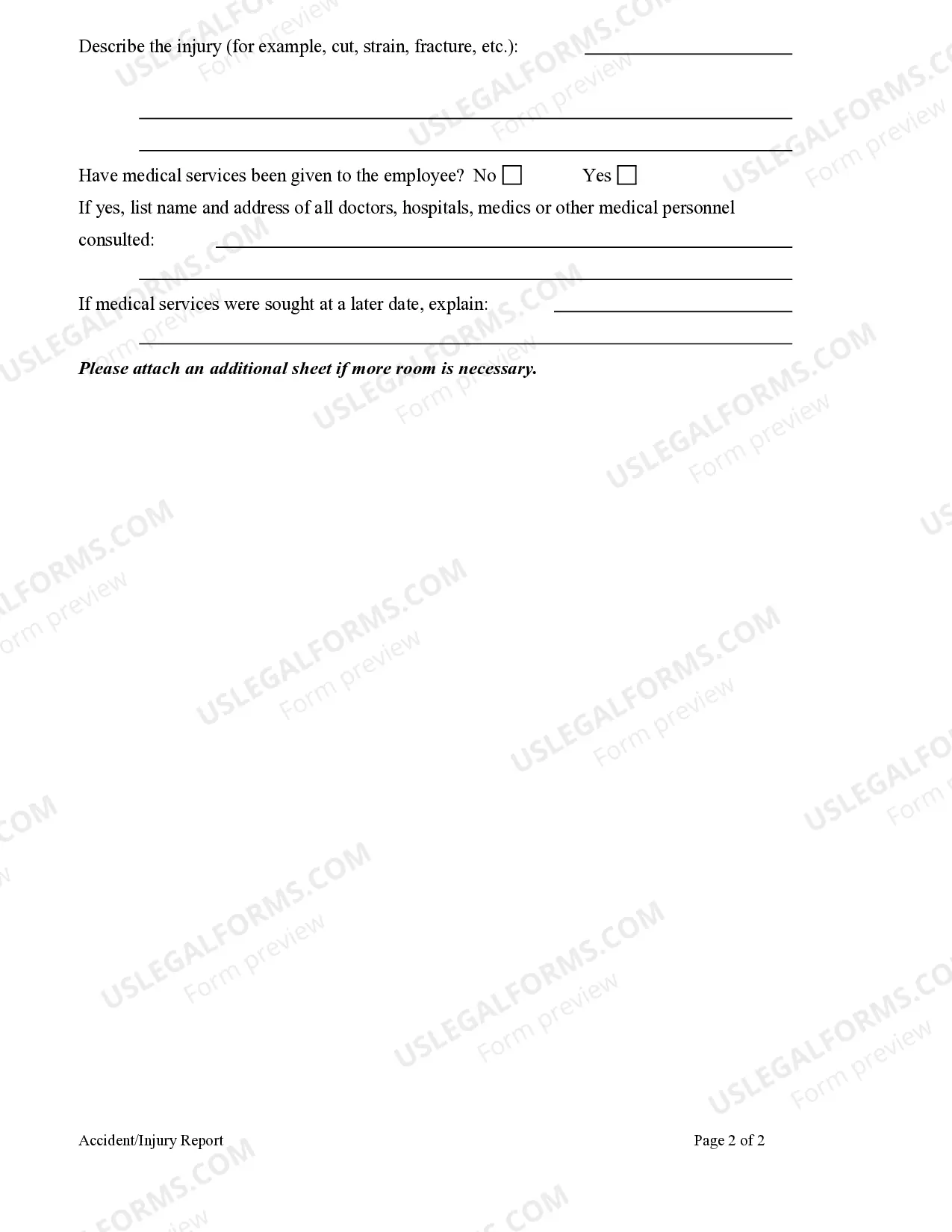
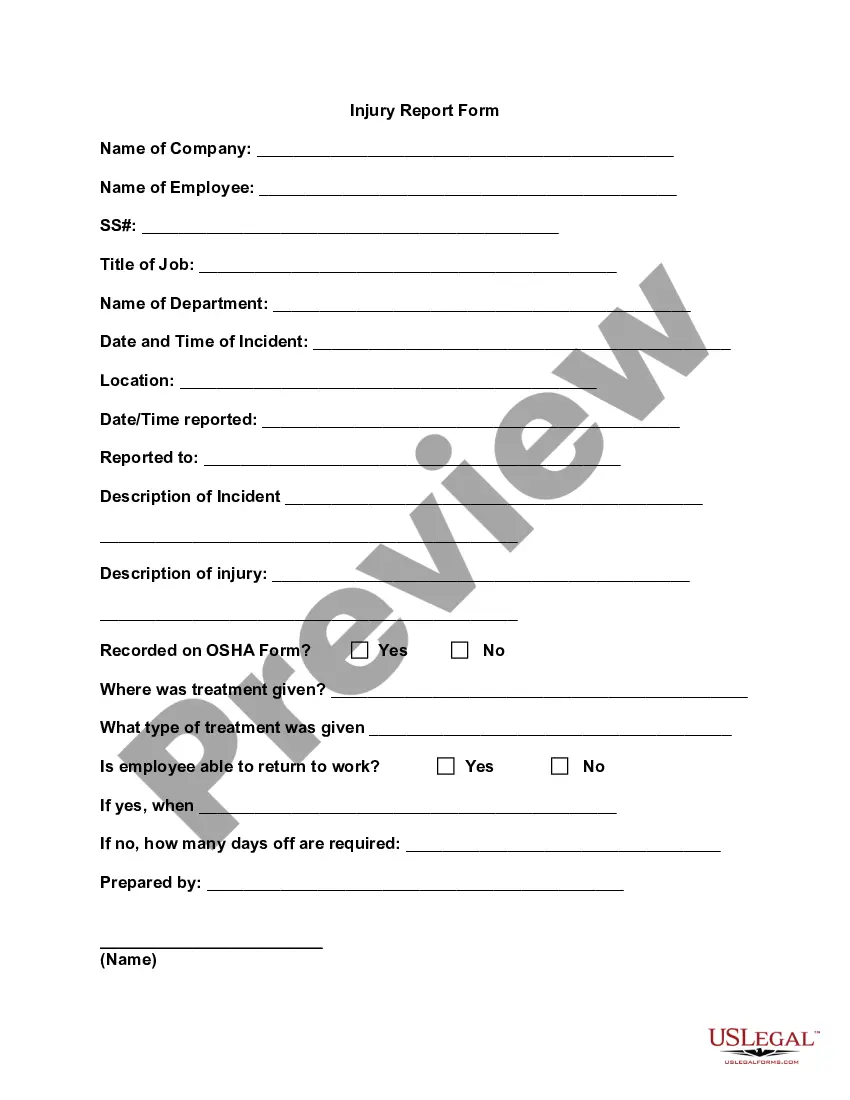
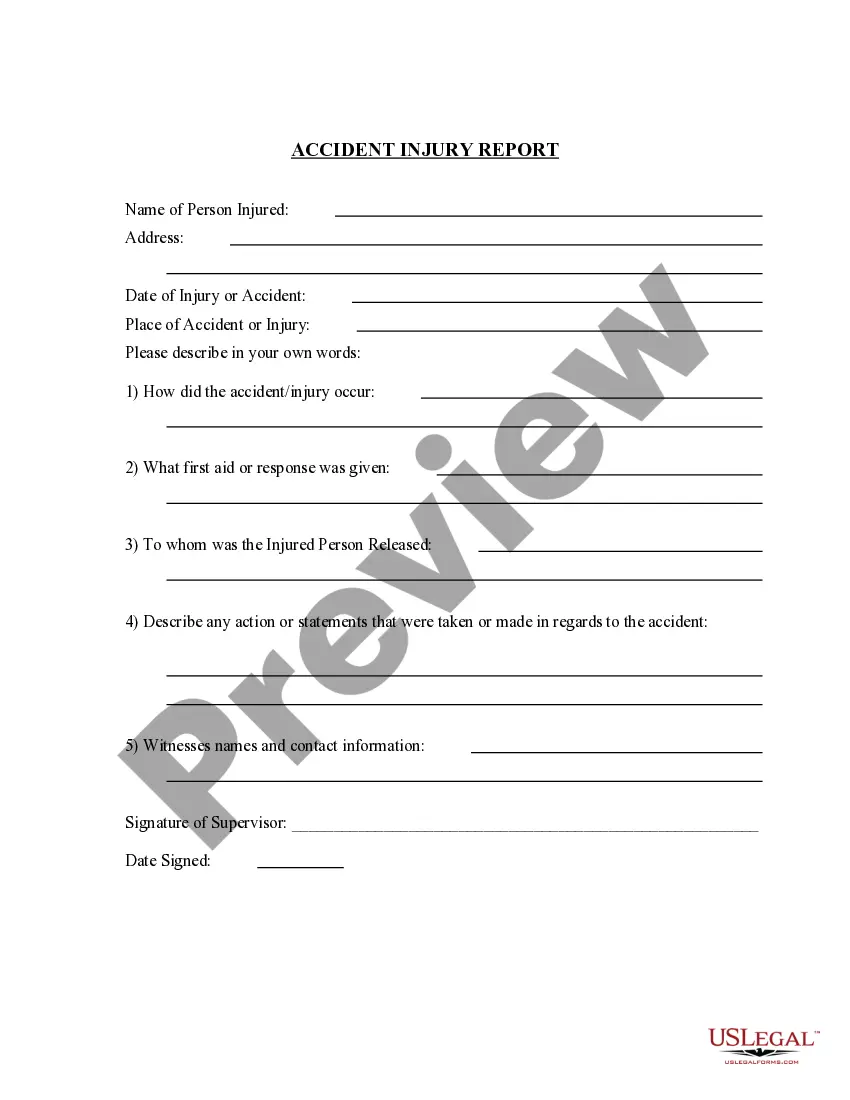
Accident report forms should include fields for names and contact information of the individuals and witnesses involved, the type of accident, the date and time the accident occurred, the location of the accident, a detailed description of the accident, and room for any additional comments.
What Should I Include In An Accident Report? Date, time, and location . Parties involved, including insurance information. Injuries and damages. Witness statements and contact information. Sequence of events – describe what happened. Photographs and sketches.
Information to Include When Writing a Car Wreck Report The Other Driver's Identity. The Time and Location of the Collision. Vehicle Information. Insurance Details. Eye-Witness Information. An Explanation of How the Collision Occurred. Seek Medical Attention. Document the Accident Scene.
The law requires the driver to file this SR-1 form with DMV regardless of fault.
INTRODUCTION (3-5 sentences) Write briefly about the accident, time and date of the accident and casualties. DESCRIPTION OF THE ACCIDENT (6-7 sentences) Describe exactly how the accident happened. ACTION TAKEN (4-5 sentences) ... RECOMMENDATIONS ( 4-5 bullet points) ... CONCLUSION (2-3 sentences)
Stick to the Facts Focus on the facts without adding opinions or assumptions. Describe what happened during the accident clearly and avoid discussing fault or other details. Never guess or estimate. If you don't know the answer to a question, admit that you don't know and move on.
