Accident With Trauma In Illinois
Description

Get your form ready online
Our built-in tools help you complete, sign, share, and store your documents in one place.
Make edits, fill in missing information, and update formatting in US Legal Forms—just like you would in MS Word.
Download a copy, print it, send it by email, or mail it via USPS—whatever works best for your next step.
Sign and collect signatures with our SignNow integration. Send to multiple recipients, set reminders, and more. Go Premium to unlock E-Sign.
If this form requires notarization, complete it online through a secure video call—no need to meet a notary in person or wait for an appointment.
We protect your documents and personal data by following strict security and privacy standards.

Make edits, fill in missing information, and update formatting in US Legal Forms—just like you would in MS Word.

Download a copy, print it, send it by email, or mail it via USPS—whatever works best for your next step.

Sign and collect signatures with our SignNow integration. Send to multiple recipients, set reminders, and more. Go Premium to unlock E-Sign.

If this form requires notarization, complete it online through a secure video call—no need to meet a notary in person or wait for an appointment.

We protect your documents and personal data by following strict security and privacy standards.
Looking for another form?






Form popularity
FAQ
If you choose to submit a Motorist Crash Report, you'll need the following information: Place and time of the accident. The name, address, and date of birth of all motorists involved in the accident. The driver's license information of all motorists involved in the accident.
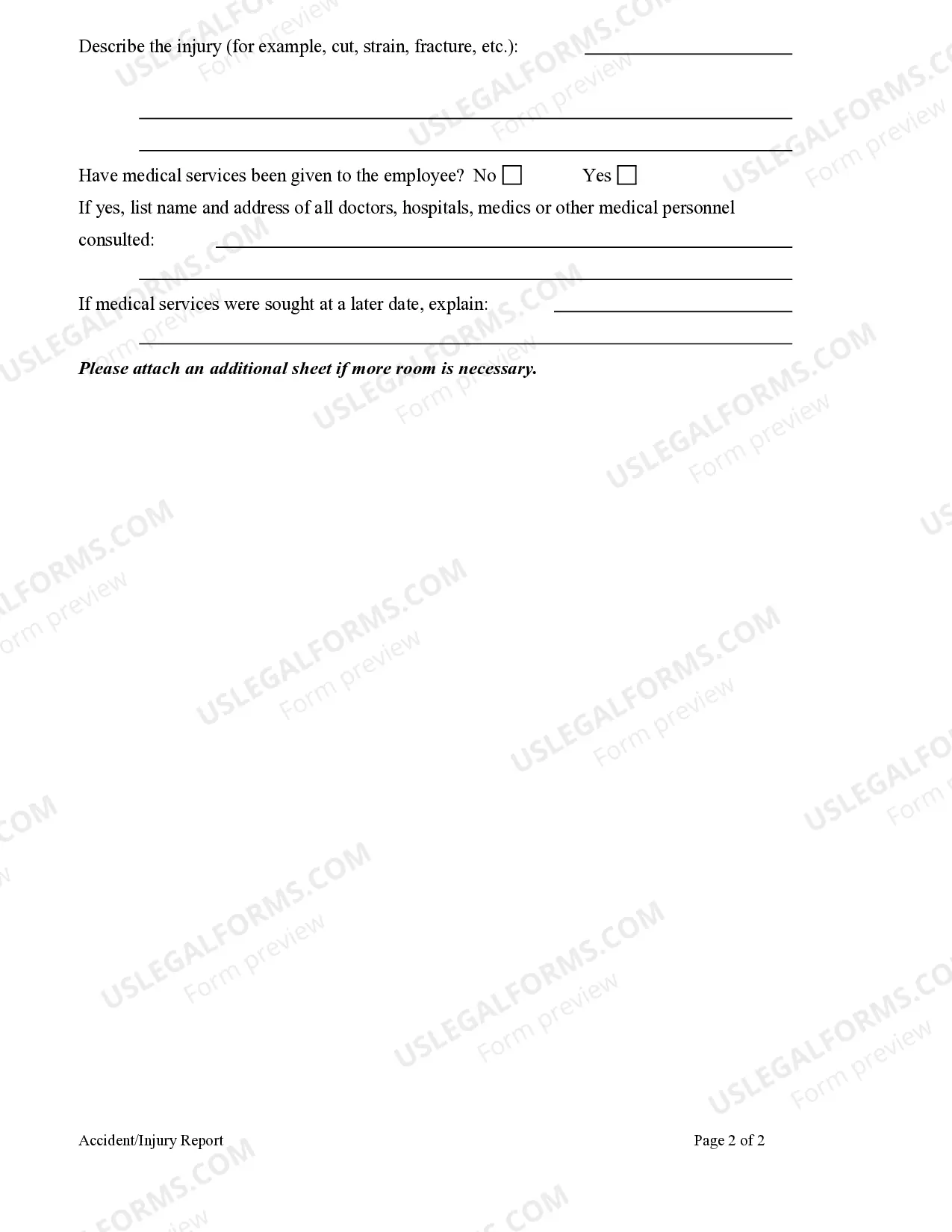
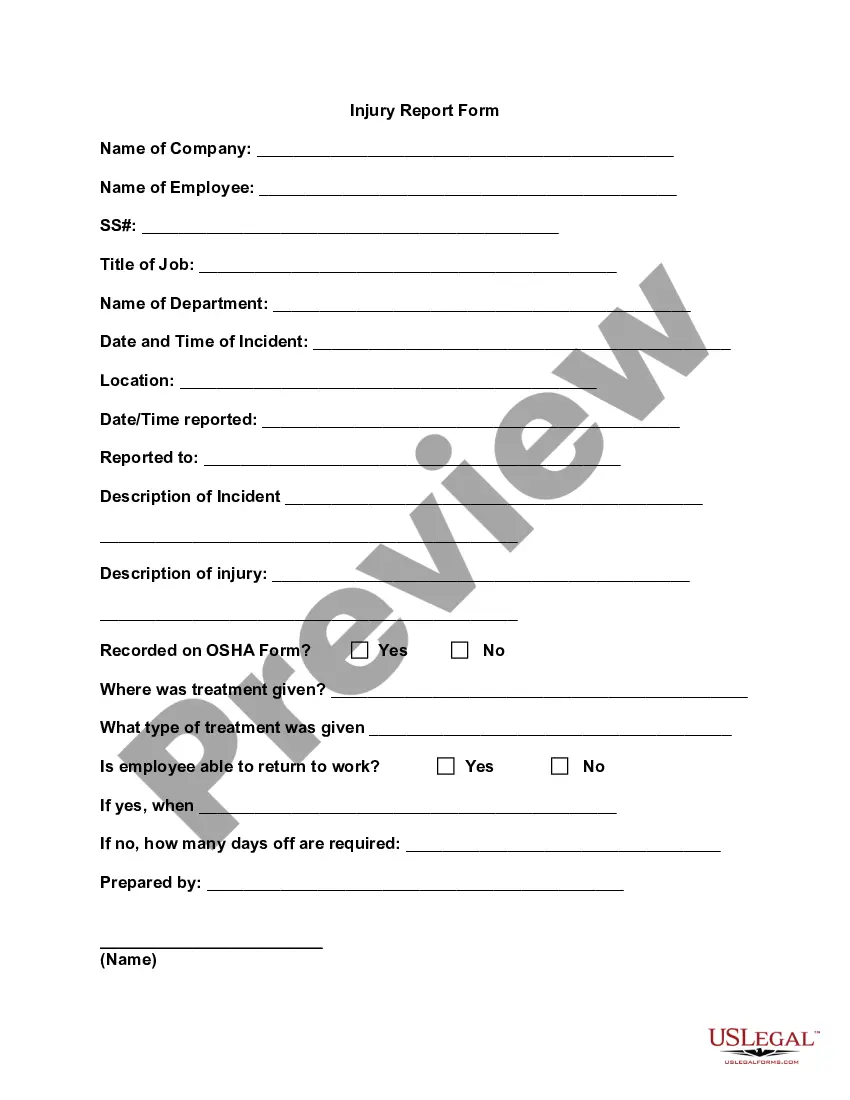
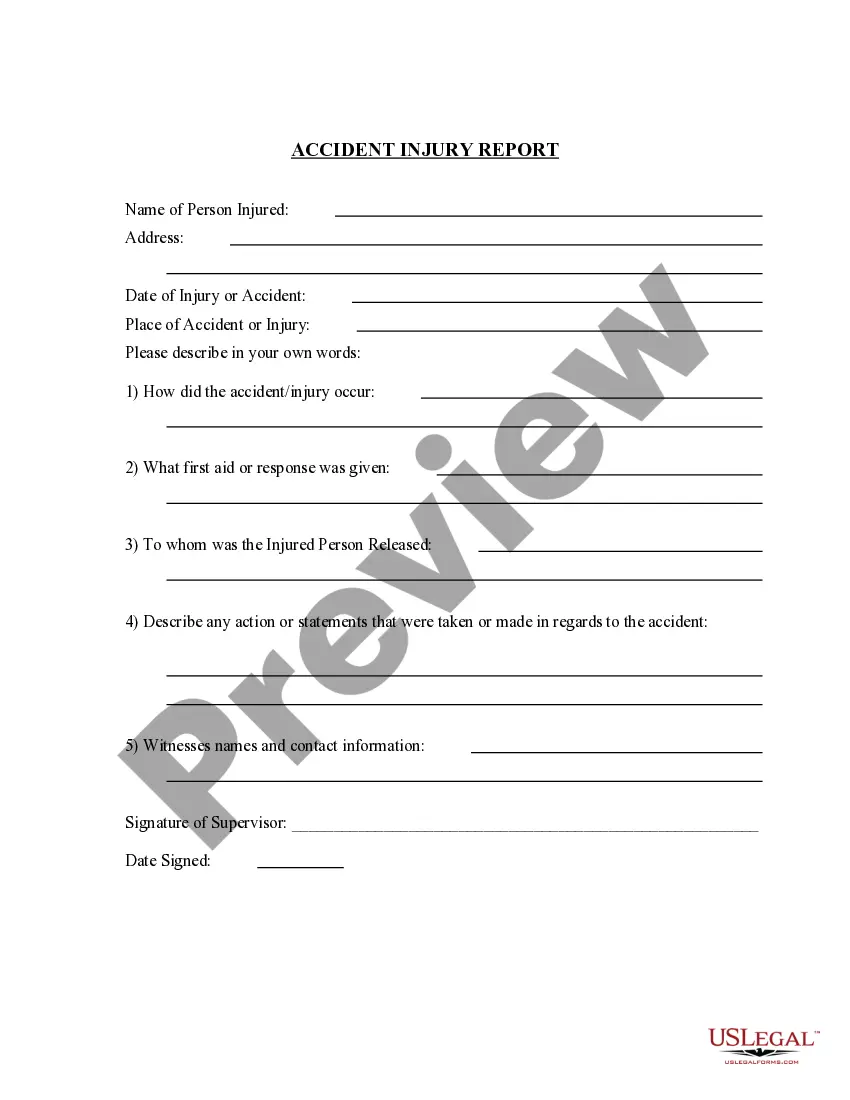
1. Basic Information Date and Time: When the accident occurred. 2. Parties Involved Driver Information: Name, address, phone number, driver's license number, and insurance details for each driver. 3. Witnesses 4. Accident Description 5. Law Enforcement 6. Additional Information 7. Conclusion 8. Attachments
“Incident (Accident) Investigations: A Guide for Employers” simplifies how to approach incident or accident investigations — providing helpful information on how to: Preserve and document the scene. Collect Data. Determine root causes. Implement corrective actions.
Stick to the Facts Focus on the facts without adding opinions or assumptions. Describe what happened during the accident clearly and avoid discussing fault or other details. Never guess or estimate. If you don't know the answer to a question, admit that you don't know and move on.
Provide your name, phone number, and address. If pressed for more, inform the adjuster of things like the date, time, and location. However, you are not required to discuss the nature of your injury, the treatment you received, and how the crash occurred.
How to Move on from Car Accident Trauma Acknowledge Your Feelings. Experiencing post-car accident depression, anxiety or other negative emotions is normal after a traumatic event. Talk About the Incident. Seek Professional Guidance. Stay Active. Practice Self-Care Techniques. Try Gradual Exposure.
Can You Get PTSD From a Car Accident? It is possible to develop post-traumatic stress disorder (PTSD) after a car accident. Car accidents can be highly traumatic experiences, especially if they involve serious injury, a threat to life, or witnessing the death or severe injury of others.
During a car accident, a series of events can unfold that can cause lasting emotional trauma, including life-altering injuries, the threat of death, and the death of someone else. Emotional trauma is a natural response to such a dramatic chain of events. It is a function of the brain's complex survival mechanisms.
Types of Traumatic Injuries Traumatic brain injury. Spinal cord injury. Spine fractures. Amputation - traumatic. Facial trauma. Acoustic trauma. Crush injury. Concussion.
Some U.S. states are no-fault states, meaning you file a claim with your insurance company, and they handle it. But Illinois is one of 38 states categorized as an at-fault state, meaning drivers are liable for any injuries they cause on the roads.
