Accident And Injury Clinic In Clark
Description

Get your form ready online
Our built-in tools help you complete, sign, share, and store your documents in one place.
Make edits, fill in missing information, and update formatting in US Legal Forms—just like you would in MS Word.
Download a copy, print it, send it by email, or mail it via USPS—whatever works best for your next step.
Sign and collect signatures with our SignNow integration. Send to multiple recipients, set reminders, and more. Go Premium to unlock E-Sign.
If this form requires notarization, complete it online through a secure video call—no need to meet a notary in person or wait for an appointment.
We protect your documents and personal data by following strict security and privacy standards.

Make edits, fill in missing information, and update formatting in US Legal Forms—just like you would in MS Word.

Download a copy, print it, send it by email, or mail it via USPS—whatever works best for your next step.

Sign and collect signatures with our SignNow integration. Send to multiple recipients, set reminders, and more. Go Premium to unlock E-Sign.

If this form requires notarization, complete it online through a secure video call—no need to meet a notary in person or wait for an appointment.

We protect your documents and personal data by following strict security and privacy standards.
Looking for another form?
Form popularity
FAQ
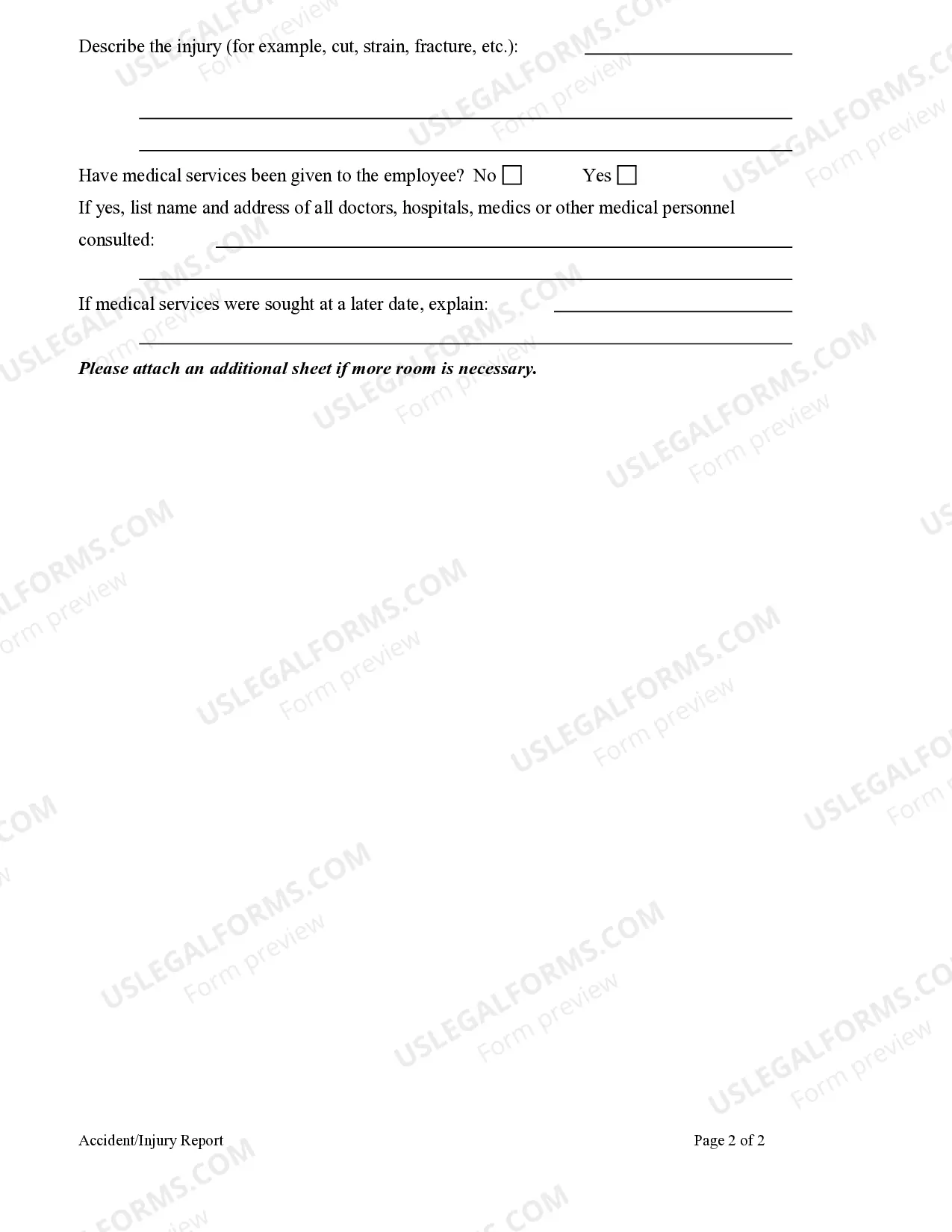
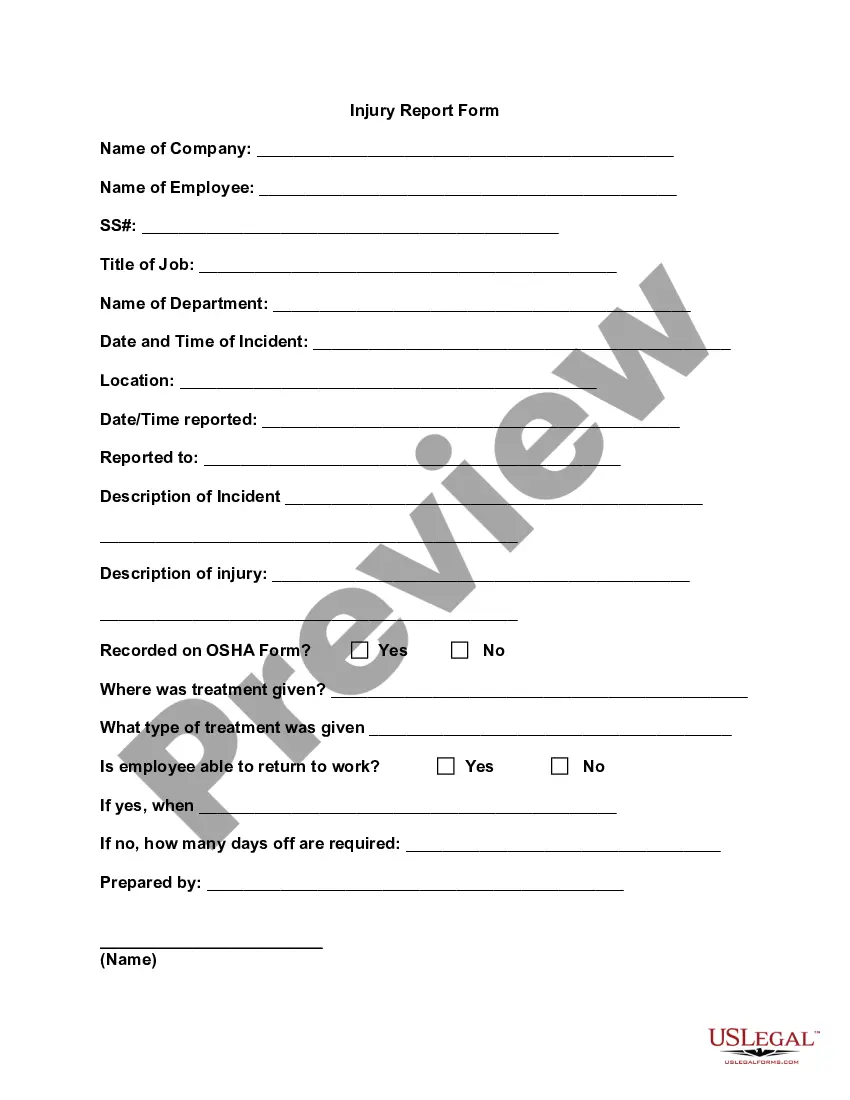
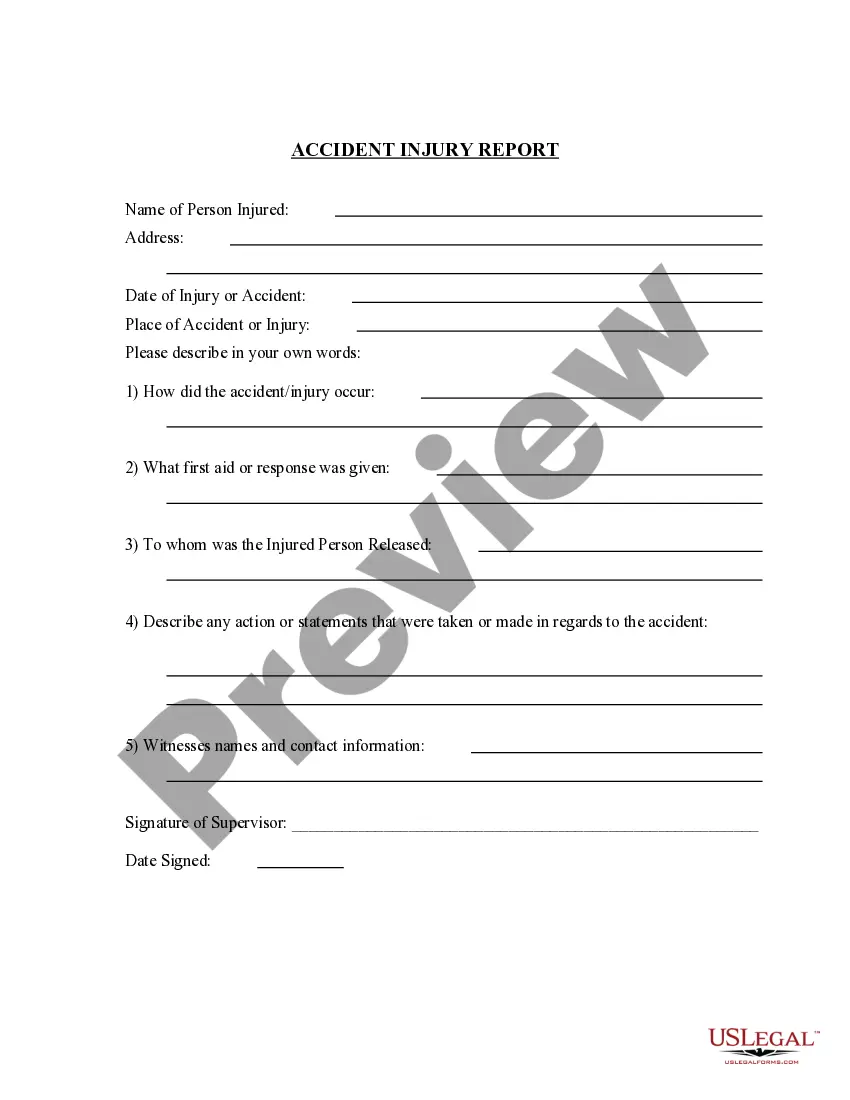
There are five key details of accidents legally required: Full name, address and occupation of the injured person (a) Date and time of the accident (b) Location of the accident (c) Cause and nature of the injury (d) Name, address and occupation of the person giving the notice, if other than the injured person (e).
Some of the questions below will be applicable and some will not. Which questions are applicable depends on the nature and circumstances of the accident. How does the injured employee feel now? ... Who was injured? ... What were the causal factors of the accident? ... When did the accident occur? ... Why was the person injured?
Finding root causes: the “five whys” The “five whys” is a proven tool for getting to the root causes of a problem. These are the causes that, if corrected, would keep similar problems from happening in the future. It involves asking “why” as many times as necessary—and five is often the magic number.
Some of the questions below will be applicable and some will not. Which questions are applicable depends on the nature and circumstances of the accident. How does the injured employee feel now? ... Who was injured? ... What were the causal factors of the accident? ... When did the accident occur? ... Why was the person injured?
Accident reporting & investigation procedure – 6 steps Check for immediate danger. Seek medical assistance. Record details in the accident book. Conduct a formal investigation. Determine if the accident is reportable. Review and update safety measures. How to track and manage incidents effectively.
What to include in a work incident report The date and time of the incident. The name of the witness or author of the report. A detailed description of the events. The names of the affected parties. Other witness statements or important information. The result of the incident.
An effective incident investigation involves six main steps, which are described in detail below: Secure the Scene. Plan the Investigation. Collect All Relevant Information. Analyze Collected Data to Find the Root Cause. Implement Corrective Actions. Document and Share the Results.
Six questions you need to ask during your accident investigation What. • was the injury/illness? • was being done at time of injury or incident? • were they told to do so? • tools were being used? ... When. • did the injury or incident occur? • did the employee begin the task? • was the employee assigned to the task?
You can handle your personal injury case by yourself if you have little bit knowledge about your legal rights and option. But it is advisable to hire an experienced personal injury attorney to negotiate a fair settlement and get you the compensation which you deserve.
Compensation after an accident or injury Write a letter, complain or try mediation. Check your insurance policies. Using a solicitor or a claims company.
