Annual Meeting Resolutions With Employees In Tarrant
Description



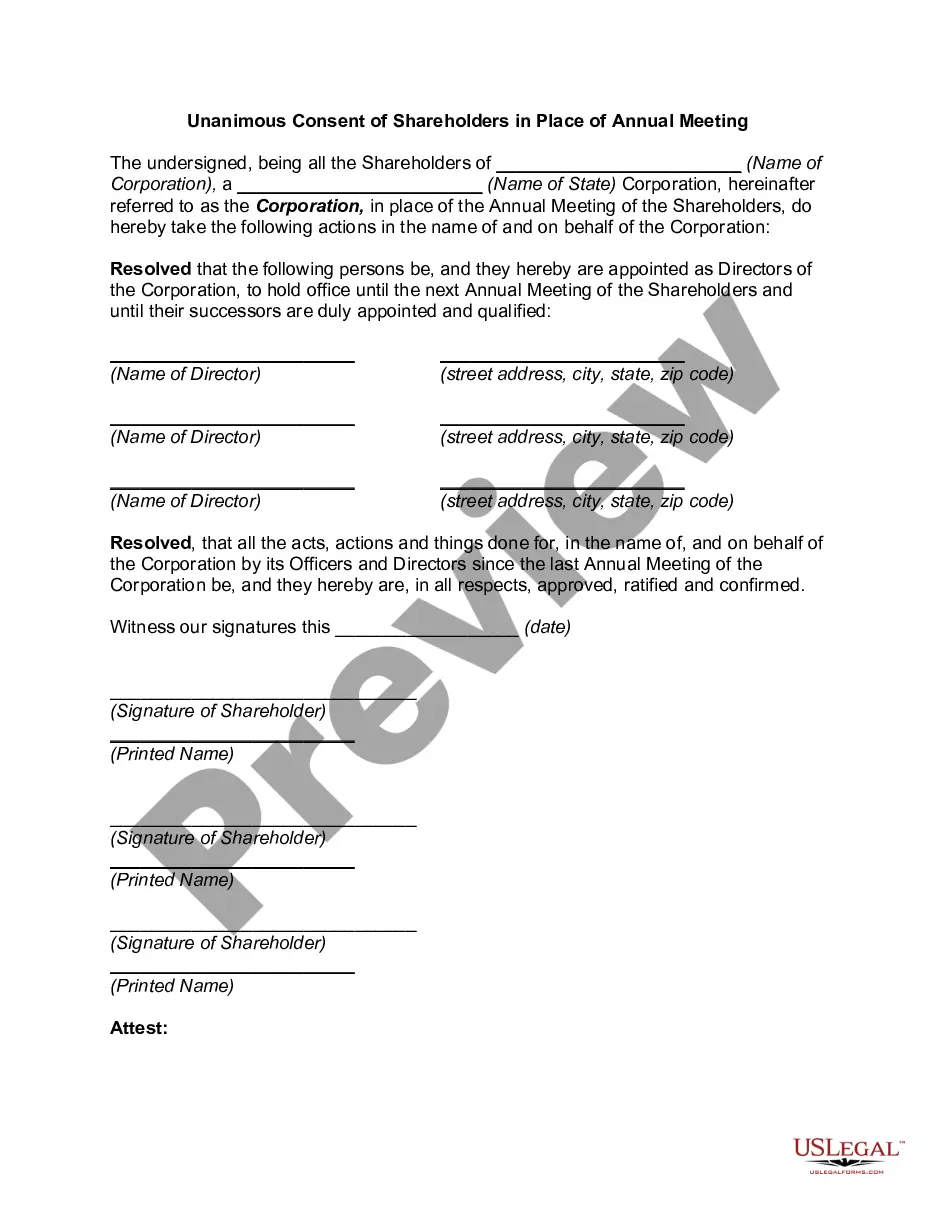
Get your form ready online
Our built-in tools help you complete, sign, share, and store your documents in one place.
Make edits, fill in missing information, and update formatting in US Legal Forms—just like you would in MS Word.
Download a copy, print it, send it by email, or mail it via USPS—whatever works best for your next step.
Sign and collect signatures with our SignNow integration. Send to multiple recipients, set reminders, and more. Go Premium to unlock E-Sign.
If this form requires notarization, complete it online through a secure video call—no need to meet a notary in person or wait for an appointment.
We protect your documents and personal data by following strict security and privacy standards.

Make edits, fill in missing information, and update formatting in US Legal Forms—just like you would in MS Word.

Download a copy, print it, send it by email, or mail it via USPS—whatever works best for your next step.

Sign and collect signatures with our SignNow integration. Send to multiple recipients, set reminders, and more. Go Premium to unlock E-Sign.

If this form requires notarization, complete it online through a secure video call—no need to meet a notary in person or wait for an appointment.

We protect your documents and personal data by following strict security and privacy standards.
Looking for another form?






Form popularity
FAQ
California. Both Acts provide that it is a misdemeanor for a member of a state or legislative body to attend a meeting in violation of any provision of the Act, where the member intends to deprive the public of information to which the member knows or has reason to know the public is entitled.
The Open Meeting Act Made Easy is a handbook in a question-and-answer format that covers the most frequently asked questions about the Texas Open Meetings Act (“the Act”). The handbook addresses when the Act applies, what constitutes reasonable notice and the application of the Act to informal gatherings.
Texas Government Code, Chapter 552, gives you the right to access government records; and an officer for public information and the officer's agent may not ask why you want them. All government information is presumed to be available to the public. Certain exceptions may apply to the disclosure of the information.
Section 551.007 gives a member of the public the right to participate in a meeting by addressing the governmental body about items on the meeting's agenda. A governmental body may offer additional or alternative ways for a member of the public to participate in the meeting, but it remains the member's choice.
The Open Meetings Act (Government Code, Chapter 551) provides that meetings of governmental bodies must be open to the public (except for expressly authorized executive sessions). Both state and regional agencies file notices of open meetings with the Secretary of State's office.
School board meetings are generally open to the public under Chapter 551 of the Texas Government Code, except for executive sessions which may be held to discuss limited issues such as possible real estate purchases or personnel actions.
Sec. 551.002. OPEN MEETINGS REQUIREMENT. Every regular, special, or called meeting of a governmental body shall be open to the public, except as provided by this chapter.
The Texas Open Meetings Act was enacted to ensure the Texas government is transparent, open, and accountable to the people. At its core, the Texas Open Meetings Act requires government entities to keep official business accessible to the public.
It is a misdemeanor for a member of a governing body to conspire to circumvent the Act by meeting in numbers of less than a quorum for the purpose of secret deliberations. It Page 6 -6- is punishable by a fine of between $100 and $500, one to six months in jail, or both. 3.
Upon finding a violation of the Open Meeting Law, the Attorney General may impose a civil penalty upon a public body of not more than $1,000 for each intentional violation.

