Sample Letter With Acknowledgment In Collin
Description
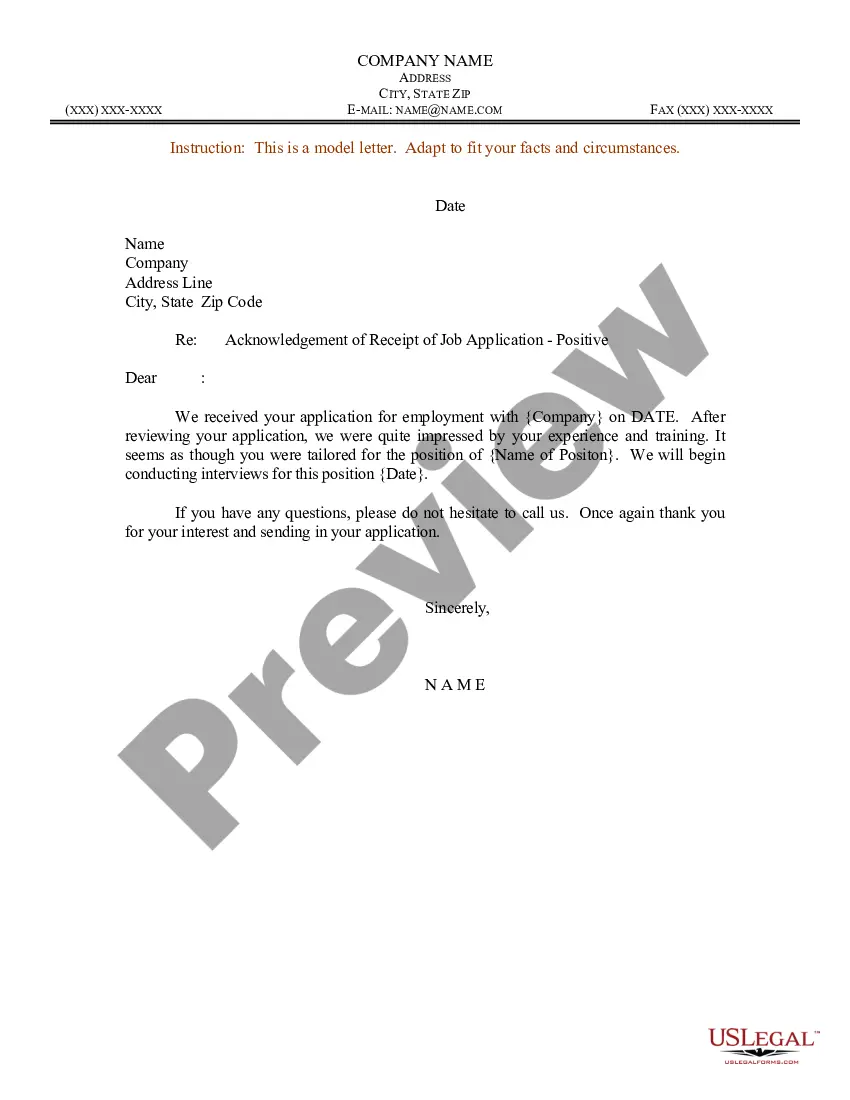


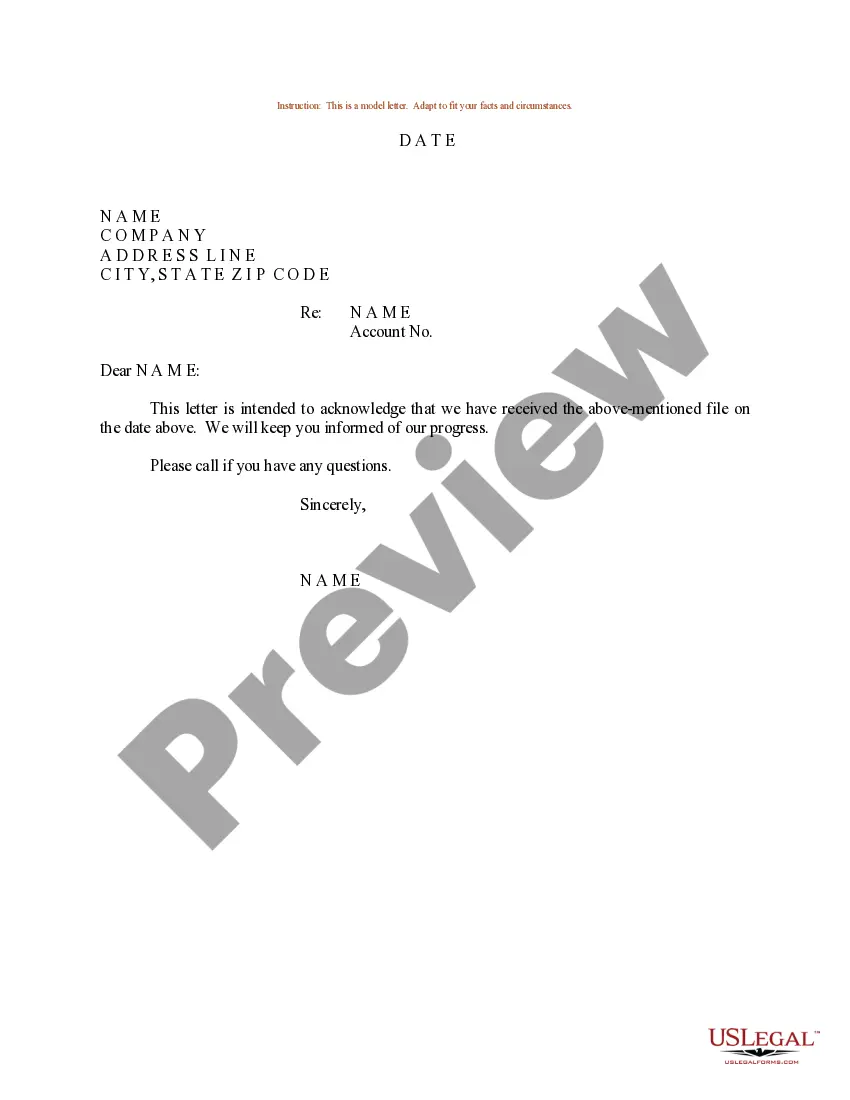
Get your form ready online
Our built-in tools help you complete, sign, share, and store your documents in one place.
Make edits, fill in missing information, and update formatting in US Legal Forms—just like you would in MS Word.
Download a copy, print it, send it by email, or mail it via USPS—whatever works best for your next step.
Sign and collect signatures with our SignNow integration. Send to multiple recipients, set reminders, and more. Go Premium to unlock E-Sign.
If this form requires notarization, complete it online through a secure video call—no need to meet a notary in person or wait for an appointment.
We protect your documents and personal data by following strict security and privacy standards.

Make edits, fill in missing information, and update formatting in US Legal Forms—just like you would in MS Word.

Download a copy, print it, send it by email, or mail it via USPS—whatever works best for your next step.

Sign and collect signatures with our SignNow integration. Send to multiple recipients, set reminders, and more. Go Premium to unlock E-Sign.

If this form requires notarization, complete it online through a secure video call—no need to meet a notary in person or wait for an appointment.

We protect your documents and personal data by following strict security and privacy standards.
Looking for another form?



Form popularity
FAQ
An acknowledgment letter basically informs the sender that the received items are securely in your possession. And this letter of acknowledgment isn't just a nicety; it's a crucial document deserving a spot in your organizational archives. Remember the personal touch.
Outline the information that needs to be included in the letter Start with a professional greeting. Identify the person the letter is acknowledging. Describe the action that is being acknowledged. Express gratitude for the action taken. Include any relevant details. Close with a professional sign-off. Add contact information.
A request for an acknowledgement usually is best placed at the end of a letter, in the last paragraph, so it's less likely the recipient will forget it. Consider italicizing or boldfacing your request for an acknowledgement. This is a matter of personal choice, as some people consider this approach a bit heavy-handed.
I acknowledge receipt of your official information request dated date for brief detail of the subject matter of the request. We received your request on date.
I'm extremely grateful to (Something—my success, the completion of my dissertation) would not have been possible without the support and nurturing of (person). I cannot begin to express my thanks to …., who …. Less strong, but very appreciative: I would like to extend my sincere thanks to …/ I must also thank …
Kick off your acknowledgment letter by stating the date you received the document or goods, providing a brief description for clarity, and confirming their safe arrival. Clarity in this section is paramount to avoid any follow-up inquiries from the sender seeking more details.
How do you fill out an acknowledgment letter? Date of receipt: State when the document or goods were received. Description: Provide a concise description of the received document or goods. Confirmation statement: Include a statement confirming the safe receipt of the document or goods.
For example, "Acknowledging Receipt: Your Email Dated date." “Thank You for Your Submission/Message/Request." “Confirmation: We've Received Your Document/Information.” "Acknowledgment of Your Recent Inquiry/Feedback/Communication.” "Gratitude for Your Application/Order/Support."
A request for an acknowledgement usually is best placed at the end of a letter, in the last paragraph, so it's less likely the recipient will forget it. Consider italicizing or boldfacing your request for an acknowledgement. This is a matter of personal choice, as some people consider this approach a bit heavy-handed.
A letter of acknowledgement aims to intimate the concerned party that the documents or items requested in a previous communication have been received. The acknowledgement letter is a professional courtesy extended by businesses to maintain professional relationships.

