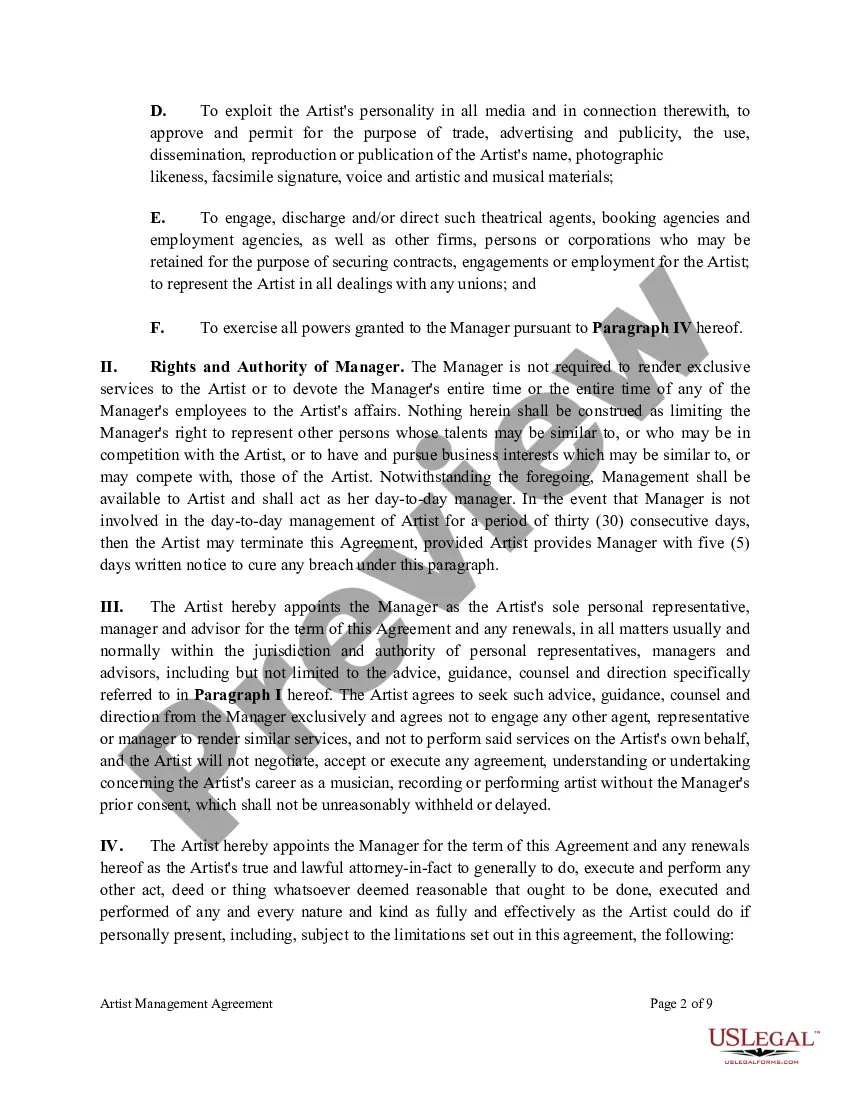
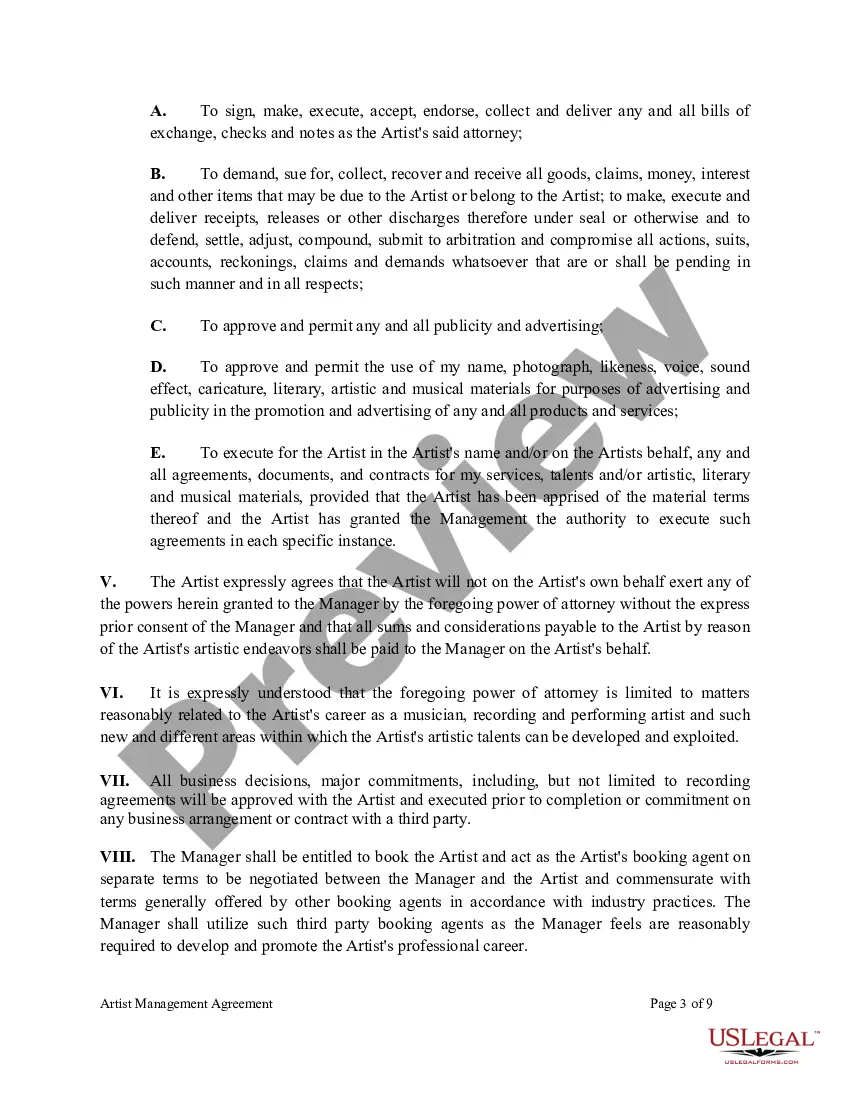
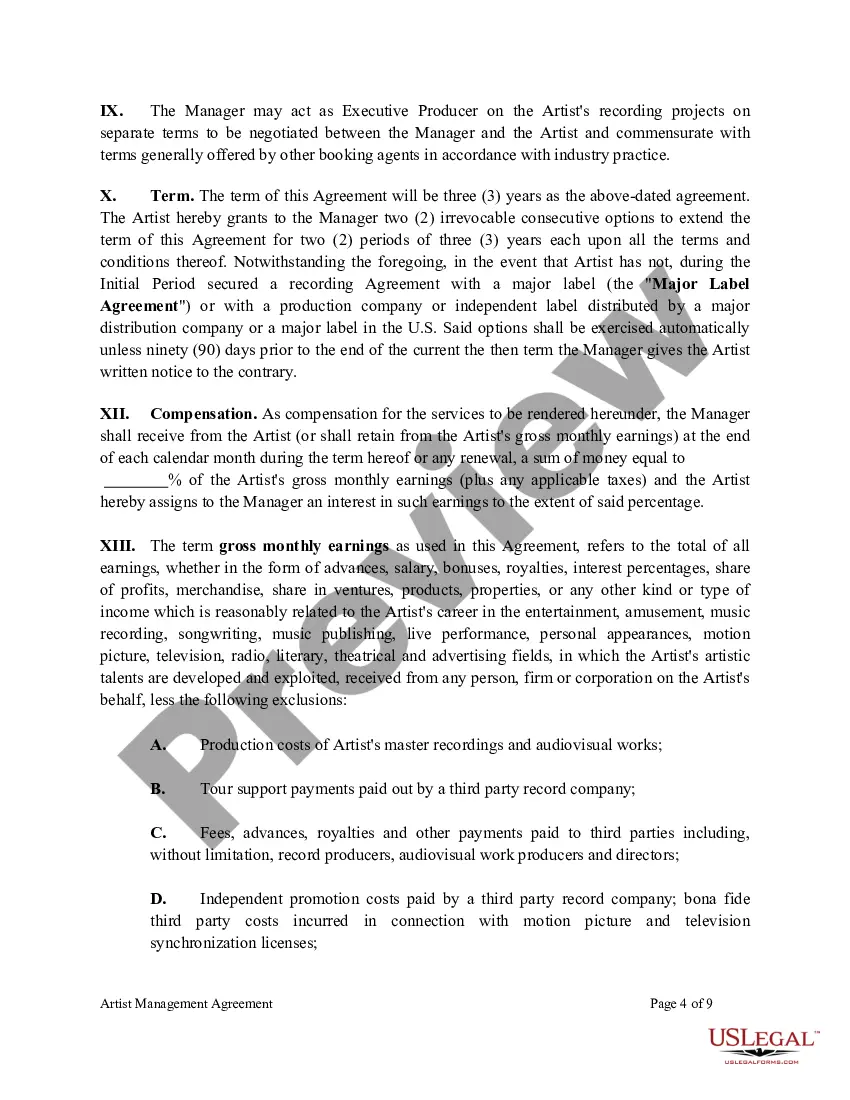
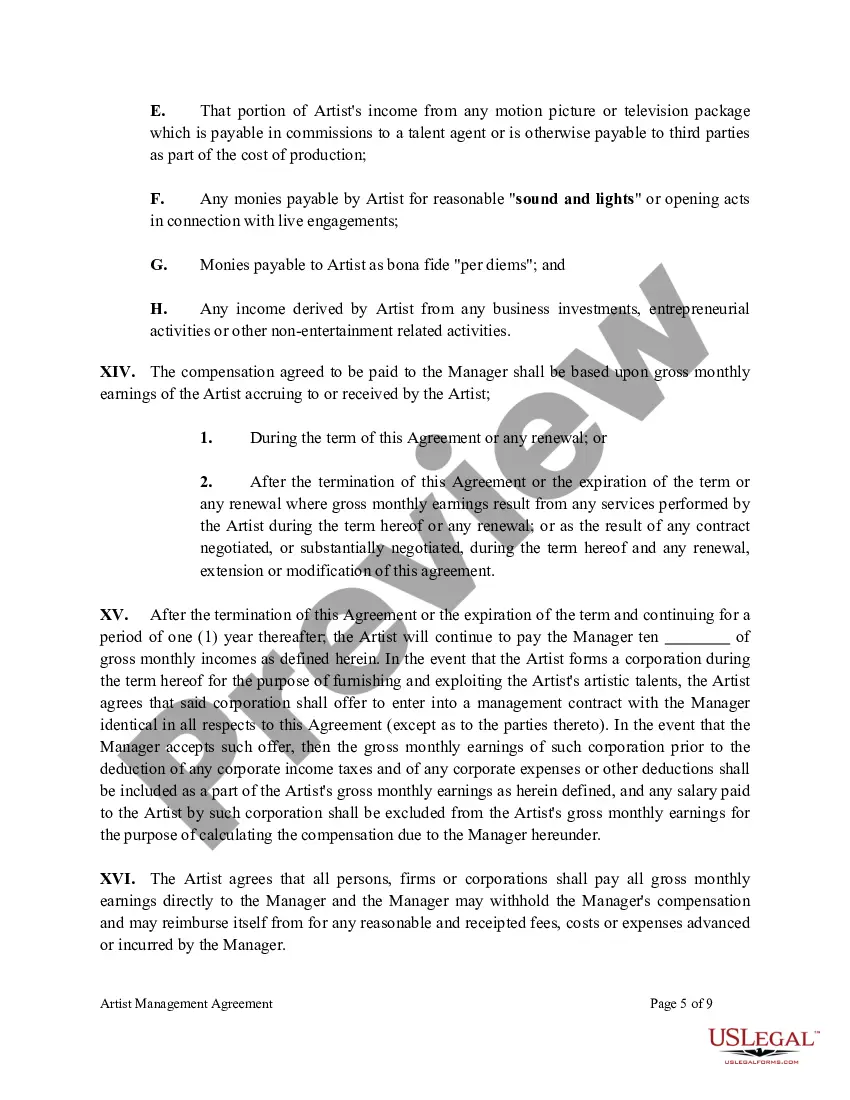
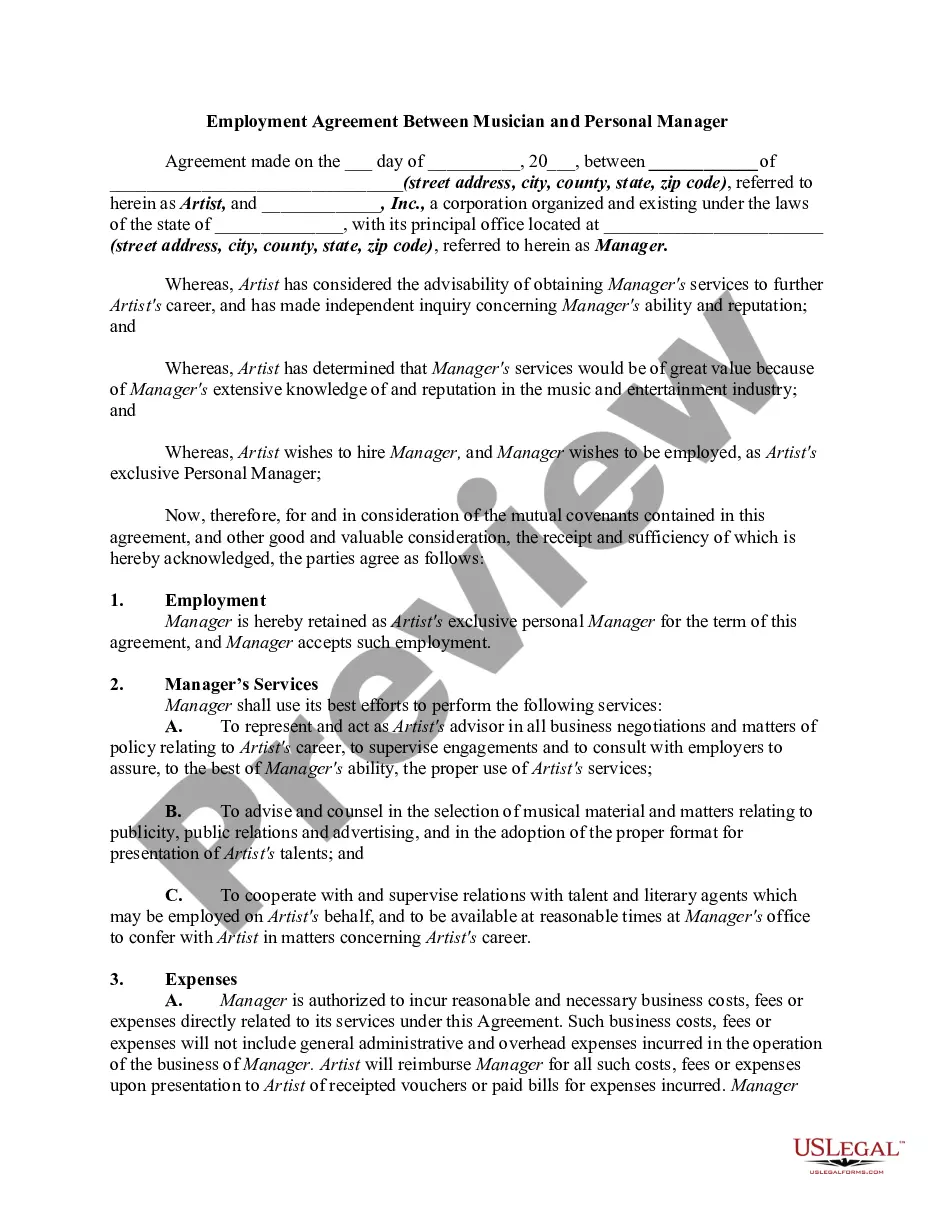
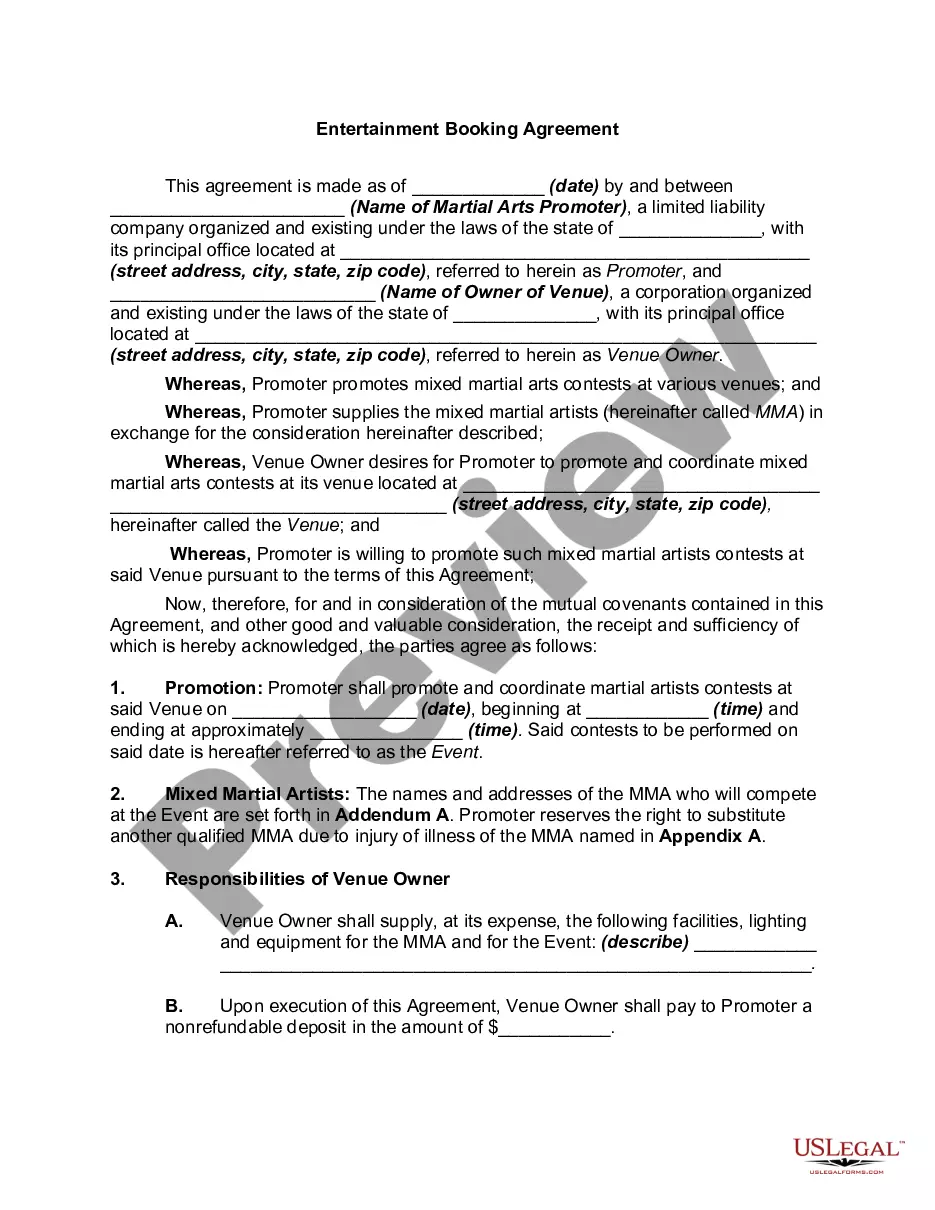
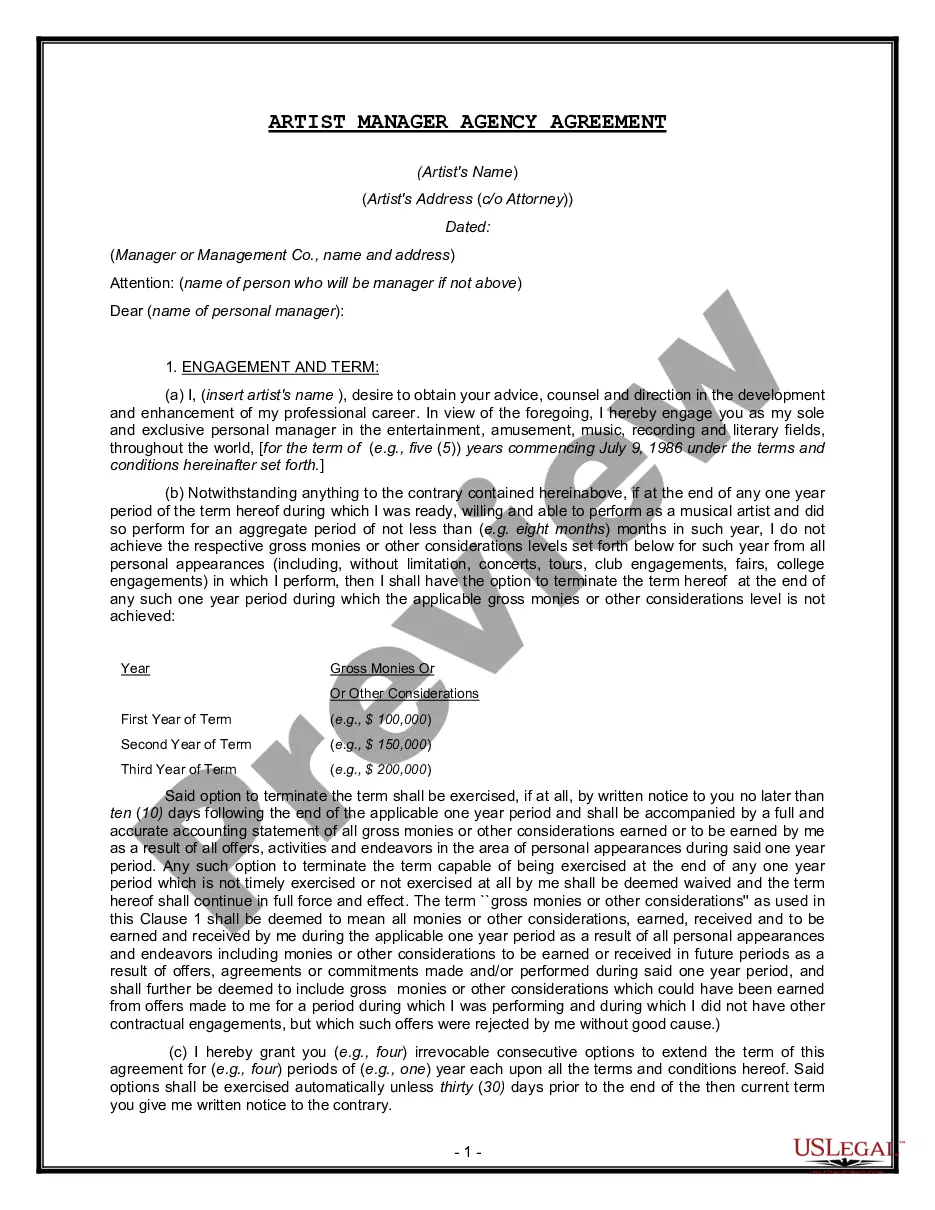
Basic Artist Management Contract With Music Industry In Wayne
Description

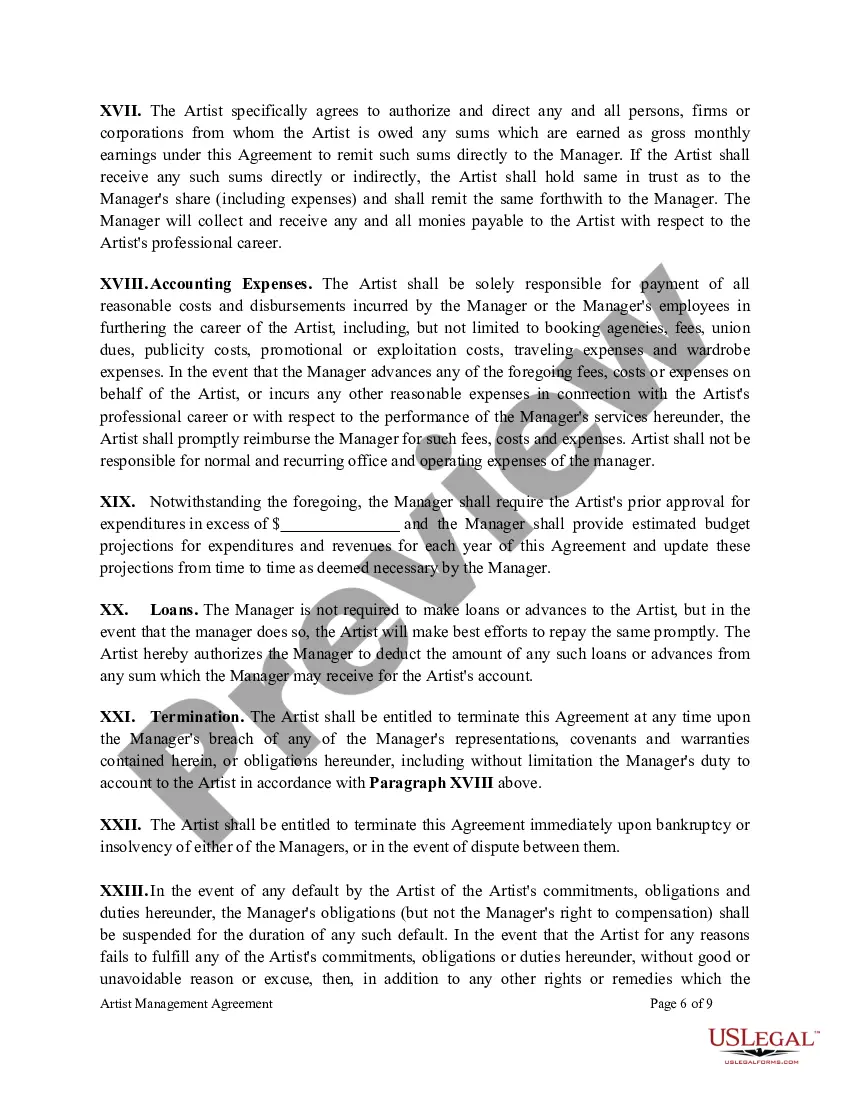
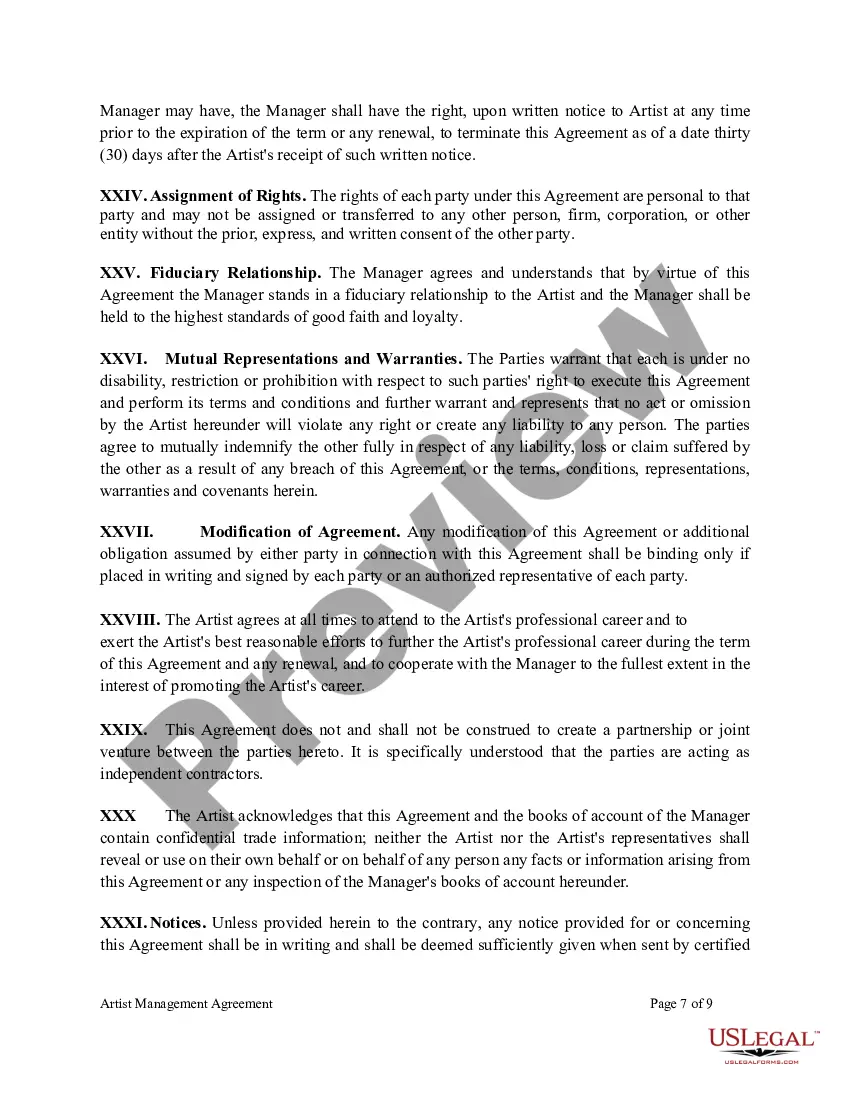
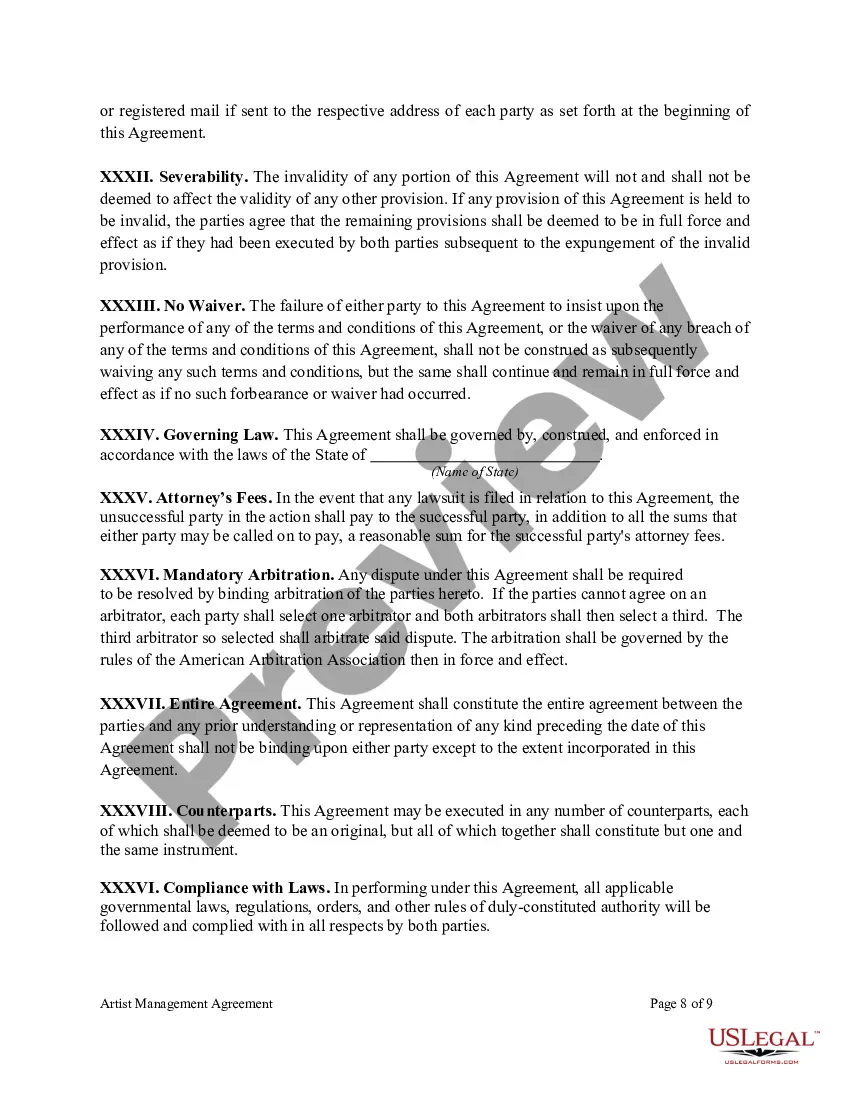
Get your form ready online
Our built-in tools help you complete, sign, share, and store your documents in one place.
Make edits, fill in missing information, and update formatting in US Legal Forms—just like you would in MS Word.
Download a copy, print it, send it by email, or mail it via USPS—whatever works best for your next step.
Sign and collect signatures with our SignNow integration. Send to multiple recipients, set reminders, and more. Go Premium to unlock E-Sign.
If this form requires notarization, complete it online through a secure video call—no need to meet a notary in person or wait for an appointment.
We protect your documents and personal data by following strict security and privacy standards.

Make edits, fill in missing information, and update formatting in US Legal Forms—just like you would in MS Word.

Download a copy, print it, send it by email, or mail it via USPS—whatever works best for your next step.

Sign and collect signatures with our SignNow integration. Send to multiple recipients, set reminders, and more. Go Premium to unlock E-Sign.

If this form requires notarization, complete it online through a secure video call—no need to meet a notary in person or wait for an appointment.

We protect your documents and personal data by following strict security and privacy standards.
Looking for another form?






Form popularity
FAQ
Steps To Starting An Artist Management Company Build Your Artist Roster. Sign A Contract. Don't Quit Your Day Job Just Yet. Draft an Artist Management Company Business Plan. Make a Name for Yourself. Get Organized. Work With an Entertainment Accountant. Hire an Entertainment Lawyer.
As a general rule, managers take a percentage of all income generated by the artist in exchange for their management services. Commission rates typically range from 15-25% of the artist's gross income from: Recording royalties: Sales, streaming and licensing of recorded music.
Quick find Considerations before you start a management company. How to start a management company. Choose a management company name. Know the specifics of who you want to manage and draw up a business plan. Get your management company incorporated. Hire support, especially for those areas you know little about. Scout talent.
How To Become An Artist Manager Understand Your Role: Managing Artists' Expectations. Educate Yourself. Become a Student Manager. Make College Friends. Join College Radio. Promote College Events. Acquire Your Own Clients. Help A Friend.
A Music Recording Contract is a legal agreement between a music recording company and an artist or group that creates music. Recording companies use the contract to outline the terms for creating recorded music with the artist. Your Music Recording Contract should cover details like: Compensation and royalties.
Managers' commissions are typically between 15 to 20% of an artist's gross income. Whether it's 15% or 20% really depends on the level of the band and the bargaining power of each party. I've seen some net deals, but they are extremely rare. That being said, I always push for a net commission on merchandise.
Starting a Career in Artist Management: A Step-by-Step Guide Research the industry and understand the role of an artist manager. Gain experience by interning or assisting established artist managers. Build a strong network by attending industry events and connecting with artists.
Being an artist manager is not an easy task. It requires a lot of hard work, dedication, and passion for music. Artist managers are responsible for guiding and supporting artists in every aspect of their career, from booking gigs to negotiating contracts and managing finances.
Networking: Attend music industry events, conferences, or concerts. Networking can often lead to personal connections with managers or their representatives. LinkedIn: Search for the artist's management team on LinkedIn. Professionals in the industry often maintain profiles that can provide contact details.
