Artist Management Salary In Travis
Description

Get your form ready online
Our built-in tools help you complete, sign, share, and store your documents in one place.
Make edits, fill in missing information, and update formatting in US Legal Forms—just like you would in MS Word.
Download a copy, print it, send it by email, or mail it via USPS—whatever works best for your next step.
Sign and collect signatures with our SignNow integration. Send to multiple recipients, set reminders, and more. Go Premium to unlock E-Sign.
If this form requires notarization, complete it online through a secure video call—no need to meet a notary in person or wait for an appointment.
We protect your documents and personal data by following strict security and privacy standards.

Make edits, fill in missing information, and update formatting in US Legal Forms—just like you would in MS Word.

Download a copy, print it, send it by email, or mail it via USPS—whatever works best for your next step.

Sign and collect signatures with our SignNow integration. Send to multiple recipients, set reminders, and more. Go Premium to unlock E-Sign.

If this form requires notarization, complete it online through a secure video call—no need to meet a notary in person or wait for an appointment.

We protect your documents and personal data by following strict security and privacy standards.
Looking for another form?








Form popularity
FAQ
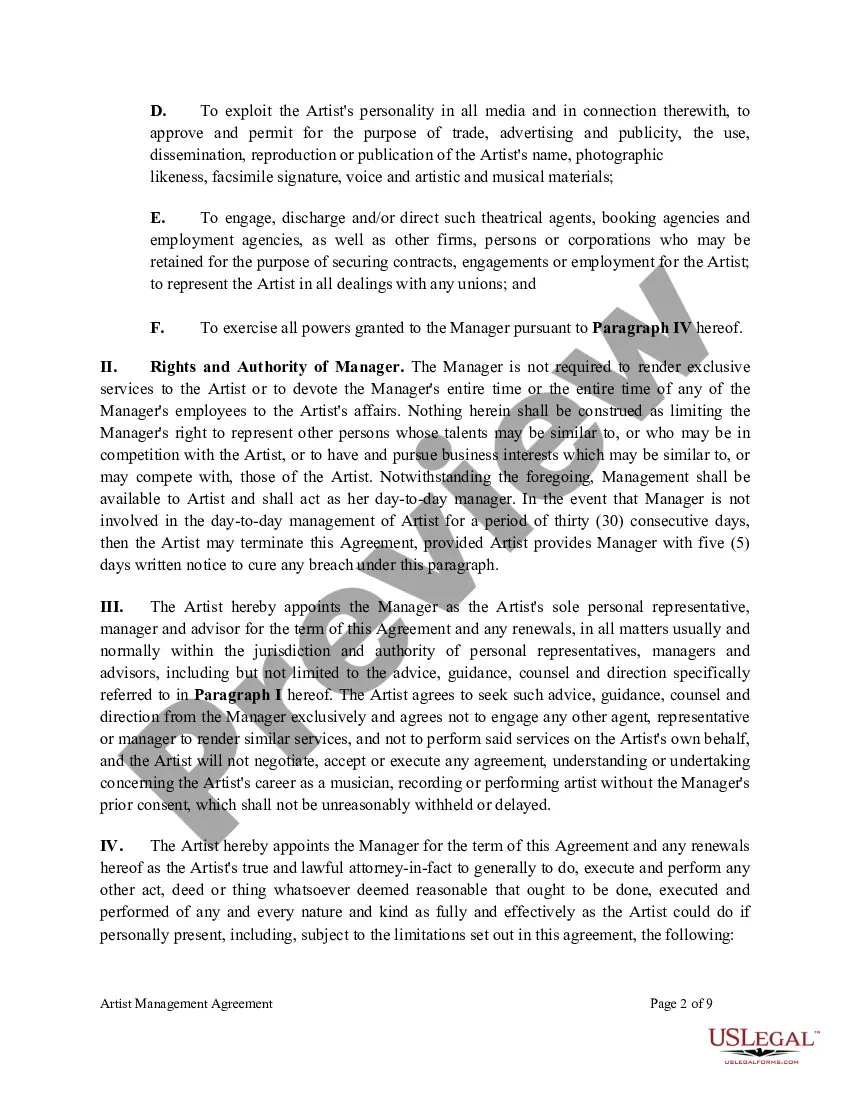
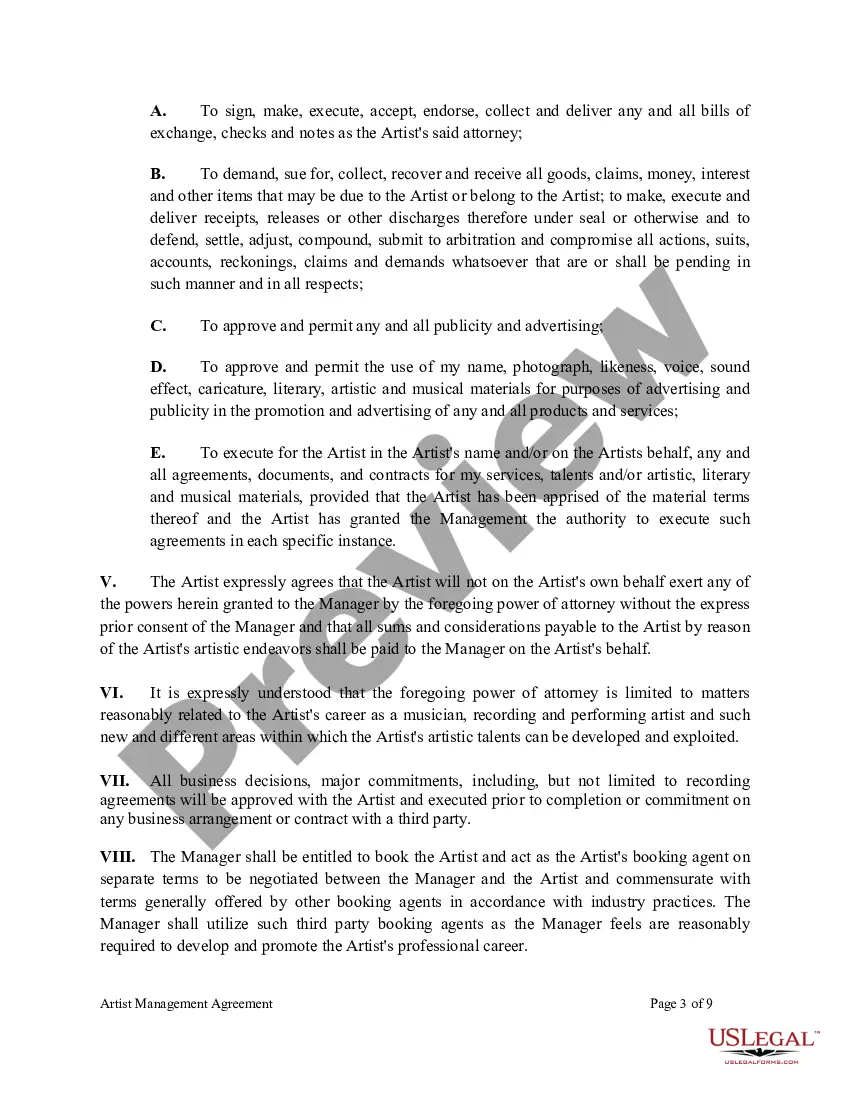
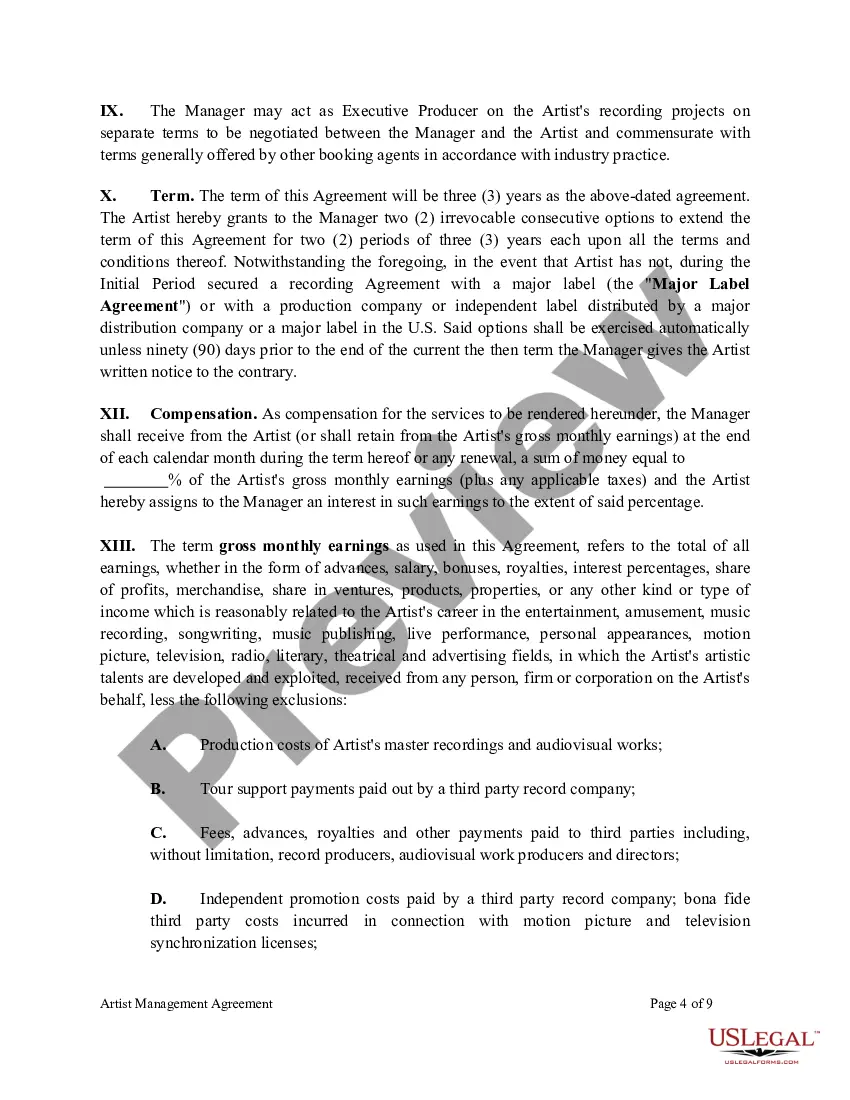
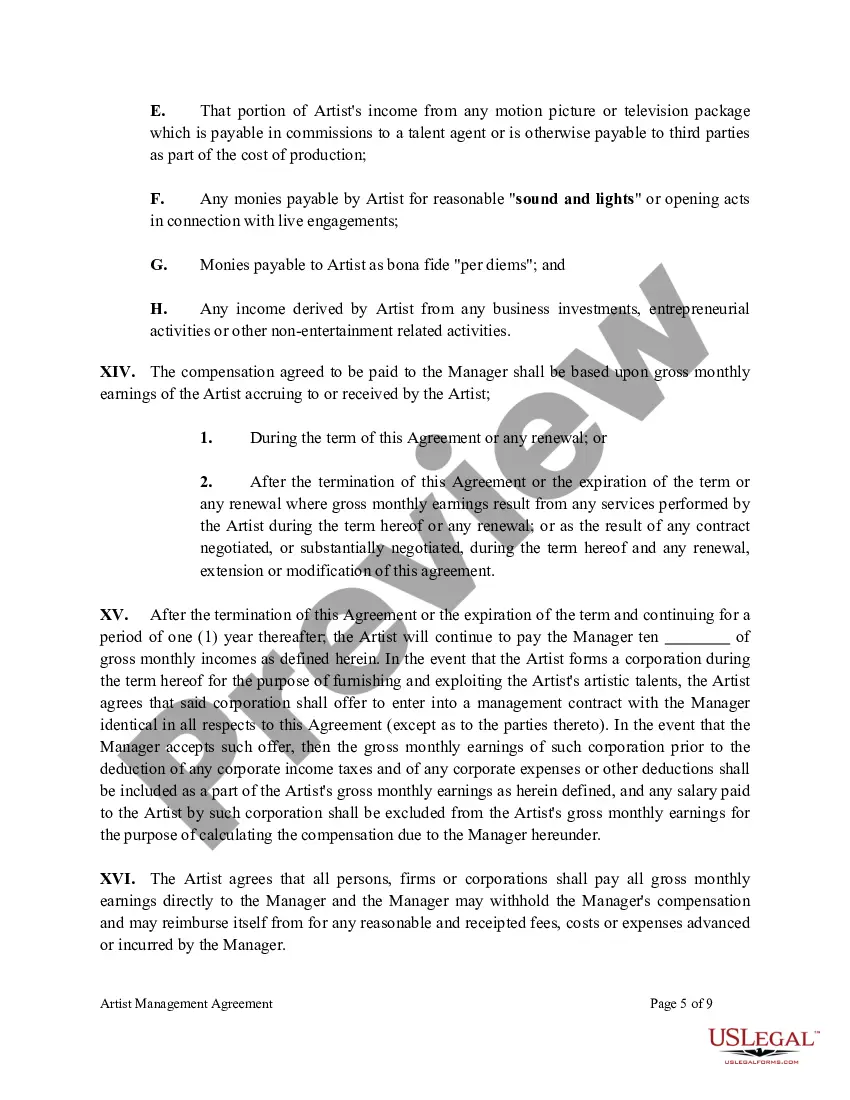
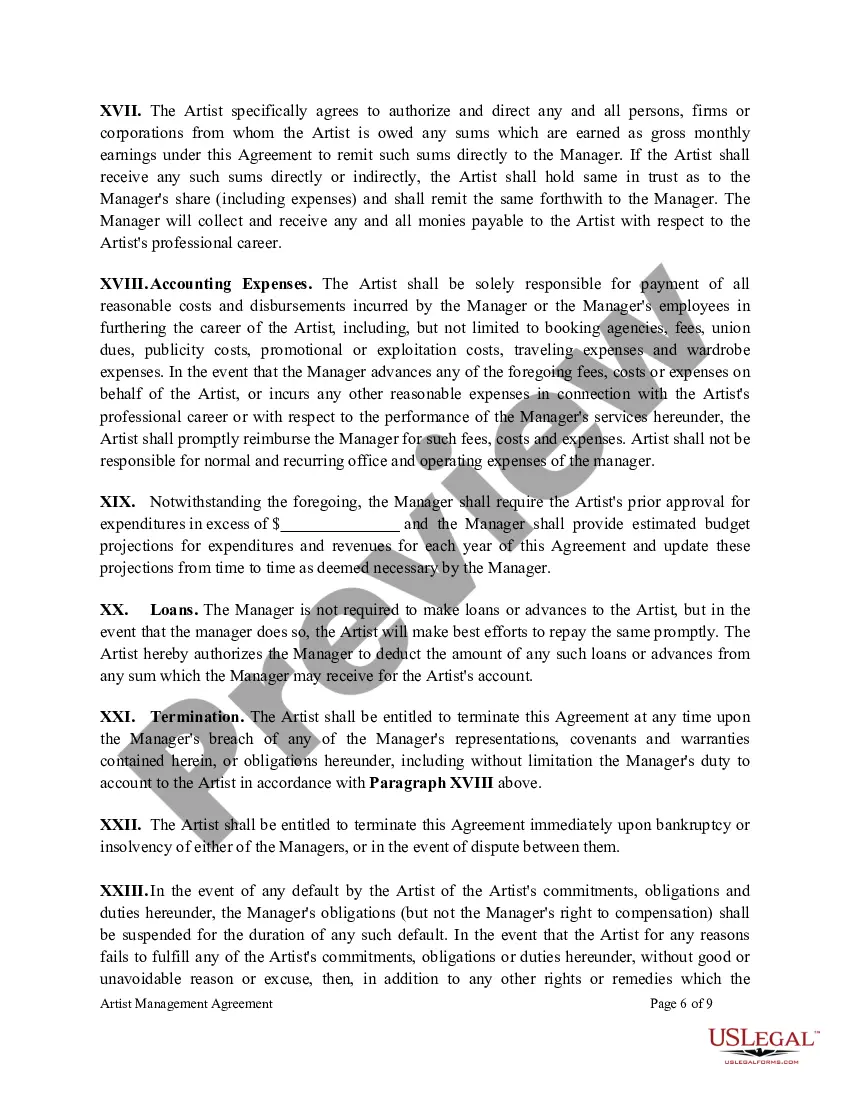
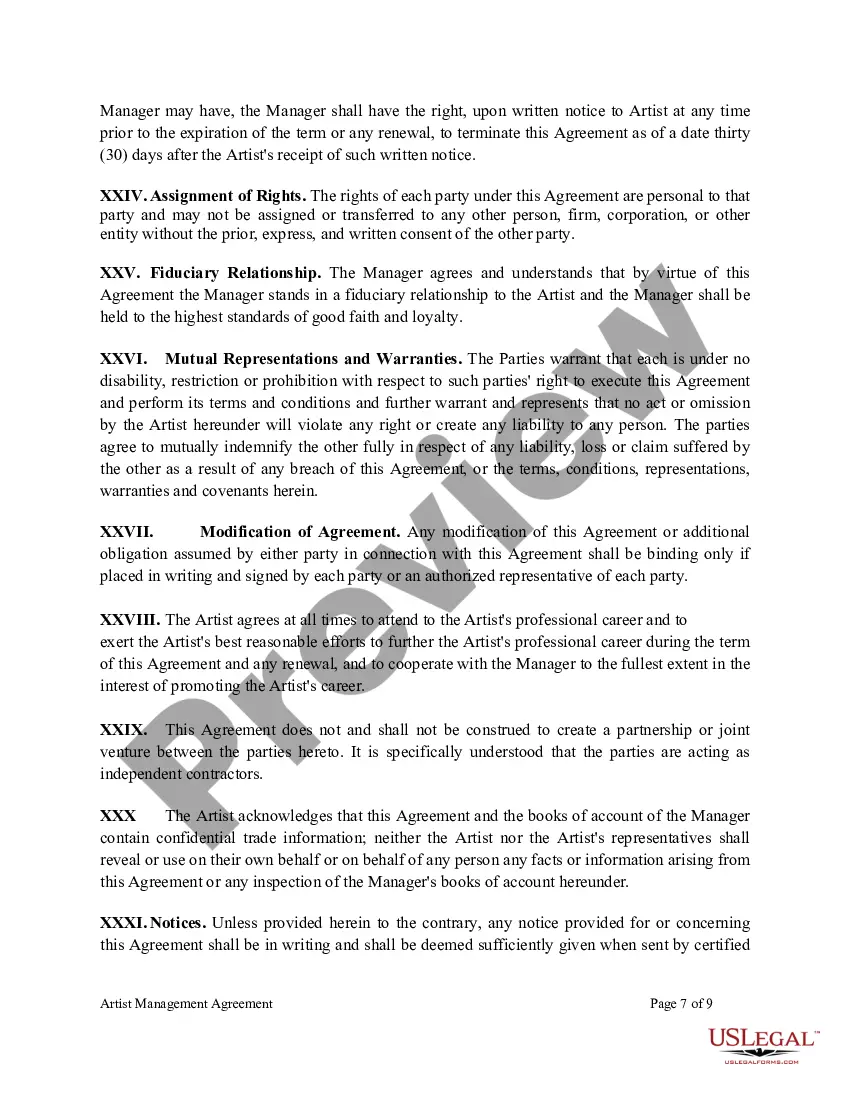
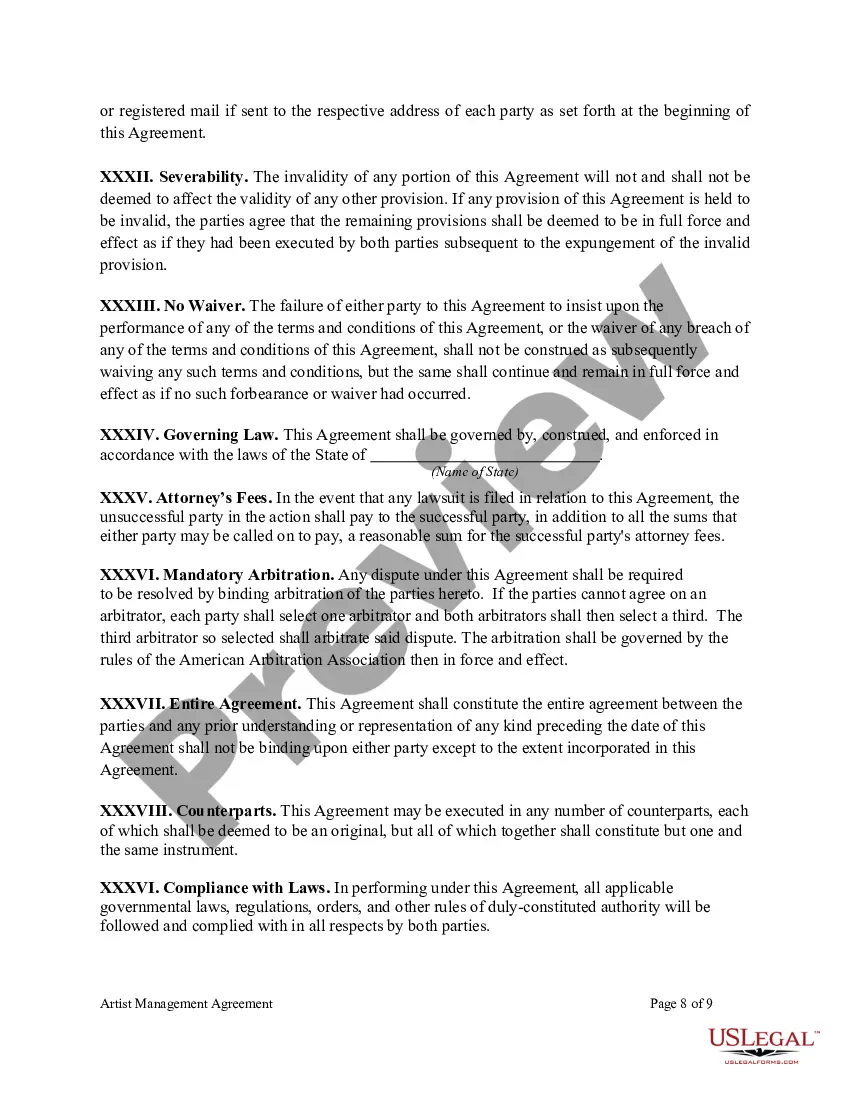
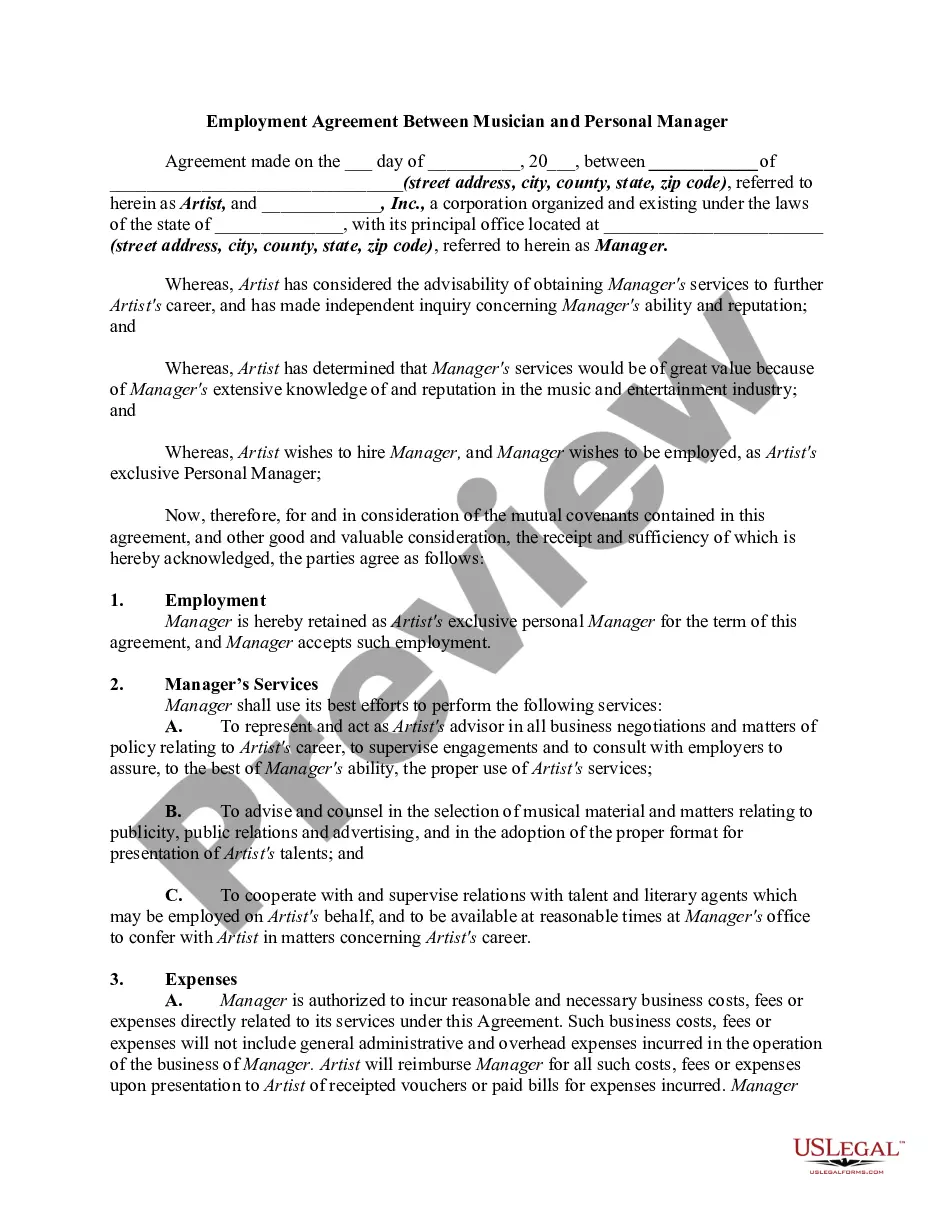
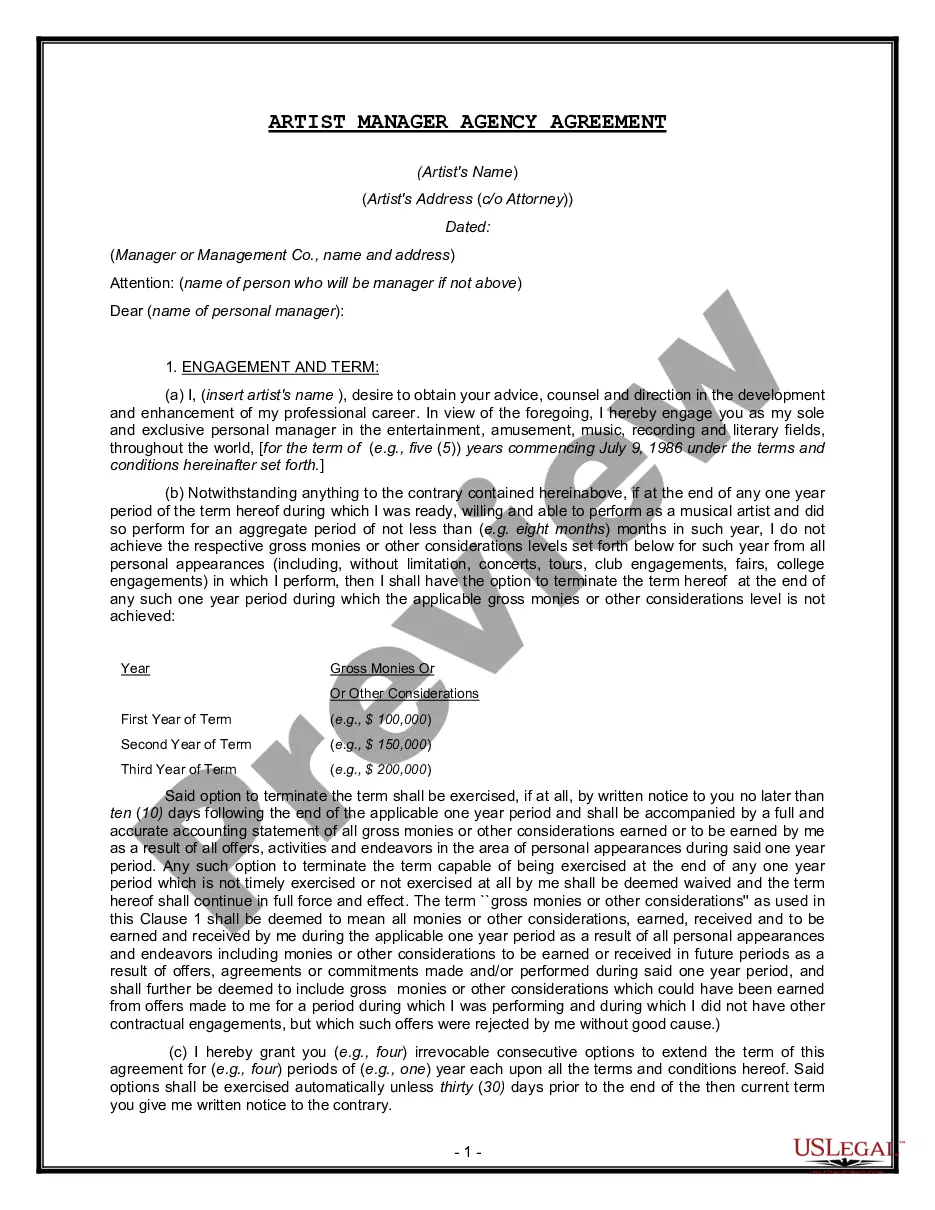
Your manager can earn anywhere between 15 and 25 percent of your earnings. This is fairly standard. Other details that you should look into include the length of the contract and the continuation of payments to your manager after the contract ends.
What Percentage Do They Make? The most common, or easiest gauging point for management percentage, at least in North America, is 15 to 20% of gross artist revenue. I personally don't know of anyone who charges 15% of gross but I have heard through the industry that some people do. I personally hear of 20% more often.
Starting a Career in Artist Management: A Step-by-Step Guide Research the industry and understand the role of an artist manager. Gain experience by interning or assisting established artist managers. Build a strong network by attending industry events and connecting with artists.
Managers' commissions are typically between 15 to 20% of an artist's gross income. Whether it's 15% or 20% really depends on the level of the band and the bargaining power of each party.
Most managers receive a percentage of the artist's gross income, typically between 15-30 percent. Before signing a management contract, artists should thoroughly review the terms and consider seeking legal advice. It's crucial to understand what you're agreeing to, as this contract can significantly impact your career.
Self-employed persons, including direct sellers, report their income on Schedule C (Form 1040), Profit or Loss from Business (Sole Proprietorship). Use Schedule SE (Form 1040), Self-Employment Tax if the net earnings from self-employment are $400 or more.
Tax Forms for Independent Artists Schedule C is the main form for reporting art-related income and expenses, which is then attached to your personal tax return on Form 1040. If you've made estimated tax payments during the year, these are reconciled on Form 1040-ES.
The self-employment tax is generated automatically if you earn more than $400 worth of net profit for your art.
A recording contract (commonly called a record contract or record deal) is a legal agreement between a record label and a recording act (artist or group), where the act makes an audio recording (or series of recordings) for the label to sell and promote.
Music management companies are your face in the industry. They represent you and advocate for the best deals. They guide you on personal and business issues to ensure you're always in your prime form. On the other hand, record labels are more interested in selling your music.
