Talent Management Contract For Dummies In Suffolk
Description

Get your form ready online
Our built-in tools help you complete, sign, share, and store your documents in one place.
Make edits, fill in missing information, and update formatting in US Legal Forms—just like you would in MS Word.
Download a copy, print it, send it by email, or mail it via USPS—whatever works best for your next step.
Sign and collect signatures with our SignNow integration. Send to multiple recipients, set reminders, and more. Go Premium to unlock E-Sign.
If this form requires notarization, complete it online through a secure video call—no need to meet a notary in person or wait for an appointment.
We protect your documents and personal data by following strict security and privacy standards.

Make edits, fill in missing information, and update formatting in US Legal Forms—just like you would in MS Word.

Download a copy, print it, send it by email, or mail it via USPS—whatever works best for your next step.

Sign and collect signatures with our SignNow integration. Send to multiple recipients, set reminders, and more. Go Premium to unlock E-Sign.

If this form requires notarization, complete it online through a secure video call—no need to meet a notary in person or wait for an appointment.

We protect your documents and personal data by following strict security and privacy standards.
Looking for another form?










Form popularity
FAQ
How to become a talent manager Earn your degree. Many employers might require you to earn a high school diploma, while others may prefer a bachelor's degree. Gain experience in the entertainment industry. Network with industry professionals. Determine your niche. Join an organization for support.
Step 1: Identifying Talent Needs : Identifying talent needs is the foundation of the talent management process. It involves assessing the current workforce, identifying skill gaps, and determining future talent requirements based on organizational goals and objectives.
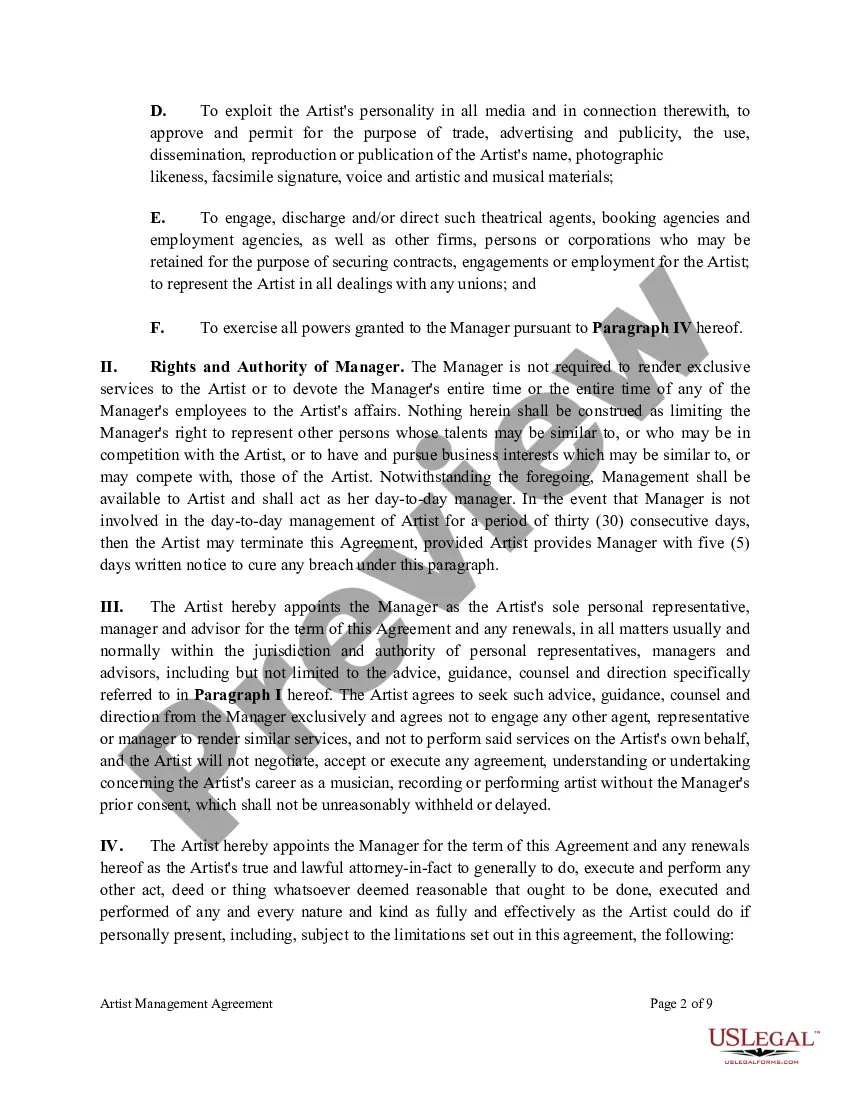
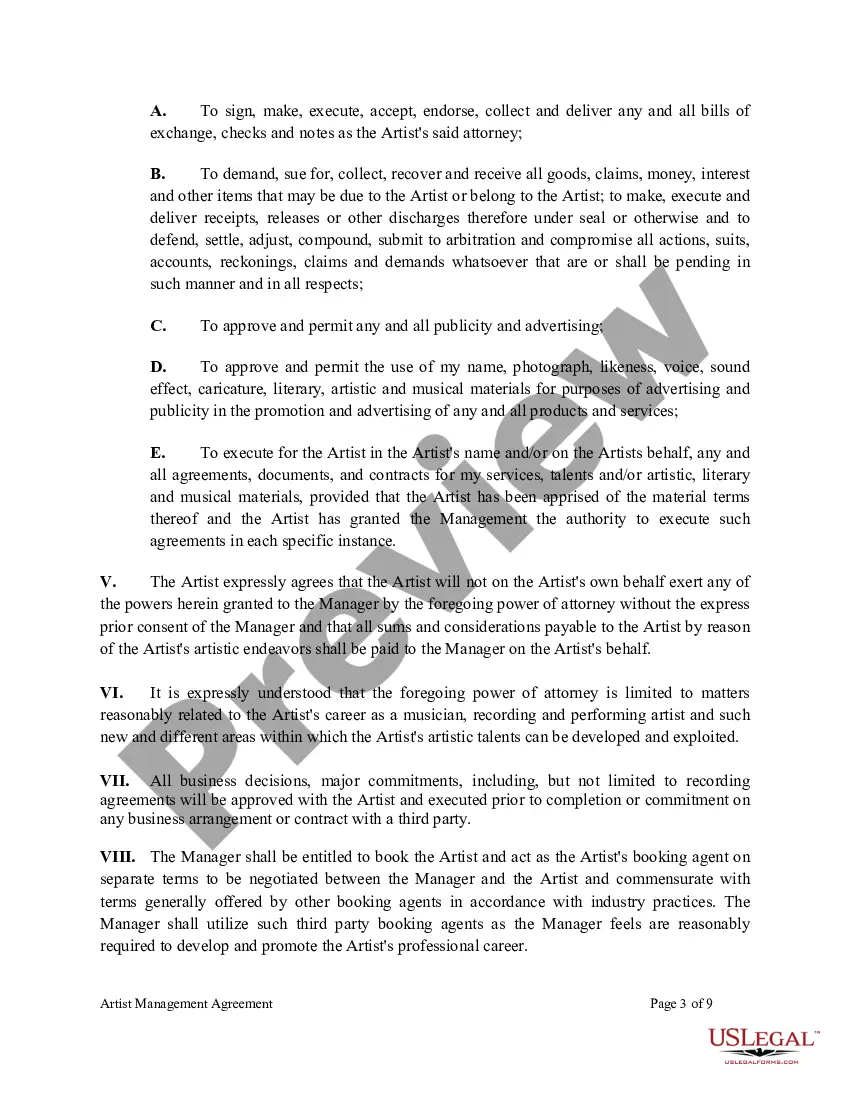
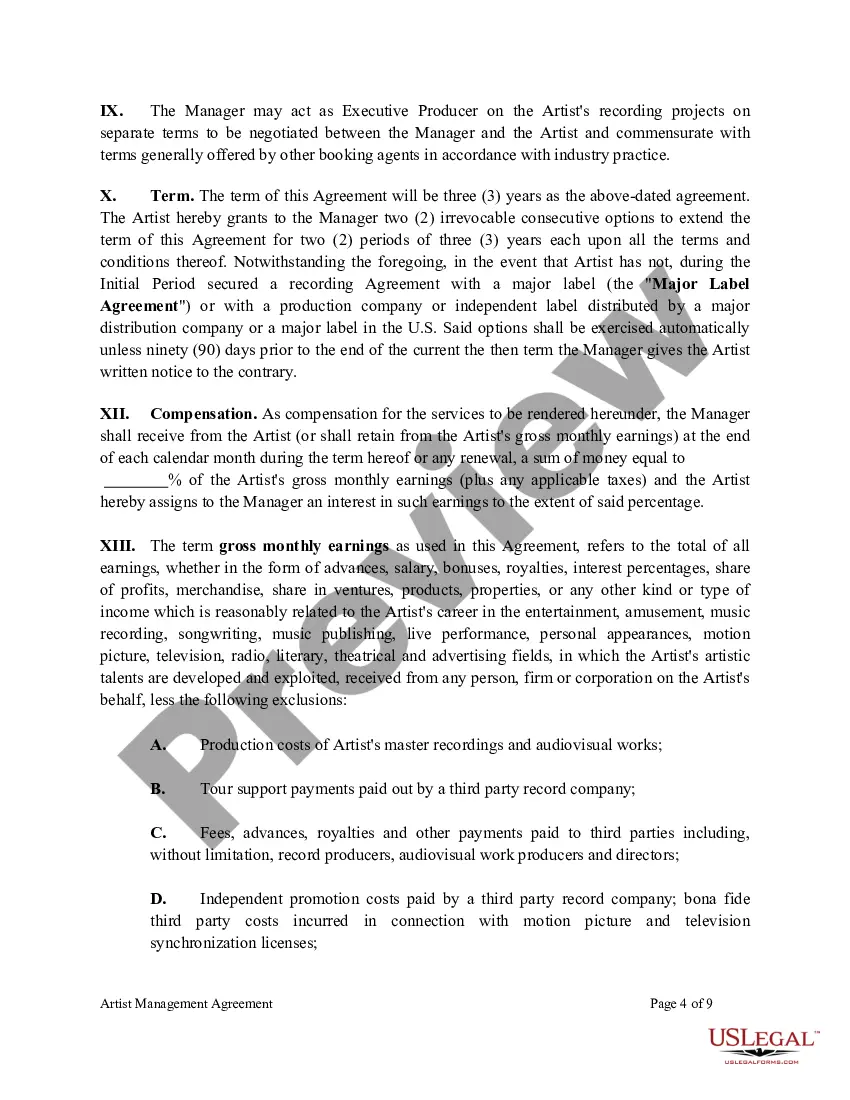
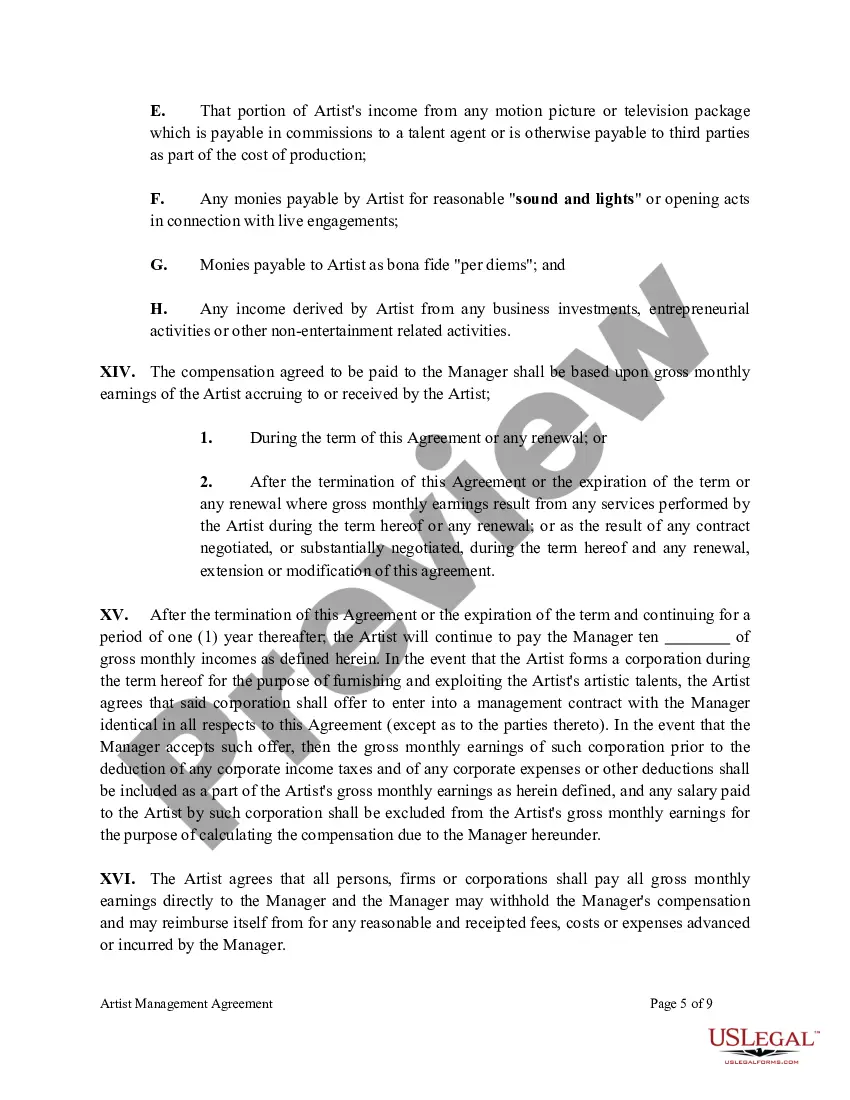
Common Sections in Artist Management Agreements ARTIST MANAGEMENT AGREEMENT. BACKGROUND. Services Of The Manager. Rights And Authority Of The Manager. Term. Compensation. Accounting. Expenses.
Earn a Bachelor's Degree: Start with a degree in Human Resources, Psychology, Business Administration, or a related field. This will provide the foundational knowledge necessary for any HR professional. Gain Practical Experience: Start in roles such as a Talent Development Associate or HR assistant.
Managers generally take, on average, 10-15 percent commission. Fifteen percent is considered higher- end compensation in the industry. This should be clearly spelled out in your agreement with your personal manager.
There are no education requirements, but many talent managers earn a bachelor's degree in marketing or public relations.
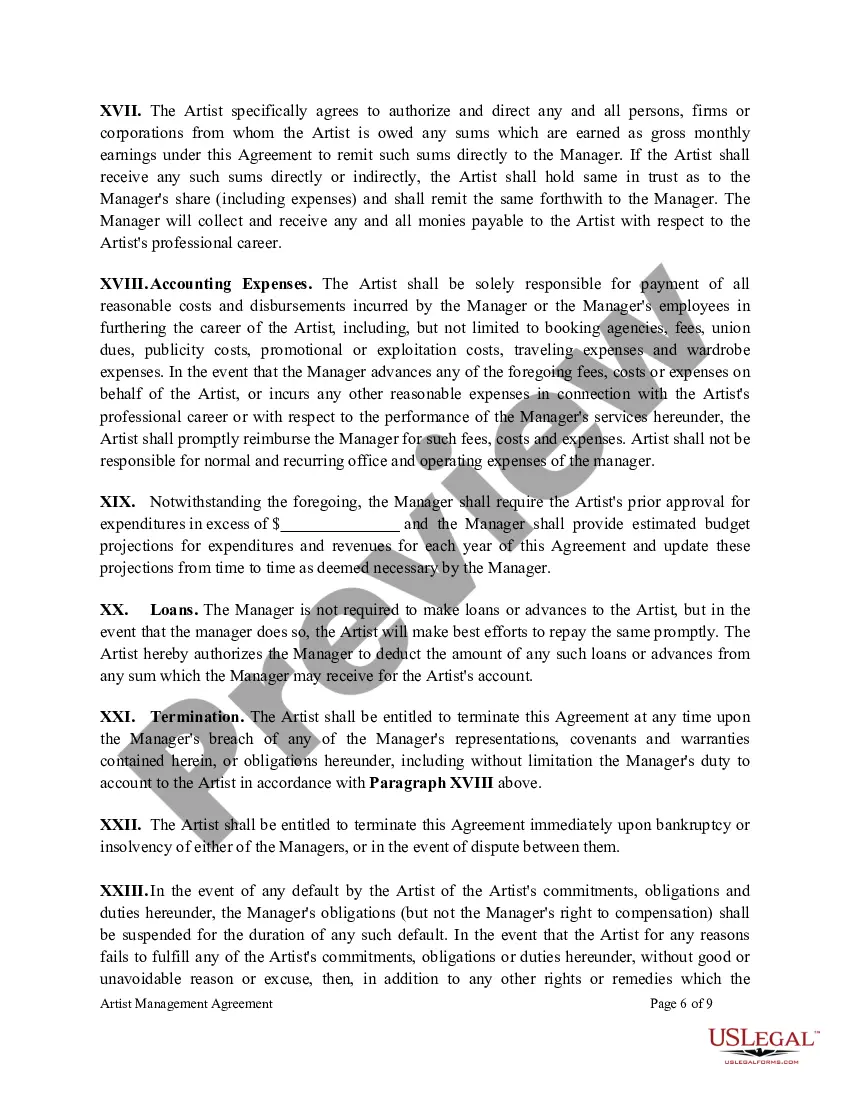
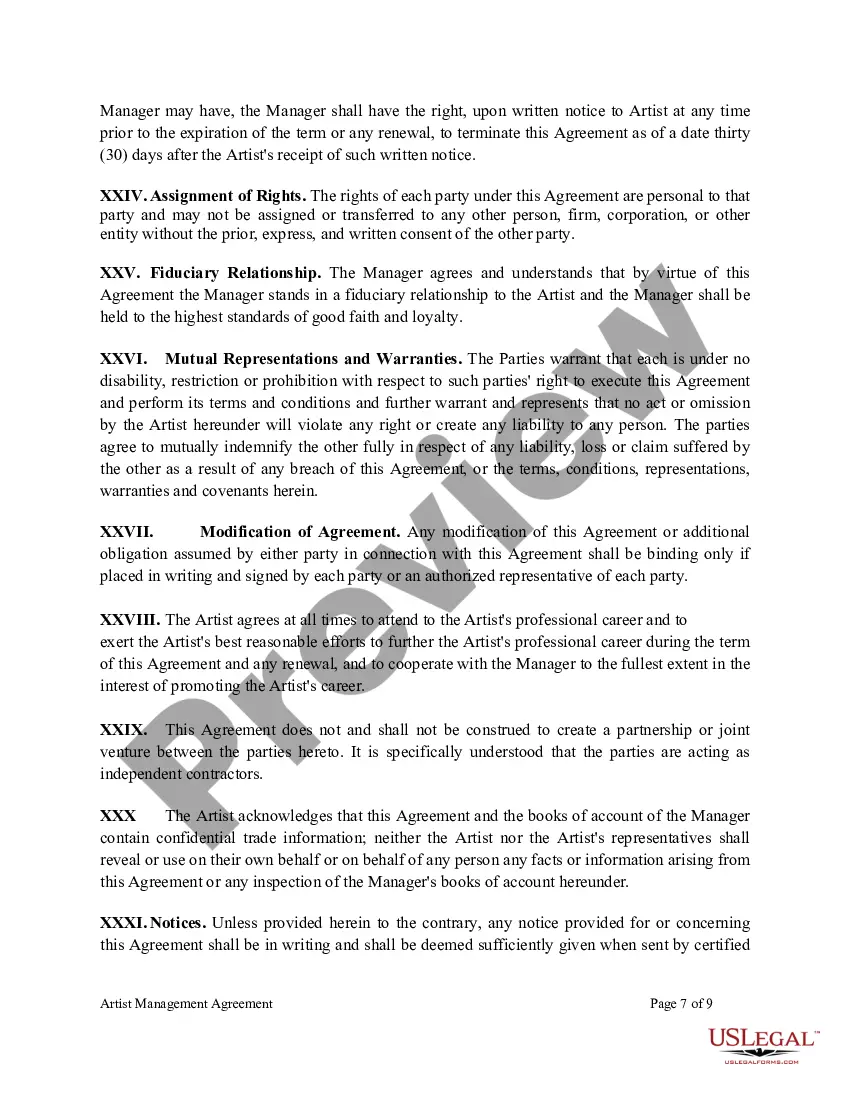
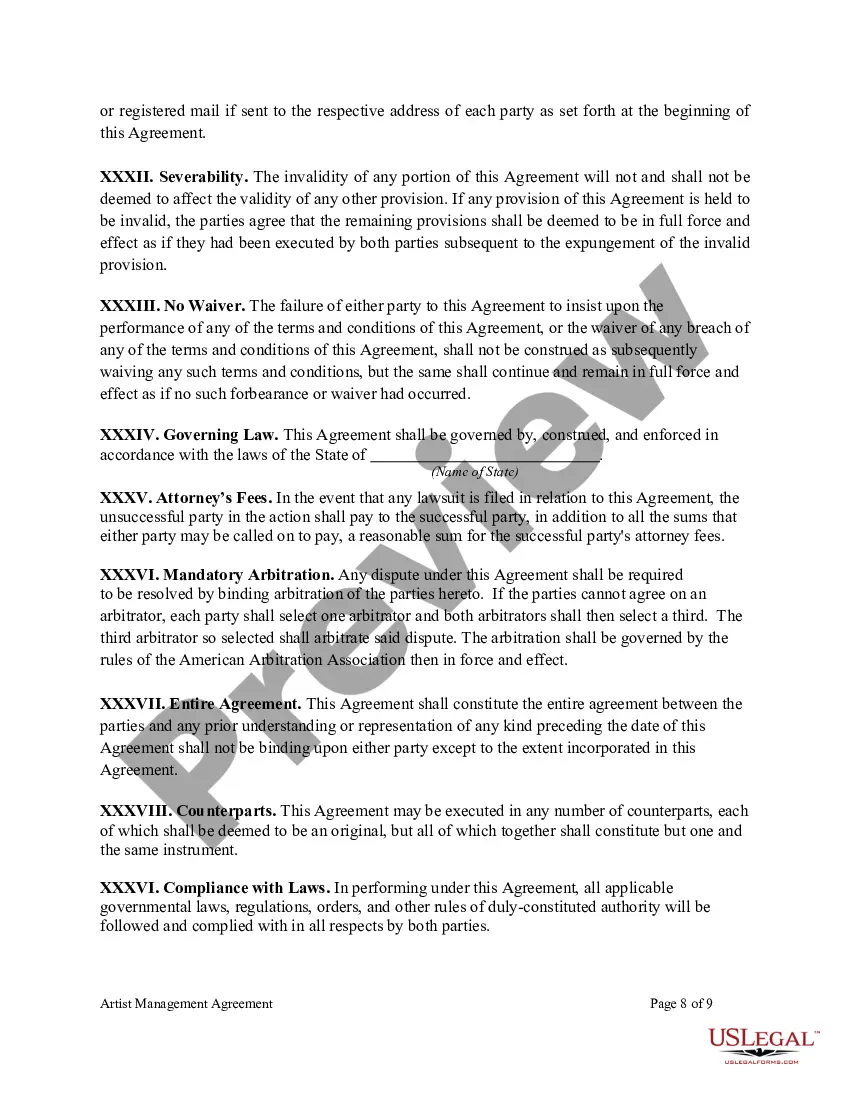
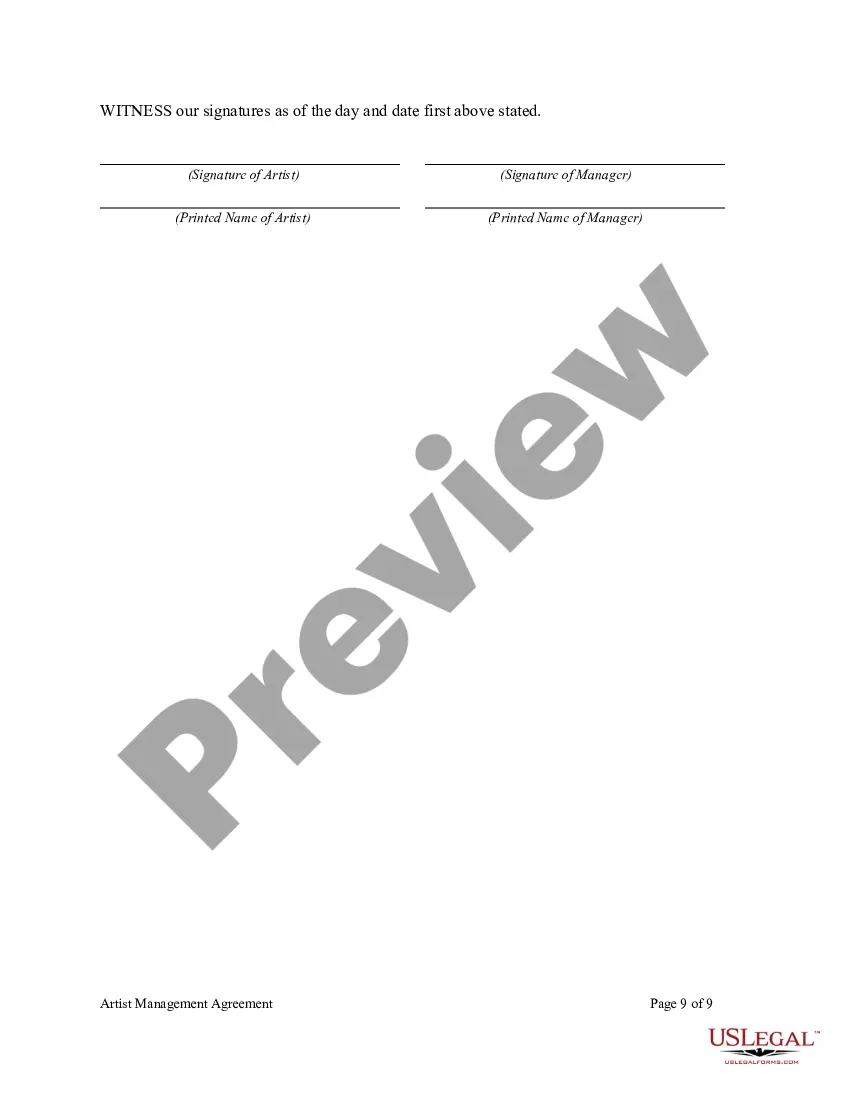
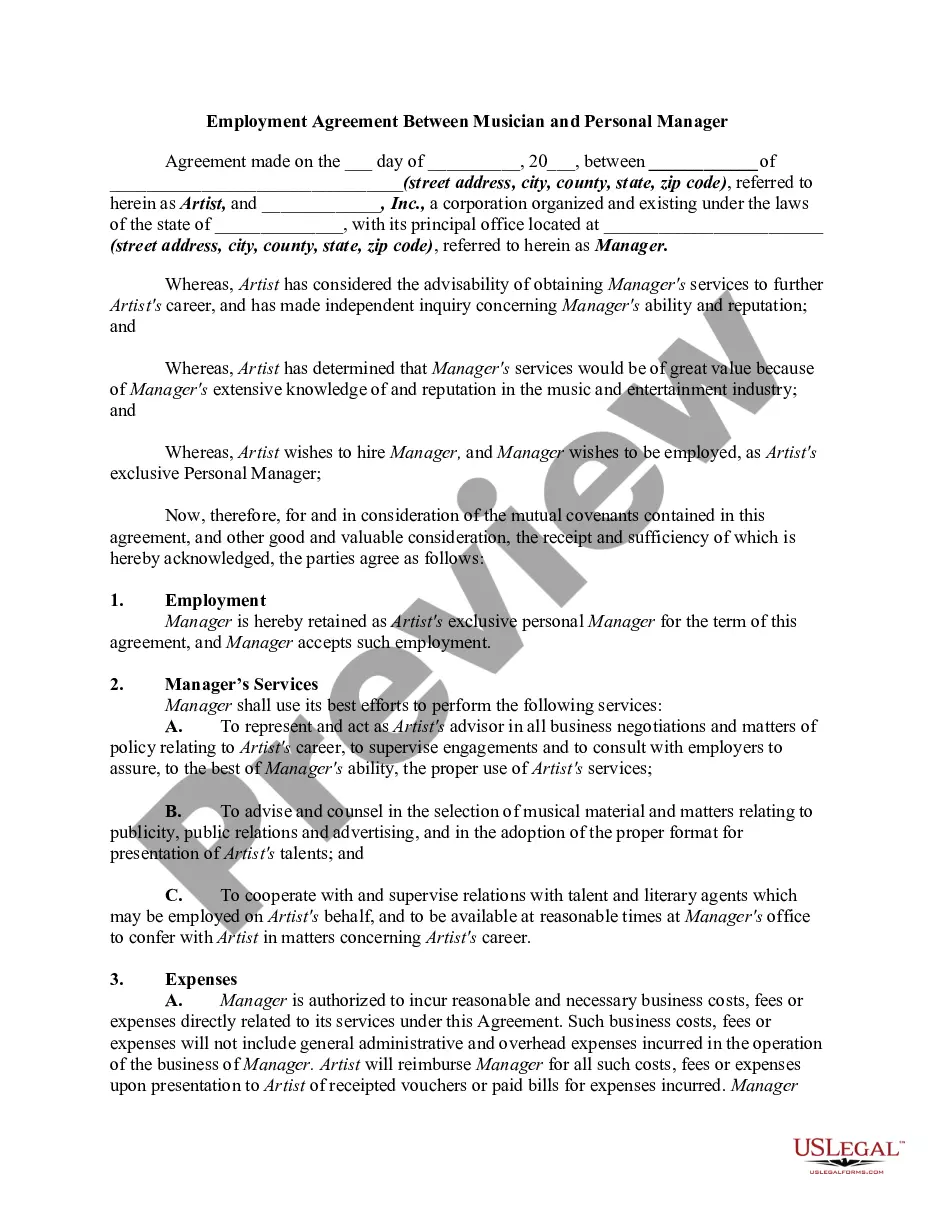
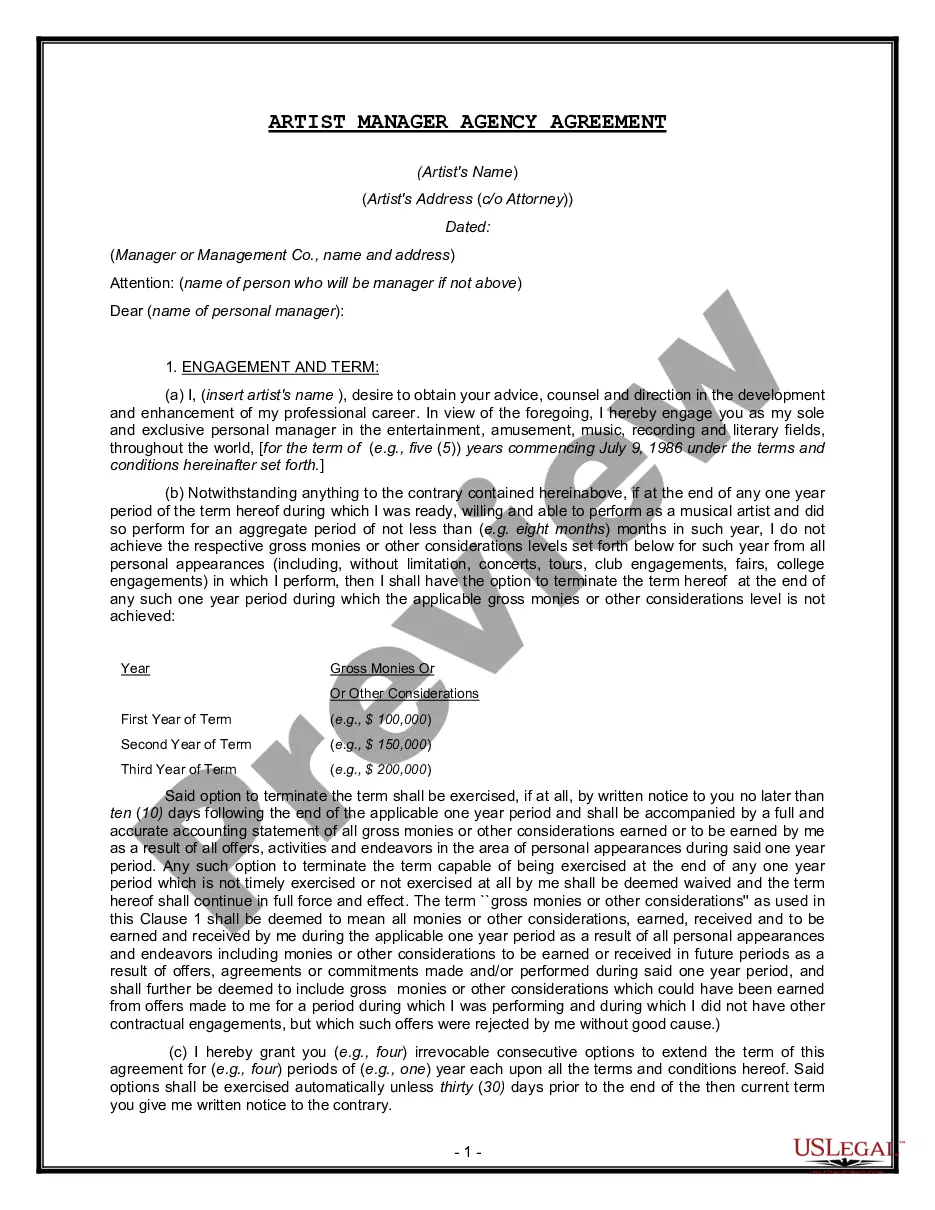
This exclusive contract outlines the professional agreement between an artist and a talent agency. It includes terms for negotiation, compensation, and employment conditions. Ideal for artists seeking representation in entertainment fields.
Most actors or other entertainment talents retain an agent or manager to represent them. This usually involves signing a talent representation agreement that defines the services provided by the agent and the compensation received in return.
