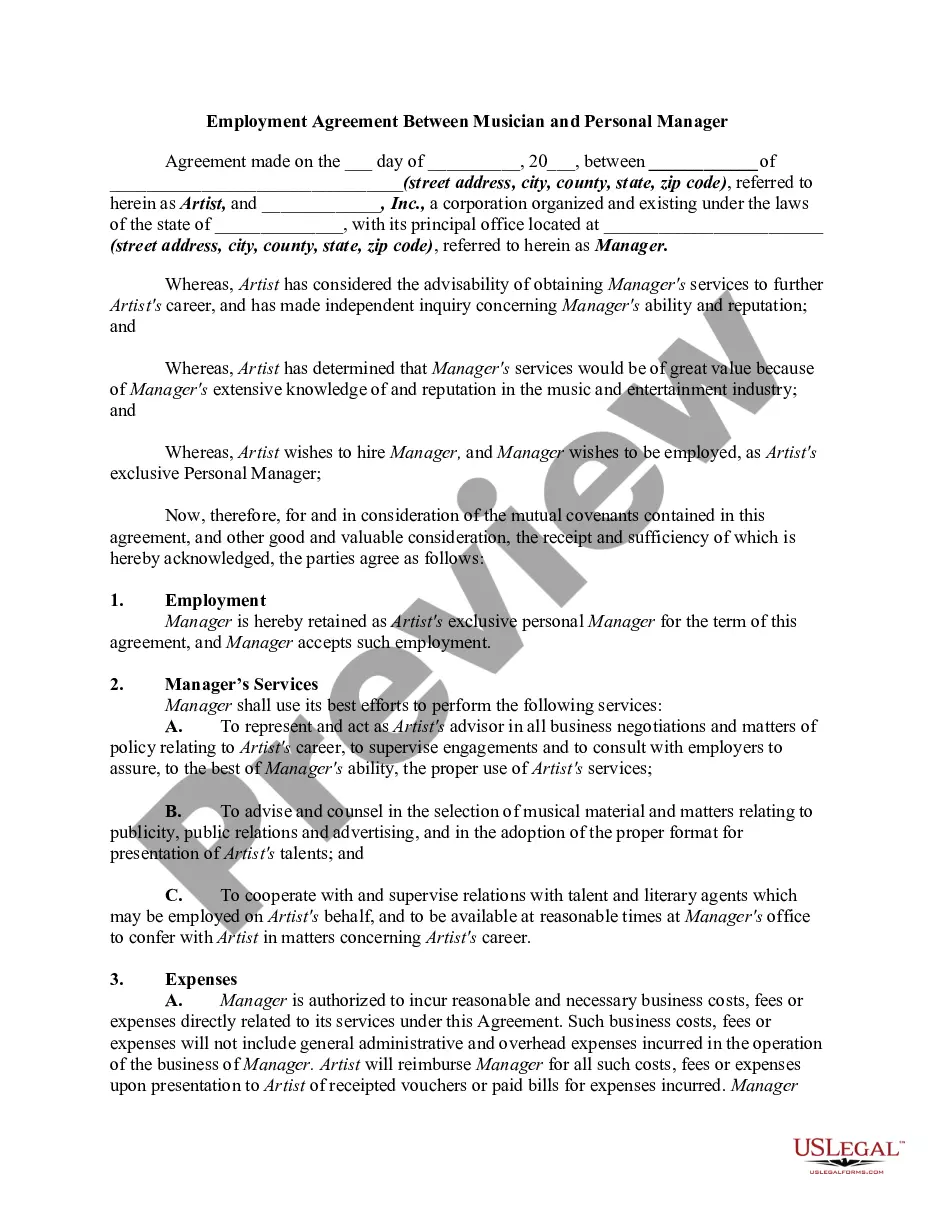
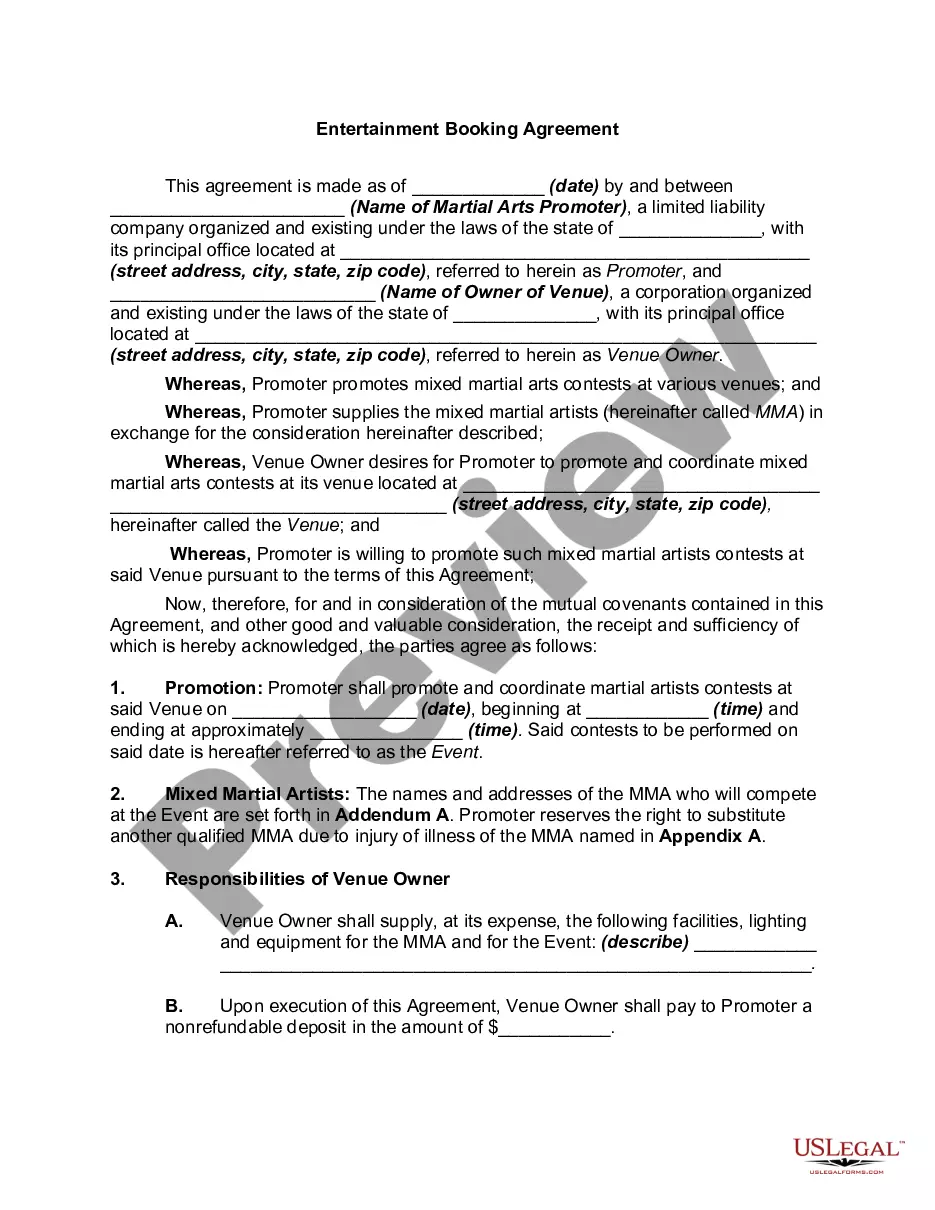
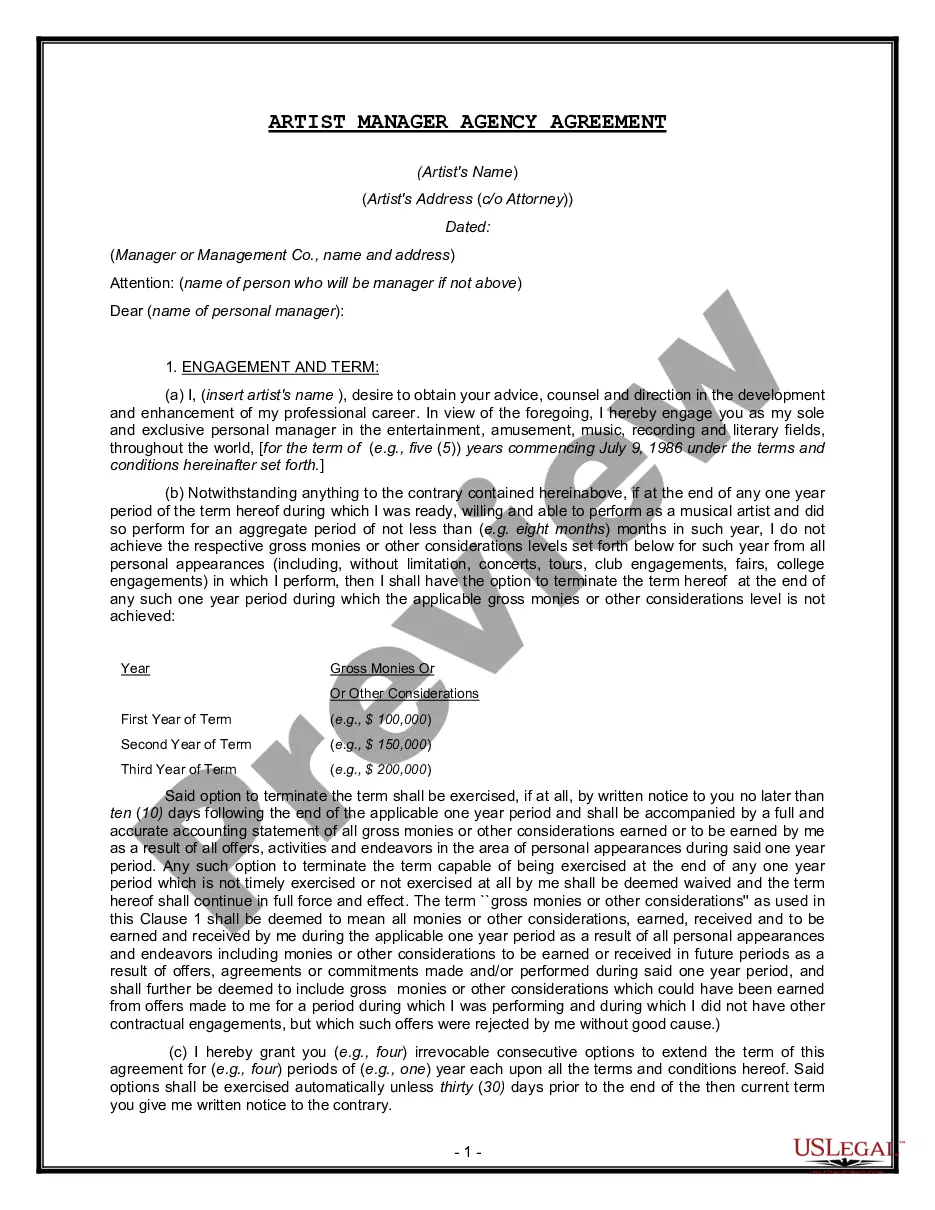
Sample Artist Management Contract With Agency In Santa Clara
Description

Get your form ready online
Our built-in tools help you complete, sign, share, and store your documents in one place.
Make edits, fill in missing information, and update formatting in US Legal Forms—just like you would in MS Word.
Download a copy, print it, send it by email, or mail it via USPS—whatever works best for your next step.
Sign and collect signatures with our SignNow integration. Send to multiple recipients, set reminders, and more. Go Premium to unlock E-Sign.
If this form requires notarization, complete it online through a secure video call—no need to meet a notary in person or wait for an appointment.
We protect your documents and personal data by following strict security and privacy standards.

Make edits, fill in missing information, and update formatting in US Legal Forms—just like you would in MS Word.

Download a copy, print it, send it by email, or mail it via USPS—whatever works best for your next step.

Sign and collect signatures with our SignNow integration. Send to multiple recipients, set reminders, and more. Go Premium to unlock E-Sign.

If this form requires notarization, complete it online through a secure video call—no need to meet a notary in person or wait for an appointment.

We protect your documents and personal data by following strict security and privacy standards.
Looking for another form?









Form popularity
FAQ
What Percentage Do They Make? The most common, or easiest gauging point for management percentage, at least in North America, is 15 to 20% of gross artist revenue. I personally don't know of anyone who charges 15% of gross but I have heard through the industry that some people do. I personally hear of 20% more often.
As a general rule, managers take a percentage of all income generated by the artist in exchange for their management services. Commission rates typically range from 15-25% of the artist's gross income from: Recording royalties: Sales, streaming and licensing of recorded music.
Managers' commissions are typically between 15 to 20% of an artist's gross income. Whether it's 15% or 20% really depends on the level of the band and the bargaining power of each party. I've seen some net deals, but they are extremely rare. That being said, I always push for a net commission on merchandise.
If you've been handling everything on your own and are hitting a wall getting past the proverbial industry waiting room, it might be time to hire a manager. A manager must constantly work at managing your own expectations and goals, while expanding your base of industry relationships, experience and knowledge.
How To Become An Artist Manager Understand Your Role: Managing Artists' Expectations. Educate Yourself. Become a Student Manager. Make College Friends. Join College Radio. Promote College Events. Acquire Your Own Clients. Help A Friend.
Quick find Considerations before you start a management company. How to start a management company. Choose a management company name. Know the specifics of who you want to manage and draw up a business plan. Get your management company incorporated. Hire support, especially for those areas you know little about. Scout talent.
Steps To Starting An Artist Management Company Build Your Artist Roster. Sign A Contract. Don't Quit Your Day Job Just Yet. Draft an Artist Management Company Business Plan. Make a Name for Yourself. Get Organized. Work With an Entertainment Accountant. Hire an Entertainment Lawyer.
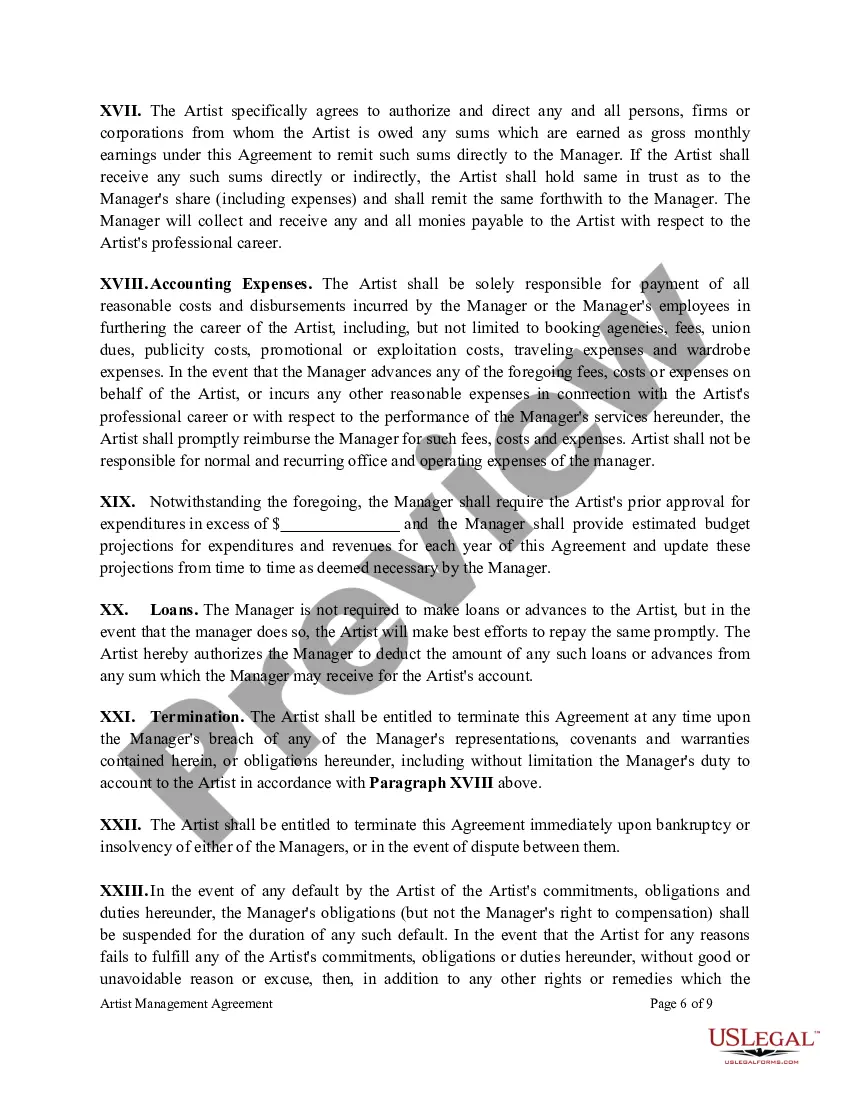
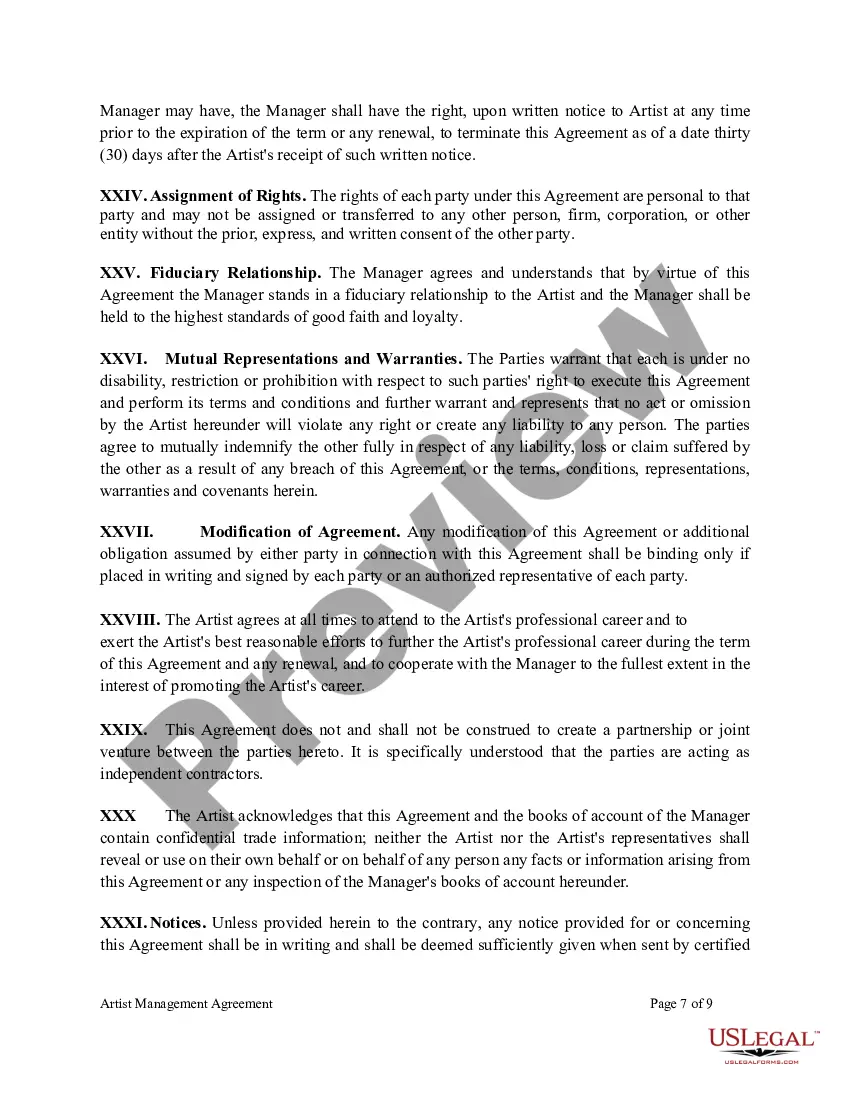
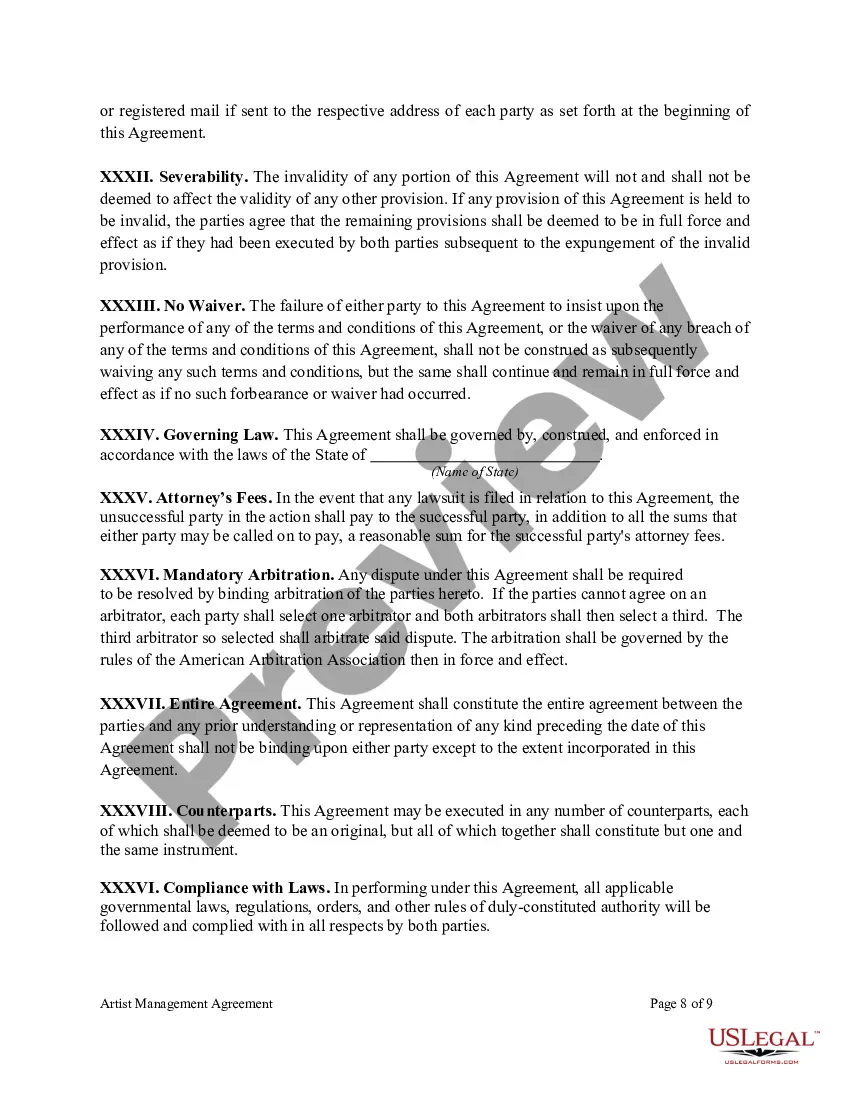
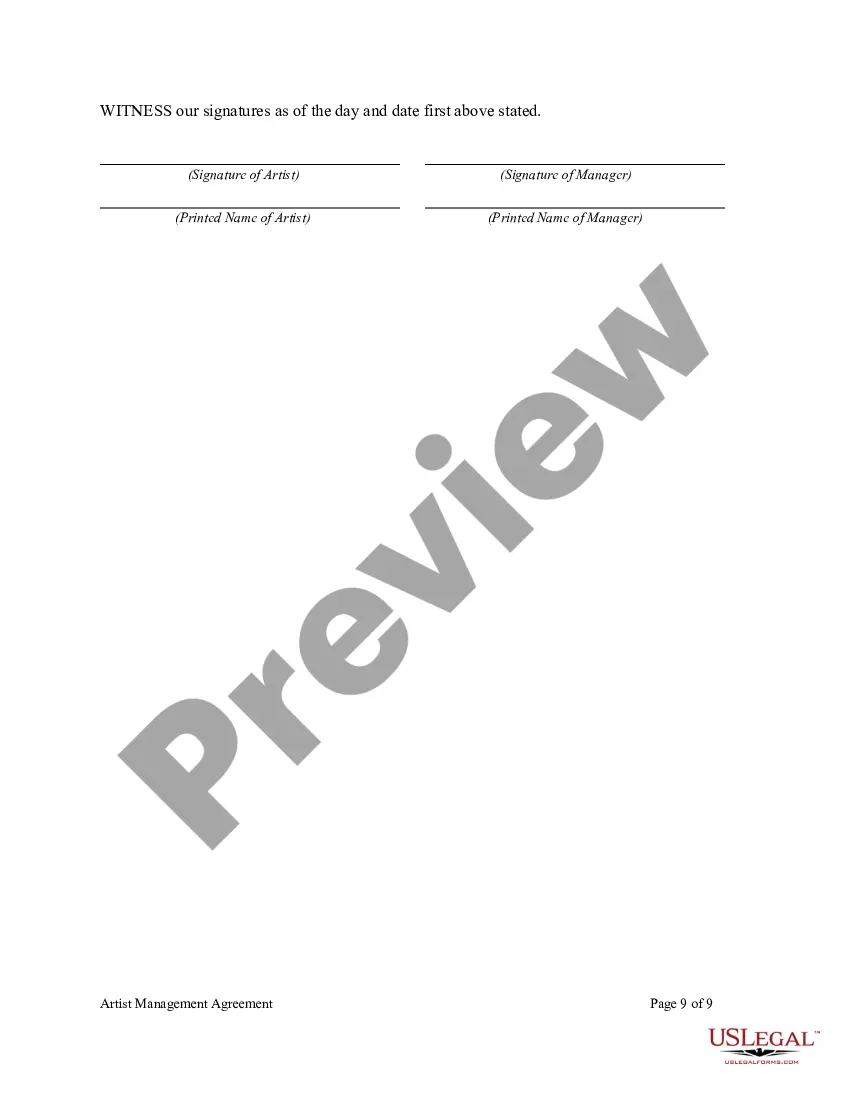
Common Sections in Artist Management Agreements ARTIST MANAGEMENT AGREEMENT. BACKGROUND. Services Of The Manager. Rights And Authority Of The Manager. Term. Compensation. Accounting. Expenses.
Contracts like an artist agreement help avoid miscommunications and confusion over the rights and responsibilities of both parties involved. Artist agreements typically include availability expectations, performance markers, and licensing or ownership rights of the works created during the partnership.
