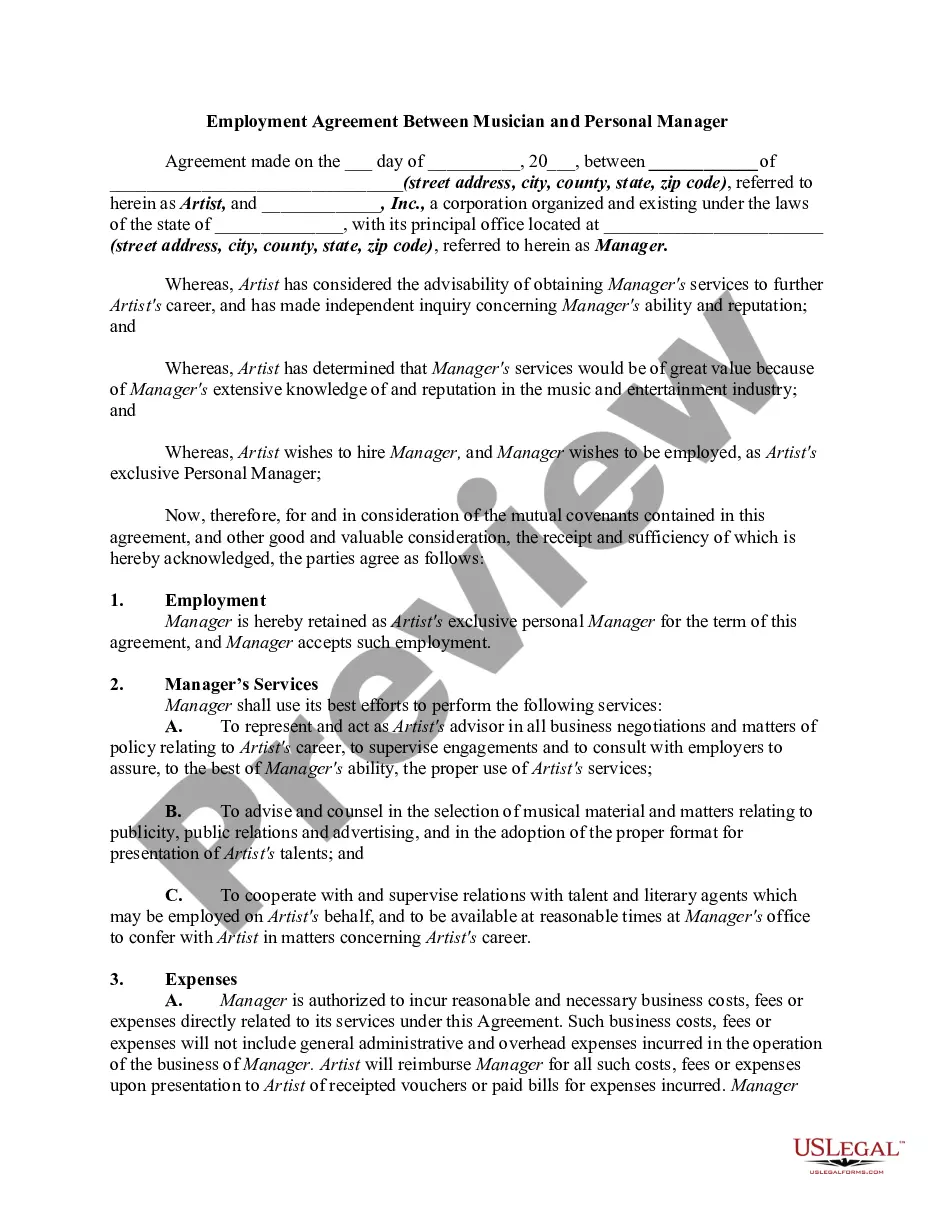
Artist Manager Contract With Record Label In Ohio
Description


Get your form ready online
Our built-in tools help you complete, sign, share, and store your documents in one place.
Make edits, fill in missing information, and update formatting in US Legal Forms—just like you would in MS Word.
Download a copy, print it, send it by email, or mail it via USPS—whatever works best for your next step.
Sign and collect signatures with our SignNow integration. Send to multiple recipients, set reminders, and more. Go Premium to unlock E-Sign.
If this form requires notarization, complete it online through a secure video call—no need to meet a notary in person or wait for an appointment.
We protect your documents and personal data by following strict security and privacy standards.

Make edits, fill in missing information, and update formatting in US Legal Forms—just like you would in MS Word.

Download a copy, print it, send it by email, or mail it via USPS—whatever works best for your next step.

Sign and collect signatures with our SignNow integration. Send to multiple recipients, set reminders, and more. Go Premium to unlock E-Sign.

If this form requires notarization, complete it online through a secure video call—no need to meet a notary in person or wait for an appointment.

We protect your documents and personal data by following strict security and privacy standards.
Looking for another form?







Form popularity
FAQ
Label managers coordinate, schedule and promote a record company's releases. Working closely with artists, artist managers, distributors and external promotion teams, they are responsible for ensuring musical products are delivered on time, on-budget and on-brand.
While it is not a requirement, it is generally recommended for an artist to have their own manager separate from their record label. The roles of a record label and an artist manager are distinct and serve different functions.
They guide you on personal and business issues to ensure you're always in your prime form. On the other hand, record labels are more interested in selling your music. They bring in the resources necessary to produce your album and effectively distribute your music to potential fans.
Scope of Responsibilities: Managers have a broader role, covering almost all aspects of an artist's career, while labels focus specifically on music production, distribution, and large-scale promotion.
It outlines the terms and conditions of the artist's recording and distribution of music. This contract specifies the rights and responsibilities of both parties, including details about the production, promotion, and financial aspects of the music released under the label.
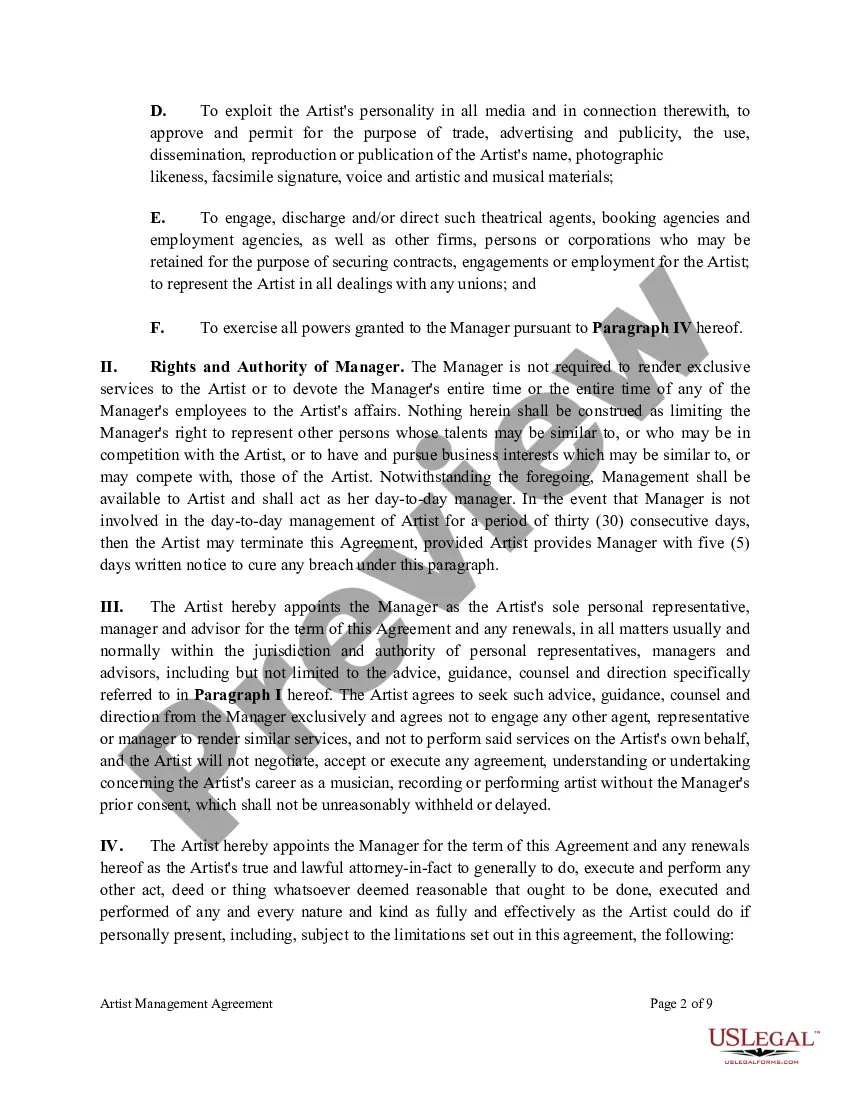
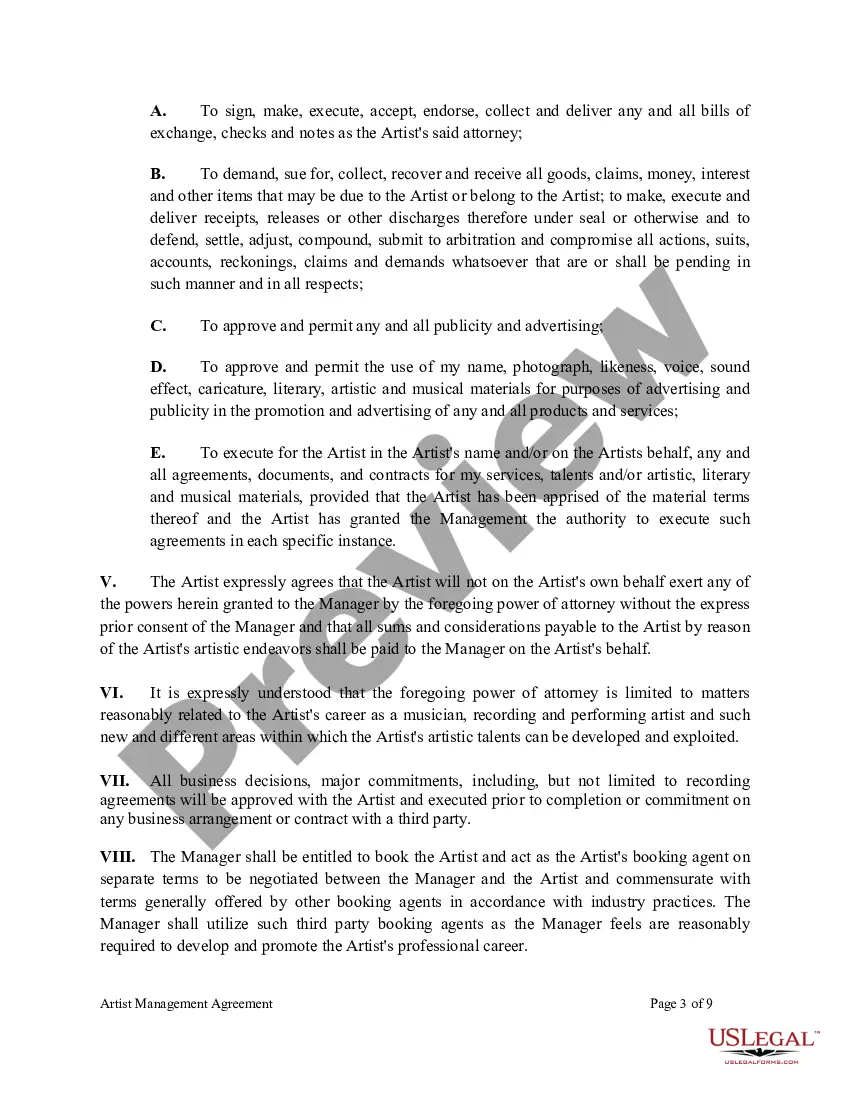
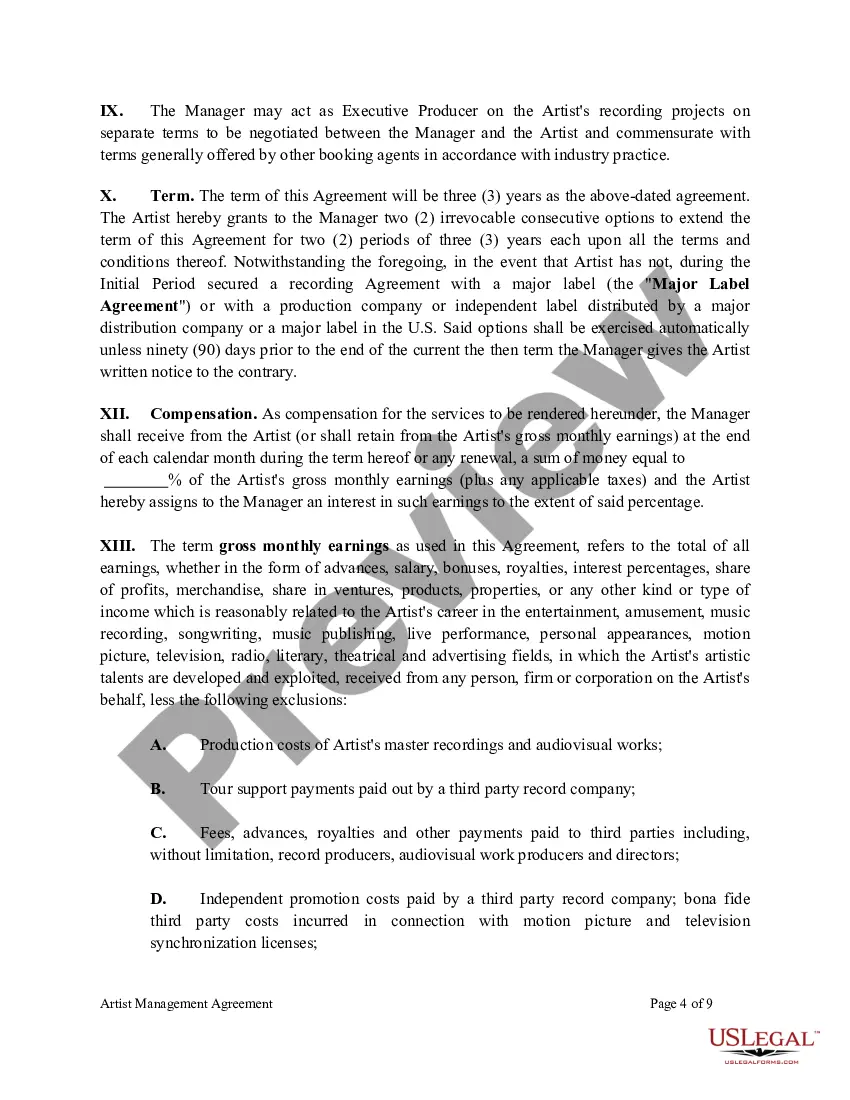
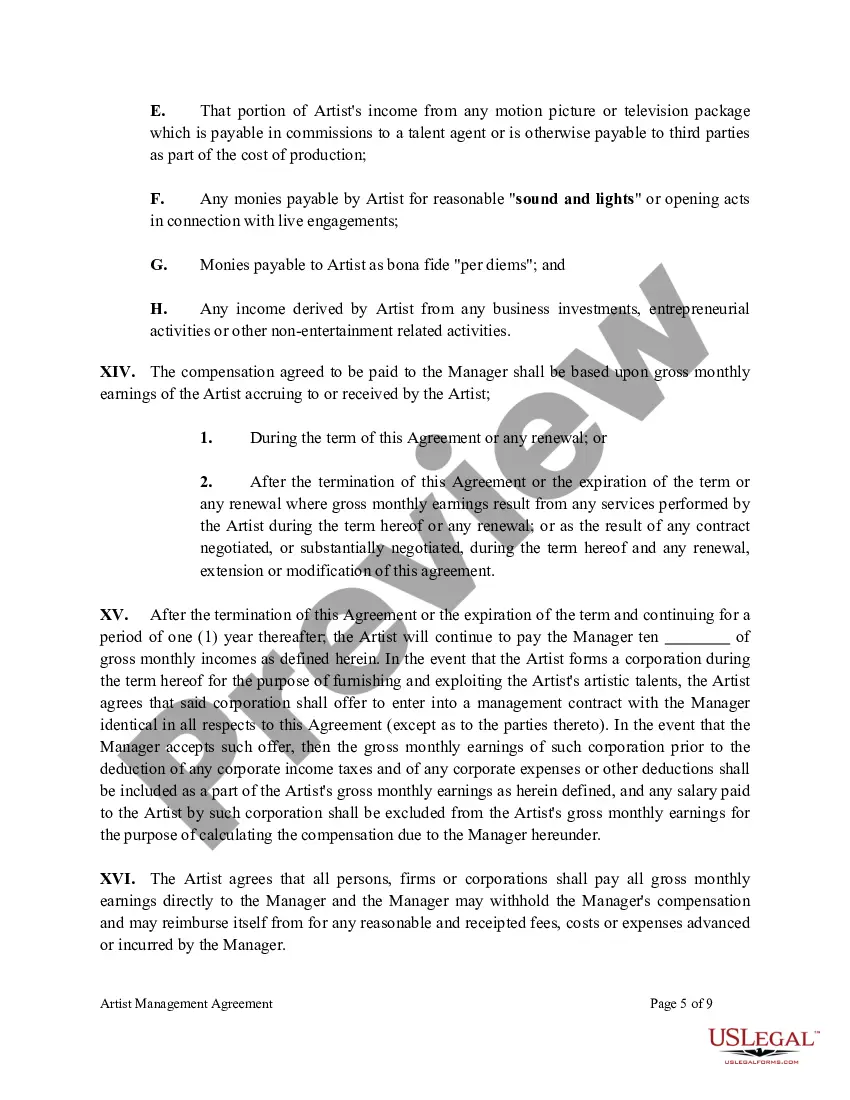
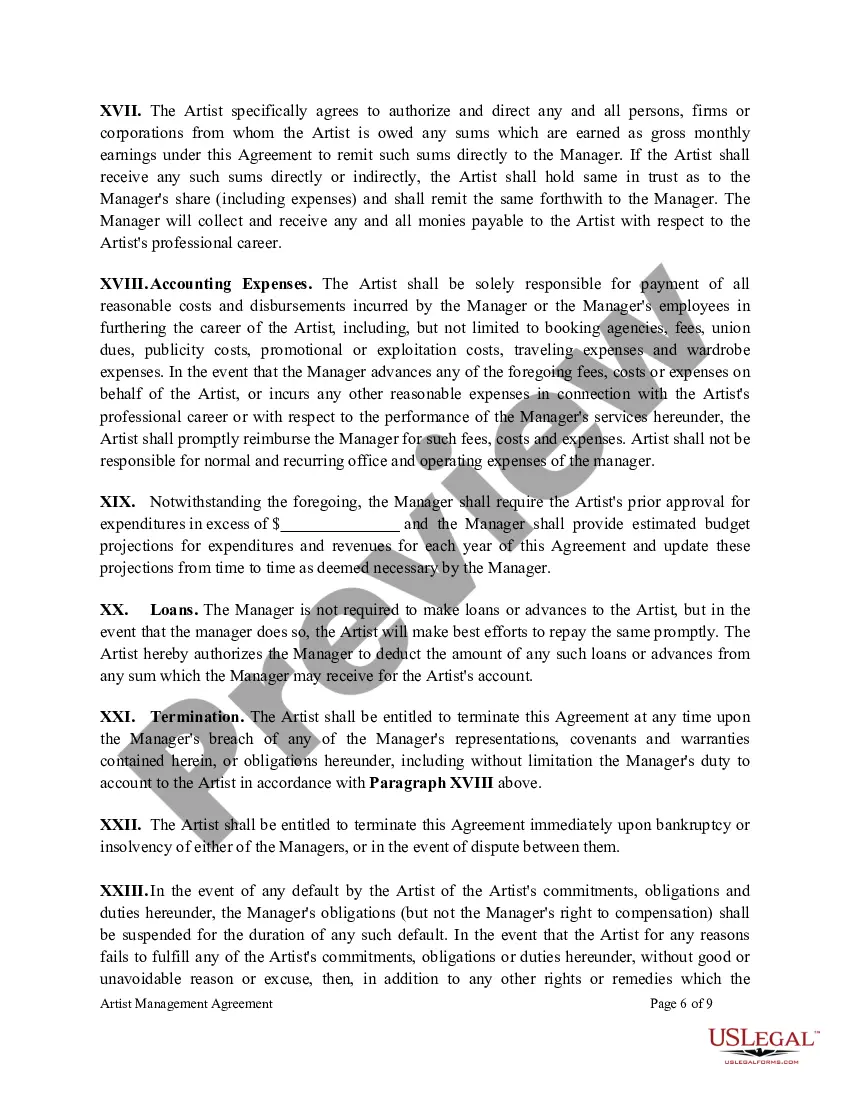
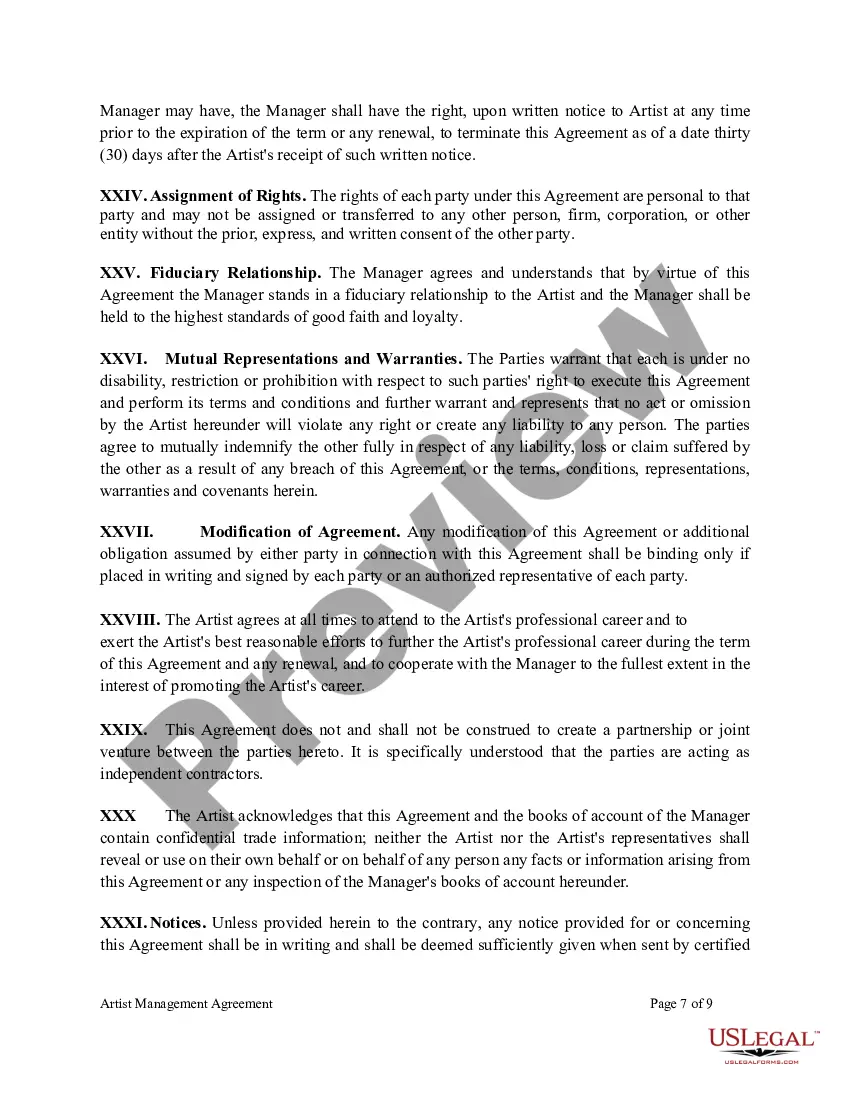
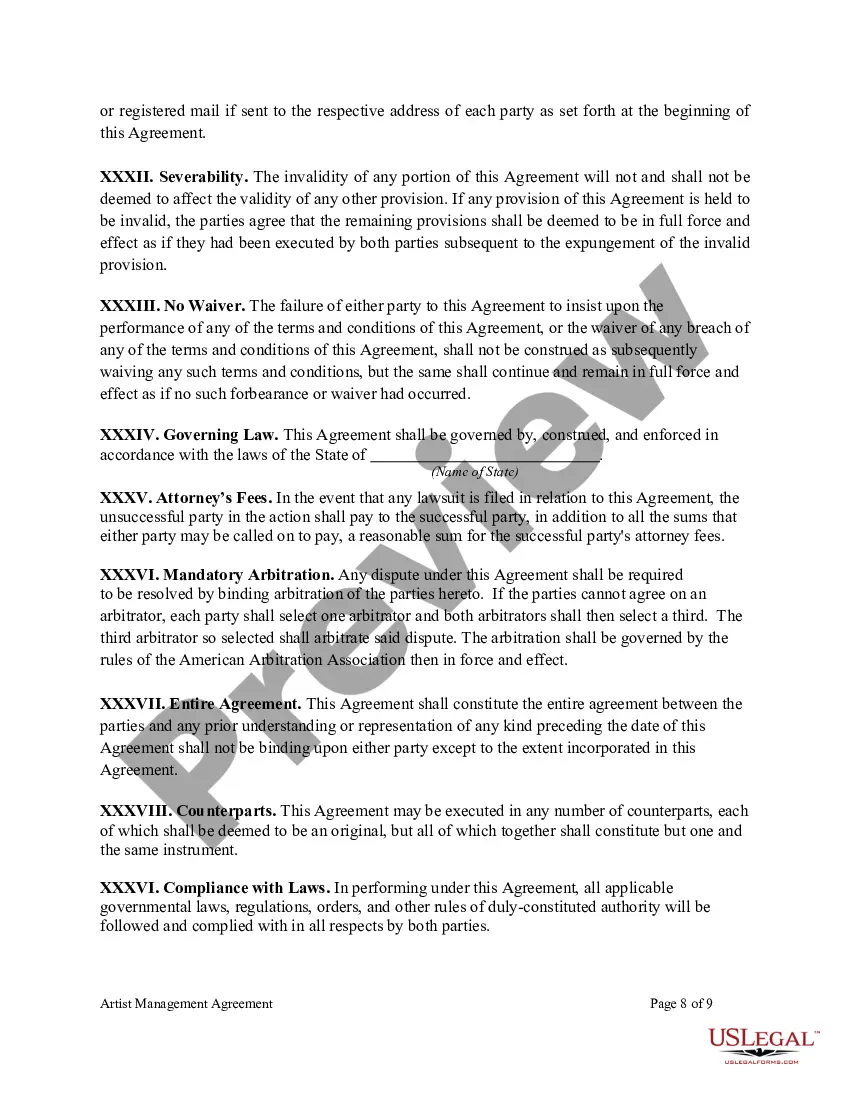
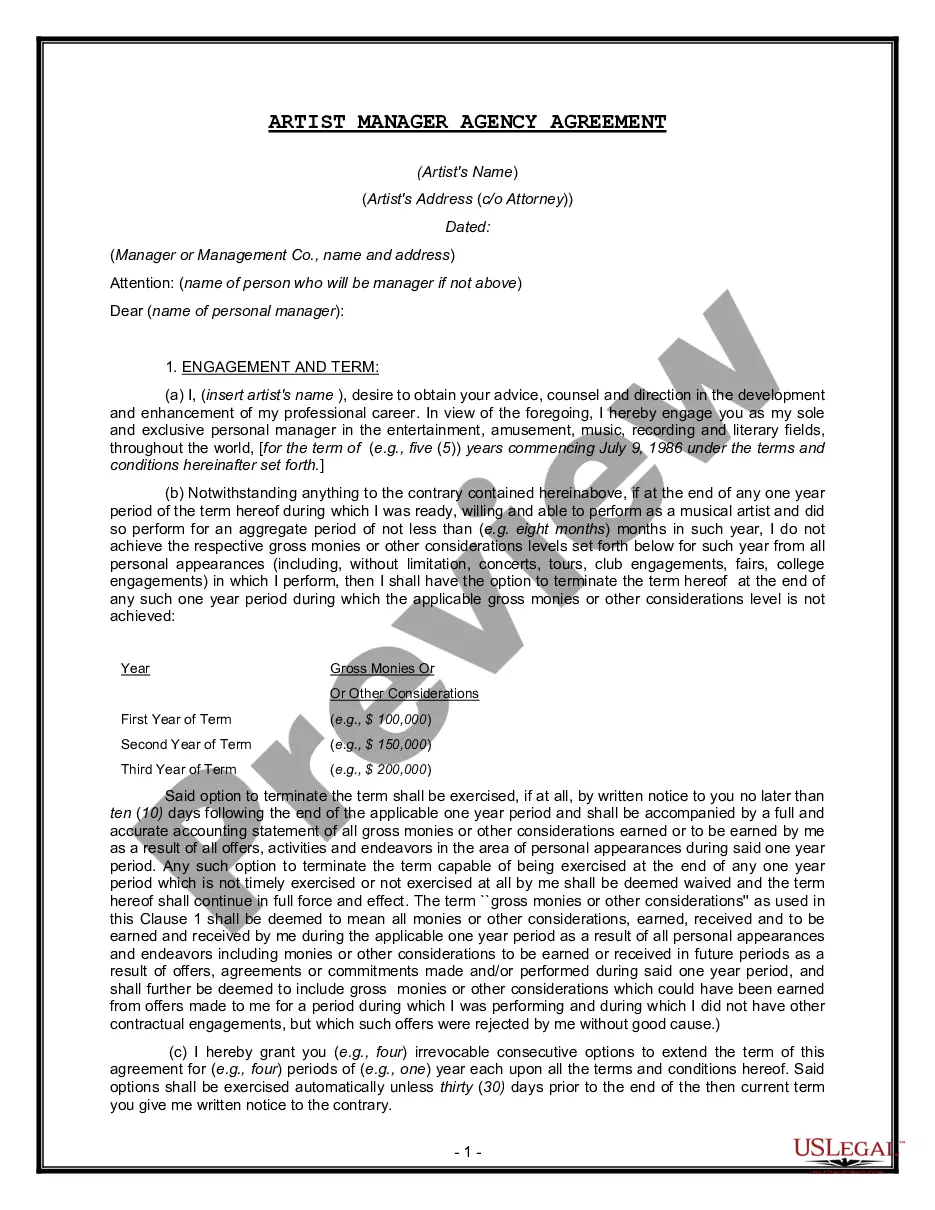
Common Sections in Artist Management Agreements ARTIST MANAGEMENT AGREEMENT. BACKGROUND. Services Of The Manager. Rights And Authority Of The Manager. Term. Compensation. Accounting. Expenses.
Record Label Manager Salary Annual SalaryHourly Wage Top Earners $100,000 $48 75th Percentile $68,500 $33 Average $59,525 $29 25th Percentile $42,000 $20
Education: Considering music managers are responsible for all the legal and business aspects of an artist's career, they usually must have a bachelor's degree in the music business (or business in general). Several schools offer music management or business management degrees.
As a general rule, managers take a percentage of all income generated by the artist in exchange for their management services. Commission rates typically range from 15-25% of the artist's gross income from: Recording royalties: Sales, streaming and licensing of recorded music.
