Music Management Contract For Construction Projects In Montgomery
Description









Get your form ready online
Our built-in tools help you complete, sign, share, and store your documents in one place.
Make edits, fill in missing information, and update formatting in US Legal Forms—just like you would in MS Word.
Download a copy, print it, send it by email, or mail it via USPS—whatever works best for your next step.
Sign and collect signatures with our SignNow integration. Send to multiple recipients, set reminders, and more. Go Premium to unlock E-Sign.
If this form requires notarization, complete it online through a secure video call—no need to meet a notary in person or wait for an appointment.
We protect your documents and personal data by following strict security and privacy standards.

Make edits, fill in missing information, and update formatting in US Legal Forms—just like you would in MS Word.

Download a copy, print it, send it by email, or mail it via USPS—whatever works best for your next step.

Sign and collect signatures with our SignNow integration. Send to multiple recipients, set reminders, and more. Go Premium to unlock E-Sign.

If this form requires notarization, complete it online through a secure video call—no need to meet a notary in person or wait for an appointment.

We protect your documents and personal data by following strict security and privacy standards.
Looking for another form?





Form popularity
FAQ
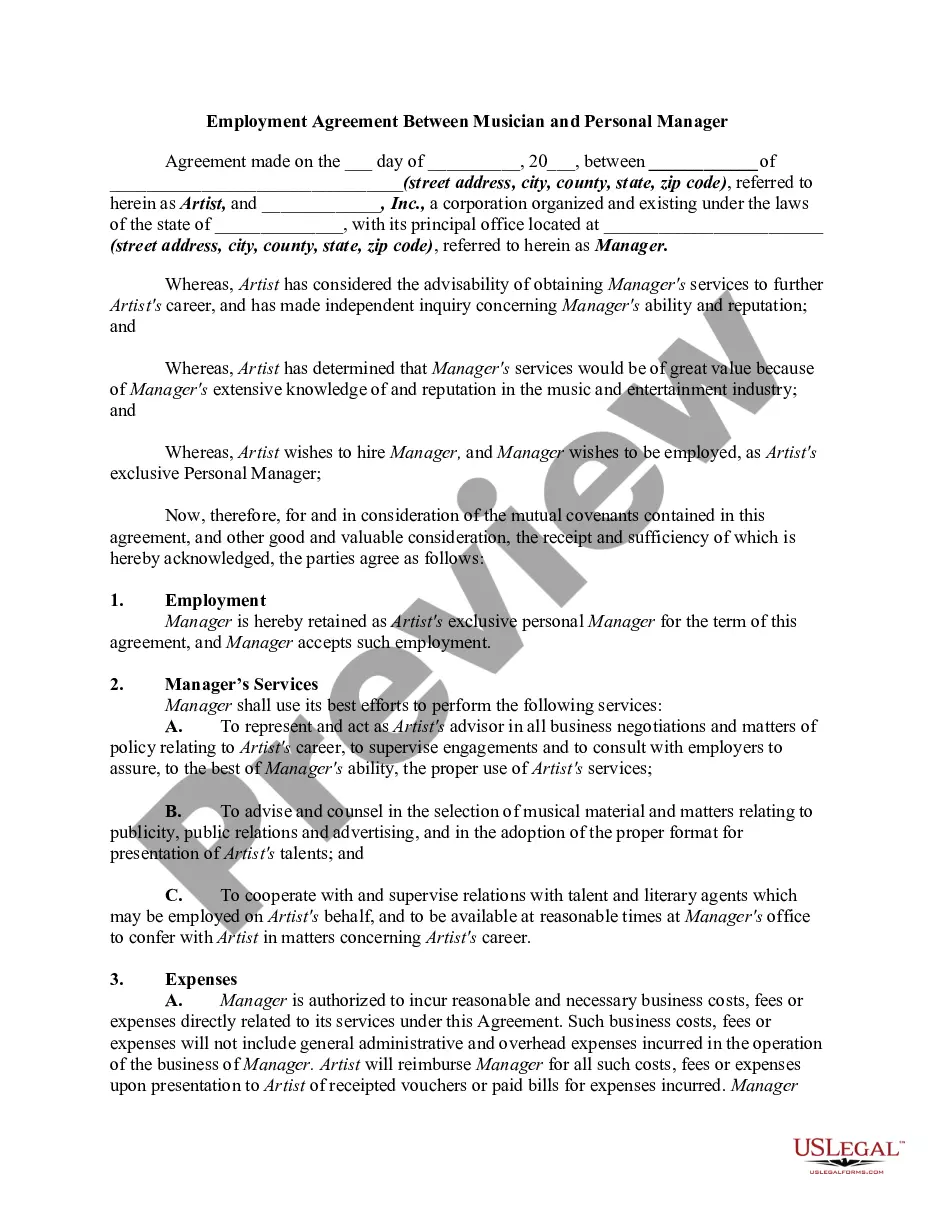
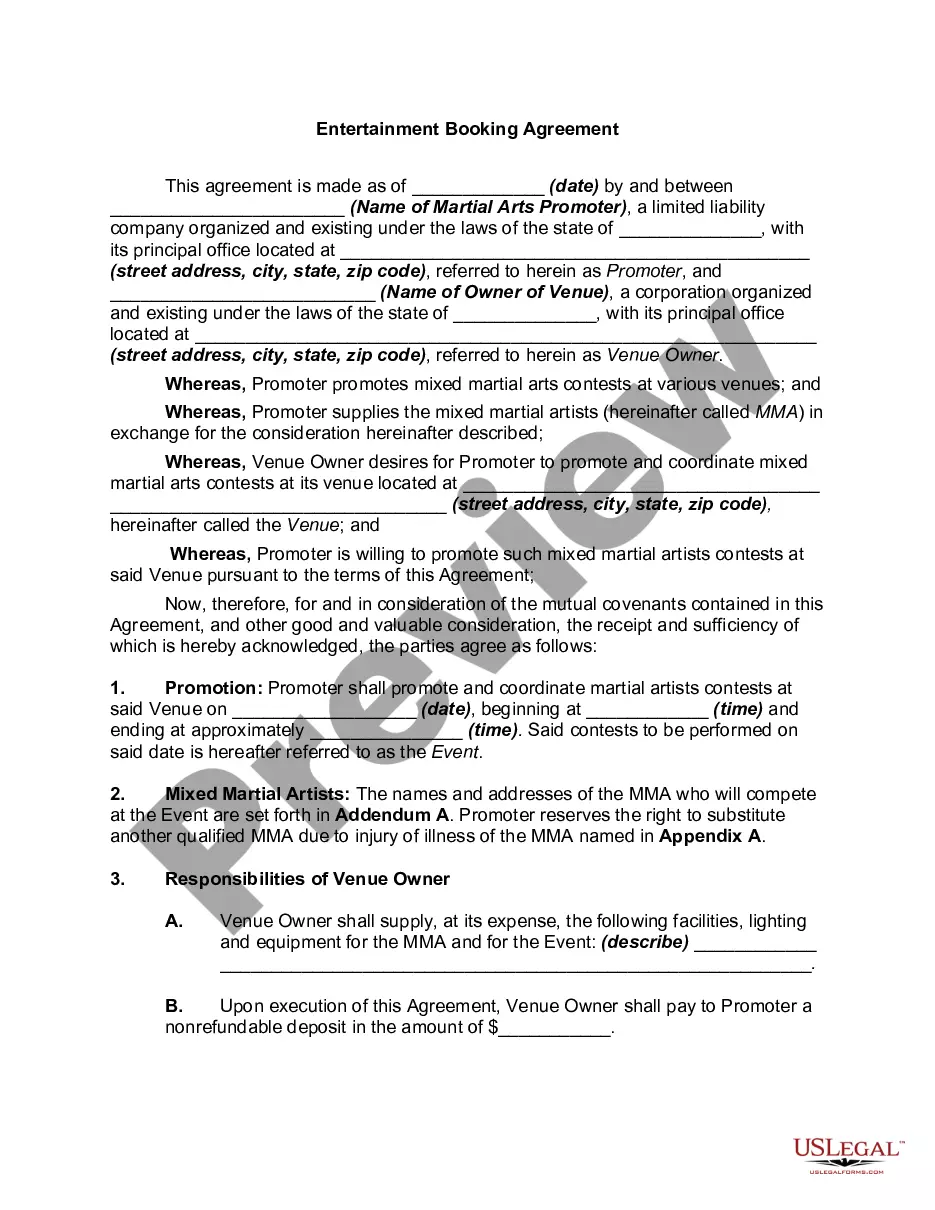
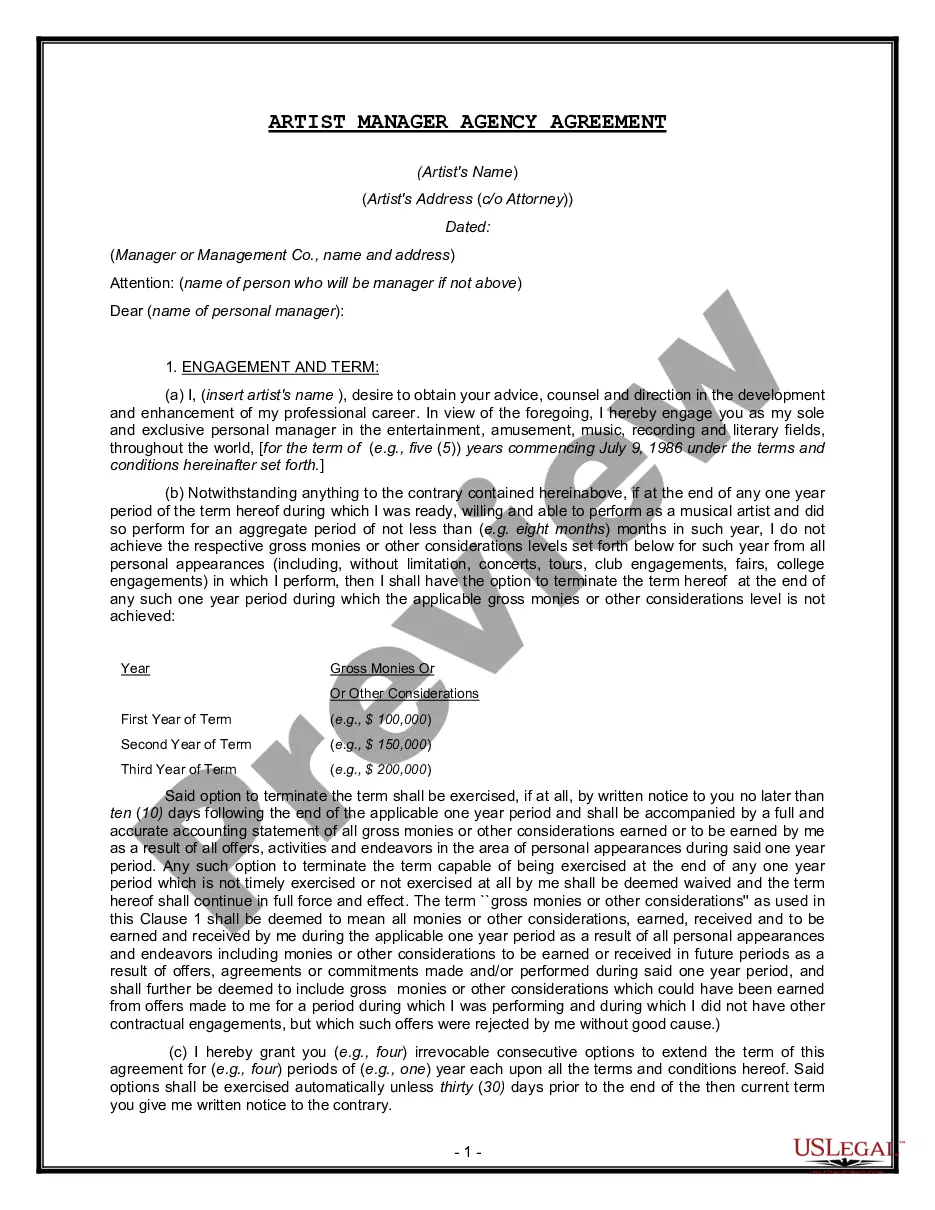
An Artist Management Agreement is used by a personal manager to contract with a recording and performing musical artist to set the terms for managing the artist's career. The manager receives a percentage of all the income generated by the artist for the management services provided.
Your Music Recording Contract should cover details like: Compensation and royalties. Where and when the album will be recorded. The album's release date. Who has creative control over specific elements of the album. The termination clause. The exclusive agreement clause. Dispute resolution. Promotional appearances.
As a general rule, managers take a percentage of all income generated by the artist in exchange for their management services. Commission rates typically range from 15-25% of the artist's gross income from: Recording royalties: Sales, streaming and licensing of recorded music.
The most common distribution is 15-20% for the artists and 75-80% for labels but it can go up to 50-50 with indie labels. For example, if you sign a 360° contract, your record label manages all aspects of your music project, from manufacturing to distribution, from marketing to publishing to sub-licensing, and more.
Contract management in construction is the process of overseeing and administrating contracts between various parties involved in a construction project. It encompasses activities such as the negotiation of contract terms, monitoring compliance with agreed-upon conditions, and facilitating dispute resolutions.
As a general rule, managers take a percentage of all income generated by the artist in exchange for their management services. Commission rates typically range from 15-25% of the artist's gross income from: Recording royalties: Sales, streaming and licensing of recorded music.
How long is a normal artist manager contract? The standard length of the management contract is three years but it can vary from 2 to 5 years on a case by case basis. Most contracts also include a "Sunset" clause.
The best way to catch a labels attention is to successfully do the work that a label would do themselves. Build a social media presence. Get your Twitter followers up, Facebook, SoundCloud and YouTube etc. It shows you're able to communicate well, and able to understand some of the business side of things.
Most musicians do not get a record deal for several reasons: High Competition: The music industry is highly competitive, with countless artists vying for attention. Labels receive thousands of demos and submissions, making it difficult for any single artist to stand out.
GETTING SIGNED TO A MAJOR LABEL We're talking between 20-100k followers. Many artists end up hiring social media management to get this done so they can stay focused on the music.