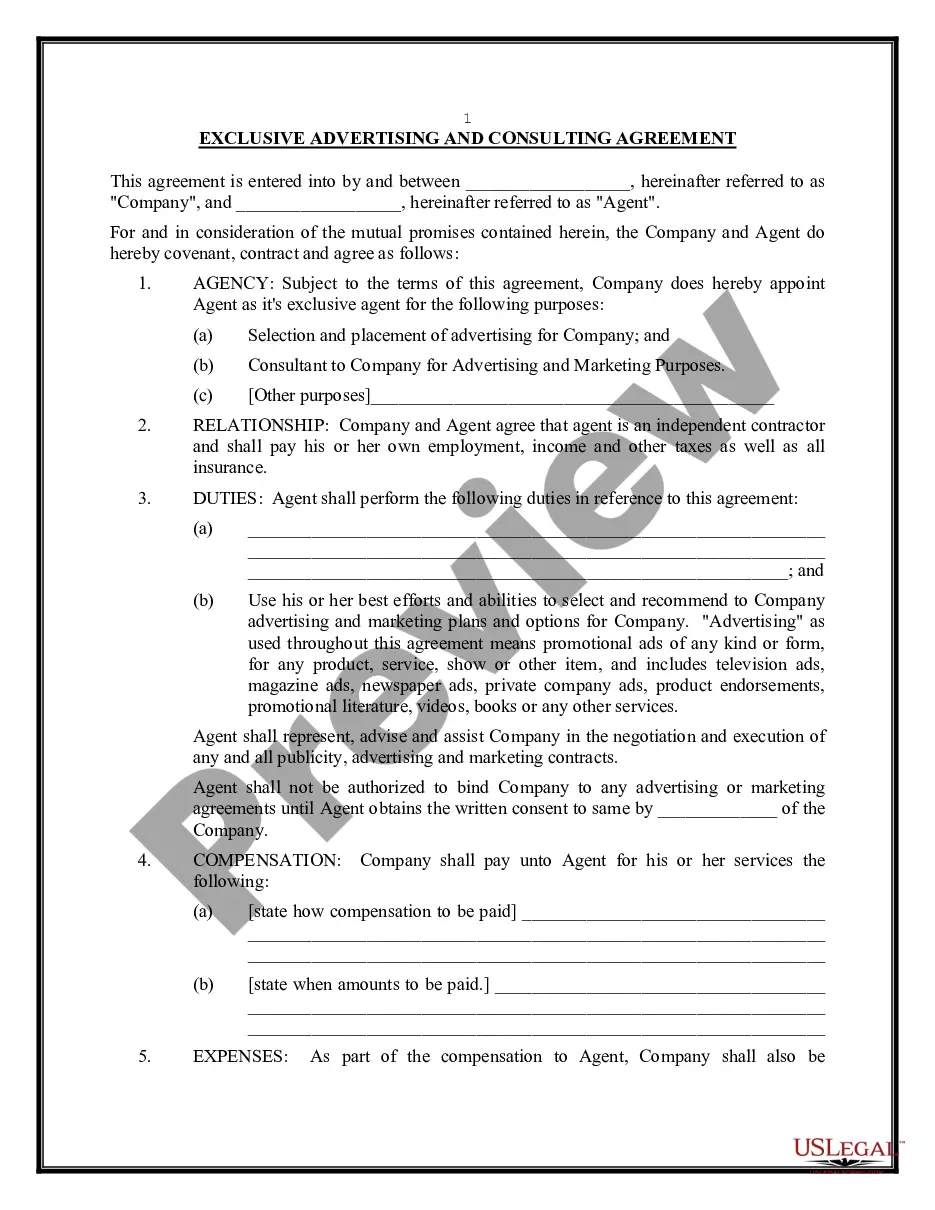
Contract Management For Procurement In Los Angeles
Description

Get your form ready online
Our built-in tools help you complete, sign, share, and store your documents in one place.
Make edits, fill in missing information, and update formatting in US Legal Forms—just like you would in MS Word.
Download a copy, print it, send it by email, or mail it via USPS—whatever works best for your next step.
Sign and collect signatures with our SignNow integration. Send to multiple recipients, set reminders, and more. Go Premium to unlock E-Sign.
If this form requires notarization, complete it online through a secure video call—no need to meet a notary in person or wait for an appointment.
We protect your documents and personal data by following strict security and privacy standards.

Make edits, fill in missing information, and update formatting in US Legal Forms—just like you would in MS Word.

Download a copy, print it, send it by email, or mail it via USPS—whatever works best for your next step.

Sign and collect signatures with our SignNow integration. Send to multiple recipients, set reminders, and more. Go Premium to unlock E-Sign.

If this form requires notarization, complete it online through a secure video call—no need to meet a notary in person or wait for an appointment.

We protect your documents and personal data by following strict security and privacy standards.
Looking for another form?








Form popularity
FAQ
The 5 P's of procurement—Power, People, Processes, Planning, and Prevention—form a holistic framework that is essential for achieving procurement excellence.
However, these two critical departments may not always be on the same page due to their unique goals. While contract managers are concerned with making sure contracts are approved by their legal team, procurement specialists are more concerned with acquiring products/services efficiently.
The procurement process involves several key steps: identifying needs, sourcing suppliers, negotiating contracts, and managing supplier relationships.
Exploring the key stages of the contract management lifecycle Stage 1: Contract Initiation. Stage 2: Contract Creation and Negotiation. Stage 3: Contract Approval. Stage 4: Contract Execution. Stage 5: Contract Monitoring and Management. Stage 6: Contract Renewal or Termination.
What stages does the procurement contract management process include? Identifying your needs. Evaluating potential suppliers. Drafting the perfect bid. Negotiating the contract. Setting up invoicing / payment systems. Performance evaluation. Contract renewal / closure.
Contract management in procurement is the process of systematically and efficiently managing contract creation, execution, and analysis to obtain the best possible financial and operational performance.
The procurement process is often seen as a subset of the larger supply chain management system, but it holds its own in terms of strategic importance by: Identifying needs. Sourcing materials and services.
Contract management includes negotiating the terms and conditions in contracts and ensuring compliance with the terms and conditions, as well as documenting and agreeing on any changes or amendments that may arise during its implementation or execution.
Procurement management focuses on securing favorable terms and contracts while contract management ensures the delivery of promised value throughout the contract's lifecycle.
Procurement in project management is essential for securing the right goods and services, ensuring projects are completed on time and within budget. By effectively managing procurement, project managers can reduce risks, improve quality, and enhance project outcomes.