Artist Manager Contract With Gallery In Harris
Description

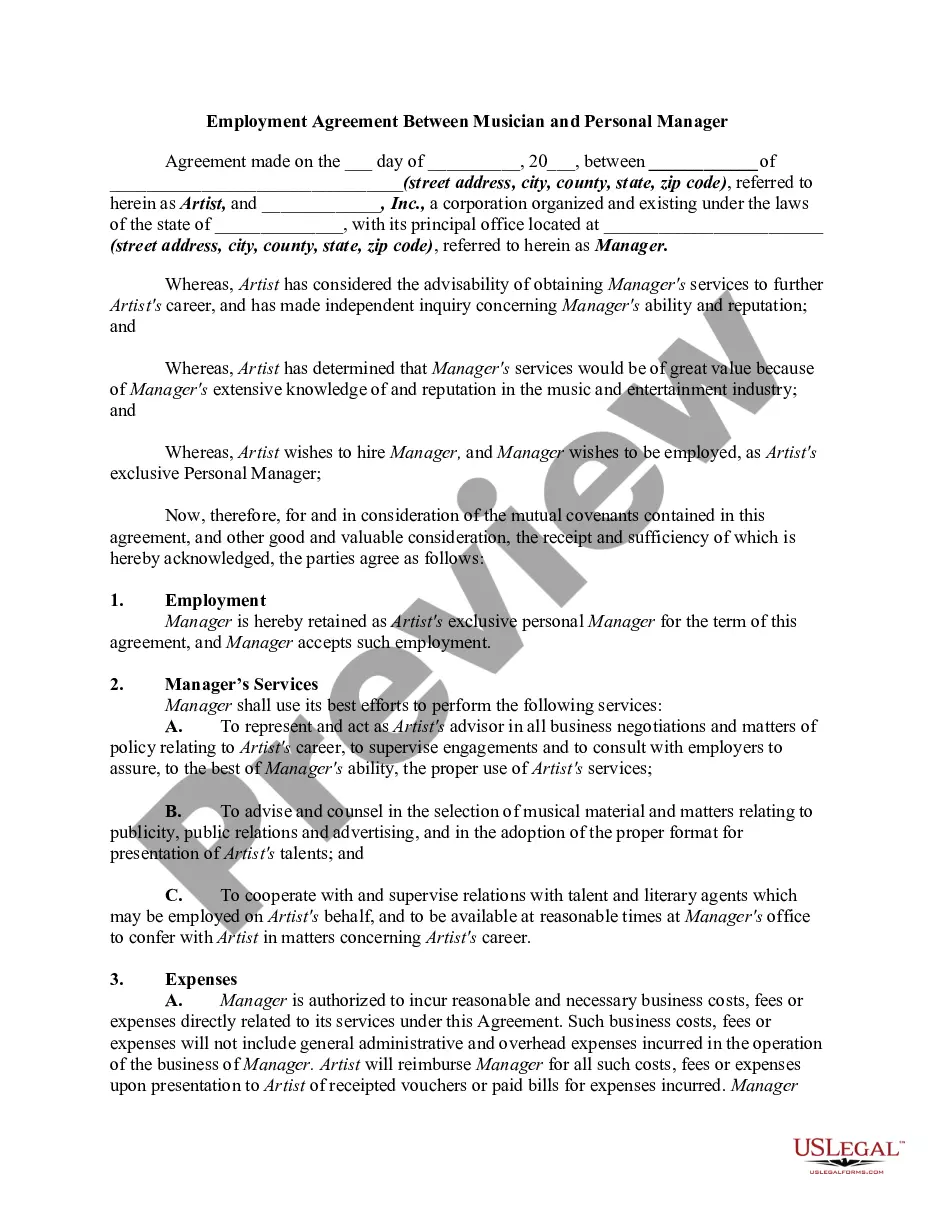
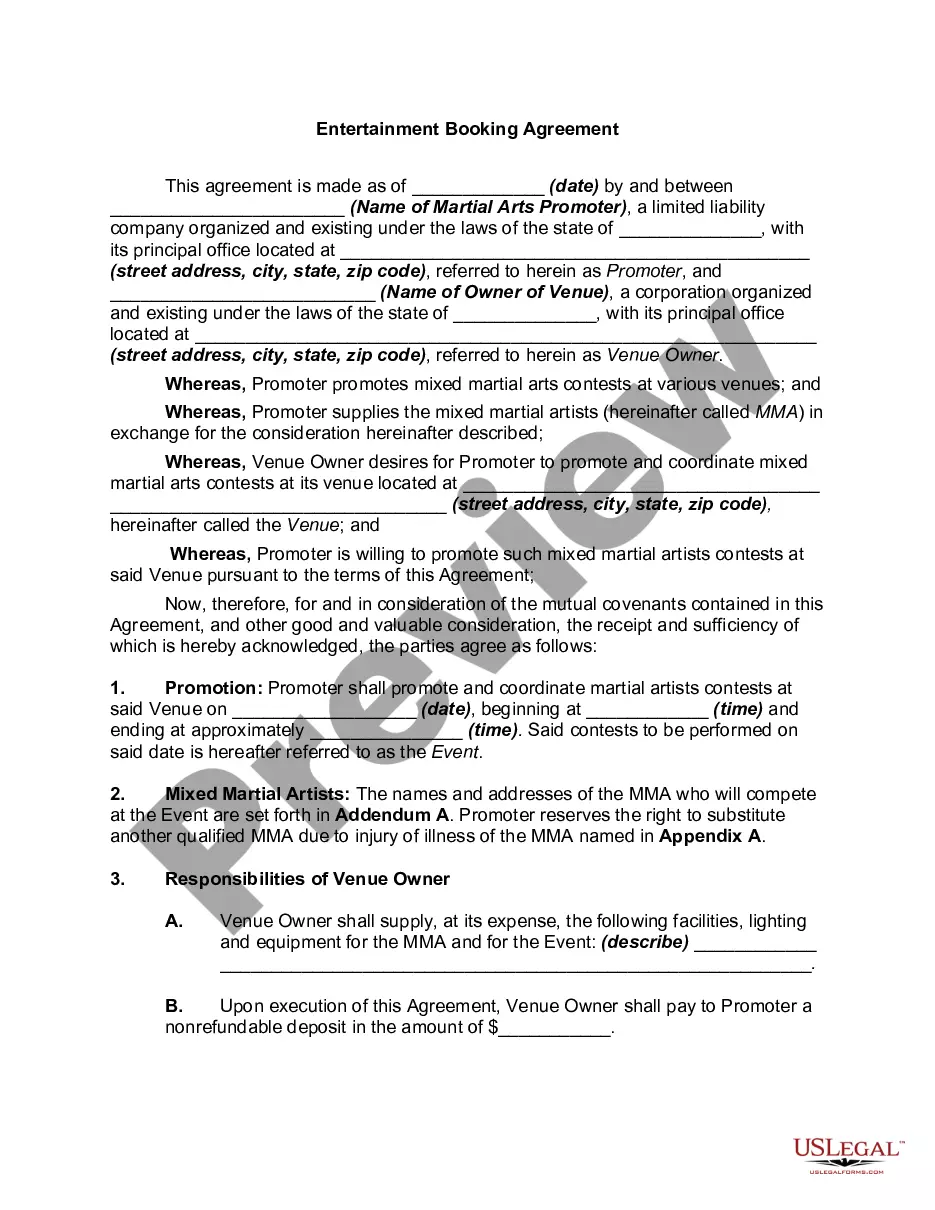
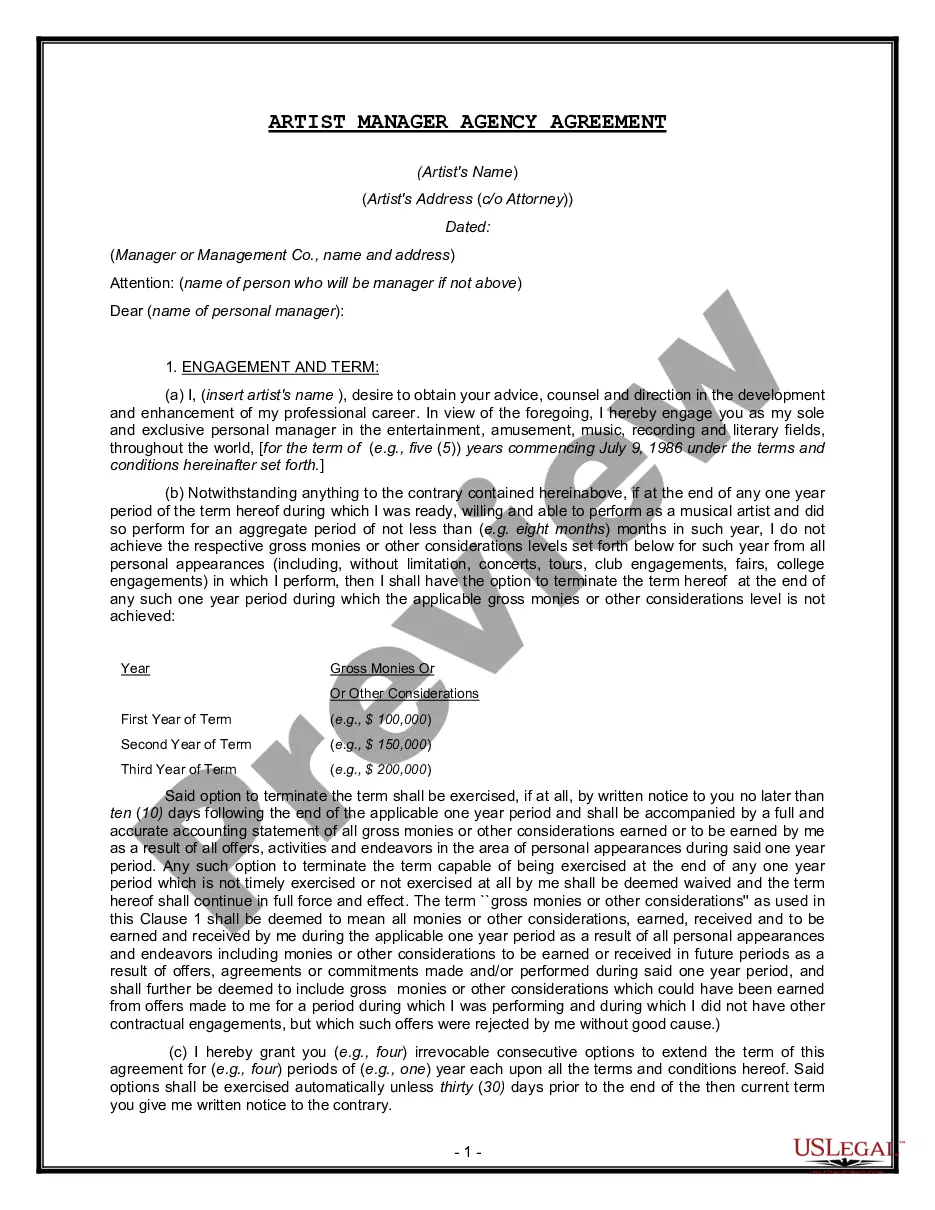
Get your form ready online
Our built-in tools help you complete, sign, share, and store your documents in one place.
Make edits, fill in missing information, and update formatting in US Legal Forms—just like you would in MS Word.
Download a copy, print it, send it by email, or mail it via USPS—whatever works best for your next step.
Sign and collect signatures with our SignNow integration. Send to multiple recipients, set reminders, and more. Go Premium to unlock E-Sign.
If this form requires notarization, complete it online through a secure video call—no need to meet a notary in person or wait for an appointment.
We protect your documents and personal data by following strict security and privacy standards.

Make edits, fill in missing information, and update formatting in US Legal Forms—just like you would in MS Word.

Download a copy, print it, send it by email, or mail it via USPS—whatever works best for your next step.

Sign and collect signatures with our SignNow integration. Send to multiple recipients, set reminders, and more. Go Premium to unlock E-Sign.

If this form requires notarization, complete it online through a secure video call—no need to meet a notary in person or wait for an appointment.

We protect your documents and personal data by following strict security and privacy standards.
Looking for another form?





Form popularity
FAQ
If you are talking about well-known musicians, you can generally find contact details for their management via their official website &/or fan club which you can easily find just by googling. Failing that, contact their record company and ask them.
There are several types of contracts that come into play for artists working professionally — whether in the context of gallery representation, receiving commissions or funding, selling an artwork, or loaning work for a temporary exhibition.
Jenkins said that usually “artists look for a Manager when things get too overwhelming for them to handle themselves.” “But,” she continued, “other artists have someone from the beginning to help get their career off the ground.
What Percentage Do They Make? The most common, or easiest gauging point for management percentage, at least in North America, is 15 to 20% of gross artist revenue.
Comments Section Networking: Attend industry events, music conferences, and shows to meet people in the industry. Research: Look for managers who work with artists in your genre and have a track record of success. Referrals: Ask fellow musicians and industry contacts for recommendations.
If you're a musician looking for a music manager, consider following these steps: Develop your music. Create recordings. Explore your network. Contact agencies and managers. Continue to promote your music. Meet and discuss your career goals. Negotiate and sign a contract.
Having an artist management contract in place from the start sets the tone for a happy manager-artist relationship. By including clauses for commissions, term, decision making, sunset periods and exclusivity, you'll have all your legal bases covered from day one.
Write the contract in six steps Start with a contract template. Open with the basic information. Describe in detail what you have agreed to. Include a description of how the contract will be ended. Write into the contract which laws apply and how disputes will be resolved. Include space for signatures.
How to become an art gallery manager? To reach this position, it is recommended to obtain a graduate degree in arts management, art business, museum studies or arts administration. As the position involves marketing and management tasks, taking classes of those two fields can also help you better qualify for the job.
