Talent Management Contract For The Twenty-first Century In Fulton
Description

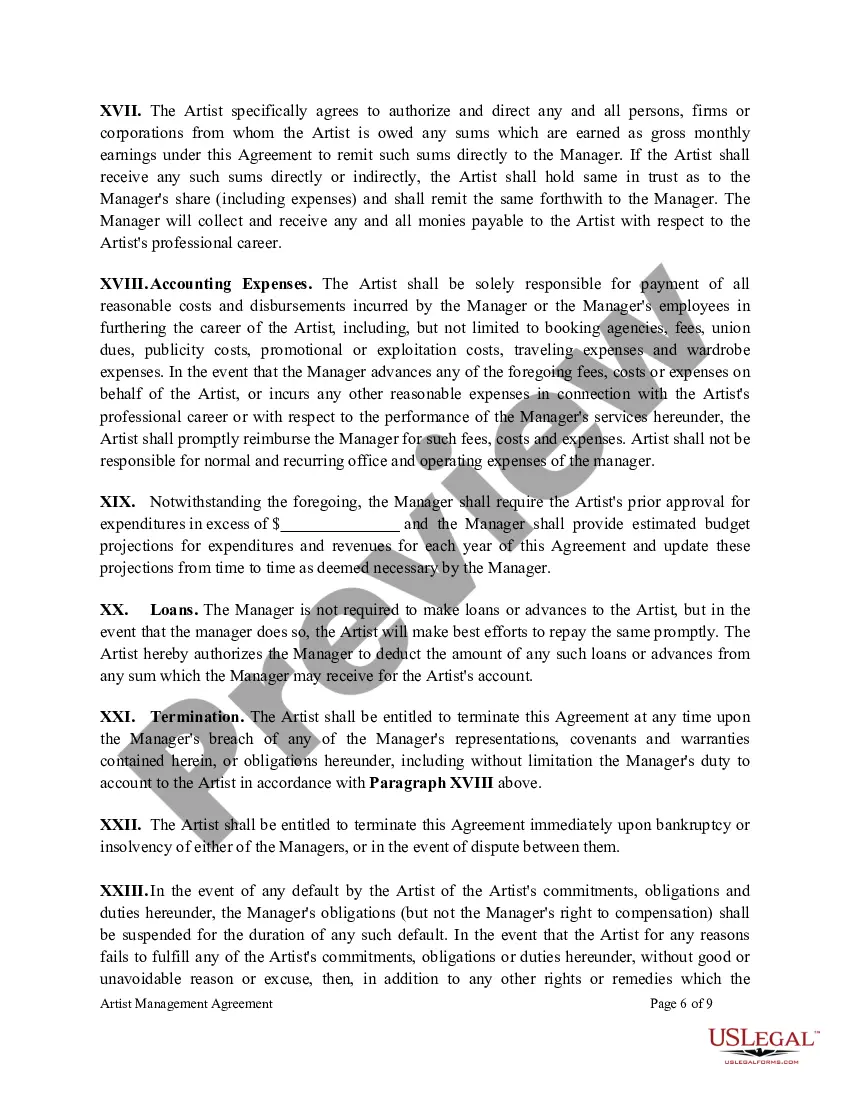
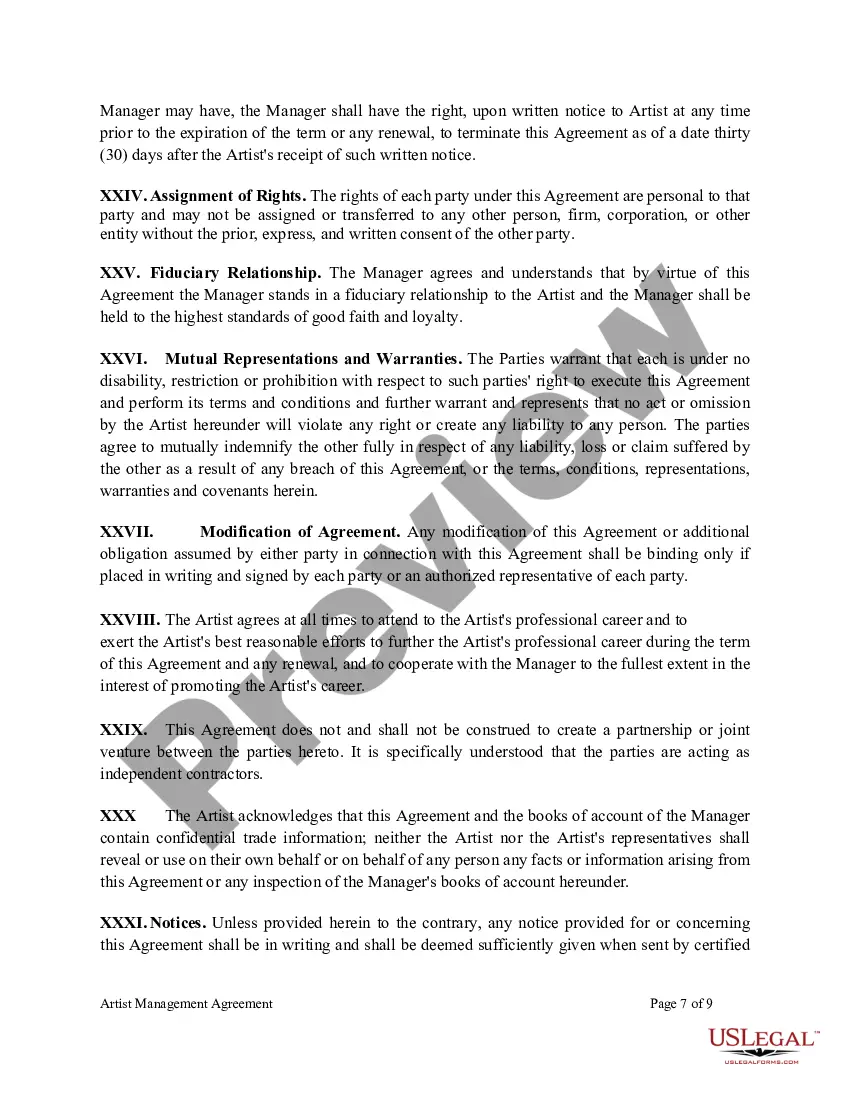


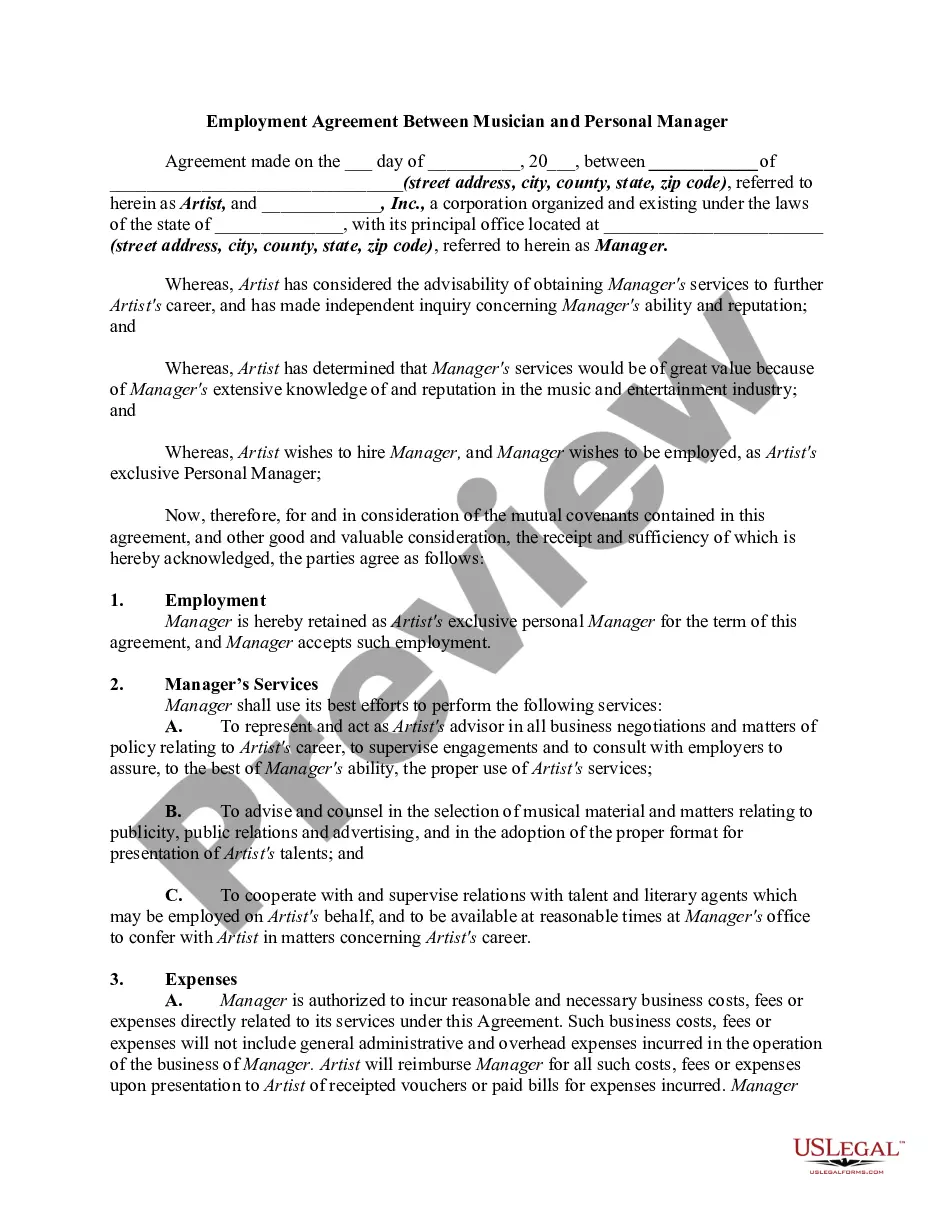

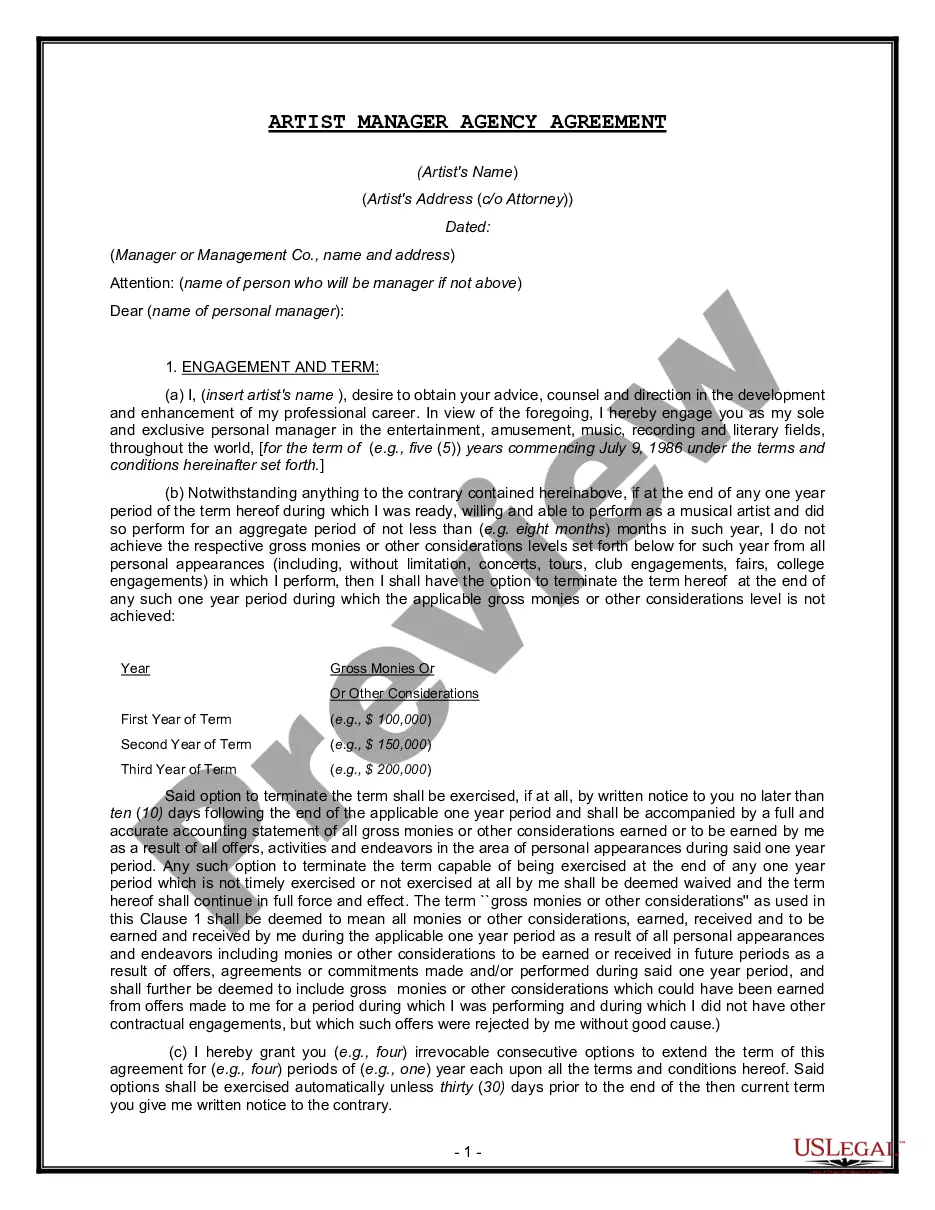
Get your form ready online
Our built-in tools help you complete, sign, share, and store your documents in one place.
Make edits, fill in missing information, and update formatting in US Legal Forms—just like you would in MS Word.
Download a copy, print it, send it by email, or mail it via USPS—whatever works best for your next step.
Sign and collect signatures with our SignNow integration. Send to multiple recipients, set reminders, and more. Go Premium to unlock E-Sign.
If this form requires notarization, complete it online through a secure video call—no need to meet a notary in person or wait for an appointment.
We protect your documents and personal data by following strict security and privacy standards.

Make edits, fill in missing information, and update formatting in US Legal Forms—just like you would in MS Word.

Download a copy, print it, send it by email, or mail it via USPS—whatever works best for your next step.

Sign and collect signatures with our SignNow integration. Send to multiple recipients, set reminders, and more. Go Premium to unlock E-Sign.

If this form requires notarization, complete it online through a secure video call—no need to meet a notary in person or wait for an appointment.

We protect your documents and personal data by following strict security and privacy standards.
Looking for another form?








Form popularity
FAQ
These might include projects that are already underway or work in a different field. An actor signing an agreement for representation in TV projects, for example, might want to exclude theater work. Most talent representation agreements last for a term between one and five years.
Career path for a contract manager Earn a bachelor's degree (mandatory). Get relevant work experience. Go to law school (optional). As previously mentioned, not all companies looking for a contract manager require candidates with law degrees. Become a certified contract manager (optional in most cases)
What is End-to-End Talent Management? End-to-end talent management considers every stage of the talent lifecycle, from application to offboarding. It also takes into account the employee journey, including performance management, engagement, professional development, and career paths.
How to implement contract management activities Step 1: Transition activities, if any. Step 2: Review the draft contract management plan. Step 3: Review the contract's budget. Step 4: Resources to support contract management. Step 5: Finalise and implement the contract management plan.
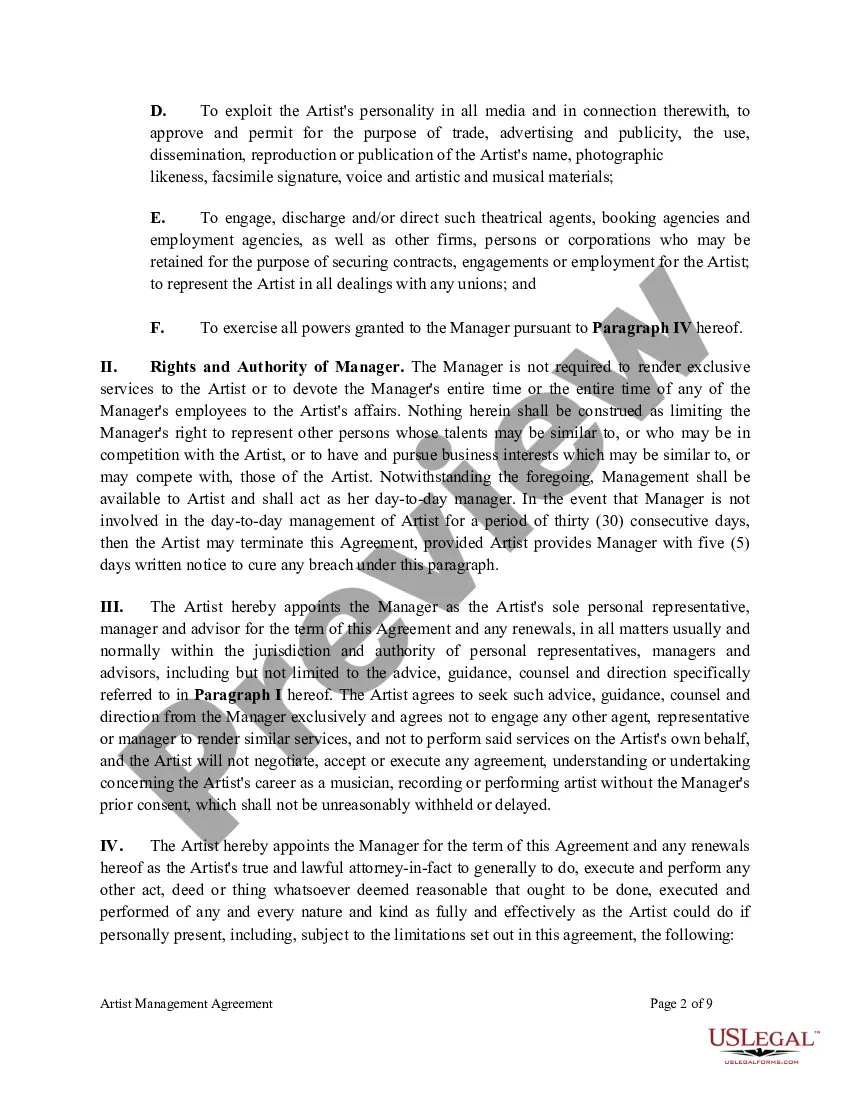
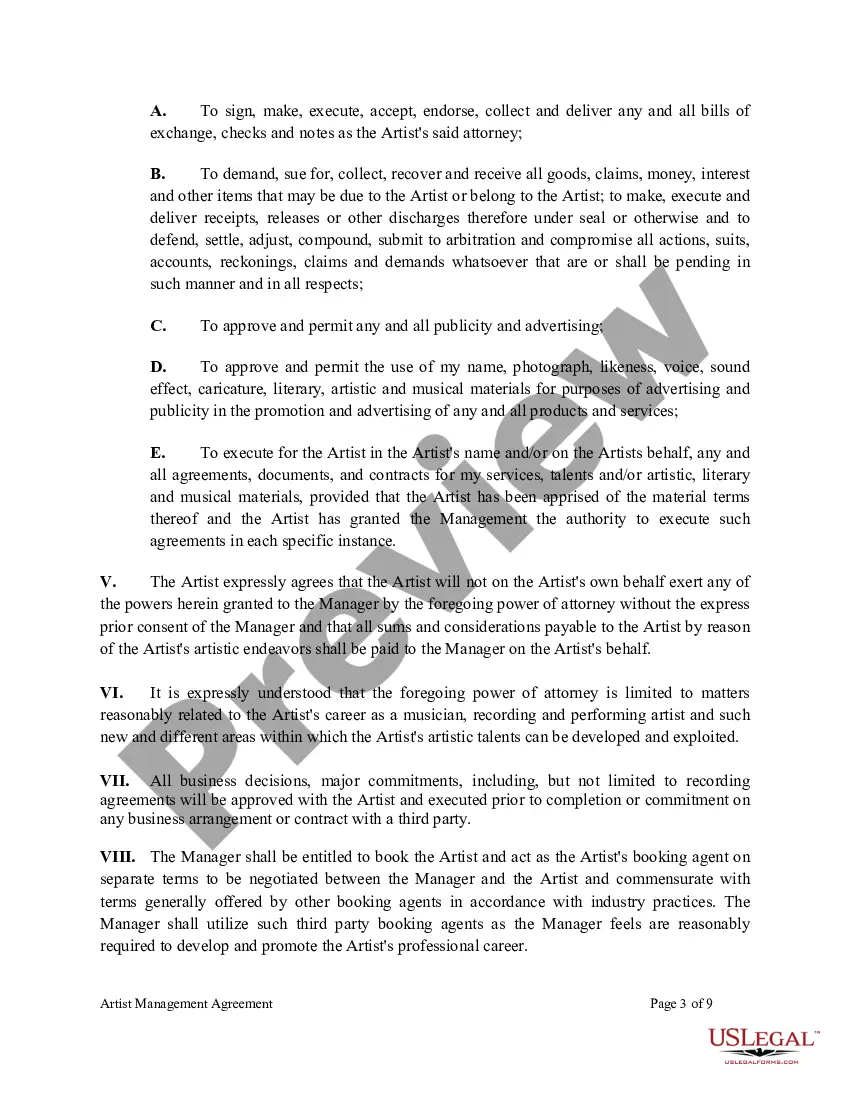
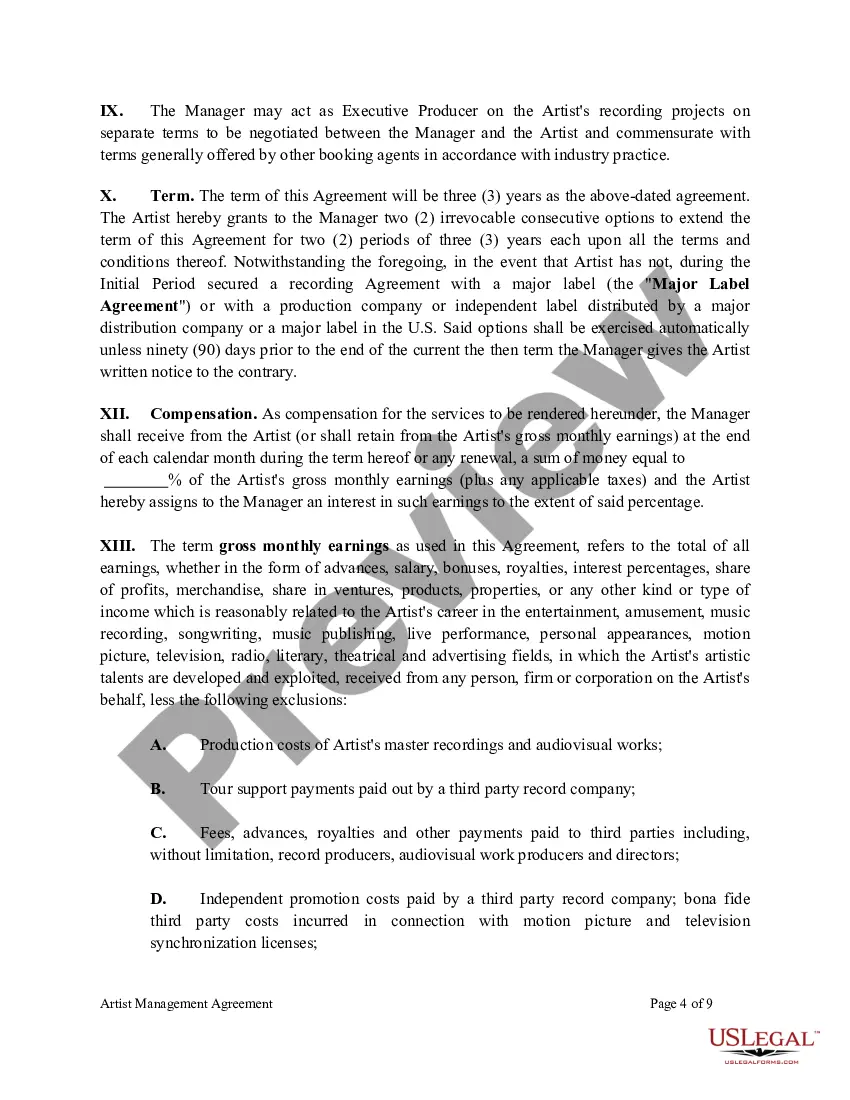
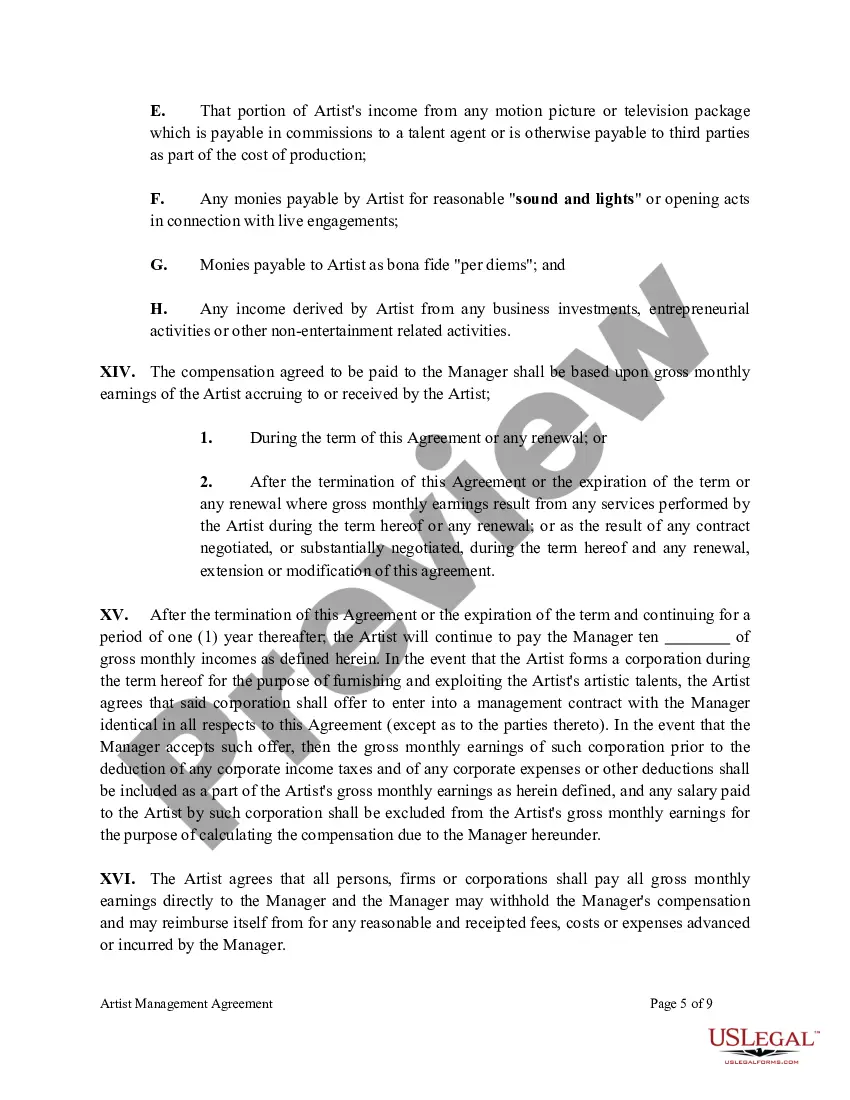
As a general rule, managers take a percentage of all income generated by the artist in exchange for their management services. Commission rates typically range from 15-25% of the artist's gross income from: Recording royalties: Sales, streaming and licensing of recorded music.
Most contract managers have at least a bachelor's degree, typically in business administration, law, or finance. Some contracts managers who work for an in-house legal department have paralegal or legal training.
Exploring the key stages of the contract management lifecycle Stage 1: Contract Initiation. Stage 2: Contract Creation and Negotiation. Stage 3: Contract Approval. Stage 4: Contract Execution. Stage 5: Contract Monitoring and Management. Stage 6: Contract Renewal or Termination.
How to Start a Contracting Business Choose a trade. Set up and register your business structure. Explore business insurance. Choose the right tools and equipment. Understand the licensing requirements. Set a service rate. Market your business locally. Join an industry association.
There are five fundamentals of effective talent management strategy that can help companies overcome these and other common challenges. Drive goal alignment and determine metrics. Create a strong employer brand. Focus on employee experience. Encourage a high-performance culture. Gain a single-source view of employees.
In brief, integrated talent management is the coordination of traditional HR sub-functions—recruitment and selection, workforce planning, performance management, learning and development, recognition, and succession planning—to more strategically leverage talent.