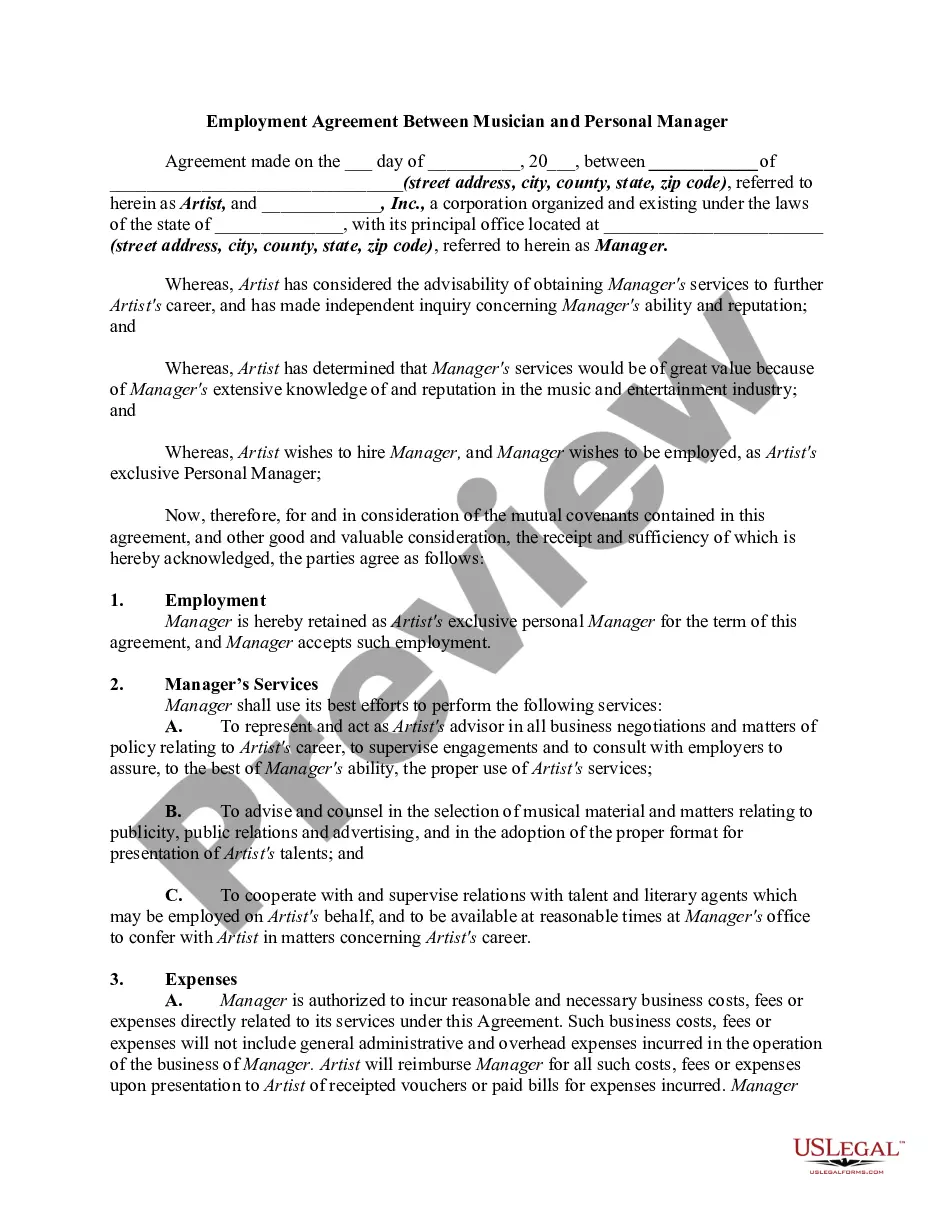
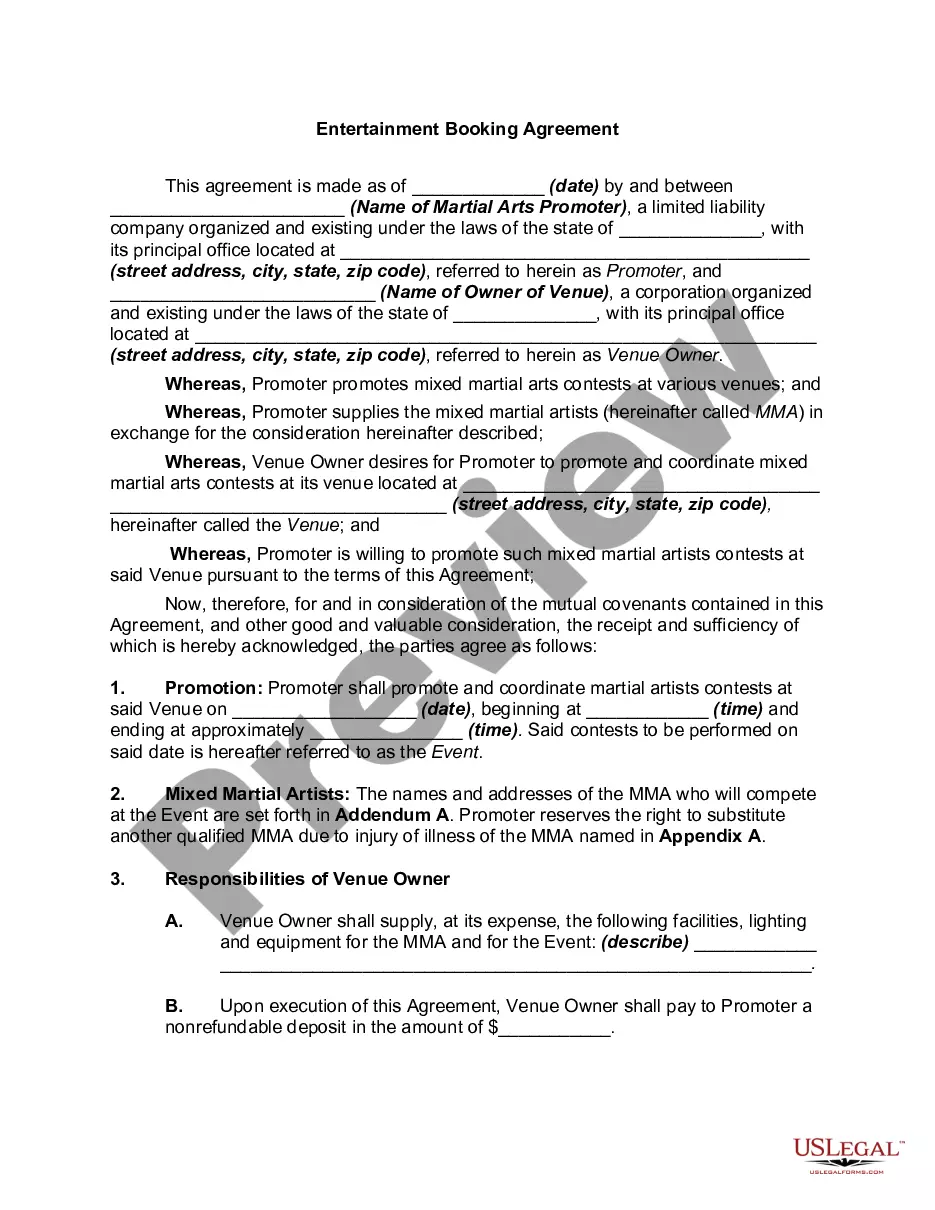
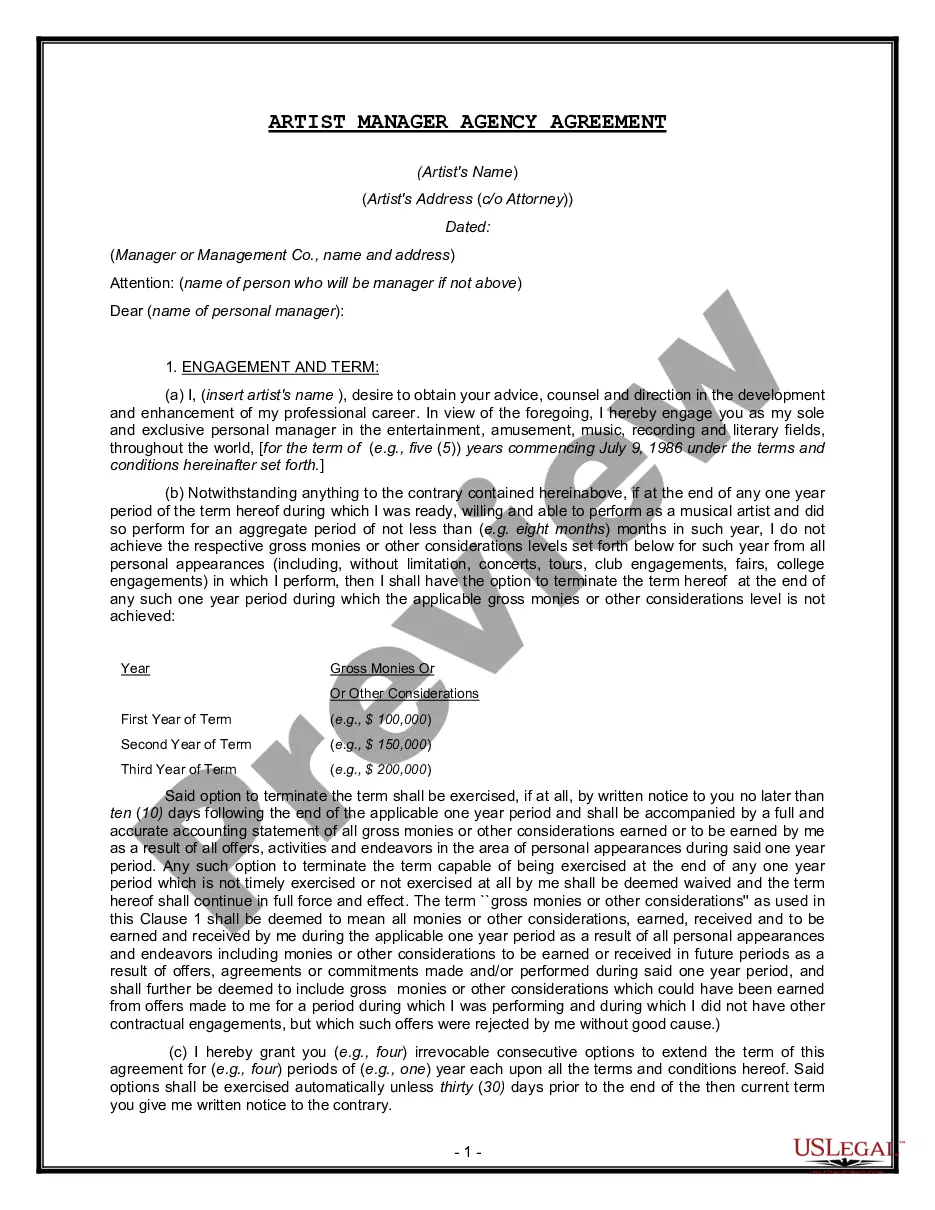
Personal Manager Contract With Property In Florida
Description









Get your form ready online
Our built-in tools help you complete, sign, share, and store your documents in one place.
Make edits, fill in missing information, and update formatting in US Legal Forms—just like you would in MS Word.
Download a copy, print it, send it by email, or mail it via USPS—whatever works best for your next step.
Sign and collect signatures with our SignNow integration. Send to multiple recipients, set reminders, and more. Go Premium to unlock E-Sign.
If this form requires notarization, complete it online through a secure video call—no need to meet a notary in person or wait for an appointment.
We protect your documents and personal data by following strict security and privacy standards.

Make edits, fill in missing information, and update formatting in US Legal Forms—just like you would in MS Word.

Download a copy, print it, send it by email, or mail it via USPS—whatever works best for your next step.

Sign and collect signatures with our SignNow integration. Send to multiple recipients, set reminders, and more. Go Premium to unlock E-Sign.

If this form requires notarization, complete it online through a secure video call—no need to meet a notary in person or wait for an appointment.

We protect your documents and personal data by following strict security and privacy standards.
Looking for another form?




Form popularity
FAQ
Essential clauses of a property management agreement Introduction. The intro part identifies the document as a property management agreement. Recitals. Description of rental property. Property manager's duties; obligations. Owner's obligations. Reimbursement of expenses. Term. Compensation.
To become a property manager in Florida, one must earn a real estate sales agent license, complete a real estate pre-licensing course, submit a licensure application, pass the real estate associates exam and possibly pursue other licensing options for improved career prospects.
House now to be very clear if you intend to uh rent someone else's house even if it's uh maybeMoreHouse now to be very clear if you intend to uh rent someone else's house even if it's uh maybe perhaps a relatives a friends your neighbor's.
To practice as a property manager, a real estate license is generally required, which mandates completion of a specific pre-licensing course and passing the relevant state exam. Before the rental agreement commences, it's wise to consider obtaining landlord insurance in Florida to provide coverage for any damages.
Filing a Complaint With Relevant Authorities: Your Next Steps Department of Business and Professional Regulation (DBPR): The DBPR is the state agency responsible for regulating real estate professionals in Florida. Local Housing Authority. Better Business Bureau (BBB). Small Claims Court. Attorney General's Office:
Q: How do I know if my property manager is acting unethically? A: Some signs include misappropriated funds, unresponsive behavior to maintenance requests, unlawful tenant treatment, and unexplained fees. Keep an eye on their financial reporting and how they handle tenant concerns.
Contact Higher Management: If the property manager works for a larger company, you may want to reach out to their supervisor or the company's management to express your concerns. File a Complaint: If the situation doesn't improve, you can file a complaint with a local tenant's association or housing authority.
In Florida, the regulation and oversight of HOA management companies fall primarily under the Florida Department of Business and Professional Regulation (DBPR) and the Division of Florida Condominiums, Timeshares, and Mobile Homes.
Like most states, Florida offers renters a number of ways to file a complaint including: Filing a complaint with The Department of Housing and Urban Development (HUD) Filing a lawsuit in court. Lodging a complaint with the Better Business Bureau (BBB) Filing a complaint with the city's relevant department.
