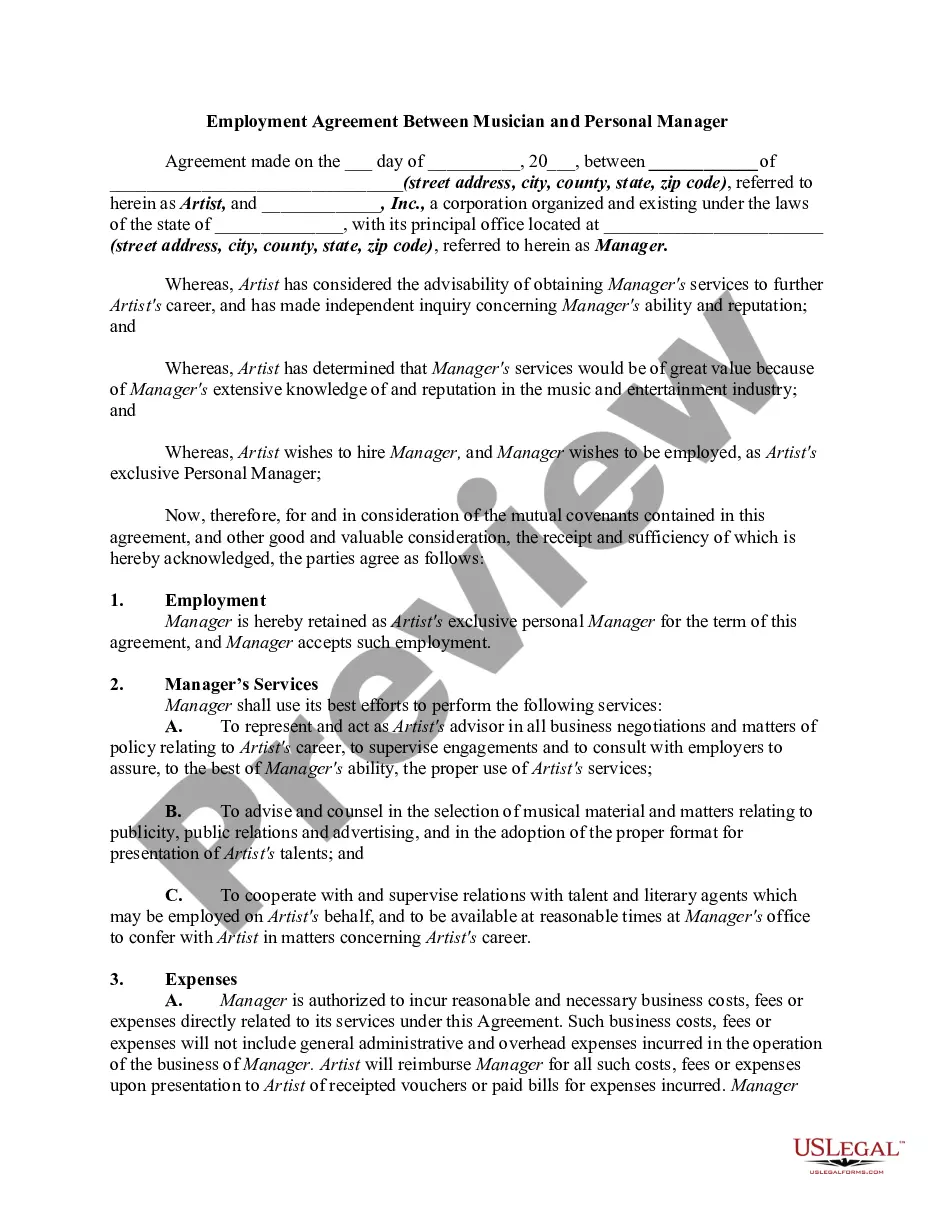
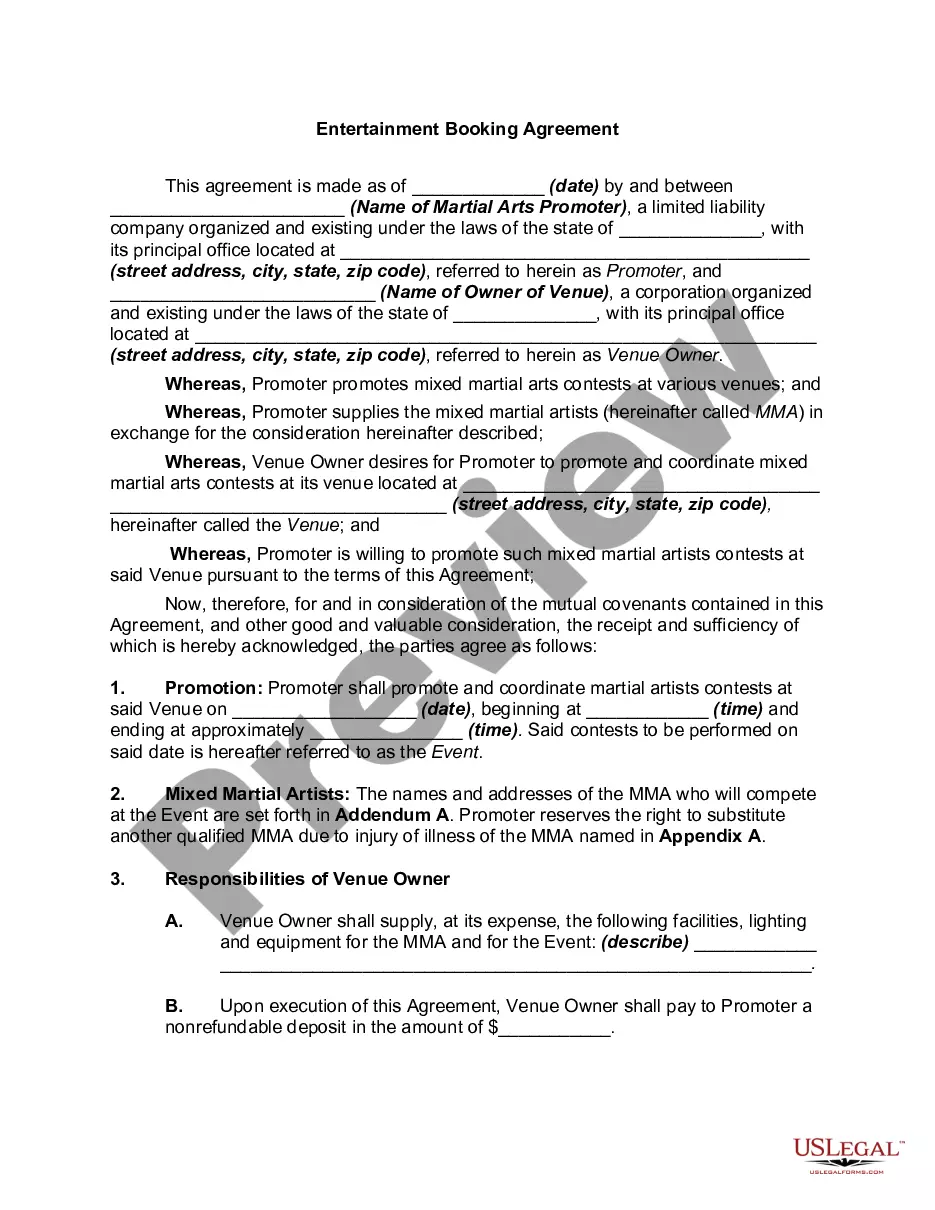
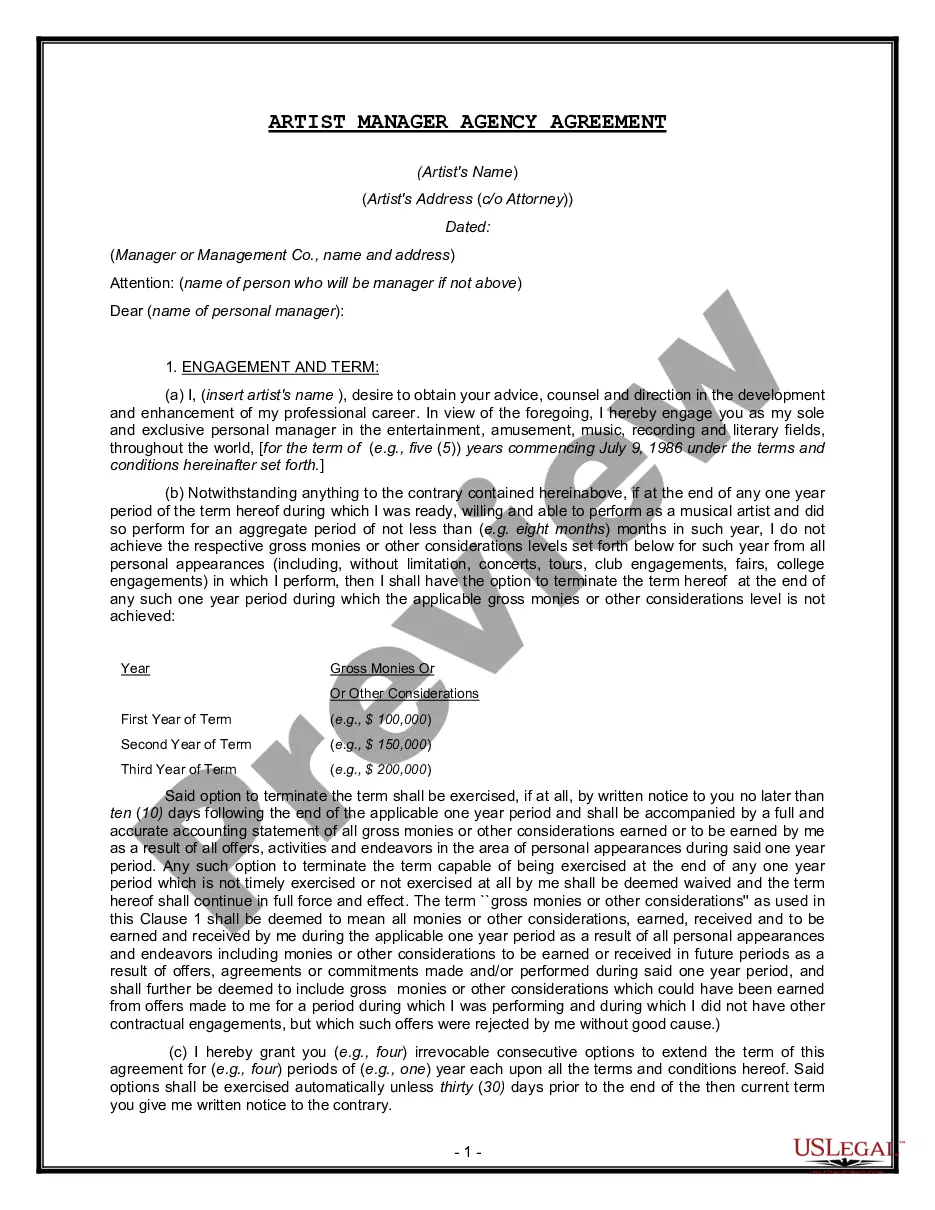
Music Management Contract With Owner In Dallas
Description

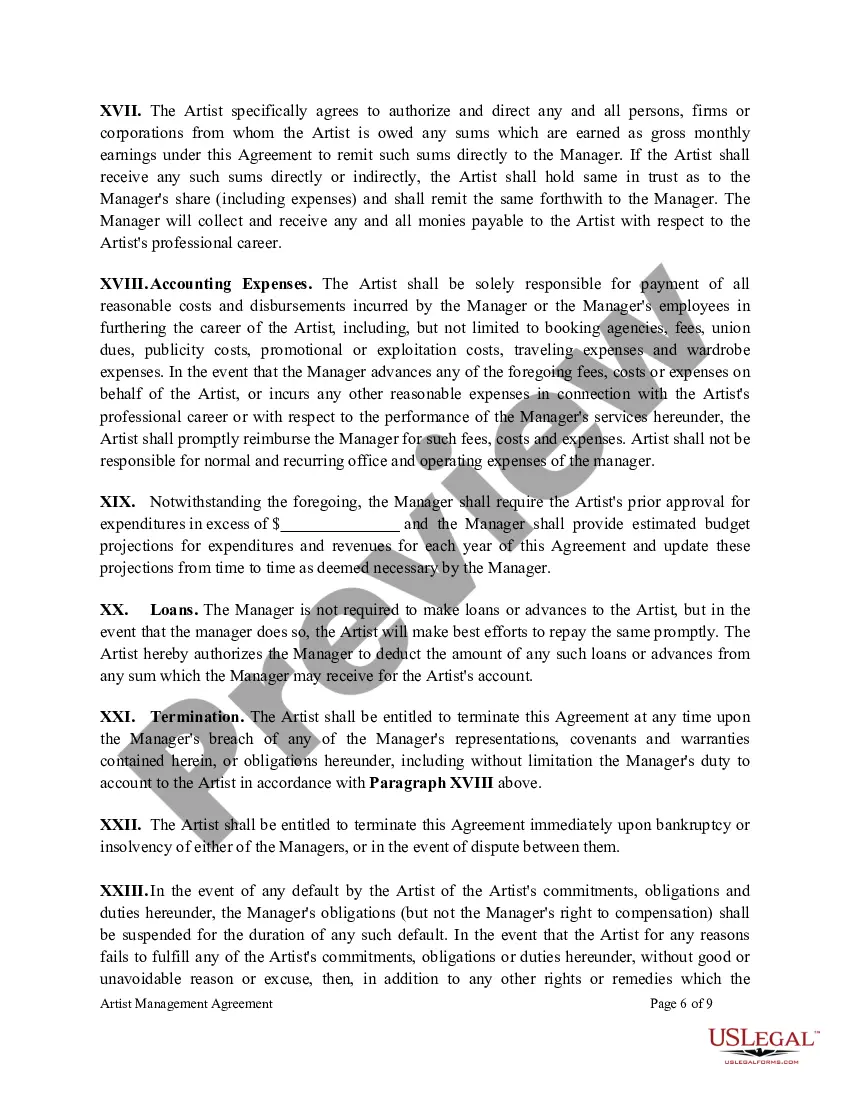
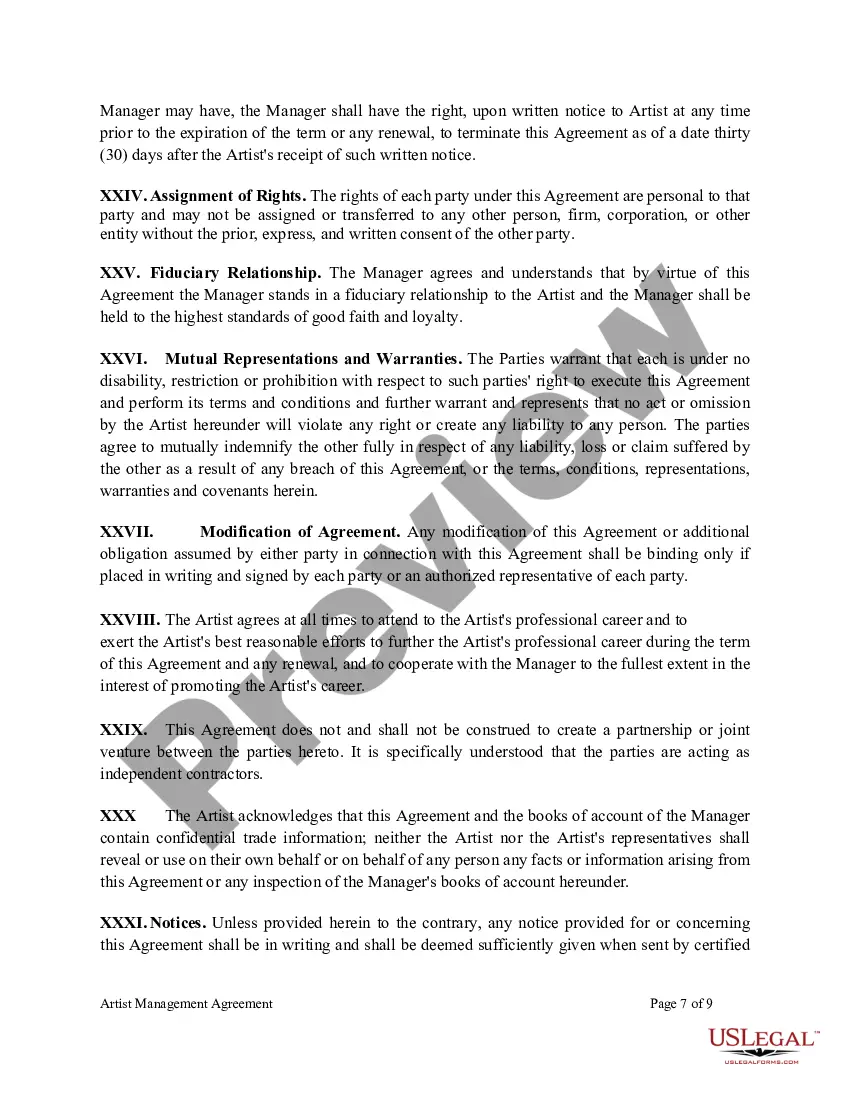
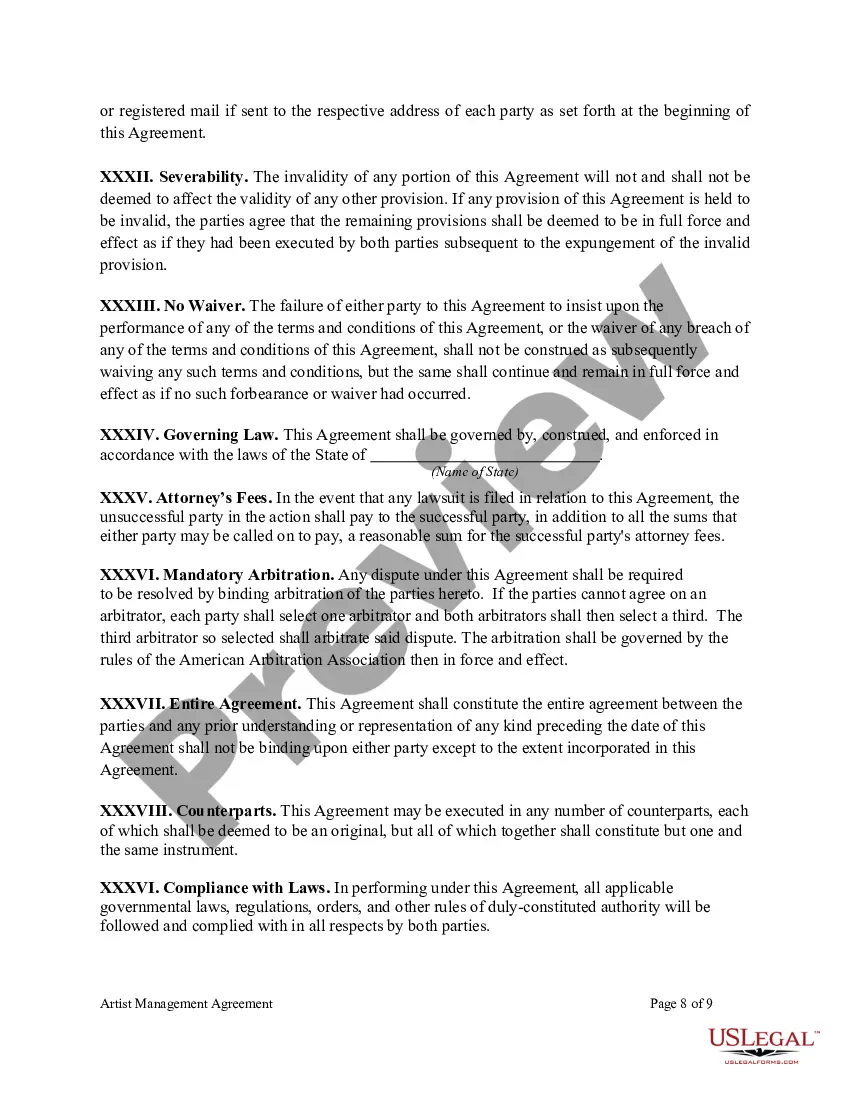
Get your form ready online
Our built-in tools help you complete, sign, share, and store your documents in one place.
Make edits, fill in missing information, and update formatting in US Legal Forms—just like you would in MS Word.
Download a copy, print it, send it by email, or mail it via USPS—whatever works best for your next step.
Sign and collect signatures with our SignNow integration. Send to multiple recipients, set reminders, and more. Go Premium to unlock E-Sign.
If this form requires notarization, complete it online through a secure video call—no need to meet a notary in person or wait for an appointment.
We protect your documents and personal data by following strict security and privacy standards.

Make edits, fill in missing information, and update formatting in US Legal Forms—just like you would in MS Word.

Download a copy, print it, send it by email, or mail it via USPS—whatever works best for your next step.

Sign and collect signatures with our SignNow integration. Send to multiple recipients, set reminders, and more. Go Premium to unlock E-Sign.

If this form requires notarization, complete it online through a secure video call—no need to meet a notary in person or wait for an appointment.

We protect your documents and personal data by following strict security and privacy standards.
Looking for another form?




Form popularity
FAQ
As a general rule, managers take a percentage of all income generated by the artist in exchange for their management services. Commission rates typically range from 15-25% of the artist's gross income from: Recording royalties: Sales, streaming and licensing of recorded music.
A Publishing or Song-writing Agreement is the document by which a songwriter assigns the copyright in their compositions to a music publisher in exchange for royalties and, in appropriate cases, an advance against those royalties.
Recording Contracts As part of this agreement, the label typically pays for the artist's marketing, promotion, and music distribution at every step of the recording process. In return, the artist commits to providing the label with a set quantity of albums or tracks within a given time.
Write the contract in six steps Start with a contract template. Open with the basic information. Describe in detail what you have agreed to. Include a description of how the contract will be ended. Write into the contract which laws apply and how disputes will be resolved. Include space for signatures.
Your Music Recording Contract should cover details like: Compensation and royalties. Where and when the album will be recorded. The album's release date. Who has creative control over specific elements of the album. The termination clause. The exclusive agreement clause. Dispute resolution. Promotional appearances.
Managers' commissions are typically between 15 to 20% of an artist's gross income. Whether it's 15% or 20% really depends on the level of the band and the bargaining power of each party.
How to Get Noticed by a Music Manager Create an Impressive EPK (Electronic Press Kit) ... Release Quality Music Consistently. Gain a Loyal Fanbase. Leverage Social Media. Showcase Your Live Performances. Collaborate with Other Artists. Creating a Professional Online Presence.
To get a talent agent, you need to find their email address and email them an EPK (Electronic Press Kit). Also do some cold calling by finding their phone numbers, but before you do that, try to learn something about them if you can find any info on them. Or, simply show up in their office and set a meeting with them.
Typing 'music manager' into any search engine will produce tons of results you can scroll through to fish out music managers you can contact via email addresses or social media handles. You should also use social media platforms like LinkedIn, Instagram, and Facebook to search for music managers.
