Artist Agreement Form Template With Photo In Contra Costa
Description

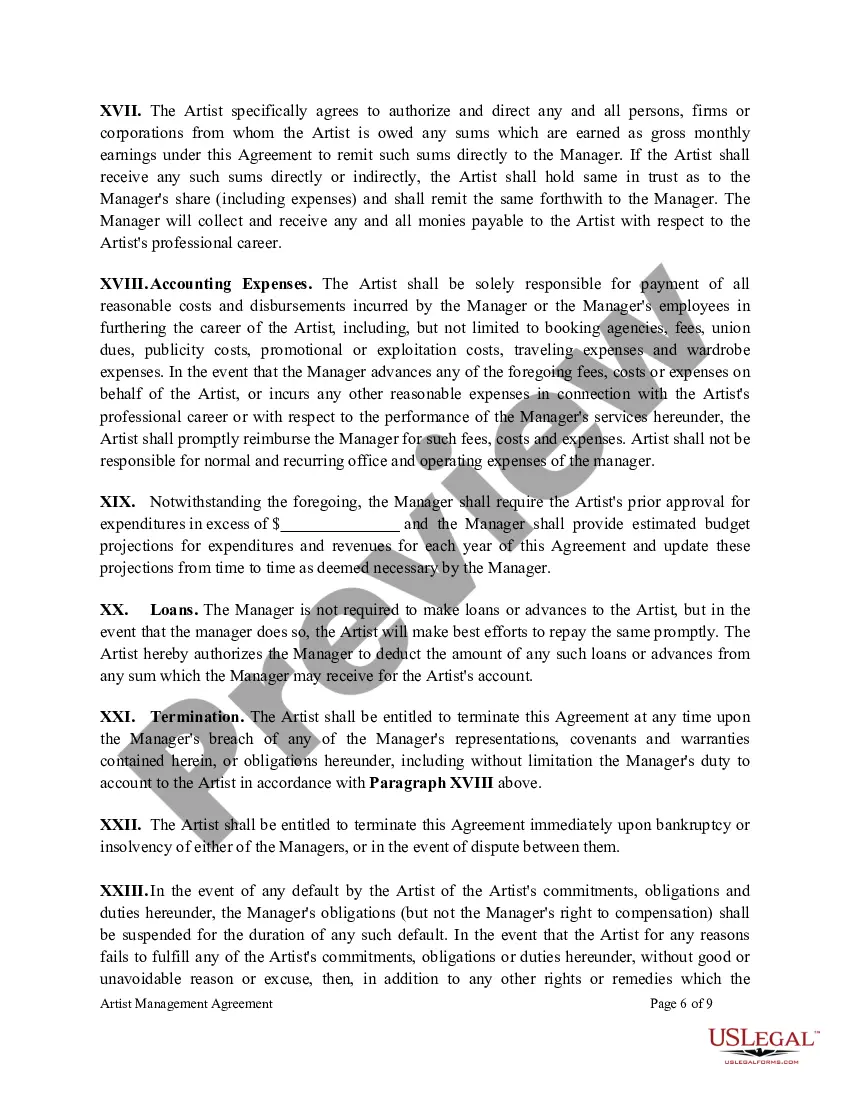
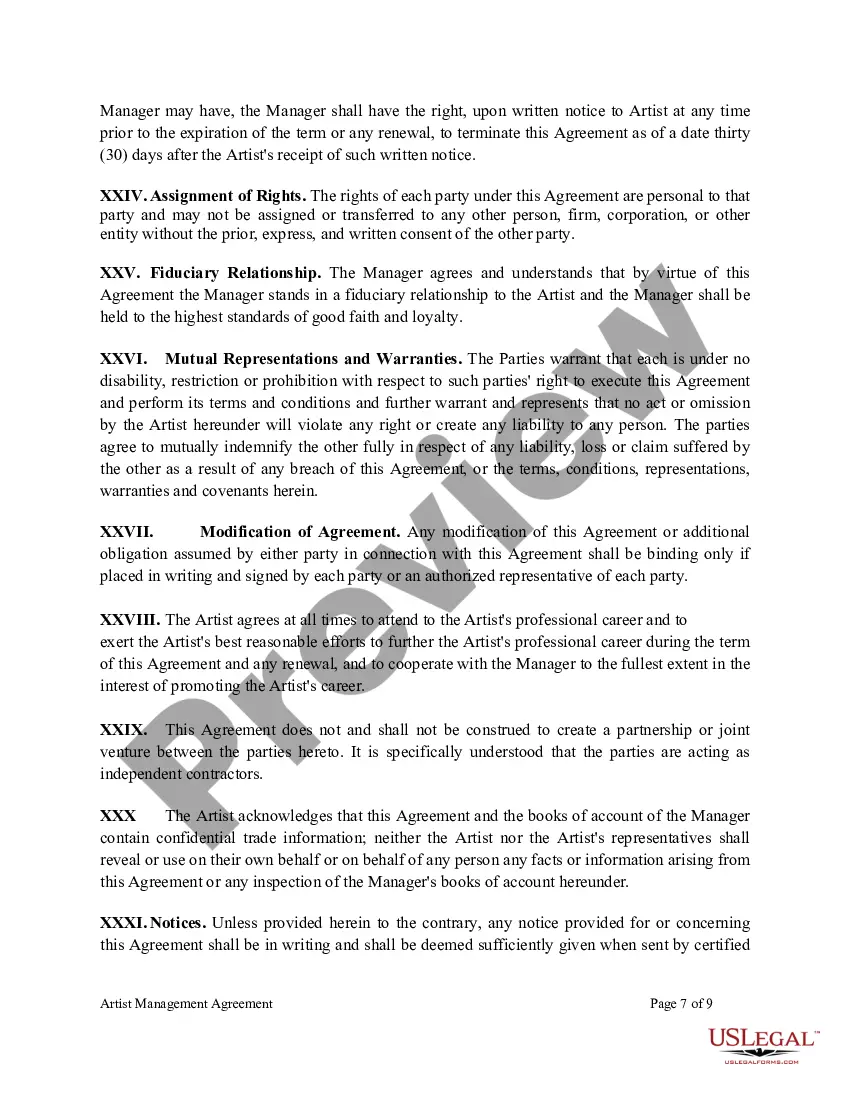
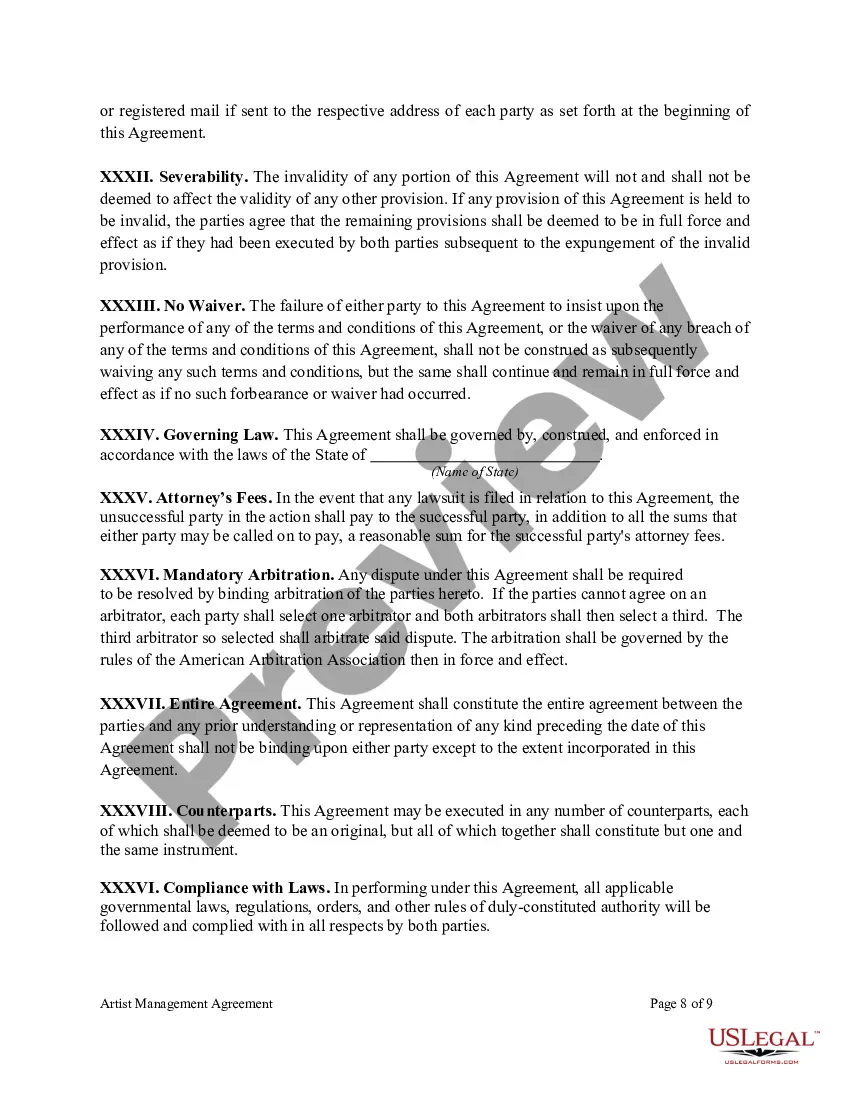
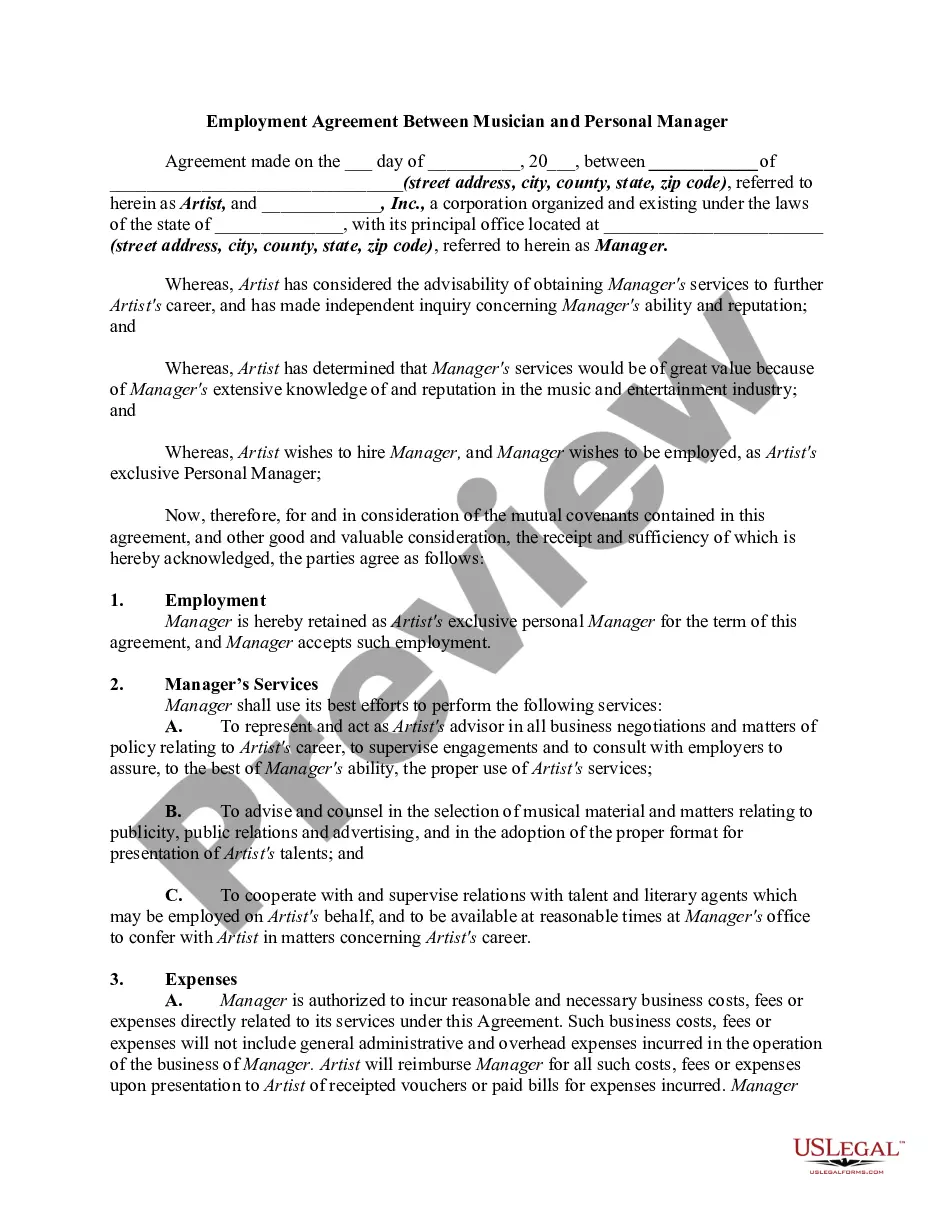
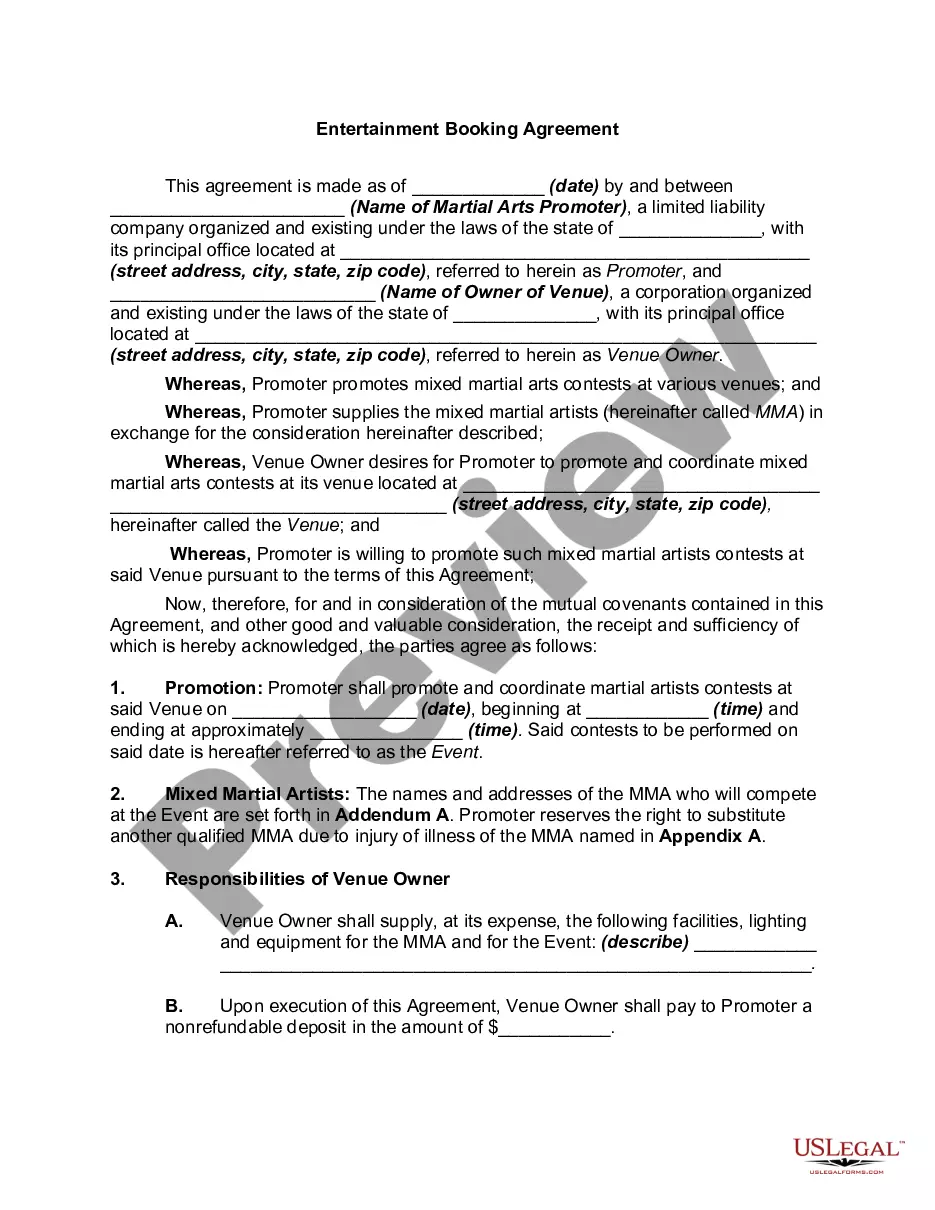
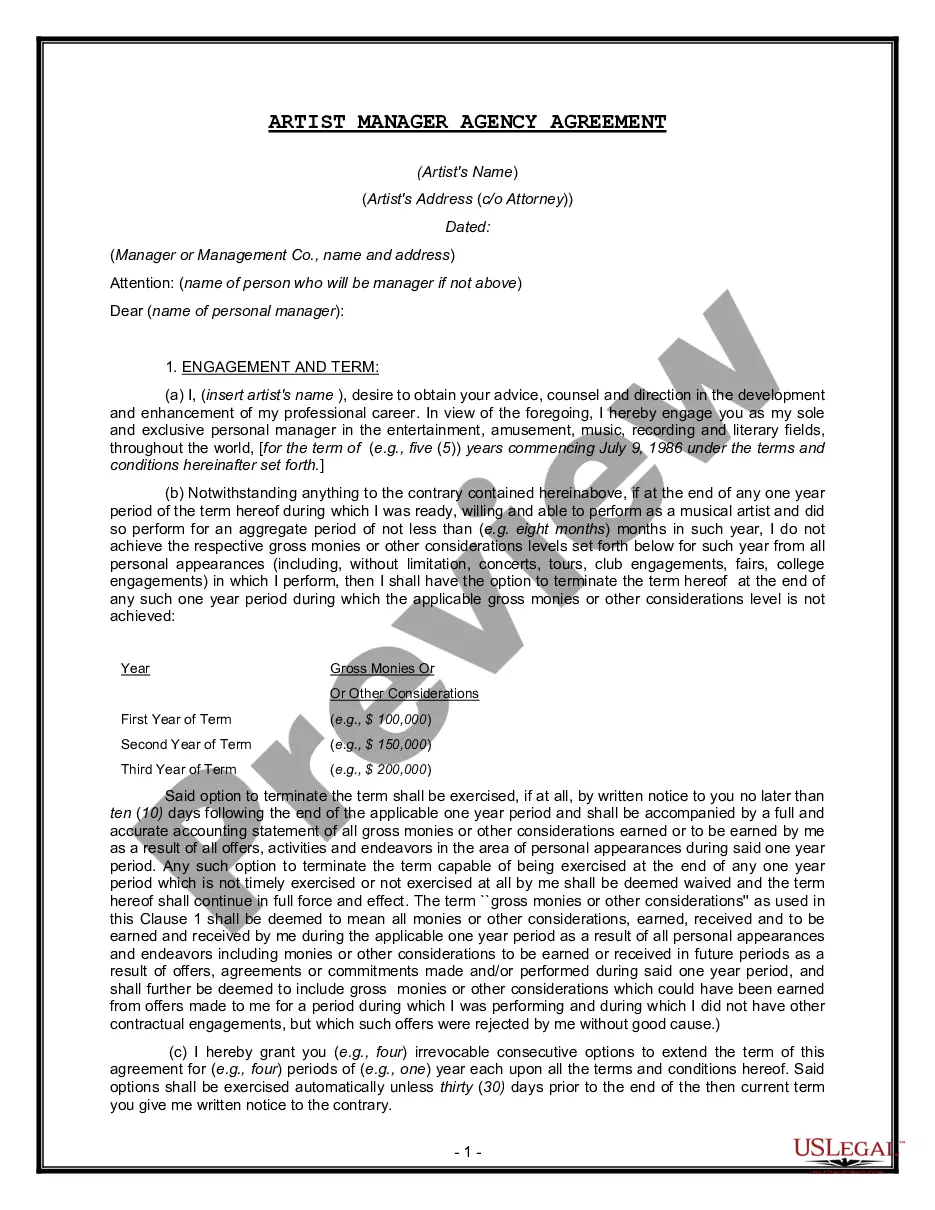
Get your form ready online
Our built-in tools help you complete, sign, share, and store your documents in one place.
Make edits, fill in missing information, and update formatting in US Legal Forms—just like you would in MS Word.
Download a copy, print it, send it by email, or mail it via USPS—whatever works best for your next step.
Sign and collect signatures with our SignNow integration. Send to multiple recipients, set reminders, and more. Go Premium to unlock E-Sign.
If this form requires notarization, complete it online through a secure video call—no need to meet a notary in person or wait for an appointment.
We protect your documents and personal data by following strict security and privacy standards.

Make edits, fill in missing information, and update formatting in US Legal Forms—just like you would in MS Word.

Download a copy, print it, send it by email, or mail it via USPS—whatever works best for your next step.

Sign and collect signatures with our SignNow integration. Send to multiple recipients, set reminders, and more. Go Premium to unlock E-Sign.

If this form requires notarization, complete it online through a secure video call—no need to meet a notary in person or wait for an appointment.

We protect your documents and personal data by following strict security and privacy standards.
Looking for another form?






Form popularity
FAQ
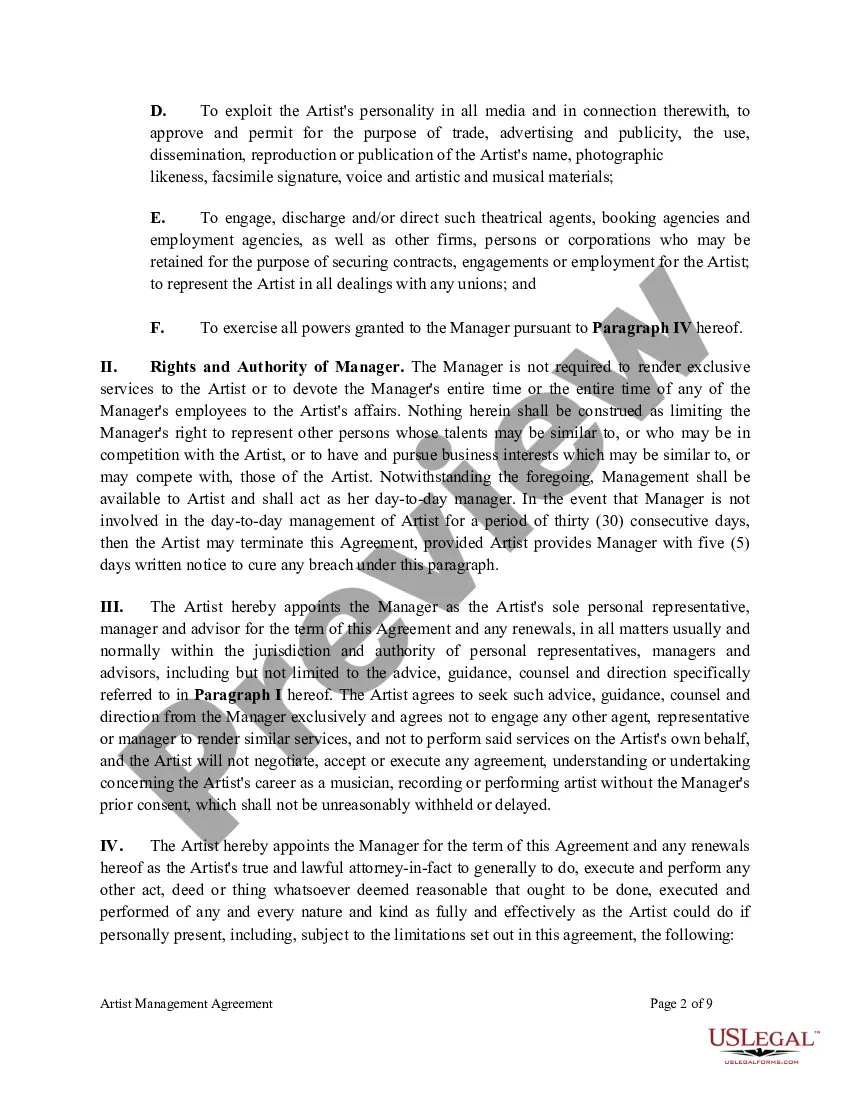
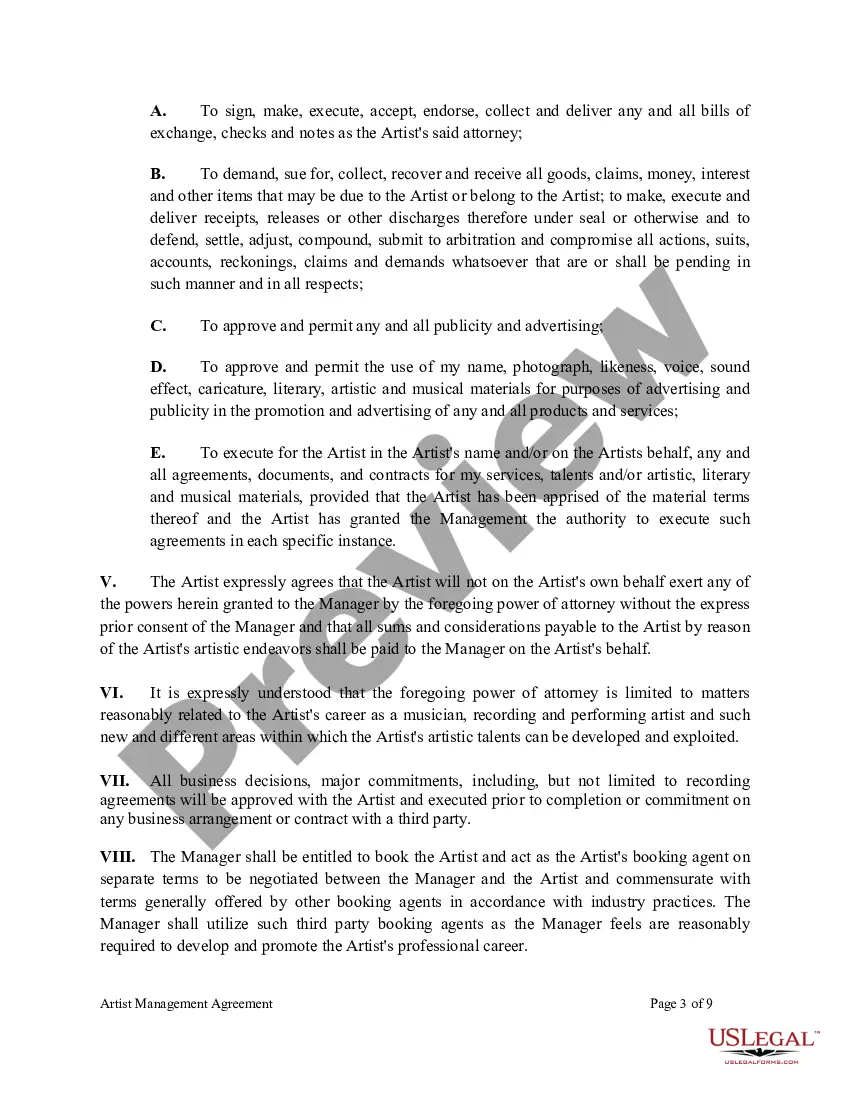
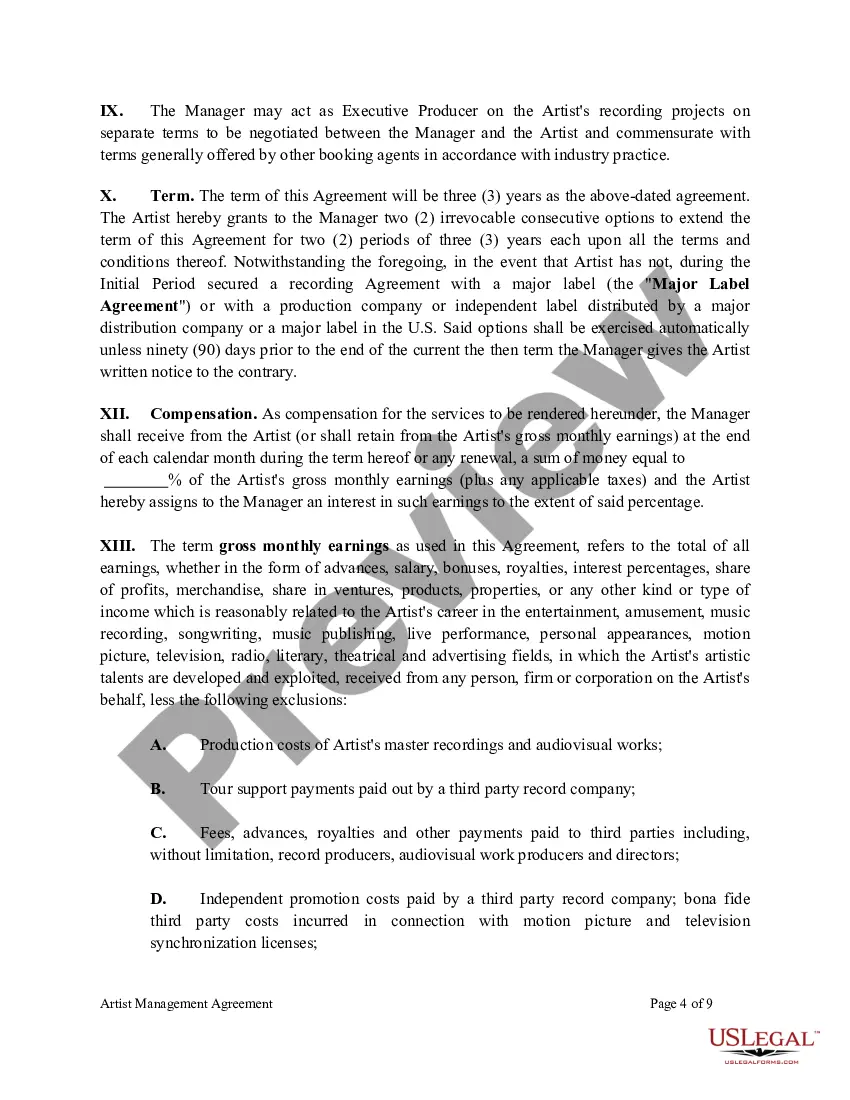
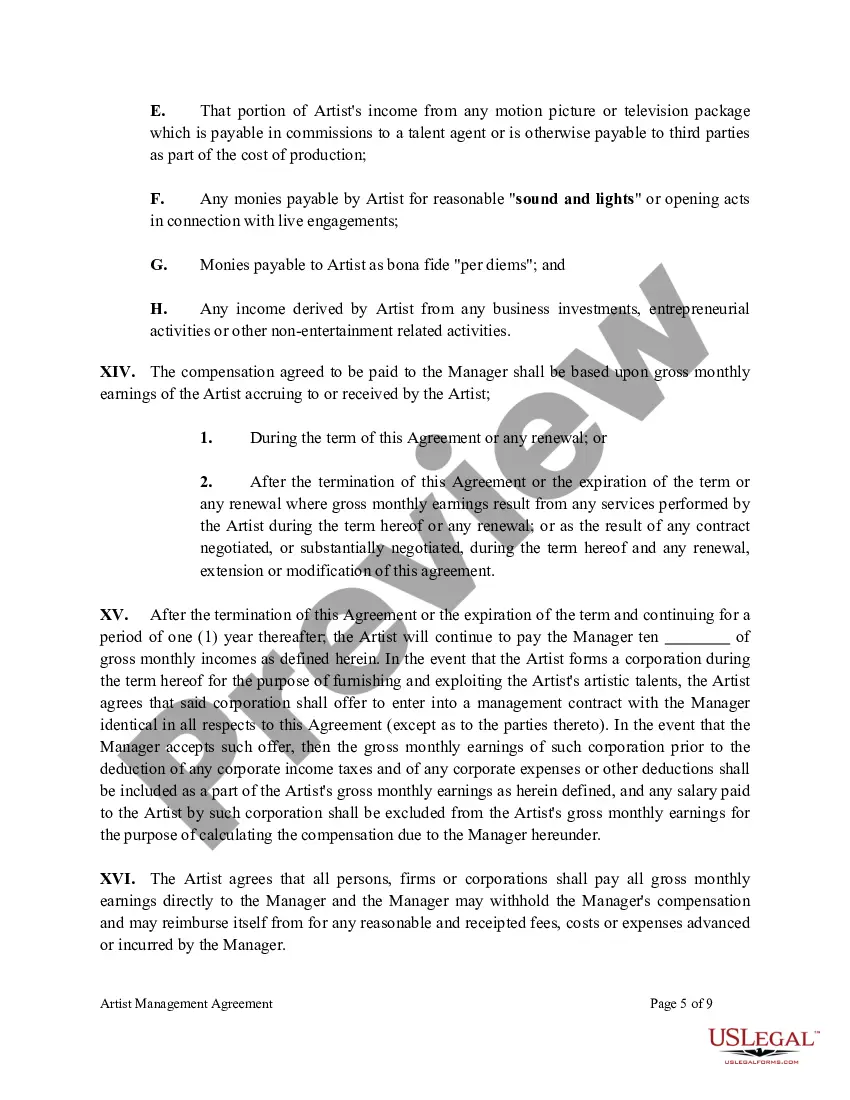
Contracts like an artist agreement help avoid miscommunications and confusion over the rights and responsibilities of both parties involved. Artist agreements typically include availability expectations, performance markers, and licensing or ownership rights of the works created during the partnership.
Generally, to be legally valid, most contracts must contain two elements: All parties must agree about an offer made by one party and accepted by the other. Something of value must be exchanged for something else of value.
When it comes to the use of digital images of signatures in legal proceedings, it's important to note that they can be admissible in court under certain circumstances. However, there are some potential issues that can arise, such as the authenticity of the image and the possibility of tampering.
And remember: the visual signature image on a digital document during an electronic signature procedure has no legal value. It's the intangible, invisible certificate that does all the work!
A photo of a signed document can be considered legal in many instances, particularly when it is used as evidence to prove the signing of an agreement or contract. However, it is essential to ensure that such photographs are captured correctly and meet all legal requirements.
The general answer is YES. Most jurisdictions will permit photo copies, whether they be from a copy machine or fax. To have a document admitted into evidence you need to be able to establish that it is bona fide and that the party to be charged agreed to the document. Agreement can manifest itself in different ways.
When it comes to the use of digital images of signatures in legal proceedings, it's important to note that they can be admissible in court under certain circumstances. However, there are some potential issues that can arise, such as the authenticity of the image and the possibility of tampering.
Understanding the important clauses of a general agreement Introduction. In the first section, you need to provide the details of the parties involved in the agreement. First party's obligations. Second party's obligations. Representations of the parties. Additional terms. Force majeure. Governing law. Amendments.
