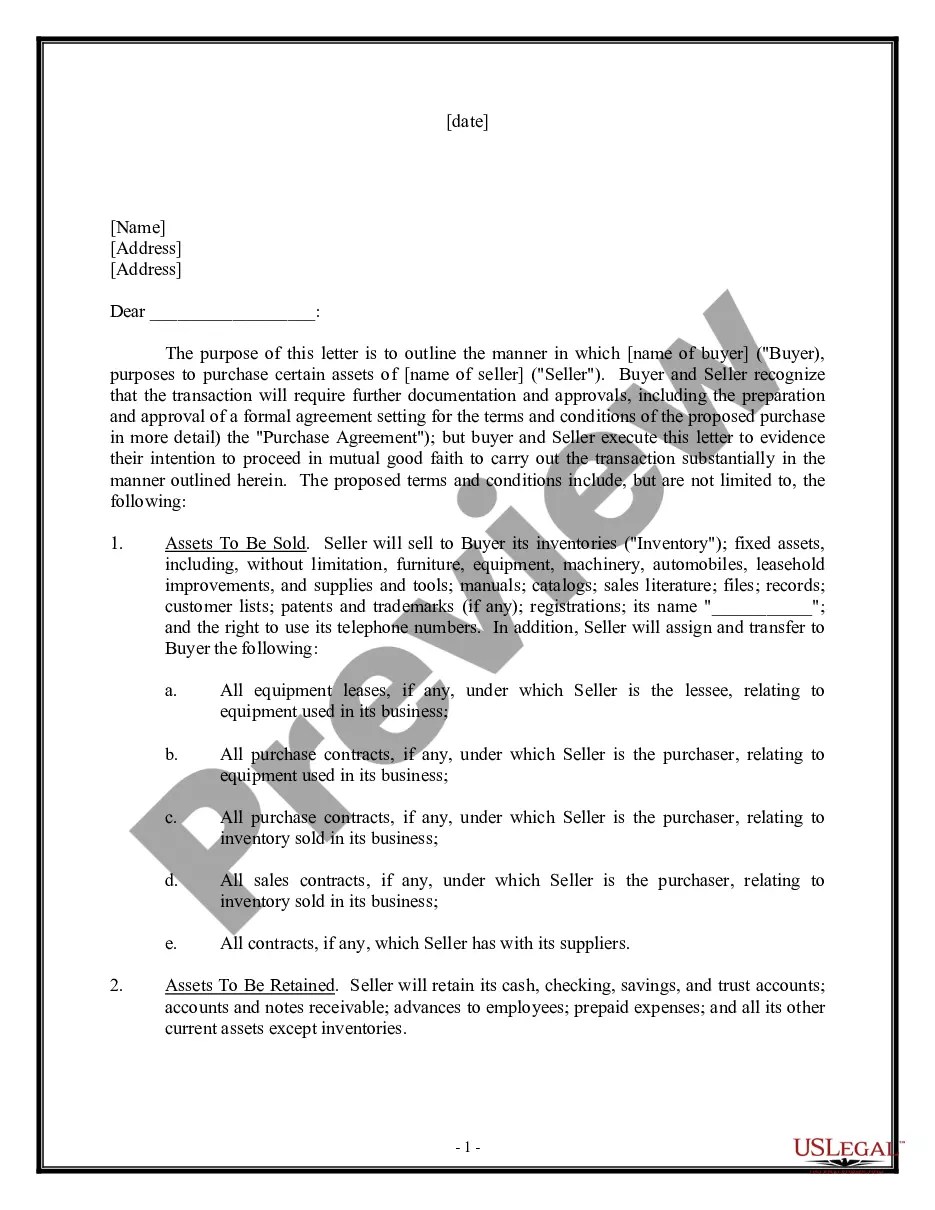
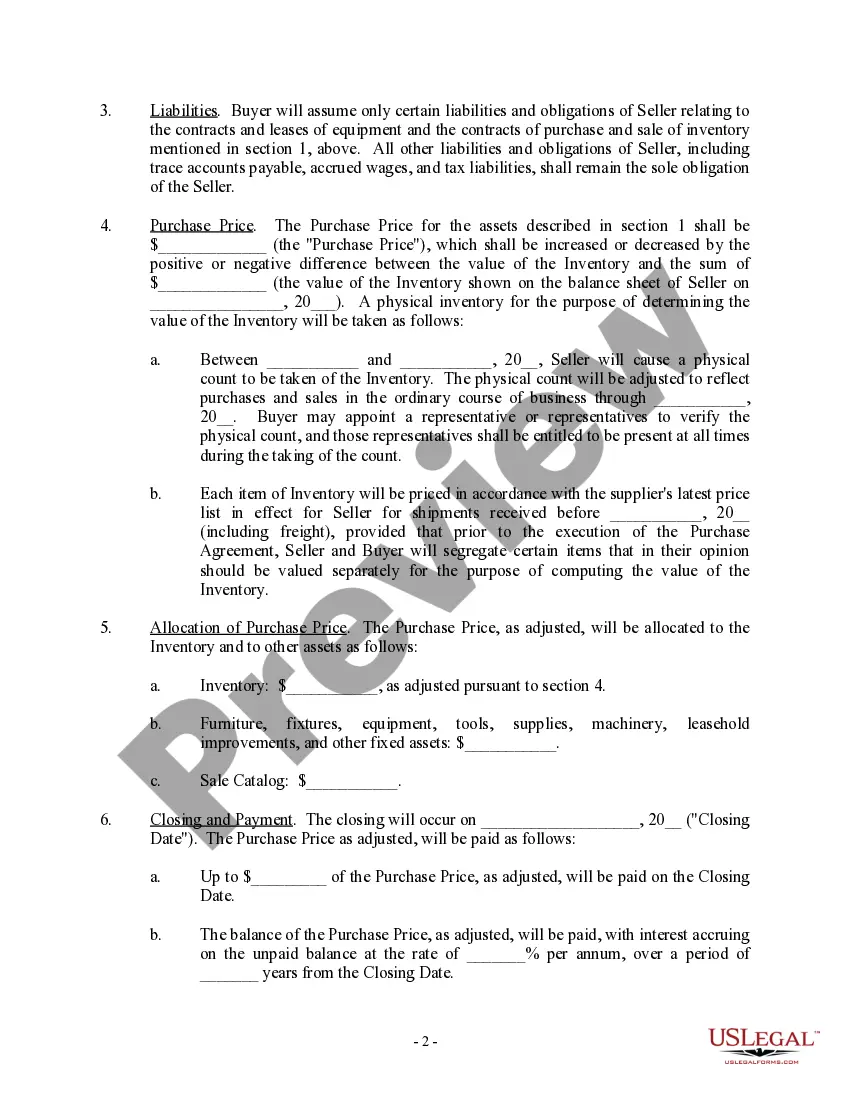
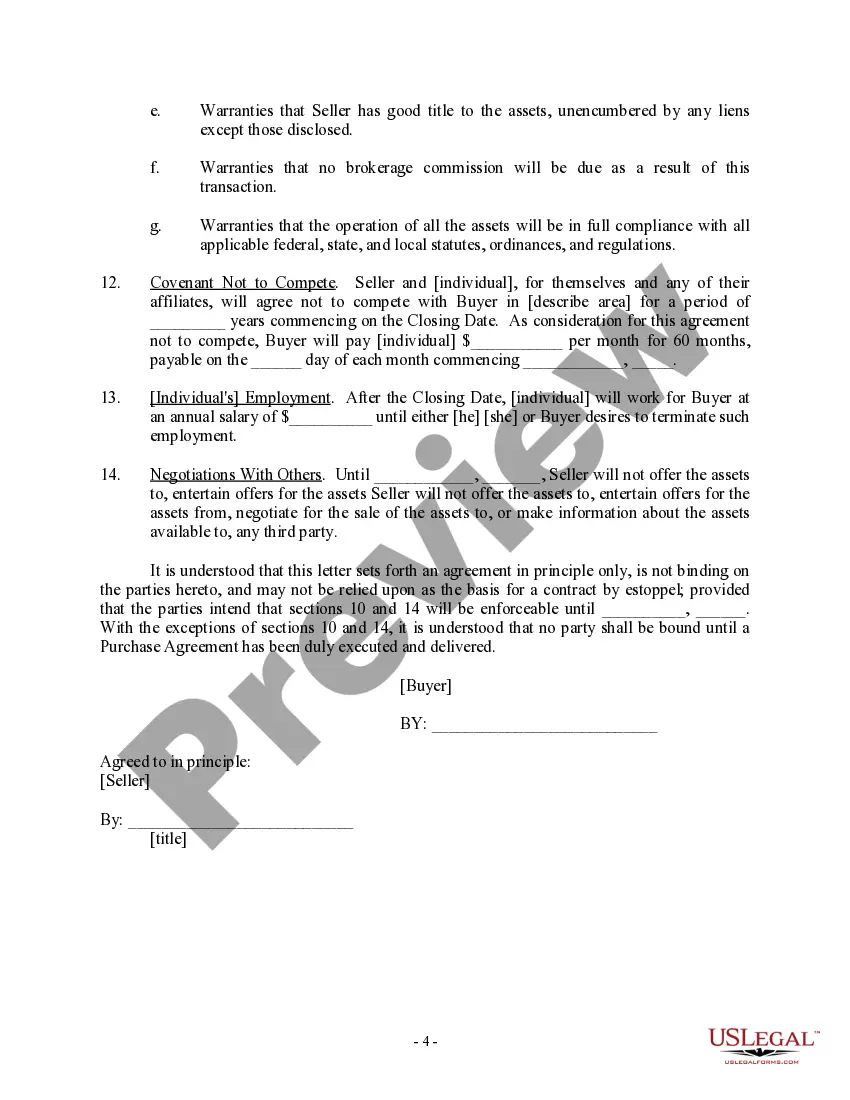
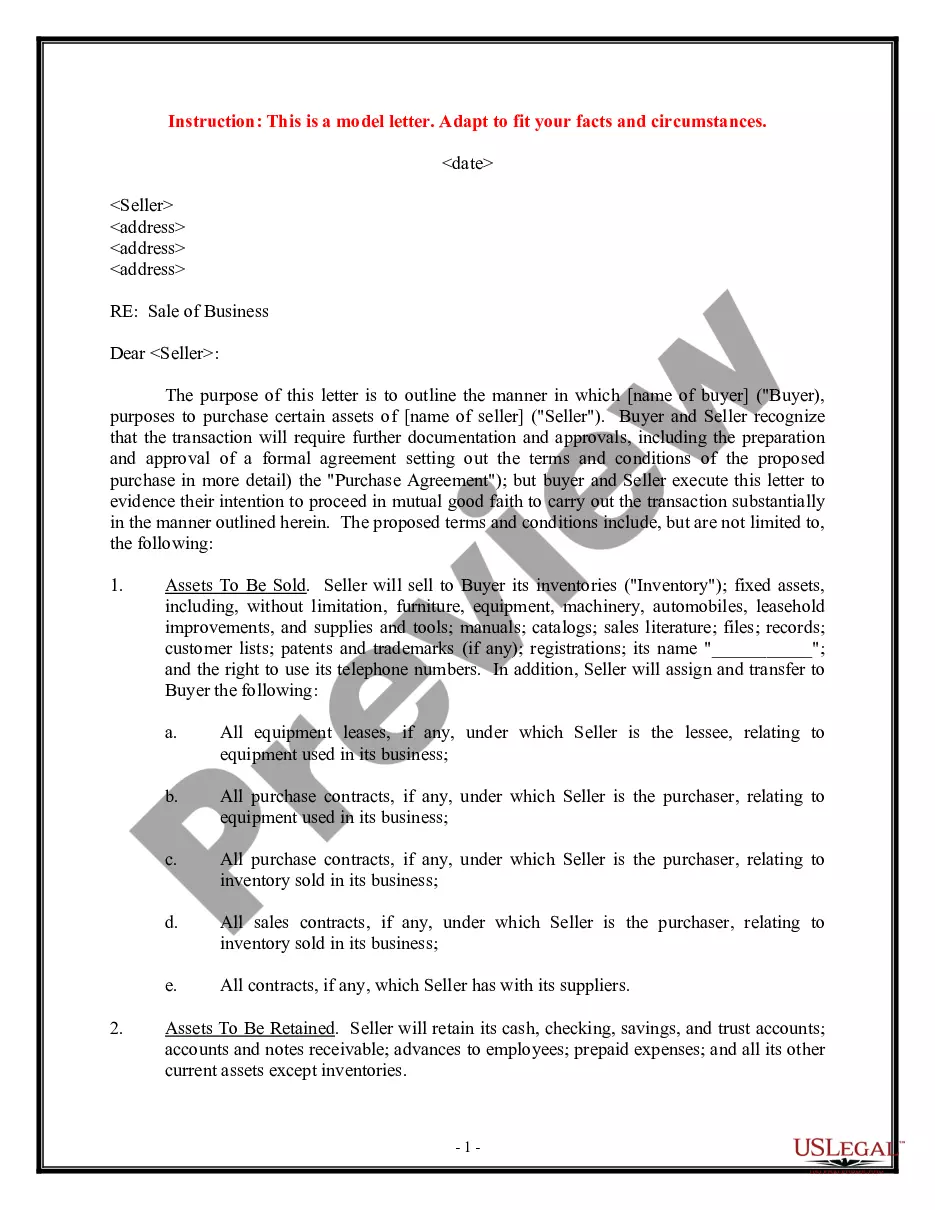
Assets Asset Purchase For Credit In California
Description


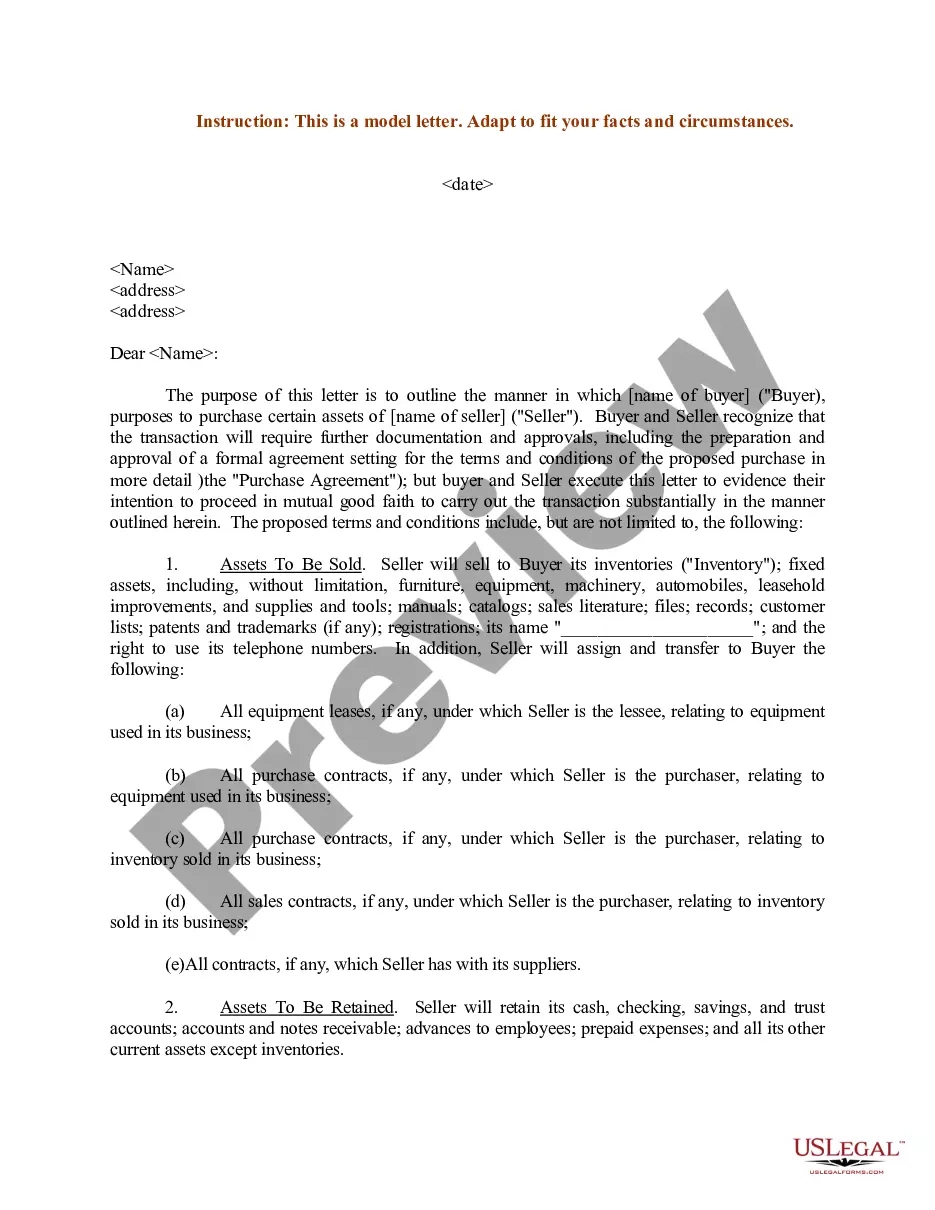
Get your form ready online
Our built-in tools help you complete, sign, share, and store your documents in one place.
Make edits, fill in missing information, and update formatting in US Legal Forms—just like you would in MS Word.
Download a copy, print it, send it by email, or mail it via USPS—whatever works best for your next step.
Sign and collect signatures with our SignNow integration. Send to multiple recipients, set reminders, and more. Go Premium to unlock E-Sign.
If this form requires notarization, complete it online through a secure video call—no need to meet a notary in person or wait for an appointment.
We protect your documents and personal data by following strict security and privacy standards.

Make edits, fill in missing information, and update formatting in US Legal Forms—just like you would in MS Word.

Download a copy, print it, send it by email, or mail it via USPS—whatever works best for your next step.

Sign and collect signatures with our SignNow integration. Send to multiple recipients, set reminders, and more. Go Premium to unlock E-Sign.

If this form requires notarization, complete it online through a secure video call—no need to meet a notary in person or wait for an appointment.

We protect your documents and personal data by following strict security and privacy standards.
Looking for another form?

Form popularity
FAQ
California Law California does not conform to the changes made to IRC section 174 and has not adopted the updated terminology to define "Specified Research or Experimental Expenditures" or the expense treatment of research costs.
California doesn't conform to MACRS or ACRS depreciation methods for 1120 C Corporations, except to the extent that such depreciation is passed through from a partnership or LLC classified as a partnership.
Effective October 1, 2024, the Standard Medical Expense Deduction will increase to $150 per month. ACL 24-59. This means that households with an elderly or disabled member and between $35 and $185 of medical expenses per month will get a standard $150 per month deduction.
Purpose. Use form FTB 3885, Corporation Depreciation and Amortization, to calculate California depreciation and amortization deduction for corporations, including partnerships and limited liability companies (LLCs) classified as corporations.
California law has not always conformed to federal law with regard to depreciation methods, special credits, or accelerated write‑offs. Consequently, the recovery periods and the basis on which the depreciation is calculated may be different from the amounts used for federal purposes.
Assets sold on credit are entered in sales journal.
A credit sales journal entry is a type of accounting entry that is used to record the sale of merchandise on credit. The entry is made by debiting the Accounts Receivable and crediting the Sales account. The amount of the sale is typically recorded in the journal as well.
In California, key bankruptcy exemptions include up to $600,000 in home equity, $3,325 in vehicle equity, protected retirement accounts, personal belongings, and public benefits such as Social Security. Exemptions help filers keep essential property while resolving debt through Chapter 7 or Chapter 13 bankruptcy.
For example, if a business purchases a new computer for $1,200 on credit, it would record $1,200 as a debit in its account for equipment (an asset) and $1,200 as a credit in its accounts payable account (a liability).
A business line of credit can be considered an asset when used strategically to enhance the business's financial position and growth prospects. However, it is imperative to weigh its benefits against the risks and manage it judiciously to maintain a healthy balance sheet and ensure long-term financial stability.
