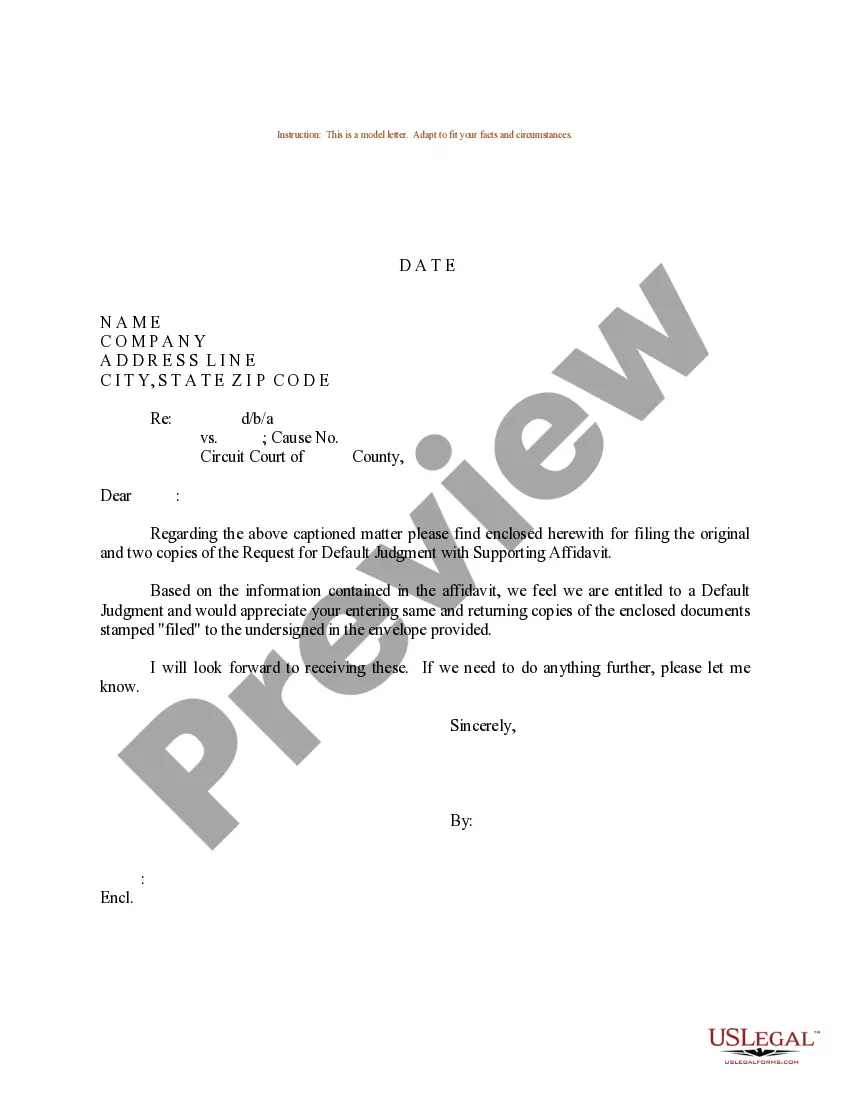
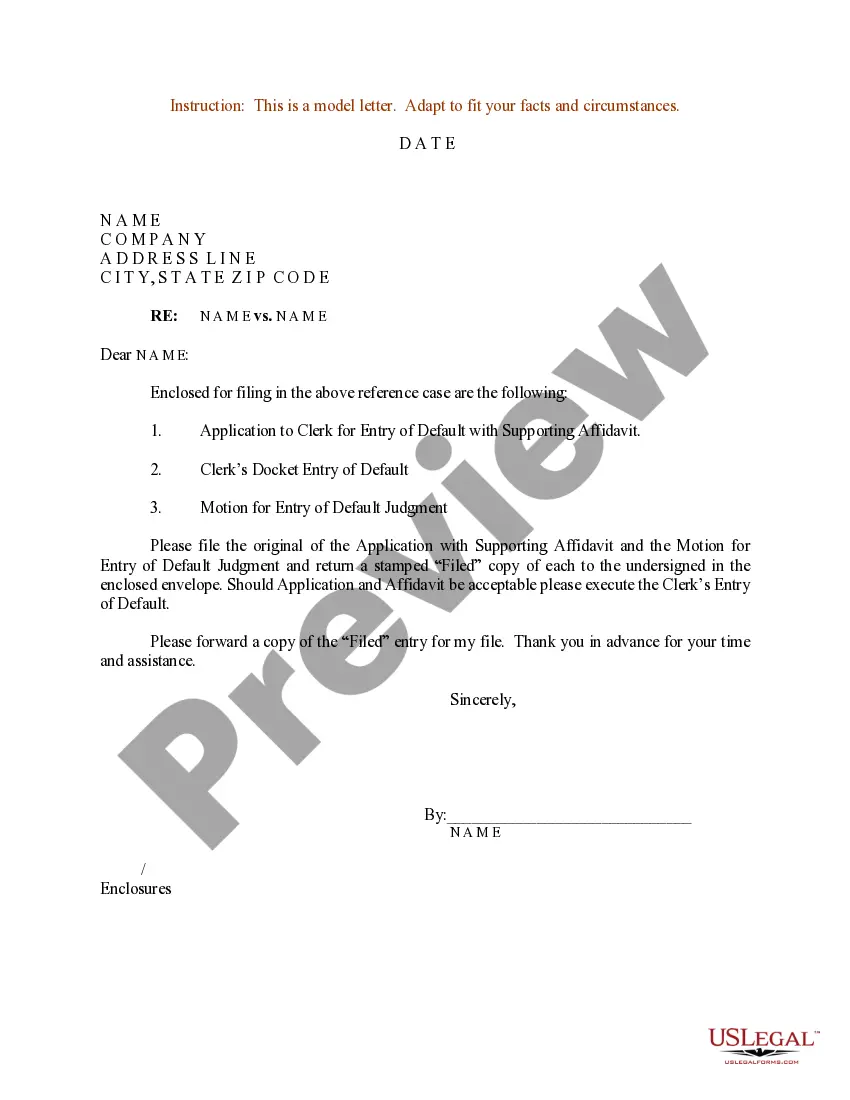
Letter Requesting Motion To Vacate Order Of Default Without Notice In Suffolk
Description
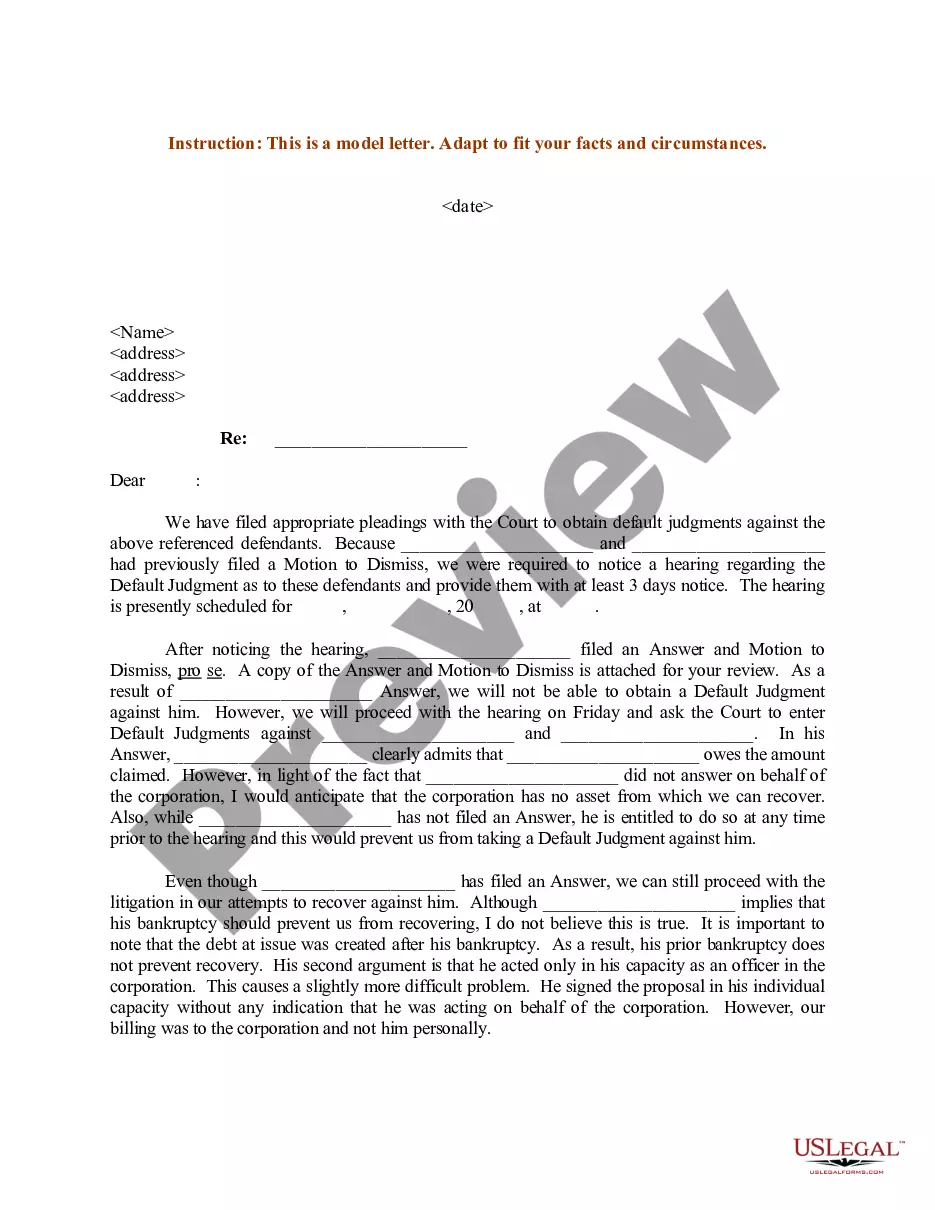
Get your form ready online
Our built-in tools help you complete, sign, share, and store your documents in one place.
Make edits, fill in missing information, and update formatting in US Legal Forms—just like you would in MS Word.
Download a copy, print it, send it by email, or mail it via USPS—whatever works best for your next step.
Sign and collect signatures with our SignNow integration. Send to multiple recipients, set reminders, and more. Go Premium to unlock E-Sign.
If this form requires notarization, complete it online through a secure video call—no need to meet a notary in person or wait for an appointment.
We protect your documents and personal data by following strict security and privacy standards.

Make edits, fill in missing information, and update formatting in US Legal Forms—just like you would in MS Word.

Download a copy, print it, send it by email, or mail it via USPS—whatever works best for your next step.

Sign and collect signatures with our SignNow integration. Send to multiple recipients, set reminders, and more. Go Premium to unlock E-Sign.

If this form requires notarization, complete it online through a secure video call—no need to meet a notary in person or wait for an appointment.

We protect your documents and personal data by following strict security and privacy standards.
Looking for another form?









Form popularity
FAQ
A motion may be withdrawn at any time prior to its return date by filing with the clerk a written request signed by counsel for the moving party.
For that purpose the judgment debtor should approach the plaintiff/judgment creditor or his/her/its attorney to obtain the written consent to rescission of judgment. There is however no requirement in law that obliges a plaintiff/judgment creditor to give a consent to rescission of judgment.
To vacate a default, your motion papers must show a good reason or excuse for your default and that your claims or defenses have legal merit. Whenever a motion is to be brought, the person filing the motion is called the moving party or the movant.
To vacate a default, your motion papers must show a good reason or excuse for your default and that your claims or defenses have legal merit.
A defendant can challenge the entry of default by filing a motion pursuant to Federal Rule of Civil Procedure 55(c), which allows the court to set it aside for “good cause” shown. Under certain circumstances, the court is required to do so.
If you don't file an Answer or you miss a court date, the party suing you will ask the court for a default judgment against you. You can ask the court to vacate (undo) the default judgment. If the judgment is vacated and the case is put back on the court's calendar and the case will continue.
Most Courts, including California, put strict time limits on when that motion may be filed (six months from entry of default in California though this time limit may be altered based on various factors) and the longer the period of time from entry of default, the harder it is to have the Court remove it.
— The effective words of a resolution declaring the office of Speaker of the House of Representatives to be vacant. A resolution declaring the office of Speaker of the United States House of Representatives vacant (informally referred to as a "motion to vacate") is considered privileged under certain circumstances.
A motion is a written request for something from the court. This motion requests some court to vacate (over turn, reverse, throw out) a prior court decision to dismiss (end) an appeal (a proceeding whereby a higher court is asked to examine a lower court ruling or decision or judgment).
