Letter Requesting Motion To Vacate Order Of Default With Student Loans In Maricopa
Description

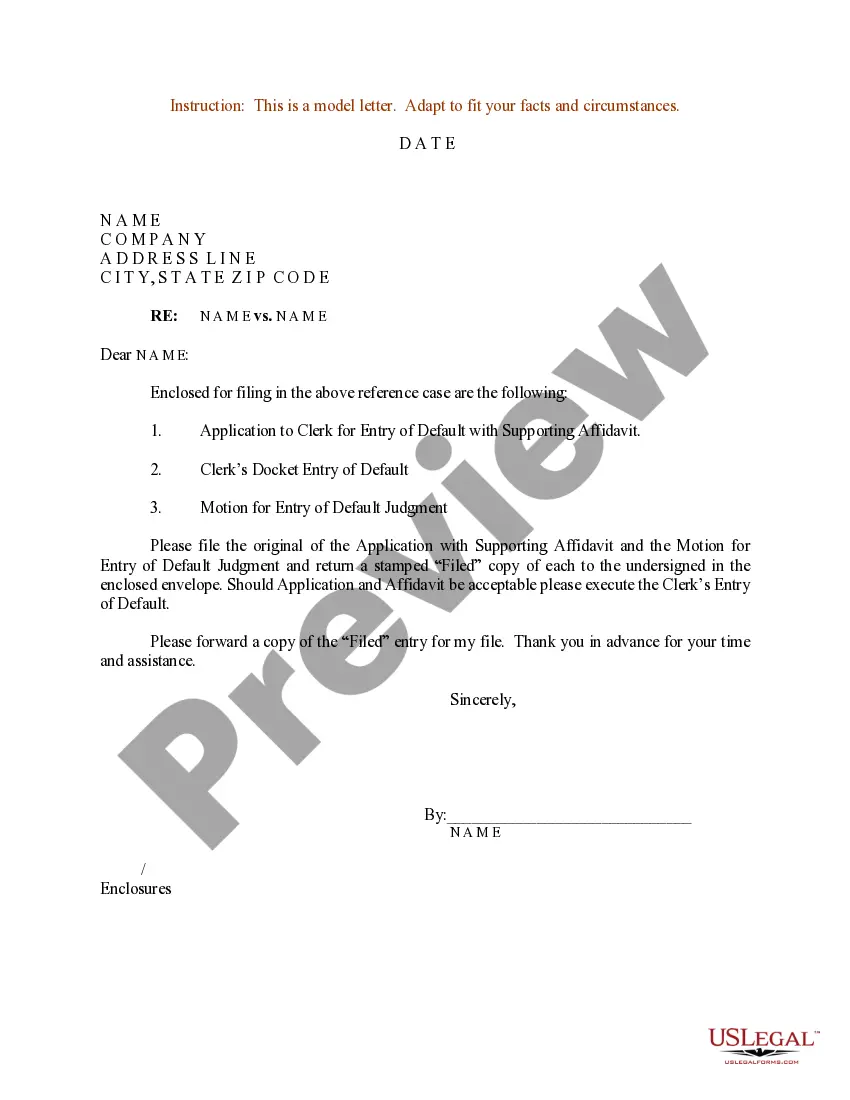
Get your form ready online
Our built-in tools help you complete, sign, share, and store your documents in one place.
Make edits, fill in missing information, and update formatting in US Legal Forms—just like you would in MS Word.
Download a copy, print it, send it by email, or mail it via USPS—whatever works best for your next step.
Sign and collect signatures with our SignNow integration. Send to multiple recipients, set reminders, and more. Go Premium to unlock E-Sign.
If this form requires notarization, complete it online through a secure video call—no need to meet a notary in person or wait for an appointment.
We protect your documents and personal data by following strict security and privacy standards.

Make edits, fill in missing information, and update formatting in US Legal Forms—just like you would in MS Word.

Download a copy, print it, send it by email, or mail it via USPS—whatever works best for your next step.

Sign and collect signatures with our SignNow integration. Send to multiple recipients, set reminders, and more. Go Premium to unlock E-Sign.

If this form requires notarization, complete it online through a secure video call—no need to meet a notary in person or wait for an appointment.

We protect your documents and personal data by following strict security and privacy standards.
Looking for another form?





Form popularity
FAQ
Arizona Judgments are Enforceable for at Least Ten Years The ten years starts running from the when the Clerk of the Court enters in the judgment. This is important to understand because the date the Clerk of the Court enters the judgment can (and often is) different from the date the judge signed the judgment.
If you don't file an Answer or you miss a court date, the party suing you will ask the court for a default judgment against you. You can ask the court to vacate (undo) the default judgment. If the judgment is vacated and the case is put back on the court's calendar and the case will continue.
A motion to vacate must be filed within a reasonable time. For reasons (1) and (2), the motion must be filed no more than 6 months after the entry of the judgment or the date of the proceeding, whichever is later. The moving party must deliver a copy of the motion to the other party on the date of filing.
A defendant can challenge the entry of default by filing a motion pursuant to Federal Rule of Civil Procedure 55(c), which allows the court to set it aside for “good cause” shown. Under certain circumstances, the court is required to do so.
For good cause shown, and upon terms the court deems just, the court may set aside a judgment entered upon a failure to appear. A motion to set aside a default judgment shall be made in writing within 30 days after entry of the default judgment.
A motion to vacate must be filed within a reasonable time. For reasons (1) and (2), the motion must be filed no more than 6 months after the entry of the judgment or the date of the proceeding, whichever is later. The moving party must deliver a copy of the motion to the other party on the date of filing.
Under the new version of Rule 68(g), the sanctions against a party who fails to obtain a more favorable judgment than the offer is “twenty percent of the difference between the amount of the offer and the amount of the final judgment.” This change applies to offers of judgment served on or after January 1, 2022.
A motion may be withdrawn at any time prior to its return date by filing with the clerk a written request signed by counsel for the moving party.
For that purpose the judgment debtor should approach the plaintiff/judgment creditor or his/her/its attorney to obtain the written consent to rescission of judgment. There is however no requirement in law that obliges a plaintiff/judgment creditor to give a consent to rescission of judgment.
